



Search News
Industry Portal
Popular Tags
Heavy Industry Equipment: 5 Maintenance Risks That Raise Downtime

Author
Time
Click Count
For after-sales maintenance teams, heavy industry equipment failures rarely start with a dramatic breakdown. They begin with missed trends, rushed checks, and service steps treated as routine instead of risk control.
In rail and marine operations, that pattern is expensive. A delayed inspection on a braking module, pantograph, signal cabinet, LNG handling system, or propulsion asset can quickly turn into downtime, safety exposure, and avoidable repair cost.
This article explains five maintenance risks that most often raise downtime in heavy industry equipment and shows how to spot them before asset performance drops.
Why a Checklist Approach Works for Heavy Industry Equipment

Complex systems fail across interfaces, not only inside single components. That is especially true in integrated railway control, traction power, vessel automation, cryogenic handling, and high-load braking environments.
A checklist does not replace engineering judgment. It standardizes early detection, reduces skipped steps, and helps maintenance teams compare actual equipment condition against expected operating behavior.
For heavy industry equipment, disciplined checklists improve three things: inspection consistency, fault isolation speed, and planned maintenance accuracy. Those gains directly reduce downtime and unplanned intervention windows.
Five Maintenance Risks That Raise Downtime
- Verify baseline operating data before service. Without trend references for temperature, vibration, current, pressure, and response time, heavy industry equipment faults are often judged too late.
- Inspect wear interfaces under real load conditions. Contact strips, brake pads, seals, bearings, valves, and connectors can pass visual checks while already drifting beyond stable performance limits.
- Confirm torque, alignment, and fastening integrity after intervention. Many repeat failures come from maintenance-induced errors rather than original component defects in heavy industry equipment.
- Review contamination paths aggressively. Dust, salt spray, carbon debris, moisture, and insulation residue often accelerate sensor drift, overheating, corrosion, and control instability.
- Document fault symptoms with time stamps and operating context. Downtime rises when teams record the part replaced but not the actual trigger pattern or environmental conditions.
Risk 1: Missing Condition Trends Instead of Detecting Real Degradation
Heavy industry equipment rarely moves from healthy to failed in one step. It usually drifts through heat rise, current instability, pressure fluctuation, longer response cycles, or abnormal noise signatures.
When historical data is incomplete, maintenance teams rely too heavily on experience alone. That works for obvious damage, but not for slow degradation in relays, compressors, actuators, traction assemblies, and auxiliary power systems.
The practical fix is simple: define a baseline after commissioning or overhaul, then compare every inspection against that baseline. Trend-based decisions reduce false confidence and shorten troubleshooting time.
Risk 2: Treating Visual Inspection as Sufficient Evidence
Surface appearance can be misleading. Contact wear, thermal fatigue, brake fade, micro-cracking, electrical tracking, and early seal hardening often develop before obvious external damage appears.
For heavy industry equipment, inspection must combine visual review with measurement. Thickness, contact resistance, insulation values, pressure holding time, vibration spectrum, and thermal imaging reveal what sight alone cannot.
This matters in both rail and marine assets. A pantograph head, braking unit, switchgear cabinet, or LNG valve train may look serviceable while operating with shrinking safety margin.
Risk 3: Creating Repeat Failures During Maintenance
Not all downtime comes from equipment age. A meaningful share comes from service errors: incorrect torque, connector misplacement, contamination introduced during opening, poor calibration, or skipped post-maintenance verification.
In heavy industry equipment, the consequences spread quickly. One misaligned assembly can increase wear in neighboring parts, distort sensor feedback, or trigger protective shutdowns across linked systems.
The best control is a structured close-out routine. After intervention, confirm alignment, electrical continuity, fastening sequence, alarm reset status, and live functional response before returning the asset to duty.
Risk 4: Underestimating Contamination and Environmental Stress
Heavy industry equipment operates in punishing environments. Rail systems face carbon dust, vibration, and weather cycling. Marine systems face salt, humidity, thermal shock, and persistent corrosion pressure.
Contamination is not only a cleanliness issue. It affects insulation performance, cooling efficiency, signal quality, lubrication stability, and mechanical movement. Over time, minor contamination becomes a root cause of downtime.
Maintenance plans should therefore include contamination mapping. Identify where debris enters, where moisture condenses, where salt accumulates, and where cleaning methods may damage seals or coatings.
Risk 5: Recording Repairs Without Recording Operating Context
A part replacement log is useful, but incomplete. Heavy industry equipment failures need context: load state, ambient temperature, route profile, sea condition, duty cycle, alarm sequence, and operator observations.
Without that context, repeated faults look unrelated. Teams replace components again, yet the true trigger remains hidden in intermittent overload, unstable power quality, vibration peaks, or harsh environmental exposure.
Good documentation turns maintenance history into a decision tool. It supports root cause analysis, spare parts planning, warranty discussion, and more accurate service intervals for heavy industry equipment.
How These Risks Appear in Different Operating Scenarios
Railway Signal and Traction Systems
In signalling and traction environments, downtime often starts with unstable contacts, cabinet contamination, connector looseness, or response delays that look minor during routine checks.
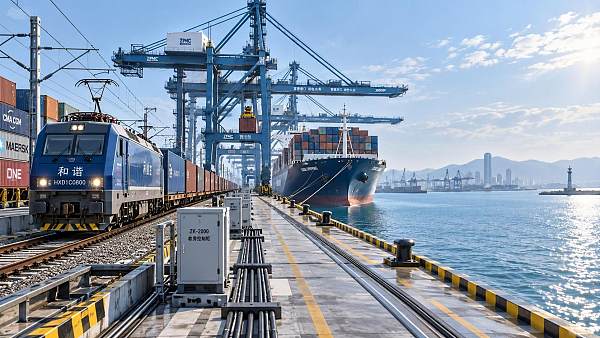
Because these systems are interdependent, one weak maintenance step can affect train control continuity, power collection stability, and braking coordination. Heavy industry equipment in rail service needs both electrical and mechanical verification.
Smart Vessels and LNG Carrier Systems
On advanced vessels, maintenance risk often hides in automation loops, valve response, corrosion progression, insulation stress, and sensor drift under temperature extremes.
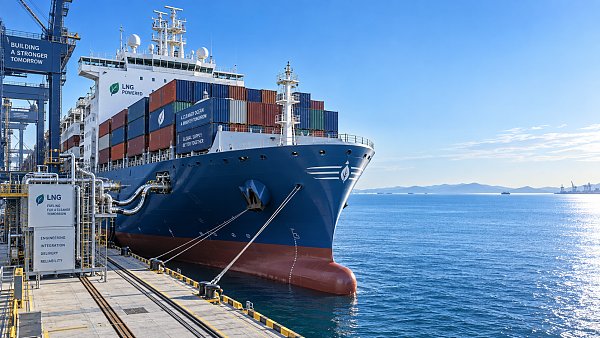
For LNG carriers especially, heavy industry equipment must be checked with strict attention to sealing integrity, cryogenic material condition, and alarm logic response under dynamic load and thermal variation.
Commonly Overlooked Items That Increase Downtime
Calibration drift is frequently ignored because the equipment still appears operational. Yet slight measurement error can mislead control logic and maintenance judgment across critical systems.
Temporary fixes are another hidden risk. Cable ties, improvised sealing, bypassed alarms, and nonstandard fasteners may restore operation briefly while raising future downtime probability.
Lubrication quality also deserves attention. Wrong grade, over-application, or contamination in grease points can shorten component life faster than under-lubrication in some heavy industry equipment.
Spare parts traceability matters as well. If batches, service hours, and failure modes are not linked, recurring part weakness can remain invisible for too long.
Practical Execution Steps for Maintenance Teams
- Set baseline values for every critical heavy industry equipment parameter after overhaul, commissioning, or validated stable operation.
- Use dual inspection methods by combining visual review with measured evidence such as thermal, vibration, electrical, or pressure data.
- Close every work order with a functional verification step, not only a completed task list.
- Record environmental and operating context whenever a fault occurs or a part is replaced.
- Review repeat failures monthly to identify maintenance-induced issues, contamination patterns, or interval settings that no longer match field conditions.
Conclusion and Next Action
Downtime in heavy industry equipment is often raised by small maintenance gaps, not dramatic single-point failures. Missed trends, weak measurement discipline, poor close-out control, contamination, and incomplete records create the real cost chain.
Start with one action: convert the five risks above into a field checklist for the most critical rail or marine asset under your responsibility. Then compare the next three inspections against baseline data, not memory.
That simple shift makes heavy industry equipment maintenance more predictive, more consistent, and far less vulnerable to avoidable downtime.
Recommended News
 Sep 29, 2026What drives traction systems price differences between rail projects?Traction systems price differences explained: compare duty cycles, voltage compatibility, integration, localization, and lifecycle costs for smarter rail procurement.
 Sep 26, 2026What to assess before selecting an electric traction system manufacturerChoose an electric traction system manufacturer with confidence. Explore key criteria for performance, reliability, safety, integration, energy efficiency, and lifecycle support.
 Sep 25, 2026When do full digitalization systems justify the investment?Full digitalization systems: discover when rail and maritime operators can turn connected data into safer operations, higher availability, and measurable ROI.
 Sep 23, 2026What drives automatic train control systems cost on rail projects?Automatic train control systems cost depends on integration, migration, safety testing, communications, and lifecycle support. Explore the key budget drivers for rail projects.
 Sep 21, 2026How to assess an ocean going vessel builder’s delivery riskAssess an ocean going vessel builder’s delivery risk with proven checks for schedules, capacity, design maturity, critical equipment, quality, and project controls.
 Sep 20, 2026What drives rail safety technology costs over a project lifecycle?Rail safety technology cost goes beyond equipment—explore lifecycle drivers from integration and safety assurance to cybersecurity, commissioning, and obsolescence.
 Sep 16, 2026What to verify before choosing an advanced ocean-going vessels supplierAdvanced ocean-going vessels supplier checklist: verify design authority, build quality, digital systems, delivery reliability, and lifecycle support before you buy.
 Sep 15, 2026What rail safety technology best reduces level-crossing risks in Southeast Asia?Rail safety technology Southeast Asia: discover how fail-safe signalling, barriers, obstacle detection and remote monitoring reduce level-crossing risks.
 Sep 14, 2026How exporters can reduce customs delays in global trade logisticsGlobal trade logistics for exporters: reduce customs delays with accurate data, clearance-ready documents, early filing, and proactive exception management.
 Sep 13, 2026When do global transportation network systems reduce delivery delays?Global transportation network systems reduce delivery delays by improving rail-port-vessel coordination, real-time visibility, and proactive decisions across complex land-sea supply chains.
 Sep 09, 2026When should you choose a rail and maritime manufacturer with dual-sector capability?Rail and maritime manufacturer guide: learn when dual-sector capability reduces integration risk, improves lifecycle support, and strengthens rail-to-port operations.
 Sep 08, 2026What to verify before selecting a railway signalling equipment supplierRailway signalling equipment supplier checklist: verify safety evidence, integration, cybersecurity, delivery capability, and lifecycle support before award.
 Sep 07, 2026How to size a traction power transformer for railway load demandTraction power transformer sizing guide: model railway load demand, peak duty, voltage regulation, harmonics, and contingency capacity for reliable service.
 Sep 07, 2026How do customization options for industrial connectors affect lead times?Customization options for industrial connectors can impact lead times, cost, and compliance. Learn how to specify smarter for rail and marine projects.
 Sep 05, 2026What information should an industrial sourcing guide include?Industrial sourcing information procurement guide: evaluate suppliers, compliance, lifecycle costs, interfaces, and lead times for smarter rail and maritime purchasing decisions.
 Sep 01, 2026How to find reliable maritime tender information before biddingMaritime tender information: learn how to verify sources, define bid-ready scopes, check qualifications, and reduce risk before submitting competitive marine bids.
 Aug 30, 2026How to select railway automation equipment for depots with phased upgradesRailway automation equipment for depots: learn how to plan phased upgrades that improve safety, throughput, integration, and lifecycle control.
 Aug 27, 2026How industrial sourcing intelligence pricing data supports budget approvalIndustrial sourcing intelligence pricing data helps teams benchmark scope, assess supplier risk, and build defensible budget approvals for complex rail and maritime assets.
 Aug 26, 2026When does a marine fuel efficiency solution make financial sense in the Middle East?Marine fuel efficiency solution Middle East: learn when retrofit savings, compliance value, and vessel data align to deliver credible ROI and smarter shipping investment decisions.
 Aug 24, 2026When does maritime automation for tankers deliver a real payback?Maritime automation for tankers delivers real payback when it cuts fuel use, reduces cargo risk, and improves uptime. See how owners can time investment for stronger ROI.
 Aug 23, 2026When do maritime logistics systems in the Middle East justify the costMaritime logistics systems Middle East: discover when rising delays, manual coordination, and poor visibility make system investment the smarter move for regional operators.
 Aug 22, 2026What drives vessel navigation system price for commercial fleetsVessel navigation system price depends on integration, compliance, automation, and support—not just hardware. Learn what drives fleet costs and compare quotes with confidence.
 Aug 21, 2026How to assess shipbuilding maritime tenders before biddingShipbuilding maritime tenders require more than price checks. Learn how to assess technical scope, compliance, supply chain, and commercial risk before bidding with confidence.
 Aug 20, 2026When does working with an ocean-going vessels distributor reduce supply risk?Ocean-going vessels distributor: learn when this partner cuts supply risk through stronger compliance, faster response, and better sourcing resilience in complex maritime procurement.