



Search News
Industry Portal
Popular Tags
What to verify before choosing a railway interlocking equipment exporter
Author
Time
Click Count
Selecting a railway interlocking equipment exporter requires evidence that the delivered system can remain safe, maintainable, and compatible throughout its operating life. A quotation, a catalogue, and a general declaration of compliance are not enough. Interlocking equipment controls route setting, movement authority interfaces, point operation logic, signal aspects, level-crossing dependencies, and failure responses. An error in configuration, hardware selection, documentation, or site integration can delay commissioning and create safety exposure long after shipment.
The evaluation should begin with the exact project boundary. Clarify whether the supply covers a complete electronic interlocking, relay interlocking equipment, object controllers, input/output modules, axle counter interfaces, track-circuit interfaces, point machine control, central control interfaces, application engineering, testing tools, spare parts, or only cabinet-level hardware. “Interlocking system” can describe very different scopes, and unclear scope is a common source of missing interfaces during installation.
Safety evidence must match the supplied scope
Safety claims should be reviewed at subsystem level rather than accepted as a broad company statement. If a project requires SIL4-level functions, determine which supplied functions are assessed for that level and which depend on external equipment, application data, communication links, power systems, or site-specific engineering. A safety case for a generic platform does not automatically validate a configured installation at a particular station, depot, main line, or automated people-mover route.
Ask for the applicable safety documentation set, including certificates where relevant, assessment scope, version identifiers, safety manuals, hazard assumptions, restrictions of use, and the lifecycle activities expected from the project integrator. The documentation should identify the exact hardware revisions and software versions covered. Where certificate references and offered product versions differ, the gap needs resolution before contract award rather than during factory acceptance testing.
Functional safety evidence should also explain treatment of foreseeable faults. Useful questions include how the system detects conflicting route requests, communication loss, incorrect field feedback, vital processor disagreement, power interruption, corrupted configuration data, and input/output channel failure. The expected safe state must be explicit. For example, a loss of correspondence from a point machine should not be discussed only as an alarm; its effect on route release, signal clearance, and recovery procedure matters.
A competent railway interlocking equipment exporter should be able to distinguish between product safety evidence and application validation. This distinction becomes particularly important when track layouts, operating rules, national standards, or interface protocols differ from prior deliveries.
Examine the technical architecture behind the quotation
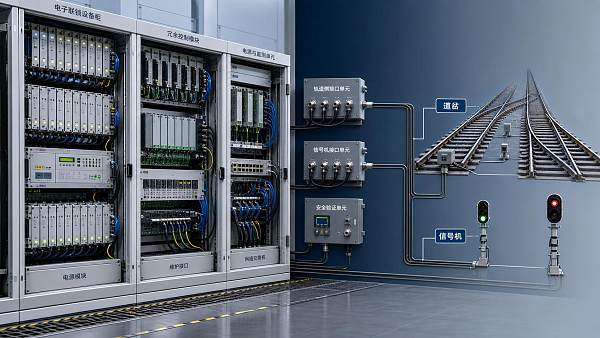
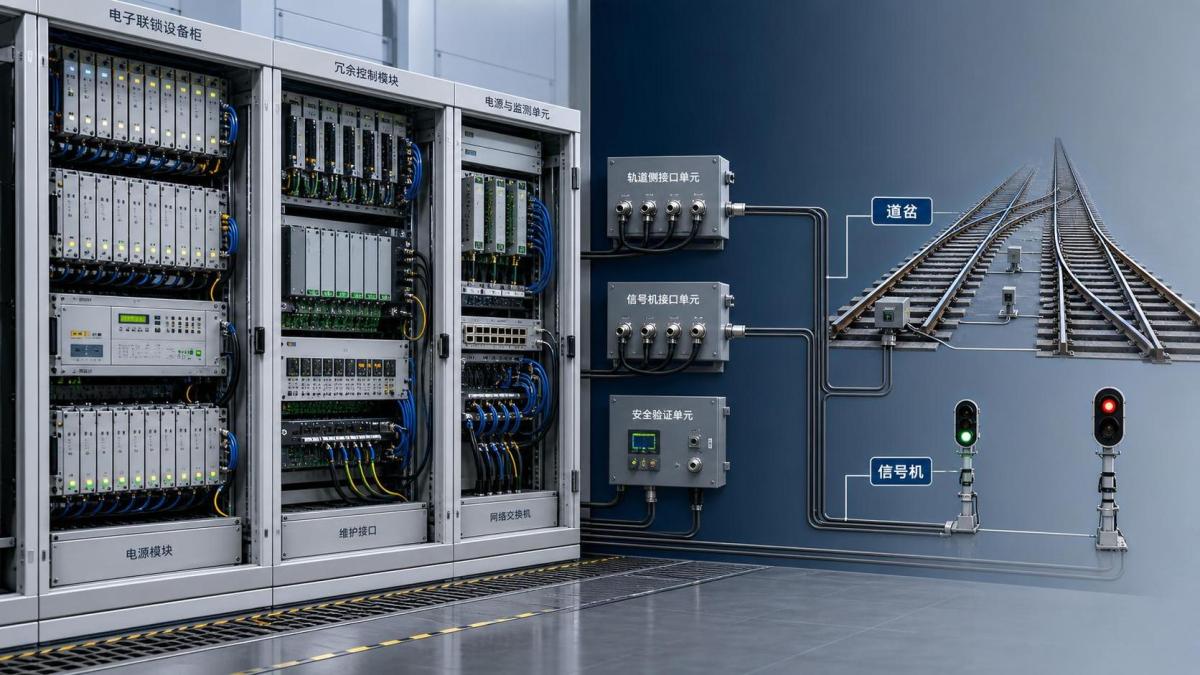
Interlocking architecture affects cabinet space, power demand, cable design, diagnostic capability, expansion options, and fault isolation. Request a current architecture diagram that shows vital and non-vital domains, field interfaces, communication paths, time synchronization, redundant elements, maintenance terminals, and external control connections. A simplified sales diagram is insufficient if it hides the boundary between supplied equipment and third-party systems.
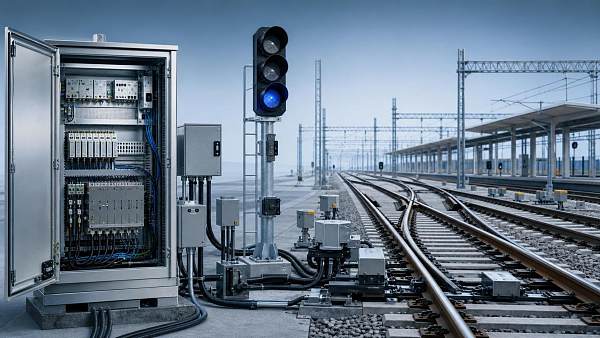
Pay close attention to the field layer. Verify the supported voltage ranges, contact monitoring method, surge protection arrangement, isolation rating, output loading limits, relay characteristics, and environmental requirements for each interface module. Point-control circuits may require different treatment from signal lamp proving, track circuit relays, door interlocks, platform screen doors, or level-crossing indications. The offered modules must suit the actual field equipment, not merely the nominal railway application.
Environmental declarations should cover the intended installation location. Indoor equipment rooms, wayside equipment huts, tunnels, coastal corridors, desert routes, and high-altitude lines can impose very different demands for temperature, humidity, salt mist, dust, vibration, electromagnetic disturbance, condensation, and ventilation. Cabinet ingress protection, coating systems, connector selection, cable entry arrangements, and heat dissipation should be evaluated together. A robust processor module can still suffer premature failures if the enclosure and installation assumptions are unsuitable.
Where redundancy is proposed, establish what is redundant and what remains a single point of failure. Dual processors, duplicated power supplies, redundant communication rings, and standby control channels do not provide the same availability outcome. The design should state the switchover behavior, diagnostic coverage, degraded operating mode, replacement process, and any required reinitialization after a fault.
Compatibility is an interface-control exercise
Many interlocking projects fail to stay on schedule because interface ownership is assumed rather than documented. Before selection, develop an interface register that names every connected system, the responsible party, the physical medium, protocol, data set, electrical characteristics, timing expectations, and test responsibility. It should cover central traffic control, automatic train protection, train detection, point machines, signals, platform systems, power supervision, telecom networks, maintenance systems, and existing relay rooms where applicable.
Protocol compatibility deserves particular scrutiny. Stating support for Ethernet, serial communication, or a common signalling protocol does not confirm interoperability. Verify the exact protocol version, message structure, cybersecurity controls, timeout values, network topology, gateway behavior, and responsibility for configuration. Legacy assets may rely on relay interfaces or proprietary telegrams that require approved conversion hardware and detailed cause-and-effect logic.
For brownfield work, survey information should be treated as a controlled input. Cable cores, relay nomenclature, terminal numbering, field contact states, grounding arrangements, and wiring changes made over years of maintenance may differ from historical drawings. The contract should specify how discrepancies discovered on site are recorded, reviewed, and reflected in updated design documents. Without that discipline, application data can be correct on paper while being wrong at the terminal block.
Review application engineering, not only equipment supply
An interlocking is governed by the approved signalling principles and route logic. Determine whether the exporter will provide application data, support its development, supply only the platform, or accept independently produced configuration. Each approach changes the technical and contractual risk.
The proposed engineering workflow should show how signalling plans become route tables, control tables, geographic data, configuration data, test cases, and final as-built records. Review requirements traceability, independent checking arrangements, change control, version management, simulation capability, and approval gates. Configuration files should be uniquely identified and reproducible from controlled source material. A downloadable binary without controlled source records makes later modifications difficult to validate.
- Route locking, overlap logic, flank protection, approach locking, emergency release, and route cancellation should be traceable to the approved operational rules.
- Interface logic needs defined normal, failed, transitional, and restart states; nominal message exchange alone is not adequate.
- Temporary works and phased cutovers should have separate, controlled application states rather than informal site alterations to the final design.
- Test records should identify the configuration version, hardware serial numbers where relevant, test environment, observed result, anomaly disposition, and approving authority.
Factory acceptance testing is valuable only when the test setup represents the intended system behavior. Confirm whether field simulators, train detection simulators, point machine loads, control-centre interfaces, and fault injection methods will be available. A demonstration that routes can be set under ideal conditions does not prove behavior during loss of detection, inconsistent feedback, network dropout, or restart following a power disturbance.
Traceability and production controls affect site reliability
Equipment used in a vital signalling installation needs disciplined manufacturing records. Review how incoming components are controlled, how hardware revisions are managed, how software is loaded and verified, and how final assemblies are identified. Serial-number traceability should allow a delivered cabinet, controller, power unit, or interface module to be connected to its test record and approved configuration.
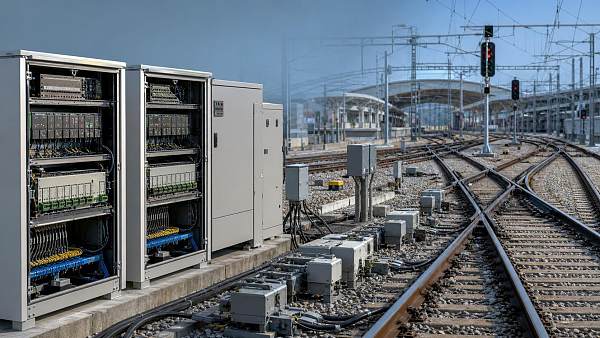
For cabinet assemblies, inspect the design details that influence installation quality: wire identification, terminal access, segregation of vital and non-vital wiring, shielding termination, earth bonding, bend radius, spare terminals, labelling durability, ventilation, and service clearances. Photos can be useful, but controlled drawings, wiring schedules, and inspection records provide a stronger basis for acceptance.
Quality documentation should include the criteria for nonconforming material, rework authorization, retesting, storage conditions, packing inspection, and release for shipment. It is reasonable to ask whether any substitution of components is possible after design approval and, if so, what formal review is required. A component substitution can alter electromagnetic behavior, contact characteristics, thermal loading, or safety assumptions even when the replacement appears functionally equivalent.
Export readiness extends beyond shipping documents
International supply introduces risks at packaging, customs clearance, inland transport, and destination handling. Confirm the agreed delivery terms, transfer of responsibility, export packaging standard, crate design, moisture protection, shock indication where appropriate, packing list granularity, and handling instructions. Cabinets and electronic modules may need separate protection from vibration, condensation, electrostatic discharge, and prolonged storage.
Shipping records should support rapid identification on arrival. Each crate should be linked to its contents, serial numbers, drawings, manuals, spare parts, and any preservation requirements. If lithium batteries, pressurized devices, chemicals, or specialized cleaning materials are included, their transport classification and documentation must be addressed before dispatch.
Also establish the expected shelf life and storage conditions for electronics, batteries, seals, connectors, relay modules, and consumables. Delayed civil works can leave delivered equipment in storage for extended periods. The supply agreement should define inspection intervals, reactivation procedures, and responsibility for replacing items that exceed their approved storage period.
Test the support model against an actual failure scenario
After-sales support should be evaluated as an operating process rather than a promise of technical assistance. Confirm support hours, escalation route, language capability, remote-access restrictions, response documentation, spare-part lead times, repair authorization, and availability of trained field personnel. Where remote diagnostics are planned, cyber access rules, logging, approval procedures, and network separation need agreement before commissioning.
Spare-parts planning should distinguish between operational spares, commissioning spares, strategic repairables, and obsolete-item mitigation. Request a recommended spare-parts list with part numbers, hardware and firmware compatibility, storage requirements, and replacement instructions. A spare module that carries an incompatible firmware revision can introduce a configuration-control issue during an urgent repair.
Training materials should be specific to the delivered system. Useful content includes rack and module replacement, controlled restart procedures, alarm interpretation, log extraction, configuration backup, permitted maintenance actions, and actions requiring engineering approval. Access to diagnostic tools should be governed so that routine fault investigation does not allow uncontrolled changes to vital application data.
Contract terms should preserve technical control
The technical schedule should identify all deliverables, approval points, acceptance criteria, document formats, intellectual-property rights needed for maintenance, software licensing conditions, cybersecurity patch responsibilities, and obsolescence notification arrangements. Avoid accepting vague wording such as “standard documentation” or “complete testing” without defining the actual records required.
Changes during design and installation need a formal path that assesses safety, cost, schedule, interfaces, drawings, configuration, test evidence, and approval status. This is especially important during staged commissioning, when a new interlocking may temporarily coexist with relay equipment, older control systems, or construction-phase wiring.
The strongest selection decision is supported by a coherent chain of evidence: the safety scope aligns with the offered functions, the hardware fits the environment, interfaces are owned and testable, configuration is controlled, production records are traceable, and support remains available after handover. Where any part of that chain is unclear, the issue should be resolved in technical clarification rather than left to site interpretation.
Recommended News
 Aug 29, 2026What to verify before choosing a railway interlocking equipment exporterRailway interlocking equipment exporter checklist: verify safety evidence, interfaces, engineering, traceability, export readiness, and long-term support before procurement.
 Aug 15, 2026How to choose railway interlocking equipment for junctionsRailway interlocking equipment for junctions: learn how to choose the right system for safety, capacity, and future expansion with confidence.
 Jul 14, 2026Rail Interlocking Systems: Common Failure Risks and Design ChecksRail interlocking systems face critical risks from route locking, point detection, track vacancy, and interface timing. Learn the key design checks that improve safety and reduce commissioning risk.
 Jul 06, 2026When to Choose a SIL4 Signalling Equipment Integrator Over Multiple VendorsSIL4 signalling equipment integrator or multiple vendors? Learn when unified integration reduces interface risk, speeds safety approval, and protects rail project delivery.
 Jul 01, 2026Electronic Railway Interlocking Systems: Key Failure Risks and Compliance ChecksRailway interlocking systems electronic risks can disrupt safety, uptime, and compliance. Explore key failure points, practical checks, and proven ways to strengthen rail resilience.
 Jun 23, 2026Interlocking Systems: Key Failure Risks and Safety Checks Before DeploymentInterlocking systems: discover key failure risks, interface hazards, and must-do safety checks before deployment to prevent costly incidents and ensure fail-safe performance.
 Jun 19, 2026Interlocking Systems for Railway Safety: Key Standards and Failure RisksInterlocking systems for railway safety: explore key standards, SIL4 expectations, and hidden failure risks to strengthen railway compliance, resilience, and safe operations.
 Jun 10, 2026How Interlocking Systems Reduce Rail Network Failure RiskInterlocking systems reduce rail network failure risk by preventing conflicts, containing faults, and speeding recovery. See how they improve safety, uptime, and operational resilience.
 Jun 05, 2026Railway Control Components: Key Failure Points to AvoidRailway control components fail in different ways across urban, high-speed, freight, and harsh outdoor routes. Discover the key failure points to avoid for safer, more reliable rail operations.
 Jun 03, 2026Railway Signal Control Systems: Common Failure Points and Safety ChecksRailway signal control systems require rigorous safety checks. Discover common failure points, inspection priorities, and practical steps to reduce risk and protect rail operations.
 Jun 02, 2026How to Evaluate Railway Control Components for System ReliabilityRailway control components evaluation guide: assess SIL compliance, interoperability, stress testing, cybersecurity, and lifecycle reliability for safer rail systems.
 May 31, 2026Interlocking Systems Technology Standards: Key Compliance RisksInterlocking systems technology standards expose critical compliance risks in SIL validation, cybersecurity, and traceability—learn how to protect rail safety and approvals.
 May 28, 2026Interlocking Systems for High-Density Rail Operations: What Improves Capacity Safely?Interlocking systems for high-density rail operations: discover how SIL4-safe architectures, redundancy, and automation interfaces boost rail capacity, resilience, and future readiness.
 May 26, 2026Interlocking Systems for Railway Safety: How to Compare Failure RisksInterlocking systems for railway safety: compare failure risks through design logic, diagnostics, redundancy, and lifecycle factors to make safer, smarter rail decisions.
 May 21, 2026Interlocking Systems Technology Standards: Key Compliance Checks for 2026Interlocking systems technology standards guide 2026 rail compliance checks on safety traceability, software control, cybersecurity, and field integrity. Learn key risks and practical actions.
 May 20, 2026Interlocking Systems for High-Density Rail: Capacity Gains vs Safety TradeoffsInterlocking systems for high-density rail operations: explore how modern architectures boost rail capacity, reduce headways, and manage safety tradeoffs for smarter network planning.
 May 19, 2026Interlocking Systems for Railway Safety: Choosing for Retrofit ProjectsInterlocking systems for railway safety: learn how to choose the best retrofit path with SIL4 assurance, legacy compatibility, lower risk, and future-ready performance.
 May 17, 2026How Computer Interlocking Cuts Rail Signaling Failure RiskInterlocking systems cut rail signaling failure risk by preventing route conflicts, reducing human error, and supporting SIL4 safety—see how computer interlocking boosts reliable, high-density operations.