



Search News
Industry Portal
Popular Tags
How to Evaluate Railway Control Components for System Reliability
Author
Time
Click Count
Evaluating railway control components is no longer a checklist exercise—it is a reliability-critical process that determines how safely and efficiently modern rail networks operate under high density, automation, and extreme performance demands. For technical evaluators, the challenge lies in connecting SIL compliance, lifecycle durability, interoperability, fault tolerance, and real-world operating data into one defensible assessment framework. This article outlines how to examine core control technologies with the rigor required for dependable railway systems.
For asset owners, EPC contractors, system integrators, and technical procurement teams, the evaluation must go beyond catalog specifications. It should prove that every control unit, interface, sensor, relay, and software-dependent subsystem can support safe operation for 20–30 years.
GTOT views railway control components as part of a wider land-sea transport intelligence chain. The same discipline used to assess high-speed traction, braking, smart vessels, and LNG carriers applies to rail signalling reliability: verify evidence, understand failure behavior, and align technology with operational risk.
Defining Reliability in Railway Control Components
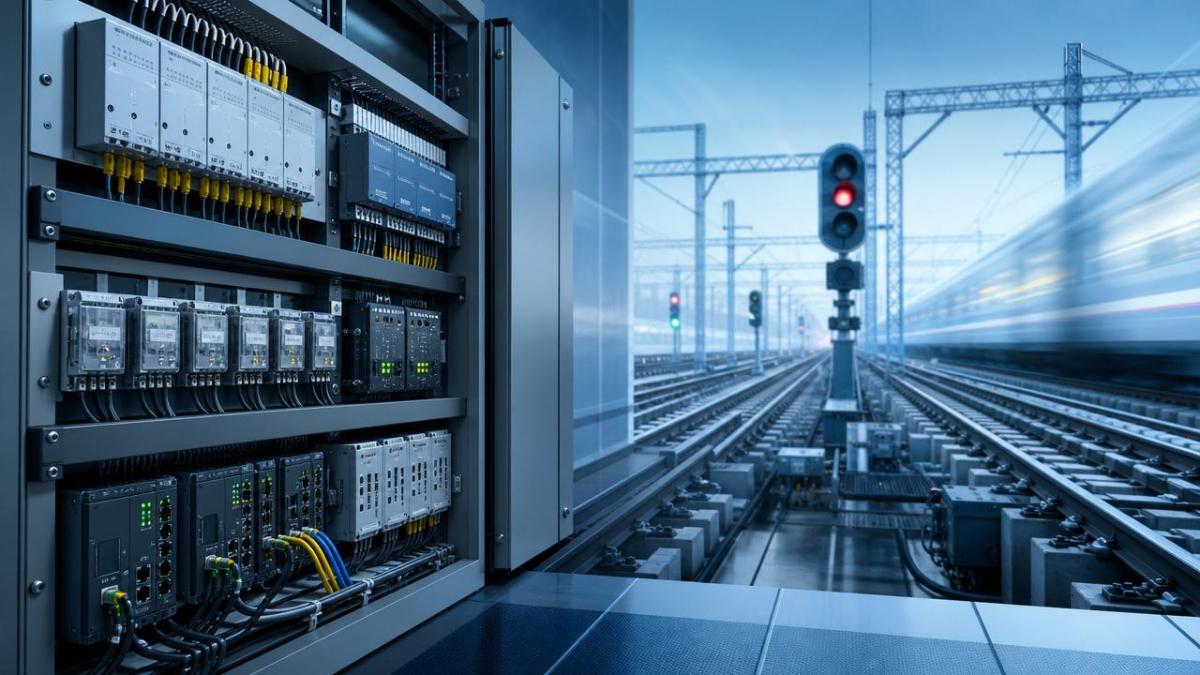
Reliability in railway control components is not a single metric. It combines safety integrity, availability, maintainability, cybersecurity resilience, environmental endurance, and predictable degradation under real operating conditions.
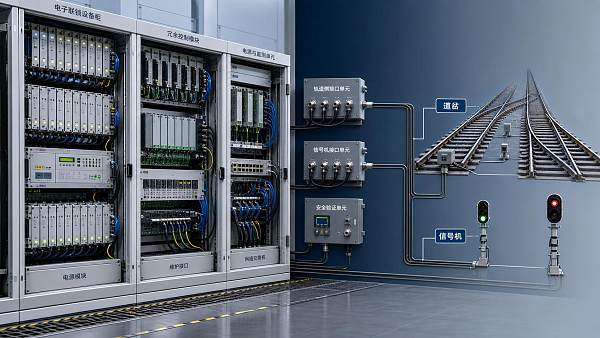
A technically sound evaluation starts by identifying the component’s role in the control chain. A track circuit, axle counter, point machine controller, interlocking interface, onboard control unit, or radio block center does not carry the same risk profile.
Separate Safety-Critical and Mission-Critical Functions
Safety-critical functions prevent hazardous movement, while mission-critical functions preserve capacity, punctuality, and automated dispatching. Many railway control components contribute to both, so evaluators should classify functions at subsystem and interface level.
For example, a route locking logic unit may require SIL4 safety evidence, while a diagnostic data gateway may require high availability but different safety justification. Mixing these criteria often leads to weak procurement decisions.
Core Reliability Questions for Technical Evaluators
- What failure modes can create unsafe train movement, signal misinterpretation, or loss of route protection?
- What is the expected operating life: 10 years, 15 years, or more than 25 years?
- Can the component support high-density operation with headways near 90–120 seconds?
- How does the device behave during power fluctuation, network congestion, vibration, or electromagnetic interference?
These questions convert a generic purchase review into a structured reliability assessment. They also help compare railway control components from different suppliers without relying only on marketing claims.
Key Evaluation Criteria for Technical Assessment
A robust assessment framework should include at least 6 dimensions: standards compliance, architecture, environmental endurance, interoperability, lifecycle support, and operational evidence. Each dimension requires documented proof.
The following table summarizes practical criteria for evaluating railway control components in metro, mainline, high-speed, and freight corridor projects.
The key conclusion is that no single certificate is sufficient. Reliable railway control components require alignment between laboratory proof, system architecture, installation conditions, and maintainability during daily operation.
Standards Compliance Must Be Traceable
Technical evaluators should request traceability from system requirement to design verification and validation. For SIL4 functions, evidence must show controlled development, configuration management, independence, and defined failure reaction.
Common reference frameworks include EN 50126 for RAMS, EN 50128 for software, EN 50129 for safety-related electronic systems, and IEC 62443 concepts for industrial cybersecurity.
Architecture Determines Failure Behavior
Redundant processors, dual communication paths, hot standby modules, and self-diagnostic loops can improve availability. However, redundancy only helps when common-cause failures are analyzed with realistic environmental and software assumptions.
A useful benchmark is switchover behavior under simulated failure. For many control applications, recovery within seconds is desirable, but safe fallback must take priority over uninterrupted service.
Testing Railway Control Components Under Real Operating Stress
Testing should reproduce the operational envelope, not only ideal conditions. Railway control components may face heat, cold, dust, voltage fluctuation, vibration, lightning surges, and network latency across 24-hour duty cycles.
For high-speed corridors, evaluators should also consider aerodynamic effects, traction return current, radio handover quality, and electromagnetic interaction with pantographs, braking systems, and onboard control equipment.
Recommended Test Layers
- Component-level type testing for temperature range, EMC, vibration, power tolerance, and ingress protection.
- Subsystem integration testing with interlocking, trackside equipment, onboard units, and communication networks.
- Factory acceptance testing with at least normal, degraded, and emergency operating scenarios.
- Site acceptance testing using actual cabling, grounding, radio coverage, and operational procedures.
- Trial operation with event logging over a defined period, often 30–90 days for complex deployments.
Each layer reveals different weaknesses. A device may pass type tests yet fail integration because timing assumptions, protocol interpretation, or diagnostic messages are inconsistent across suppliers.
Environmental and Electrical Stress Points
A strong evaluation should include temperature cycling, commonly from -25°C to +70°C depending on region and enclosure design. Outdoor cabinets may require wider tolerance than indoor control rooms.
Power supply disturbance tests should examine undervoltage, overvoltage, transient surges, and restart behavior. For railway control components, uncontrolled rebooting can create service disruption even when the fail-safe state is technically correct.
Interoperability, Cybersecurity, and Data-Driven Maintainability
Modern railway systems increasingly combine CBTC, ETCS, LTE-M, IP-based diagnostics, cloud-supported maintenance dashboards, and AI-assisted traffic management. This makes interoperability a reliability issue, not just an integration preference.
Cybersecurity must also be assessed because a compromised diagnostic channel or poorly segmented network can affect service continuity. Technical evaluators should verify access control, logging, patch governance, and secure remote maintenance.
The following comparison helps teams decide how to balance procurement criteria when railway control components must operate within legacy and digitalized infrastructure.
The main insight is that maintainability begins during procurement. Railway control components with richer diagnostics and defined lifecycle support can reduce long-term operational uncertainty.
Use Operating Data as Reliability Evidence
Technical evaluators should request anonymized field performance records where available. Useful data includes failure frequency, repair duration, replaced modules, firmware incidents, false alarm rates, and environmental correlations.
If field data is limited, require structured trial data from comparable systems. A 60-day monitored pilot can expose intermittent faults that rarely appear in a 2-day acceptance test.
Avoid Common Interoperability Mistakes
One common mistake is accepting interface documents without practical integration tests. Another is evaluating railway control components independently while ignoring timing, grounding, cabling length, and radio coverage constraints.
Legacy modernization projects require special caution. A new digital controller may be technically advanced, but reliability suffers if existing relays, track circuits, or power distribution cannot support stable operation.
Building a Defensible Evaluation Workflow
A defensible workflow helps technical teams compare offers consistently and explain decisions to engineering, procurement, safety assessors, and operations departments. The process should include 5 practical stages.
Five-Step Assessment Process
- Define operational context, including line speed, headway, automation grade, climate, traffic density, and maintenance access.
- Map safety functions and interfaces, then assign required integrity levels and validation responsibility.
- Review supplier evidence, including RAMS files, test reports, cybersecurity procedures, and lifecycle documentation.
- Perform integration and stress testing against normal, degraded, maintenance, and emergency scenarios.
- Score lifecycle value, including spare availability, software governance, training, documentation, and technical response time.
This workflow is especially valuable when multiple railway control components must be assessed together. It prevents an isolated device score from hiding system-level risk.
Scoring and Weighting Recommendations
A practical scoring model may allocate 30% to safety and compliance, 20% to interoperability, 20% to RAMS performance, 15% to maintainability, and 15% to lifecycle support.
Weights should change by project type. A greenfield high-speed line may prioritize SIL evidence and system integration, while a depot upgrade may place more weight on maintainability and migration compatibility.
Documentation That Should Not Be Missing
Technical buyers should request requirement traceability matrices, hazard logs, safety manuals, installation manuals, maintenance procedures, spare parts strategies, firmware version control records, and training plans.
For complex railway control components, missing documentation is a reliability warning. The issue is not only compliance; it affects commissioning speed, fault recovery, and future modification approval.
Practical Procurement and Lifecycle Recommendations
Reliable procurement decisions combine engineering evidence with operating economics. A cheaper component can become costly if it increases downtime, requires proprietary tools, or lacks a clear 10-year support path.
Technical evaluators should compare total lifecycle value, not only purchase price. This includes installation labor, testing effort, training days, spare inventory, software updates, and obsolescence management.
Questions to Ask Before Supplier Shortlisting
- Can the supplier explain failure reaction for each safety-relevant state, not only provide a certificate?
- Are field replaceable units designed for predictable maintenance within approved access windows?
- Does the solution support future communication upgrades, such as IP-based diagnostics or LTE-M integration?
- Is there a documented process for firmware approval, regression testing, and rollback?
- Can the component integrate with existing interlocking, braking, traction power, and control center systems?
These questions help separate robust railway control components from products that look acceptable on paper but create risk during commissioning or long-term operation.
Where GTOT Adds Decision Value
GTOT focuses on the intelligence layer behind technical evaluation. Its perspective connects railway signal control systems, pantographs, braking systems, smart container ships, and LNG carriers through rigorous equipment analysis.
For rail projects, this means evaluating control components within a broader transport reliability context. Speed, safety, energy efficiency, digitalization, and supply-chain continuity are treated as linked engineering priorities.
Technical teams can use GTOT-style assessment logic to strengthen tender responses, validate supplier claims, and build more credible procurement files for high-restriction railway projects.
Final Guidance for Reliability-Focused Evaluation
The best evaluation of railway control components is evidence-based, system-aware, and lifecycle-oriented. It tests not only what the component does, but how it fails, recovers, communicates, and ages.
Technical evaluators should prioritize traceable SIL compliance, realistic stress testing, open interfaces, cybersecurity governance, diagnostic depth, and long-term support. Together, these factors create dependable railway systems.
For organizations assessing railway control components for new lines, upgrades, or tender preparation, GTOT provides strategic intelligence and technical context across land and sea equipment ecosystems. Contact us to explore tailored evaluation guidance, compare solution pathways, or learn more about reliability-focused railway and transport technologies.
Recommended News
 Aug 29, 2026What to verify before choosing a railway interlocking equipment exporterRailway interlocking equipment exporter checklist: verify safety evidence, interfaces, engineering, traceability, export readiness, and long-term support before procurement.
 Aug 15, 2026How to choose railway interlocking equipment for junctionsRailway interlocking equipment for junctions: learn how to choose the right system for safety, capacity, and future expansion with confidence.
 Jul 14, 2026Rail Interlocking Systems: Common Failure Risks and Design ChecksRail interlocking systems face critical risks from route locking, point detection, track vacancy, and interface timing. Learn the key design checks that improve safety and reduce commissioning risk.
 Jul 06, 2026When to Choose a SIL4 Signalling Equipment Integrator Over Multiple VendorsSIL4 signalling equipment integrator or multiple vendors? Learn when unified integration reduces interface risk, speeds safety approval, and protects rail project delivery.
 Jul 01, 2026Electronic Railway Interlocking Systems: Key Failure Risks and Compliance ChecksRailway interlocking systems electronic risks can disrupt safety, uptime, and compliance. Explore key failure points, practical checks, and proven ways to strengthen rail resilience.
 Jun 23, 2026Interlocking Systems: Key Failure Risks and Safety Checks Before DeploymentInterlocking systems: discover key failure risks, interface hazards, and must-do safety checks before deployment to prevent costly incidents and ensure fail-safe performance.
 Jun 19, 2026Interlocking Systems for Railway Safety: Key Standards and Failure RisksInterlocking systems for railway safety: explore key standards, SIL4 expectations, and hidden failure risks to strengthen railway compliance, resilience, and safe operations.
 Jun 10, 2026How Interlocking Systems Reduce Rail Network Failure RiskInterlocking systems reduce rail network failure risk by preventing conflicts, containing faults, and speeding recovery. See how they improve safety, uptime, and operational resilience.
 Jun 05, 2026Railway Control Components: Key Failure Points to AvoidRailway control components fail in different ways across urban, high-speed, freight, and harsh outdoor routes. Discover the key failure points to avoid for safer, more reliable rail operations.
 Jun 03, 2026Railway Signal Control Systems: Common Failure Points and Safety ChecksRailway signal control systems require rigorous safety checks. Discover common failure points, inspection priorities, and practical steps to reduce risk and protect rail operations.
 Jun 02, 2026How to Evaluate Railway Control Components for System ReliabilityRailway control components evaluation guide: assess SIL compliance, interoperability, stress testing, cybersecurity, and lifecycle reliability for safer rail systems.
 May 31, 2026Interlocking Systems Technology Standards: Key Compliance RisksInterlocking systems technology standards expose critical compliance risks in SIL validation, cybersecurity, and traceability—learn how to protect rail safety and approvals.
 May 28, 2026Interlocking Systems for High-Density Rail Operations: What Improves Capacity Safely?Interlocking systems for high-density rail operations: discover how SIL4-safe architectures, redundancy, and automation interfaces boost rail capacity, resilience, and future readiness.
 May 26, 2026Interlocking Systems for Railway Safety: How to Compare Failure RisksInterlocking systems for railway safety: compare failure risks through design logic, diagnostics, redundancy, and lifecycle factors to make safer, smarter rail decisions.
 May 21, 2026Interlocking Systems Technology Standards: Key Compliance Checks for 2026Interlocking systems technology standards guide 2026 rail compliance checks on safety traceability, software control, cybersecurity, and field integrity. Learn key risks and practical actions.
 May 20, 2026Interlocking Systems for High-Density Rail: Capacity Gains vs Safety TradeoffsInterlocking systems for high-density rail operations: explore how modern architectures boost rail capacity, reduce headways, and manage safety tradeoffs for smarter network planning.
 May 19, 2026Interlocking Systems for Railway Safety: Choosing for Retrofit ProjectsInterlocking systems for railway safety: learn how to choose the best retrofit path with SIL4 assurance, legacy compatibility, lower risk, and future-ready performance.
 May 17, 2026How Computer Interlocking Cuts Rail Signaling Failure RiskInterlocking systems cut rail signaling failure risk by preventing route conflicts, reducing human error, and supporting SIL4 safety—see how computer interlocking boosts reliable, high-density operations.