



Search News
Industry Portal
Popular Tags
Interlocking Systems for Railway Safety: Choosing for Retrofit Projects

Author
Time
Click Count
For technical evaluators planning modernization, interlocking systems for railway safety are a critical decision point in retrofit projects. The right solution must balance SIL4 safety integrity, legacy compatibility, lifecycle cost, and future automation readiness.
This article explains how to assess retrofit options through an engineering-focused framework. The goal is to reduce delivery risk, improve operational resilience, and support long-term network performance without creating avoidable integration problems.
What is the real decision in a retrofit interlocking project?
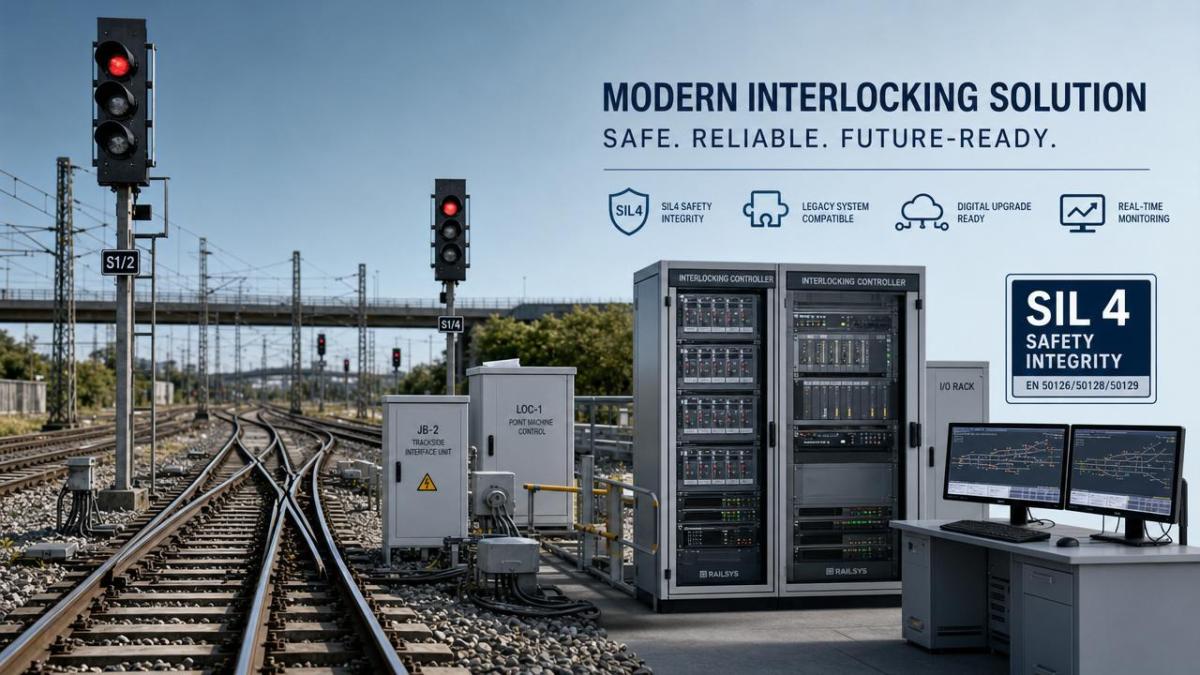
The core search intent behind this topic is not to define interlocking. Technical evaluators usually want to know which retrofit path is safest, most practical, and least disruptive for an operating railway.
In most projects, the real choice is between extending life with limited upgrades, replacing relay or early electronic interlockings with computer-based platforms, or preparing the site for future centralized or automatic operation.
The correct answer depends less on product marketing and more on constraints. Existing field elements, possession windows, interface architecture, cybersecurity requirements, and evidence for SIL4 compliance matter more than generic feature lists.
A strong retrofit decision should therefore answer four questions early. Can the new system maintain or improve safety? Can it coexist with legacy assets? Can it be commissioned with acceptable disruption? Will it remain supportable for twenty years?
What technical evaluators care about most
For this audience, the biggest concern is rarely the headline capability of the interlocking platform. It is whether the proposed solution can be integrated into a live railway without hidden engineering debt.
That creates a practical evaluation lens. Technical teams usually focus on hazard control, compatibility with existing signalling principles, migration sequencing, maintenance implications, and total lifecycle burden rather than only initial capital price.
They also need confidence that the retrofit will not lock the operator into fragile custom interfaces. Excessive bespoke engineering may solve short-term problems, but it often increases validation effort and future modification cost.
Another common concern is proof. Evaluators need documented safety cases, interface specifications, references from comparable networks, and realistic testing strategies. Claims about flexibility or intelligence have little value without traceable evidence.
Start with the existing railway, not the new product
A retrofit project succeeds when the assessment begins with the current asset base. Before comparing suppliers, evaluators should build a structured baseline of the installed interlocking, control tables, field devices, power systems, and telecom links.
This baseline should capture asset condition, obsolescence status, fault history, software supportability, and spare availability. It should also identify operational constraints such as traffic density, maintenance windows, and the need for staged commissioning.
For legacy railways, the hidden challenge often lies in undocumented changes. Historic modifications to routes, overlaps, points detection, or level crossing controls can create gaps between drawings and reality.
That is why surveys, data validation, and configuration audits should happen early. A technically elegant replacement concept can fail if the legacy logic assumptions are inaccurate or incomplete.
How to compare retrofit options in a useful way
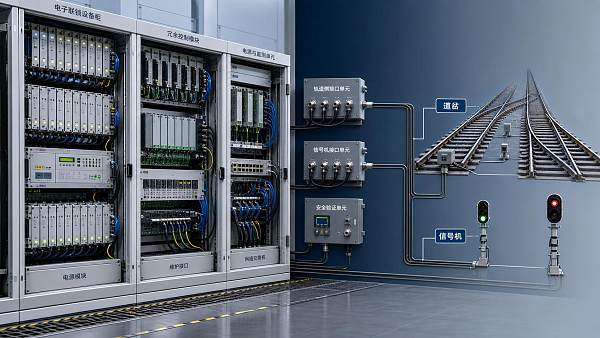
When evaluating interlocking systems for railway safety, three broad retrofit models appear most often. The first is like-for-like renewal with minimal functional change. The second is partial modernization around existing field assets. The third is full digital migration.
Like-for-like renewal can reduce integration complexity and shorten approval time. It is often suitable where operating rules are stable, budgets are constrained, and the main objective is to remove obsolescence rather than transform capacity.
Partial modernization is attractive when relays or early processors must be replaced, but points machines, signals, track circuits, axle counters, or local control panels still have useful life remaining. This option requires disciplined interface governance.
Full digital migration offers the strongest long-term platform for centralized traffic control, diagnostics, and automation. However, it usually demands the most rigorous migration planning, data conversion, cybersecurity architecture, and organization-wide change management.
Evaluators should score each option across safety assurance, integration complexity, operational disruption, maintainability, vendor dependence, future expandability, and lifecycle cost. This creates a clearer decision basis than headline procurement price alone.
Safety integrity is non-negotiable, but evidence quality varies
Every serious retrofit proposal will state SIL4 alignment, but technical evaluators should examine what sits beneath that statement. The issue is not just certification status but the relevance of the safety evidence to the exact deployment context.
Ask whether the platform safety case covers the intended architecture, interface conditions, and degraded modes. A certified core does not automatically guarantee low project risk if the surrounding application logic is heavily customized.
It is also important to review hazard logs, safety requirements allocation, fail-safe behavior, and diagnostic coverage. Pay attention to how the system handles points failures, loss of communications, power disturbances, and data inconsistency events.
Good suppliers can explain verification and validation in operational terms. They should show how type approval, application data testing, factory acceptance, site testing, and independent safety assessment fit together without leaving ambiguous responsibilities.
Legacy compatibility usually determines cost and schedule
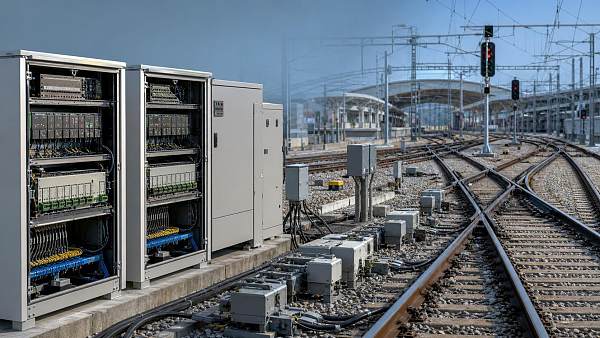
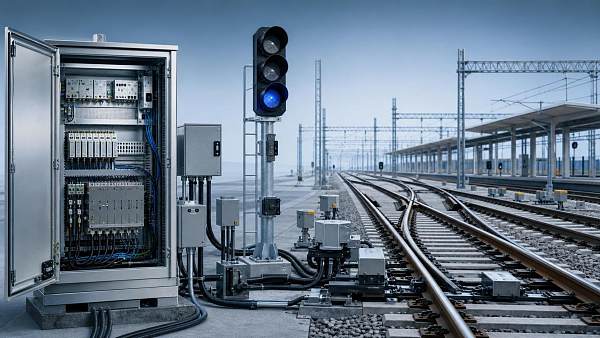
In retrofit work, compatibility is often the deciding factor between a manageable project and a prolonged one. Existing interfaces to track circuits, axle counters, point machines, signals, train detection, and control centers can dominate engineering effort.
Technical evaluators should ask which interfaces are native, which need protocol converters, and which require custom adaptation. Each conversion layer can add latency, maintenance burden, failure points, and extra validation effort.
Compatibility should also be checked at the operational rule level. Route locking, flank protection, overlap philosophy, release timing, and local operating procedures may differ across old and new implementations even when the equipment appears interoperable.
A robust proposal will clearly define retained assets, replaced assets, temporary interfaces during migration, and the final target architecture. Ambiguity in these boundaries is a common source of scope creep and test failure.
Migration strategy matters as much as system design
Many retrofit failures come from weak migration planning rather than poor core technology. Interlocking replacement on an active railway must be designed around possessions, cutover sequence, fallback options, and staff readiness.
Technical evaluators should compare whether the supplier supports staged commissioning, shadow mode testing, geographical migration by area, or functional migration by subsystem. The right approach depends on network topology and traffic criticality.
Fallback philosophy is especially important. If cutover does not go as planned, can the site revert safely? How long would recovery take? What temporary operating restrictions would apply? These questions should be answered before procurement closes.
Migration plans should also address data preparation, operator training, maintainer familiarization, spares strategy, and updated maintenance documentation. Commissioning success depends on people and process as much as equipment.
Do not underestimate lifecycle support and maintainability
For technical evaluators, the business case is incomplete without long-term support analysis. A lower upfront cost can become expensive if the platform depends on scarce expertise, proprietary tools, or limited spare part channels.
Assess the maintainability model in practical terms. Can fault diagnosis be performed quickly? Are logs readable and exportable? Is remote condition monitoring available? How easily can application data be modified under controlled governance?
Supportability should include software patching, cybersecurity updates, hardware refresh policy, and training continuity. Railways need confidence that the interlocking will remain serviceable as operating requirements and digital standards evolve.
It is also wise to examine local service presence and reference density. A platform with a strong installed base in comparable environments often reduces technical uncertainty, even if its marketing claims appear less ambitious.
Future readiness should be specific, not abstract
Many retrofit projects are justified partly by future automation goals. That is valid, but evaluators should avoid vague promises. Future readiness must be linked to concrete capabilities such as centralized control, data interfaces, diagnostics, and capacity upgrades.
If the operator may later adopt ATO, traffic management integration, or advanced remote monitoring, the interlocking should support a clean architecture for those developments. Open, well-documented interfaces are usually more valuable than loosely defined smart features.
Cybersecurity also belongs in future readiness. As interlocking environments become more connected, secure network segregation, access control, patch governance, and event logging become essential parts of system safety and availability.
The best retrofit solutions improve today’s reliability while reducing tomorrow’s upgrade friction. A platform that meets current needs but blocks digital evolution can create a second modernization cost much sooner than expected.
A practical evaluation checklist for retrofit decision-making
Technical evaluators benefit from a repeatable scoring method. First, confirm the safety evidence, including SIL4 relevance, hazard management, and independent assessment pathway. Second, validate compatibility with retained field and control assets.
Third, review migration feasibility in terms of possessions, cutover, fallback, and testing coverage. Fourth, assess maintainability, training burden, and local support capability. Fifth, compare lifecycle cost, not only installation cost.
Sixth, test future readiness through real interface requirements rather than generic automation language. Finally, challenge every supplier to show reference projects with similar legacy constraints, operational intensity, and regulatory conditions.
This framework helps separate credible retrofit solutions from attractive presentations. In most cases, the strongest option is the one that best controls integration risk while still creating a scalable path for future operational improvement.
Conclusion: choose the interlocking retrofit that reduces uncertainty
For modernization teams, selecting interlocking systems for railway safety is fundamentally an exercise in risk reduction. The right retrofit solution protects SIL4 safety performance while fitting the reality of legacy infrastructure and operational constraints.
Technical evaluators should prioritize evidence, compatibility, migration practicality, and lifecycle support over broad digital claims. A system that integrates cleanly, commissions predictably, and remains maintainable will usually deliver more value than a theoretically superior but risky architecture.
In retrofit projects, successful decisions come from disciplined comparison, not headline specifications. When the evaluation starts with the existing railway and ends with a supportable future architecture, both safety and long-term asset value improve.
Recommended News
 Aug 29, 2026What to verify before choosing a railway interlocking equipment exporterRailway interlocking equipment exporter checklist: verify safety evidence, interfaces, engineering, traceability, export readiness, and long-term support before procurement.
 Aug 15, 2026How to choose railway interlocking equipment for junctionsRailway interlocking equipment for junctions: learn how to choose the right system for safety, capacity, and future expansion with confidence.
 Jul 14, 2026Rail Interlocking Systems: Common Failure Risks and Design ChecksRail interlocking systems face critical risks from route locking, point detection, track vacancy, and interface timing. Learn the key design checks that improve safety and reduce commissioning risk.
 Jul 06, 2026When to Choose a SIL4 Signalling Equipment Integrator Over Multiple VendorsSIL4 signalling equipment integrator or multiple vendors? Learn when unified integration reduces interface risk, speeds safety approval, and protects rail project delivery.
 Jul 01, 2026Electronic Railway Interlocking Systems: Key Failure Risks and Compliance ChecksRailway interlocking systems electronic risks can disrupt safety, uptime, and compliance. Explore key failure points, practical checks, and proven ways to strengthen rail resilience.
 Jun 23, 2026Interlocking Systems: Key Failure Risks and Safety Checks Before DeploymentInterlocking systems: discover key failure risks, interface hazards, and must-do safety checks before deployment to prevent costly incidents and ensure fail-safe performance.
 Jun 19, 2026Interlocking Systems for Railway Safety: Key Standards and Failure RisksInterlocking systems for railway safety: explore key standards, SIL4 expectations, and hidden failure risks to strengthen railway compliance, resilience, and safe operations.
 Jun 10, 2026How Interlocking Systems Reduce Rail Network Failure RiskInterlocking systems reduce rail network failure risk by preventing conflicts, containing faults, and speeding recovery. See how they improve safety, uptime, and operational resilience.
 Jun 05, 2026Railway Control Components: Key Failure Points to AvoidRailway control components fail in different ways across urban, high-speed, freight, and harsh outdoor routes. Discover the key failure points to avoid for safer, more reliable rail operations.
 Jun 03, 2026Railway Signal Control Systems: Common Failure Points and Safety ChecksRailway signal control systems require rigorous safety checks. Discover common failure points, inspection priorities, and practical steps to reduce risk and protect rail operations.
 Jun 02, 2026How to Evaluate Railway Control Components for System ReliabilityRailway control components evaluation guide: assess SIL compliance, interoperability, stress testing, cybersecurity, and lifecycle reliability for safer rail systems.
 May 31, 2026Interlocking Systems Technology Standards: Key Compliance RisksInterlocking systems technology standards expose critical compliance risks in SIL validation, cybersecurity, and traceability—learn how to protect rail safety and approvals.
 May 28, 2026Interlocking Systems for High-Density Rail Operations: What Improves Capacity Safely?Interlocking systems for high-density rail operations: discover how SIL4-safe architectures, redundancy, and automation interfaces boost rail capacity, resilience, and future readiness.
 May 26, 2026Interlocking Systems for Railway Safety: How to Compare Failure RisksInterlocking systems for railway safety: compare failure risks through design logic, diagnostics, redundancy, and lifecycle factors to make safer, smarter rail decisions.
 May 21, 2026Interlocking Systems Technology Standards: Key Compliance Checks for 2026Interlocking systems technology standards guide 2026 rail compliance checks on safety traceability, software control, cybersecurity, and field integrity. Learn key risks and practical actions.
 May 20, 2026Interlocking Systems for High-Density Rail: Capacity Gains vs Safety TradeoffsInterlocking systems for high-density rail operations: explore how modern architectures boost rail capacity, reduce headways, and manage safety tradeoffs for smarter network planning.
 May 19, 2026Interlocking Systems for Railway Safety: Choosing for Retrofit ProjectsInterlocking systems for railway safety: learn how to choose the best retrofit path with SIL4 assurance, legacy compatibility, lower risk, and future-ready performance.
 May 17, 2026How Computer Interlocking Cuts Rail Signaling Failure RiskInterlocking systems cut rail signaling failure risk by preventing route conflicts, reducing human error, and supporting SIL4 safety—see how computer interlocking boosts reliable, high-density operations.