



Search News
Industry Portal
Popular Tags
Railway Control Components: Key Failure Points to Avoid
Author
Time
Click Count
Why railway control components fail differently across real operating environments
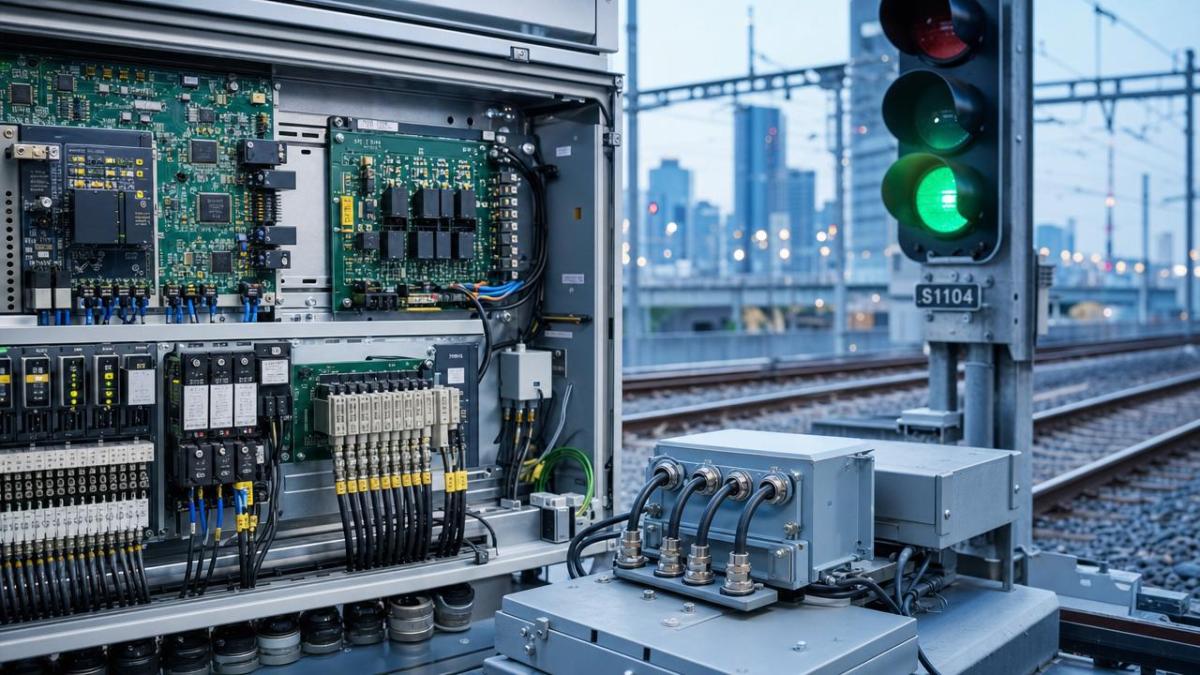
Rail networks rarely fail because of one dramatic event. More often, small weaknesses accumulate inside railway control components until service reliability suddenly drops.
That is why failure analysis cannot stop at catalog specifications. The same relay, balise interface, axle counter module, or interlocking board behaves differently by route density, climate, power quality, and maintenance discipline.
In practice, the most expensive problems appear where railway signal control systems meet traction power variation, braking demands, and digital communication layers.
GTOT often frames this as a land-sea intelligence issue. Complex rail control logic, like advanced ship navigation logic, depends on accurate sensing, stable communication, and disciplined redundancy.
When those links weaken, delays are only the first symptom. Compliance risk, unsafe states, rework, and shortened asset life usually follow.
Busy urban corridors expose the fastest hidden failure points
High-frequency metro and suburban lines place unusual stress on railway control components because switching cycles, train headways, and restart demands are relentless.
In these corridors, the weak points are often not dramatic hardware defects. They are contact fatigue, thermal drift, intermittent connector issues, and software timing mismatches.
Interlocking input modules may pass factory tests yet struggle during repeated peak-hour switching. Trackside housings may also trap heat, raising failure rates in signal processors.
A common mistake is assuming SIL4 certification alone guarantees field durability. Safety integrity matters, but dense service also demands cycle endurance, maintainability, and rapid fault isolation.
More reliable selection usually starts with three checks:
- actual switching frequency versus rated life
- cabinet temperature under summer and overload conditions
- diagnostic visibility during short service windows
Where maintenance access is limited overnight, railway control components with stronger self-diagnostics usually outperform lower-cost units with weaker event logging.
High-speed lines demand stability under vibration, speed, and power fluctuation
On high-speed corridors, railway control components face another reality. Vibration, aerodynamic loading, electromagnetic interference, and split-second decision timing become much more critical.
This is where failure often starts at interfaces. A well-designed control unit can still underperform if shielding, grounding, or connector locking is poorly matched.
Pantograph behavior and traction power stability also matter indirectly. Voltage irregularity and transient disturbances can affect control cabinets, communication boards, and onboard safety processors.
The same applies to braking coordination. If braking system feedback and control logic are not tightly synchronized, fault alarms may multiply even when mechanical braking remains healthy.
In this environment, better judgment focuses on integration quality, not just part quality. Railway control components should be reviewed together with harness design, EMC strategy, and fail-safe communication architecture.
What usually deserves closer testing on fast routes
- connector retention under prolonged vibration
- signal integrity during regenerative braking events
- EMC margins near traction converters and onboard radios
- latency consistency across redundant communication paths
Freight and mixed-traffic routes often fail at the margins, not the center
Freight-heavy or mixed-use corridors create a different pattern. Loads vary more, stop spacing changes, and infrastructure is often older.
Here, railway control components are less likely to fail from pure operating density. They fail because legacy interfaces, inconsistent maintenance, and uneven power environments stretch tolerances over time.
Track circuits may become unreliable where rail contamination, axle loads, and seasonal moisture alter detection behavior. Outdoor relay cases can also degrade faster on routes with dust, salt, or poor drainage.
One overlooked issue is compatibility drift. Replacement railway control components may fit electrically but still create diagnostic blind spots inside older control architectures.
That is why mixed-traffic projects should not treat retrofit work as simple substitution. Interface mapping, spare strategy, and software revision control deserve the same attention as hardware sourcing.
Harsh outdoor conditions change how railway control components should be judged
Environmental exposure is often underestimated because many railway control components appear robust on paper. Field life tells a different story.
Coastal air, freeze-thaw cycles, desert dust, and flooding risks do not damage every component equally. Connectors, seals, printed boards, and cable entries tend to fail first.
This matters beyond rail alone. GTOT tracks similar engineering logic in smart vessels and LNG carriers, where sealing quality and condition monitoring often decide lifecycle value.
In rail, the lesson is direct. Railway control components should be evaluated by enclosure design, corrosion resistance, condensation management, and inspection access, not by ingress rating alone.
More resilient installations usually include breathable protection, controlled drainage, anti-corrosion hardware, and maintenance routines tied to local weather patterns.
Digitalization adds new failure points that older checklists miss
As rail networks adopt LTE-M, remote monitoring, and wider automation, railway control components become part of a larger data system rather than isolated field devices.
This creates a subtle risk. Hardware may remain healthy while time synchronization, firmware alignment, cybersecurity hardening, or network prioritization quietly degrade operational confidence.
The result can be nuisance alarms, delayed diagnostics, or confusing fault cascades across control centers and wayside equipment.
A frequent misjudgment is treating communications as separate from railway control components. In modern deployments, the reliability boundary includes both the device and its data path.
Before approval, it helps to verify:
- firmware governance across redundant nodes
- event timestamp consistency
- fallback behavior during network interruption
- cybersecurity patch impact on safety validation
Where projects often misread risk before installation
Many avoidable failures start during planning, not operation. The warning signs are usually visible earlier than expected.
One common error is comparing railway control components only by upfront price and nominal rating. That ignores test depth, spare availability, and software support horizon.
Another is assuming similar routes need identical configurations. A tunnel-heavy line, an open coastal line, and a freight interchange may share functions but not stresses.
There is also a tendency to prioritize central hardware while overlooking field wiring, grounding practices, and cabinet layout. Yet many recurring faults begin there.
More grounded evaluation asks whether the chosen railway control components remain stable after five years of load growth, retrofit changes, and maintenance turnover.
Useful pre-deployment checks
- match failure mode analysis to the real route environment
- test interoperability with traction, braking, and signaling subsystems
- confirm lifecycle support, not just delivery schedule
- review maintainability during actual possession windows
A practical way to choose railway control components with fewer surprises
The safer path is to build decisions around operating context first, then parameters. That keeps railway control components aligned with real service behavior.
For dense passenger networks, focus on cycle life, thermal resilience, and rapid diagnostics. For high-speed applications, prioritize interface integrity, EMC margins, and vibration resistance.
For retrofit or freight routes, put more weight on compatibility mapping, environmental shielding, and long-term spare strategy.
This is also where intelligence platforms add value. Cross-sector observation, like GTOT’s view across rail signaling, traction power, braking behavior, and maritime control logic, helps expose hidden reliability patterns.
Before the next specification freeze, it is worth documenting route conditions, interface constraints, maintenance limits, and upgrade plans in one selection matrix.
That simple step usually reveals which railway control components carry the highest lifecycle risk, and which ones are truly fit for reliable operation.
Recommended News
 Aug 29, 2026What to verify before choosing a railway interlocking equipment exporterRailway interlocking equipment exporter checklist: verify safety evidence, interfaces, engineering, traceability, export readiness, and long-term support before procurement.
 Aug 15, 2026How to choose railway interlocking equipment for junctionsRailway interlocking equipment for junctions: learn how to choose the right system for safety, capacity, and future expansion with confidence.
 Jul 14, 2026Rail Interlocking Systems: Common Failure Risks and Design ChecksRail interlocking systems face critical risks from route locking, point detection, track vacancy, and interface timing. Learn the key design checks that improve safety and reduce commissioning risk.
 Jul 06, 2026When to Choose a SIL4 Signalling Equipment Integrator Over Multiple VendorsSIL4 signalling equipment integrator or multiple vendors? Learn when unified integration reduces interface risk, speeds safety approval, and protects rail project delivery.
 Jul 01, 2026Electronic Railway Interlocking Systems: Key Failure Risks and Compliance ChecksRailway interlocking systems electronic risks can disrupt safety, uptime, and compliance. Explore key failure points, practical checks, and proven ways to strengthen rail resilience.
 Jun 23, 2026Interlocking Systems: Key Failure Risks and Safety Checks Before DeploymentInterlocking systems: discover key failure risks, interface hazards, and must-do safety checks before deployment to prevent costly incidents and ensure fail-safe performance.
 Jun 19, 2026Interlocking Systems for Railway Safety: Key Standards and Failure RisksInterlocking systems for railway safety: explore key standards, SIL4 expectations, and hidden failure risks to strengthen railway compliance, resilience, and safe operations.
 Jun 10, 2026How Interlocking Systems Reduce Rail Network Failure RiskInterlocking systems reduce rail network failure risk by preventing conflicts, containing faults, and speeding recovery. See how they improve safety, uptime, and operational resilience.
 Jun 05, 2026Railway Control Components: Key Failure Points to AvoidRailway control components fail in different ways across urban, high-speed, freight, and harsh outdoor routes. Discover the key failure points to avoid for safer, more reliable rail operations.
 Jun 03, 2026Railway Signal Control Systems: Common Failure Points and Safety ChecksRailway signal control systems require rigorous safety checks. Discover common failure points, inspection priorities, and practical steps to reduce risk and protect rail operations.
 Jun 02, 2026How to Evaluate Railway Control Components for System ReliabilityRailway control components evaluation guide: assess SIL compliance, interoperability, stress testing, cybersecurity, and lifecycle reliability for safer rail systems.
 May 31, 2026Interlocking Systems Technology Standards: Key Compliance RisksInterlocking systems technology standards expose critical compliance risks in SIL validation, cybersecurity, and traceability—learn how to protect rail safety and approvals.
 May 28, 2026Interlocking Systems for High-Density Rail Operations: What Improves Capacity Safely?Interlocking systems for high-density rail operations: discover how SIL4-safe architectures, redundancy, and automation interfaces boost rail capacity, resilience, and future readiness.
 May 26, 2026Interlocking Systems for Railway Safety: How to Compare Failure RisksInterlocking systems for railway safety: compare failure risks through design logic, diagnostics, redundancy, and lifecycle factors to make safer, smarter rail decisions.
 May 21, 2026Interlocking Systems Technology Standards: Key Compliance Checks for 2026Interlocking systems technology standards guide 2026 rail compliance checks on safety traceability, software control, cybersecurity, and field integrity. Learn key risks and practical actions.
 May 20, 2026Interlocking Systems for High-Density Rail: Capacity Gains vs Safety TradeoffsInterlocking systems for high-density rail operations: explore how modern architectures boost rail capacity, reduce headways, and manage safety tradeoffs for smarter network planning.
 May 19, 2026Interlocking Systems for Railway Safety: Choosing for Retrofit ProjectsInterlocking systems for railway safety: learn how to choose the best retrofit path with SIL4 assurance, legacy compatibility, lower risk, and future-ready performance.
 May 17, 2026How Computer Interlocking Cuts Rail Signaling Failure RiskInterlocking systems cut rail signaling failure risk by preventing route conflicts, reducing human error, and supporting SIL4 safety—see how computer interlocking boosts reliable, high-density operations.