Search News
Industry Portal
Popular Tags
How European railway interlocking systems meet CENELEC safety standards
Author
Time
Click Count
European rail networks depend on interlocking architectures that can prove safety under demanding operational conditions. This article examines how railway interlocking systems Europe deploys are engineered, verified, and maintained to meet CENELEC requirements.
For technical evaluators, the central question is not whether an interlocking claims SIL4 capability. It is whether its complete lifecycle evidence demonstrates that hazardous failures remain acceptably controlled.
That distinction matters during procurement, modernization, and cross-border deployment. A compliant product certificate alone cannot replace a defensible system safety case for a defined railway application.
What CENELEC Compliance Actually Means for an Interlocking
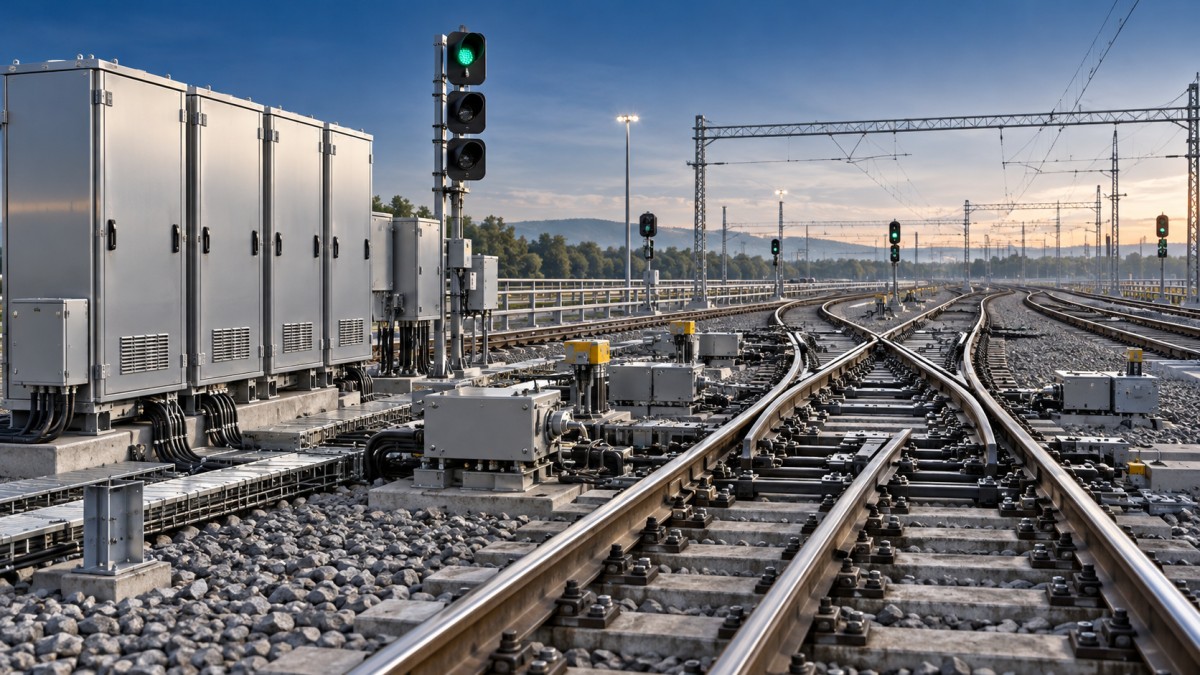
CENELEC compliance is a structured safety-engineering discipline, not a single approval event. It connects operational needs, system design, software development, verification, validation, and long-term change control.
For railway interlocking systems Europe commonly applies EN 50126, EN 50128, and EN 50129 as the core standards family for RAMS management, railway software, and safety-case evidence.
EN 50126 establishes the lifecycle framework. It requires stakeholders to identify railway hazards, allocate safety responsibilities, define acceptance criteria, and maintain traceability from concept through decommissioning.
EN 50128 focuses on software used in railway control and protection. It prescribes techniques, measures, configuration management, verification independence, and documentation appropriate to the selected safety integrity level.
EN 50129 addresses safety-related electronic systems and the safety case. It requires structured evidence that the equipment architecture, implementation, assessment, and operational constraints support the claimed safety integrity.
In practical terms, an interlocking must demonstrate that it prevents incompatible train movements, controls routes correctly, detects unsafe conditions, and transitions to a safe state when faults occur.
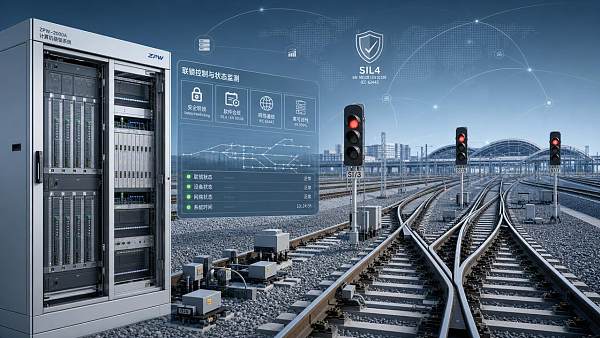
European deployments often classify core interlocking safety functions at SIL4, the highest integrity level in the CENELEC framework. This reflects the potentially catastrophic consequences of conflicting authorities or routes.
SIL4 does not mean that a system can never fail. It means the safety functions are designed so dangerous failures are sufficiently unlikely and are systematically controlled.
Technical evaluators should therefore ask whether the supplier distinguishes between functional safety claims, product capability, application-specific safety evidence, and assumptions imposed on surrounding railway subsystems.
A strong answer includes defined operational boundaries, interfaces, hazard controls, failure responses, evidence ownership, and an explicit method for handling changes after commissioning.
Why SIL4 Depends on Architecture Rather Than a Label
Safety integrity starts with architecture. An interlocking must make unsafe commands difficult to generate, difficult to transmit undetected, and impossible to execute when required safety conditions are absent.
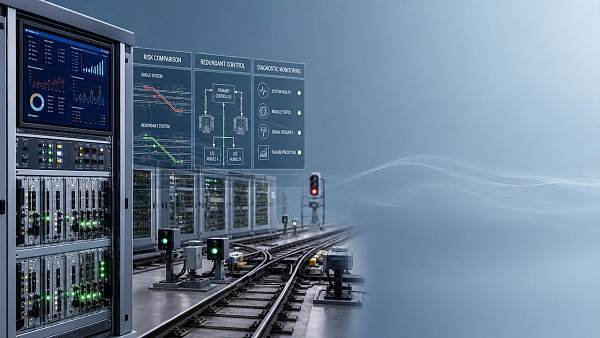
Many modern systems use redundant processing channels, independent checking logic, diverse software elements, or vital communication protocols. The appropriate design depends on the hazard analysis and implementation context.
Redundancy alone is insufficient. Two identical channels can share the same design defect, environmental vulnerability, configuration error, power issue, or incorrectly interpreted interface requirement.
For that reason, assessors examine common-cause failures alongside random hardware failures. They review segregation, timing behavior, diagnostics, maintenance procedures, and the independence of safety-related functions.
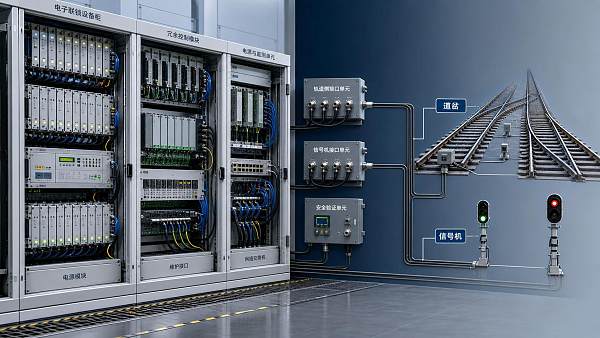
A typical interlocking separates vital route locking and movement authority decisions from non-vital operator displays, traffic optimization tools, and maintenance-facing diagnostic functions.
The vital layer must reject a route request when track occupancy, point detection, flank protection, overlap requirements, approach locking, or release conditions are not safely satisfied.
Safe-state behavior also requires close scrutiny. Depending on the design, a detected fault may cause signal replacement, route cancellation restrictions, degraded operation, alarm generation, or controlled shutdown.
Evaluators should confirm that a safe state remains meaningful during communication interruptions. A loss of data must not allow stale commands, uncontrolled route release, or ambiguous field-device states.
Field interfaces are particularly important. The interlocking may be sound internally while residual risk remains unacceptable because point machines, axle counters, track circuits, balises, or object controllers behave differently than assumed.
The procurement review should map every safety-critical interface, identify responsibility boundaries, and verify that interface specifications define timing, diagnostics, fail-safe defaults, data integrity, and recovery behavior.
How the CENELEC Lifecycle Produces Auditable Evidence
The CENELEC lifecycle requires evidence to accumulate from the earliest project decisions. Late documentation cannot reliably compensate for unclear requirements or untested assumptions introduced during design.
The process usually begins with a system definition that describes the railway area, traffic concept, operational rules, control centre interfaces, field equipment, and relevant human actions.
Hazard identification then considers credible scenarios such as train collision, derailment, movement into an occupied section, incorrect point movement, overspeed exposure, and unauthorized signal clearing.
Each hazard receives a risk assessment and safety requirement. The project allocates controls among interlocking logic, train protection, operational rules, civil infrastructure, maintenance processes, and other systems.
Requirements traceability is essential because it connects hazards to specific functions, design elements, test cases, verification records, and final safety-case arguments.
A competent supplier can show how a route-locking requirement flows from a hazard log into application data, source code controls, test specifications, simulation results, and validation records.
Verification asks whether outputs satisfy their input requirements. Validation asks whether the integrated railway system is suitable for the intended operational use. Both activities need sufficient independence.
Independence reduces the risk that the same team confirms its own misunderstanding. The needed level varies, but SIL4 work generally demands strong separation of development, checking, and assessment roles.
The safety case brings this information together. It explains the claim, presents arguments supporting that claim, references evidence, identifies assumptions, and records remaining operational restrictions.
For evaluators, document volume is not the main quality indicator. The important question is whether evidence is complete, internally consistent, configuration-controlled, and linked to specific hazards and requirements.
Application Data Is Often the Highest Project Risk
Even a proven interlocking platform can become unsafe through incorrect application engineering. Station layouts, route tables, signal aspects, locking conditions, timing values, and equipment identifiers require rigorous control.
Application data converts generic product functionality into railway-specific behavior. It may define which routes exist, which points must lock, where overlaps apply, and when route release is permitted.
European railway interlocking systems Europe deploys frequently rely on configurable application tools. These tools can improve consistency, but they do not eliminate the need for independent checking.
Assessors should establish whether the configuration process is deterministic, version-controlled, reviewed, tested, and protected against unauthorized or accidental alteration.
Data preparation should use validated source information, including approved signalling plans, control tables, track layouts, operational rules, and interface definitions from adjacent projects.
Changes to infrastructure design require disciplined impact analysis. A revised track section, signal relocation, axle-counter boundary, or route overlap can affect multiple safety constraints.
Testing must cover normal route setting, conflict rejection, route cancellation, degraded modes, emergency behavior, start-up recovery, and unusual combinations of equipment states.
Simulation and laboratory testing are valuable, but they do not replace site validation. Installation errors, cable polarity, object-controller behavior, timing margins, and physical visibility constraints can emerge on the railway.
Technical evaluators should request examples of prior application-data assurance, including checker records, test coverage reports, defect trends, configuration baselines, and evidence of controlled commissioning practices.
They should also clarify who owns the final application baseline. Ambiguous responsibility between supplier, integrator, infrastructure manager, and consultant creates avoidable approval and maintenance risk.
Cybersecurity Must Support, Not Dilute, Safety Assurance
Digital interlockings increasingly depend on IP networks, remote diagnostics, centralized control centres, electronic maintenance tools, and interfaces with traffic management or condition-monitoring platforms.
These connections create cybersecurity exposure that can affect availability, integrity, and potentially safety. A secure design must consider how malicious or unauthorized actions could compromise safety assumptions.
Cybersecurity and functional safety are related but distinct disciplines. Safety analysis considers accidental failures, while cybersecurity analysis also considers intentional threats, attacker capabilities, and security control effectiveness.
For an interlocking, relevant scenarios include unauthorized configuration changes, replayed commands, corrupted status messages, denial-of-service attacks, compromised engineering workstations, and misuse of remote access accounts.
Network segmentation is a basic control, but it is not a complete strategy. Evaluators should examine identity management, authentication, authorization, secure protocols, monitoring, patch governance, and incident response.
Remote maintenance deserves special attention because it can cross organizational boundaries. Access should be time-limited, logged, approved, technically constrained, and designed to preserve operational accountability.
Patch management requires a controlled balance. Security updates may be necessary, but any change to a safety-related environment requires impact assessment, regression testing, and documented release authorization.
Relevant European practice increasingly aligns railway cybersecurity governance with the IEC 62443 family and rail-specific guidance, while preserving the CENELEC safety-case discipline.
Technical evaluators should ask suppliers to demonstrate how cyber threats enter hazard analysis, how security assumptions are documented, and how security events affect safe degraded operation.
A mature approach avoids treating cybersecurity as an external compliance checklist. It integrates security controls into architecture, engineering workflow, acceptance testing, operational procedures, and lifecycle maintenance.
What to Examine During Supplier Evaluation and Tender Review
A tender should require more than a statement of CENELEC conformity. It should request evidence that the proposed architecture and delivery process fit the specific railway operational context.
Start by reviewing the supplier’s reference architecture. Identify vital components, safety boundaries, redundant channels, communication dependencies, diagnostic coverage, and the mechanisms used to enforce safe states.
Then examine the safety-management organization. Clear roles for safety manager, project manager, verifier, validator, configuration manager, and independent assessor are as important as technical diagrams.
Ask whether the supplier can provide a product safety case and explain how it will be extended into a project safety case. The distinction should be explicit.
Review prior deployments carefully. Comparable references should match the proposed technology, operating rules, traffic density, network interfaces, climate conditions, maintenance model, and national approval environment.
Factory acceptance testing should be structured around requirements and hazards, not merely demonstration scenarios. Traceable test evidence is more valuable than a successful presentation of standard route commands.
Site acceptance testing must prove that installed equipment behaves as designed. It should include field correspondence checks, interface verification, operational scenario testing, fault injection where appropriate, and recovery tests.
Evaluate the change-control model before award. Rail assets remain operational for decades, so future software updates, extensions, obsolescence management, and replacement components must remain manageable.
Commercial terms should define evidence deliverables, acceptance milestones, defect responsibilities, access to configuration baselines, support periods, cybersecurity obligations, and rights to safety documentation after contract completion.
A supplier with a technically capable product but weak evidence governance can create substantial schedule risk. Approval delays often arise from missing traceability or unresolved interfaces rather than failed hardware.
Independent Assessment and National Approval Are Not Formalities
Independent safety assessment provides an external challenge to the project’s safety argument. The assessor reviews whether lifecycle processes, technical evidence, and residual risks support the claimed acceptance decision.
The assessor should be involved early enough to identify weaknesses before design decisions become expensive to reverse. Late assessment often exposes issues that require extensive rework.
Assessment scope must be agreed clearly. It may cover the whole system, defined subsystems, application data, software changes, migration activities, or specific interfaces with existing signalling assets.
European approval pathways vary by country and project type. National safety authorities, notified bodies, designated bodies, infrastructure managers, and other parties may have distinct responsibilities.
Interoperability requirements can also apply when systems support trans-European rail operations. However, interoperability compliance does not remove the need for project-specific safety demonstration.
Migration projects present additional complexity. Old and new interlockings may coexist temporarily, creating transitional interfaces, altered operating rules, temporary controls, and unusual failure modes.
Technical evaluators should require a migration safety plan that covers cutover stages, fallback arrangements, staff competence, operational communications, test windows, and recovery procedures after unsuccessful commissioning.
Evidence should remain accessible after approval. The infrastructure manager needs controlled records for maintenance, incident investigation, future modifications, competency transfer, and continued assurance throughout service life.
Strong projects treat the assessor as a rigorous reviewer, not a document recipient. Early dialogue can improve evidence quality and prevent approval concerns from becoming late commercial disputes.
The final approval decision should therefore rest on a coherent safety argument, independently reviewed evidence, and demonstrable readiness of people, processes, interfaces, and installed technical systems.
How Evaluators Can Reach a Defensible Procurement Decision
Technical evaluation should combine compliance review with operational realism. The preferred interlocking is not necessarily the one with the longest certificate list or the most ambitious digital feature set.
It is the system whose safety claim remains credible within the proposed railway environment. That includes traffic demand, maintenance capability, operational rules, lifecycle budget, integration complexity, and future expansion plans.
Build an evaluation matrix that separates mandatory safety evidence from desirable product features. This prevents user-interface functions or analytics claims from obscuring core safety assurance gaps.
Weight application engineering capability heavily. In many projects, configuration quality, verification discipline, and site integration determine the practical safety outcome more directly than generic platform specifications.
Check whether the supplier identifies limitations openly. Credible safety organizations document assumptions, constraints, excluded use cases, interface dependencies, and required customer responsibilities rather than implying universal suitability.
Also assess maintainability. Diagnostic data, spare-part strategy, engineering tool availability, training, configuration access, and disciplined change processes affect both availability and the ability to preserve safety over time.
For railway interlocking systems Europe requires evidence that evolves with the asset. Compliance is sustained through controlled operation and modification, not permanently secured at initial commissioning.
A practical final question is simple: can the supplier show, requirement by requirement, how the proposed system prevents or controls identified hazards throughout its expected lifecycle?
When the answer is supported by traceable architecture, tested application data, independent assessment, secure integration, and clear operational responsibilities, the procurement decision becomes substantially more defensible.
CENELEC standards provide the structure, but disciplined engineering provides the result. Technical evaluators should seek evidence of both before accepting any interlocking solution for a live railway.
Recommended News
 Oct 22, 2026How to verify SIL4 claims for railway interlocking componentsVerify railway control components SIL4 claims with practical checks on certificates, safety evidence, and configuration. Learn what to review before selecting interlocking components.
 Oct 12, 2026How European railway interlocking systems meet CENELEC safety standardsRailway interlocking systems Europe relies on meet CENELEC SIL4 requirements through proven architecture, lifecycle evidence, application-data control, and independent safety assessment.
 Oct 19, 2026What Documents Demonstrate SIL4 Compliance for Railway Interlocking?What documents prove railway interlocking SIL4 compliance? Explore the essential safety case, hazard logs, validation records, and independent assessment evidence.
 Oct 11, 2026What Causes Railway Signalling Failures During Commissioning?What causes railway signaling systems to fail during commissioning? Explore key risks, from configuration and interface errors to testing gaps, and prevent costly delays.
 Oct 08, 2026How to assess a railway interlocking systems supplier's safety recordRailway interlocking systems supplier safety assessment: evaluate lifecycle evidence, incidents, assurance, reliability, configuration control, and cybersecurity.
 Sep 30, 2026How to select railway signaling relays for fail-safe circuitsRailway signaling relays: learn how to select fail-safe designs with proven coil behavior, contact logic, insulation, and railway-grade reliability.
 Aug 29, 2026What to verify before choosing a railway interlocking equipment exporterRailway interlocking equipment exporter checklist: verify safety evidence, interfaces, engineering, traceability, export readiness, and long-term support before procurement.
 Aug 15, 2026How to choose railway interlocking equipment for junctionsRailway interlocking equipment for junctions: learn how to choose the right system for safety, capacity, and future expansion with confidence.
 Jul 14, 2026Rail Interlocking Systems: Common Failure Risks and Design ChecksRail interlocking systems face critical risks from route locking, point detection, track vacancy, and interface timing. Learn the key design checks that improve safety and reduce commissioning risk.
 Jul 06, 2026When to Choose a SIL4 Signalling Equipment Integrator Over Multiple VendorsSIL4 signalling equipment integrator or multiple vendors? Learn when unified integration reduces interface risk, speeds safety approval, and protects rail project delivery.
 Jul 01, 2026Electronic Railway Interlocking Systems: Key Failure Risks and Compliance ChecksRailway interlocking systems electronic risks can disrupt safety, uptime, and compliance. Explore key failure points, practical checks, and proven ways to strengthen rail resilience.
 Jun 23, 2026Interlocking Systems: Key Failure Risks and Safety Checks Before DeploymentInterlocking systems: discover key failure risks, interface hazards, and must-do safety checks before deployment to prevent costly incidents and ensure fail-safe performance.
 Jun 19, 2026Interlocking Systems for Railway Safety: Key Standards and Failure RisksInterlocking systems for railway safety: explore key standards, SIL4 expectations, and hidden failure risks to strengthen railway compliance, resilience, and safe operations.
 Jun 10, 2026How Interlocking Systems Reduce Rail Network Failure RiskInterlocking systems reduce rail network failure risk by preventing conflicts, containing faults, and speeding recovery. See how they improve safety, uptime, and operational resilience.
 Jun 05, 2026Railway Control Components: Key Failure Points to AvoidRailway control components fail in different ways across urban, high-speed, freight, and harsh outdoor routes. Discover the key failure points to avoid for safer, more reliable rail operations.
 Jun 03, 2026Railway Signal Control Systems: Common Failure Points and Safety ChecksRailway signal control systems require rigorous safety checks. Discover common failure points, inspection priorities, and practical steps to reduce risk and protect rail operations.
 Jun 02, 2026How to Evaluate Railway Control Components for System ReliabilityRailway control components evaluation guide: assess SIL compliance, interoperability, stress testing, cybersecurity, and lifecycle reliability for safer rail systems.
 May 31, 2026Interlocking Systems Technology Standards: Key Compliance RisksInterlocking systems technology standards expose critical compliance risks in SIL validation, cybersecurity, and traceability—learn how to protect rail safety and approvals.
 May 28, 2026Interlocking Systems for High-Density Rail Operations: What Improves Capacity Safely?Interlocking systems for high-density rail operations: discover how SIL4-safe architectures, redundancy, and automation interfaces boost rail capacity, resilience, and future readiness.
 May 26, 2026Interlocking Systems for Railway Safety: How to Compare Failure RisksInterlocking systems for railway safety: compare failure risks through design logic, diagnostics, redundancy, and lifecycle factors to make safer, smarter rail decisions.
 May 21, 2026Interlocking Systems Technology Standards: Key Compliance Checks for 2026Interlocking systems technology standards guide 2026 rail compliance checks on safety traceability, software control, cybersecurity, and field integrity. Learn key risks and practical actions.
 May 20, 2026Interlocking Systems for High-Density Rail: Capacity Gains vs Safety TradeoffsInterlocking systems for high-density rail operations: explore how modern architectures boost rail capacity, reduce headways, and manage safety tradeoffs for smarter network planning.
 May 19, 2026Interlocking Systems for Railway Safety: Choosing for Retrofit ProjectsInterlocking systems for railway safety: learn how to choose the best retrofit path with SIL4 assurance, legacy compatibility, lower risk, and future-ready performance.
 May 17, 2026How Computer Interlocking Cuts Rail Signaling Failure RiskInterlocking systems cut rail signaling failure risk by preventing route conflicts, reducing human error, and supporting SIL4 safety—see how computer interlocking boosts reliable, high-density operations.