Search News
Industry Portal
Popular Tags
How to verify SIL4 claims for railway interlocking components
Author
Time
Click Count
A SIL4 label does not establish that an interlocking component is suitable for a particular railway application. The decisive question is whether the evidence covers the safety function, hardware and software configuration, operating conditions, and integration arrangements that the project will actually use.
A credible claim connects an identified product configuration to defined safety requirements, a documented safety argument, and an independent assessment with explicit boundaries. A certificate is an entry point into that evidence—not a substitute for examining it. Even a genuine certificate can be irrelevant to a proposed installation if its scope or conditions do not match.
Establish exactly what the SIL4 claim covers
Safety integrity levels apply to safety functions and their allocated integrity requirements. Describing an entire cabinet, processor board, relay, or communication interface as “SIL4” can conceal important distinctions between an assessed safety function and a component intended for use within one.
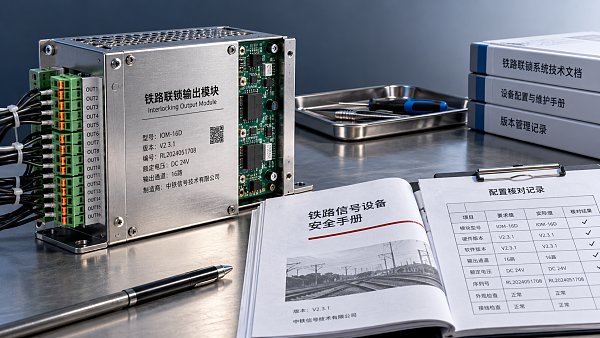
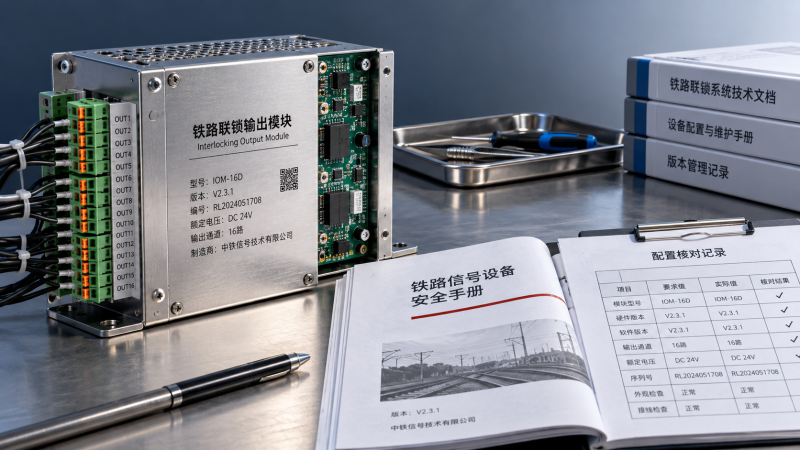
For an interlocking output module, the relevant function might be preventing an unsafe energization of a signal or point-control circuit. That is more precise than “safe output control”: it identifies the hazardous behavior the design must prevent. The evidence should also identify the function’s boundaries, response time, safe state, and assumptions about external circuitry.
Ask the supplier to express the claim in a traceable form:
- Which safety function is implemented, and which hazard does it control?
- What equipment and software are inside the assessed boundary?
- Which external safeguards, diagnostics, or operating procedures are assumed?
- Does the assessment cover a generic product, a generic application, or a specific application?
These distinctions change the acceptance burden. An assessed generic platform does not automatically establish the safety of every application built on it. Likewise, a component described as “suitable for SIL4 applications” may require additional architectural measures before it can support the intended function.
A useful initial test is to replace “SIL4 component” with a complete statement: “This identified configuration supports this safety function, under these conditions, with these remaining integration obligations.” If the supplier cannot complete that statement, the claim is not sufficiently defined for technical acceptance.
Check the standards basis, including editions and exclusions
Railway signalling assurance relies on a coordinated standards framework rather than a single SIL certificate. The precise contractual and regulatory baseline depends on the project and jurisdiction.
EN 50716 is the successor framework for railway software development previously addressed by EN 50128 and EN 50657. However, a reference to an older standard is not, by itself, proof that an existing product is unacceptable. Establish the applicable editions, amendments, transition provisions, and project acceptance rules. A supplier should explain any gap between the assessment baseline and the project baseline.
Do not confuse safety integrity with environmental qualification or quality management. Compliance with applicable vibration, temperature, electromagnetic compatibility, or quality-system requirements can support the assurance case, but does not independently demonstrate SIL4.
Authenticate the certificate and read its boundaries
Obtain the complete certificate, including annexes and referenced schedules. A cropped image, logo, or tender statement cannot establish assessment scope. Verify the certificate through the issuer’s official verification channel or by contacting the issuing organization directly.
Check the legal manufacturer, product designation, certificate number, issue and revision details, standards cited, and status. Examine validity provisions where present; certificates do not all use the same expiry arrangements. Establish whether subsequent changes, suspension, or withdrawal affect the supplied configuration.
The issuer’s role also matters. A test report, independent safety assessment report, certification decision, and railway authorization are different deliverables. Where accreditation is claimed or required, verify the relevant scope—not merely the existence of an accreditation logo. An assessment body’s involvement does not automatically mean that a national authority or infrastructure manager has accepted the product.
Read qualifying language closely. “Assessed for use up to SIL4,” “software assessed to SIL4 requirements,” and “safety function certified at SIL4” are not interchangeable. References to an assessment report or safety manual indicate that essential restrictions may sit outside the certificate itself.
Follow the safety argument beyond the label
The safety case should connect hazards to safety requirements, design measures, verification results, and residual application conditions. Not every confidential design document needs to be transferred to a customer, but sufficient evidence must be available through agreed review arrangements to substantiate the intended use.
Trace at least one critical hazardous failure through that chain. For example, if an output must not remain energized after an internal fault, establish how the fault is detected, how energy is removed, how quickly the safe state is reached, and which failures could defeat both detection and shutdown.
For continuously operating signalling functions, SIL4 is associated under the relevant railway framework with a tolerable hazard rate band of 10−9 to less than 10−8 per hour per function. This is not a blanket failure-rate claim for every part inside an interlocking, nor proof that all software faults have a measurable random failure rate. The project’s hazard allocation and system architecture remain essential.
Scrutinize the quantitative argument for:
- Failure-rate sources and their applicability to the operating environment.
- Diagnostic coverage, detection intervals, and fault-reaction times.
- Common-cause failures, shared resources, and claimed channel independence.
- Repair assumptions, mission time, latent faults, and required periodic tests.
Two processing channels do not establish independence if they share a vulnerable power supply, clock, output path, or specification error. A numerical result is only as credible as the architecture and assumptions behind it.
Software assurance requires a different emphasis: requirements traceability, development controls, verification, validation, tool treatment, and configuration management. A low calculated hardware failure rate cannot compensate for unsupported software assurance.
Match the assessed configuration to the delivered equipment
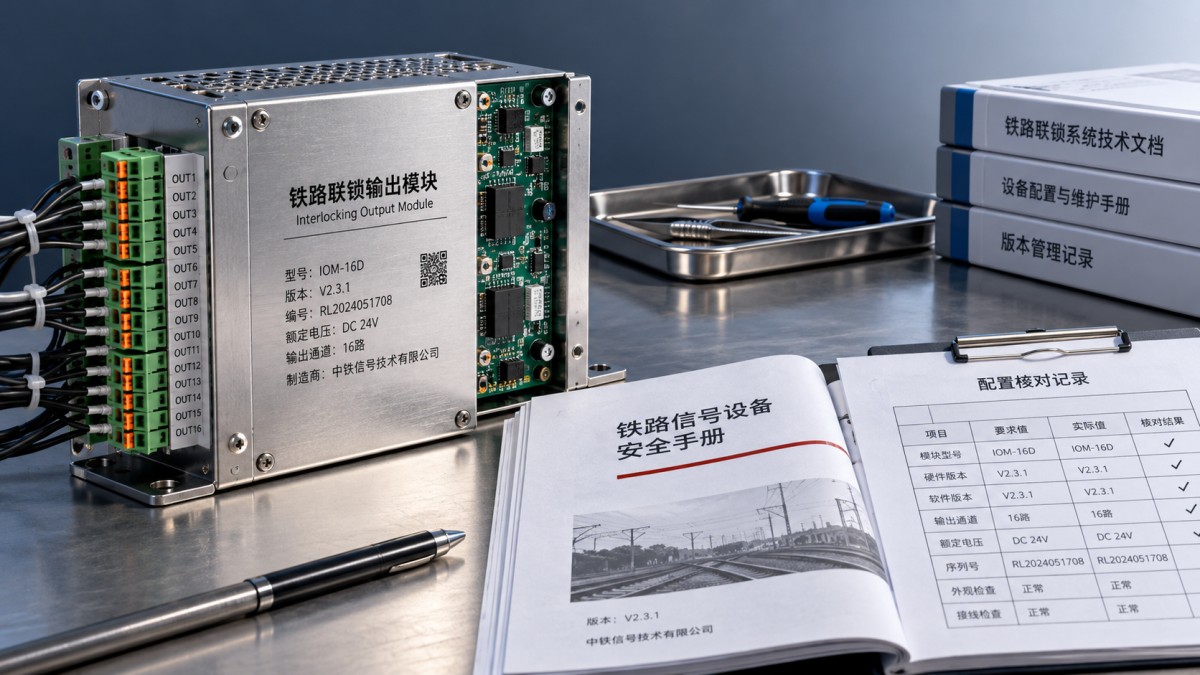
The product name on a quotation is rarely enough to identify the assessed configuration. Build a configuration match using the certificate annex, assessment report, safety manual, release documentation, and delivery records.
Relevant identifiers can include the hardware revision, programmable logic image, bootloader, operating system, safety application, parameter set, and engineering-tool version. Not every identifier must appear on the certificate face, but the controlled documentation should establish the relationship.
A later firmware release is not automatically covered because it belongs to the same product family. Request evidence of change impact analysis, regression verification, and assessment involvement where required. Apply the same discipline to replacement processors, memory devices, power modules, and obsolete-component substitutions.
Application data deserves particular attention. Route tables, locking conditions, point dependencies, and signal aspects can determine whether a generic interlocking platform behaves safely at a specific site. Platform certification does not demonstrate that those data are correct. Establish how data are generated, independently checked where required, validated, loaded, identified, and protected against unauthorized alteration.
For spare units and repaired equipment, confirm that configuration identification survives replacement and repair. A unit that fits mechanically and communicates correctly can still fall outside the approved safety baseline.
Turn application conditions into integration evidence
Safety-related application conditions are obligations, not advisory notes. They define what the product assessment leaves to the surrounding system, installation, operation, or maintenance arrangements.
Consider an output module assessed on the assumption that external circuitry prevents a single wiring fault from energizing an unsafe indication. Installing the module without that circuitry invalidates the assumption, even though the module and certificate remain unchanged.
Examine conditions covering:
- Power supplies, earthing, isolation, wiring separation, and external protection.
- Permitted loads, interface circuits, cable characteristics, and fault detection.
- Temperature, electromagnetic conditions, vibration, and enclosure requirements.
- Startup, shutdown, degraded operation, maintenance bypasses, and recovery.
- Inspection, diagnostic testing, replacement intervals, and repair restrictions.
For networked components, identify who provides each safety communication mechanism. Sequence monitoring, message authenticity, timeliness checks, and timeout behavior must align with the actual transmission architecture. A communications interface assessed under one set of assumptions does not automatically cover a different network topology or threat environment.
Cybersecurity also requires explicit treatment where malicious actions could invalidate safety assumptions. SIL4 certification should not be read as a general cybersecurity certification.
Record each application condition in a closure register with an owner, implementation reference, verification method, and acceptance evidence. An unresolved condition is an open safety obligation; copying it into a design document does not close it.
Separate product credibility from project acceptance
Independent product assessment can support reuse of established evidence, but it does not remove the need to demonstrate safe integration. Interfaces, application data, installation arrangements, and operating procedures can introduce hazards beyond the product boundary.
Acceptance evidence should therefore show that the project safety requirements are allocated correctly, that interface assumptions hold, and that integration and application validation address the installed configuration. Factory testing alone cannot establish every site-dependent condition.
Cross-border use adds another boundary. A certificate issued in one jurisdiction may provide valuable technical evidence without satisfying another jurisdiction’s authorization process. Clarify the required recognition, independent assessment, and infrastructure-manager acceptance before treating certification as sufficient for deployment.
Evidence gaps should lead to proportionate decisions. A missing annex calls for document completion. An unexplained version mismatch requires configuration clarification and potentially further assessment. An incompatible application condition can make the component unsuitable regardless of its headline integrity level.
The defensible acceptance statement is therefore not simply “SIL4 certified.” It is that a defined configuration supports specified safety functions, against an agreed standards baseline, with assessment findings addressed and application conditions demonstrably satisfied. That statement makes the claim auditable—and exposes exactly where additional evidence or engineering work is still required.
Recommended News
 Oct 22, 2026How to verify SIL4 claims for railway interlocking componentsVerify railway control components SIL4 claims with practical checks on certificates, safety evidence, and configuration. Learn what to review before selecting interlocking components.
 Oct 12, 2026How European railway interlocking systems meet CENELEC safety standardsRailway interlocking systems Europe relies on meet CENELEC SIL4 requirements through proven architecture, lifecycle evidence, application-data control, and independent safety assessment.
 Oct 19, 2026What Documents Demonstrate SIL4 Compliance for Railway Interlocking?What documents prove railway interlocking SIL4 compliance? Explore the essential safety case, hazard logs, validation records, and independent assessment evidence.
 Oct 11, 2026What Causes Railway Signalling Failures During Commissioning?What causes railway signaling systems to fail during commissioning? Explore key risks, from configuration and interface errors to testing gaps, and prevent costly delays.
 Oct 08, 2026How to assess a railway interlocking systems supplier's safety recordRailway interlocking systems supplier safety assessment: evaluate lifecycle evidence, incidents, assurance, reliability, configuration control, and cybersecurity.
 Sep 30, 2026How to select railway signaling relays for fail-safe circuitsRailway signaling relays: learn how to select fail-safe designs with proven coil behavior, contact logic, insulation, and railway-grade reliability.
 Aug 29, 2026What to verify before choosing a railway interlocking equipment exporterRailway interlocking equipment exporter checklist: verify safety evidence, interfaces, engineering, traceability, export readiness, and long-term support before procurement.
 Aug 15, 2026How to choose railway interlocking equipment for junctionsRailway interlocking equipment for junctions: learn how to choose the right system for safety, capacity, and future expansion with confidence.
 Jul 14, 2026Rail Interlocking Systems: Common Failure Risks and Design ChecksRail interlocking systems face critical risks from route locking, point detection, track vacancy, and interface timing. Learn the key design checks that improve safety and reduce commissioning risk.
 Jul 06, 2026When to Choose a SIL4 Signalling Equipment Integrator Over Multiple VendorsSIL4 signalling equipment integrator or multiple vendors? Learn when unified integration reduces interface risk, speeds safety approval, and protects rail project delivery.
 Jul 01, 2026Electronic Railway Interlocking Systems: Key Failure Risks and Compliance ChecksRailway interlocking systems electronic risks can disrupt safety, uptime, and compliance. Explore key failure points, practical checks, and proven ways to strengthen rail resilience.
 Jun 23, 2026Interlocking Systems: Key Failure Risks and Safety Checks Before DeploymentInterlocking systems: discover key failure risks, interface hazards, and must-do safety checks before deployment to prevent costly incidents and ensure fail-safe performance.
 Jun 19, 2026Interlocking Systems for Railway Safety: Key Standards and Failure RisksInterlocking systems for railway safety: explore key standards, SIL4 expectations, and hidden failure risks to strengthen railway compliance, resilience, and safe operations.
 Jun 10, 2026How Interlocking Systems Reduce Rail Network Failure RiskInterlocking systems reduce rail network failure risk by preventing conflicts, containing faults, and speeding recovery. See how they improve safety, uptime, and operational resilience.
 Jun 05, 2026Railway Control Components: Key Failure Points to AvoidRailway control components fail in different ways across urban, high-speed, freight, and harsh outdoor routes. Discover the key failure points to avoid for safer, more reliable rail operations.
 Jun 03, 2026Railway Signal Control Systems: Common Failure Points and Safety ChecksRailway signal control systems require rigorous safety checks. Discover common failure points, inspection priorities, and practical steps to reduce risk and protect rail operations.
 Jun 02, 2026How to Evaluate Railway Control Components for System ReliabilityRailway control components evaluation guide: assess SIL compliance, interoperability, stress testing, cybersecurity, and lifecycle reliability for safer rail systems.
 May 31, 2026Interlocking Systems Technology Standards: Key Compliance RisksInterlocking systems technology standards expose critical compliance risks in SIL validation, cybersecurity, and traceability—learn how to protect rail safety and approvals.
 May 28, 2026Interlocking Systems for High-Density Rail Operations: What Improves Capacity Safely?Interlocking systems for high-density rail operations: discover how SIL4-safe architectures, redundancy, and automation interfaces boost rail capacity, resilience, and future readiness.
 May 26, 2026Interlocking Systems for Railway Safety: How to Compare Failure RisksInterlocking systems for railway safety: compare failure risks through design logic, diagnostics, redundancy, and lifecycle factors to make safer, smarter rail decisions.
 May 21, 2026Interlocking Systems Technology Standards: Key Compliance Checks for 2026Interlocking systems technology standards guide 2026 rail compliance checks on safety traceability, software control, cybersecurity, and field integrity. Learn key risks and practical actions.
 May 20, 2026Interlocking Systems for High-Density Rail: Capacity Gains vs Safety TradeoffsInterlocking systems for high-density rail operations: explore how modern architectures boost rail capacity, reduce headways, and manage safety tradeoffs for smarter network planning.
 May 19, 2026Interlocking Systems for Railway Safety: Choosing for Retrofit ProjectsInterlocking systems for railway safety: learn how to choose the best retrofit path with SIL4 assurance, legacy compatibility, lower risk, and future-ready performance.
 May 17, 2026How Computer Interlocking Cuts Rail Signaling Failure RiskInterlocking systems cut rail signaling failure risk by preventing route conflicts, reducing human error, and supporting SIL4 safety—see how computer interlocking boosts reliable, high-density operations.