



Search News
Industry Portal
Popular Tags
How to choose railway interlocking equipment for junctions
Author
Time
Click Count
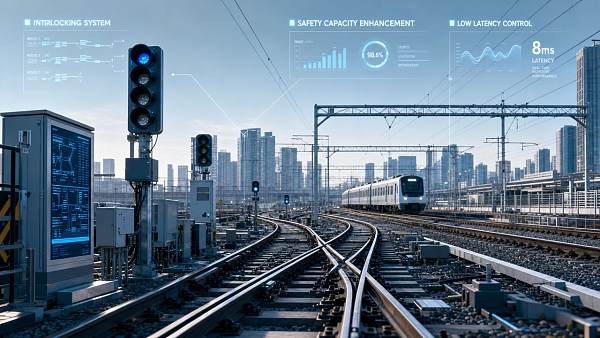
Choosing railway interlocking equipment for junctions is rarely a question of “which product is best” in the abstract. It is a question of whether the interlocking can manage your actual traffic pattern, your failure tolerance, your expansion plan, and your maintenance model without creating hidden constraints later. At a junction, the interlocking is not just switching routes. It is the layer that decides whether trains can move through a conflict-heavy node safely, predictably, and at the capacity the network expects.
That is why technical evaluators usually need to look past generic feature lists. A junction with dense passenger peaks, mixed freight/passenger traffic, or phased network expansion places very different demands on railway interlocking equipment for junctions. In practice, the right choice is the one that fits the operational logic of the site first, and only then the vendor’s platform story.
What a junction really asks of the interlocking
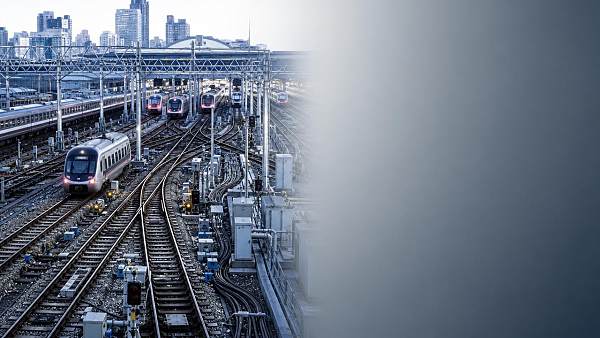
Junctions are difficult because they compress risk. Multiple routes converge, points must move reliably under load, and signal logic has to prevent conflicts while still keeping throughput acceptable. A technically acceptable system in a simple block section may underperform at a junction because route locking, flank protection, release timing, degraded-mode handling, and diagnostics become much more consequential.
The first question is not whether the system is “modern.” It is whether it can express the site’s operating rules cleanly and enforce them with enough determinism to satisfy both safety and capacity requirements. In a junction, even small delays in route setting or point confirmation can ripple into headway loss and timetable fragility.
The selection criteria that matter most
For technical evaluation, the core criteria usually fall into six groups: safety integrity, functional fit, availability, interoperability, maintainability, and lifecycle economics. None of them should be treated as a secondary item.
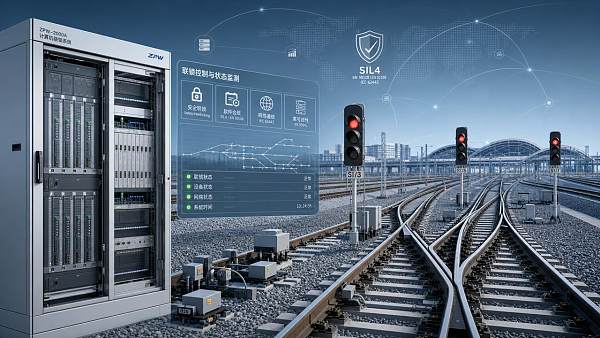
- Safety integrity: The system must support the required safety level, typically SIL4 in modern mainline contexts, but the exact project requirement should be verified against local standards and project documentation.
- Functional fit: It must handle the junction’s actual route patterns, locking logic, point layouts, and special operating cases.
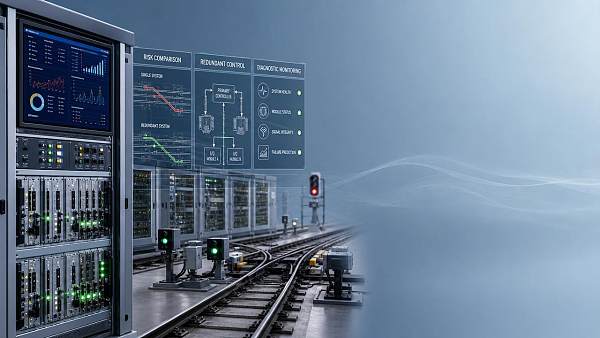
- Availability: Redundancy, failover behavior, and fault recovery time matter as much as nominal safety performance.
- Interoperability: Interfaces to track circuits, axle counters, signals, remote control centers, and adjacent systems must be proven, not assumed.
- Maintainability: Diagnostics, remote support, spare parts strategy, and testability affect long-term serviceability.
- Lifecycle cost: The purchase price is often the least important line item once commissioning, training, spares, upgrades, and obsolescence are counted.
The common mistake is to overweight architecture branding. Centralized, distributed, relay-based, electronic, and computer-based solutions can all work in the right setting. What matters is the match between the product’s operating logic and the junction’s real constraints.
Architecture choices are about operating context, not fashion
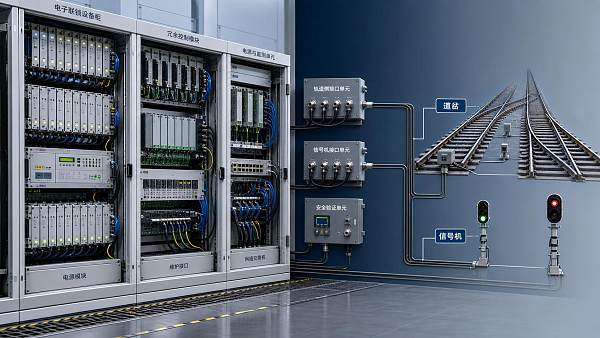
Relay interlocking, solid-state interlocking, and microprocessor-based interlocking each carry tradeoffs. Relay systems are familiar and robust, but they can become bulky and harder to expand. Modern electronic systems are more flexible, better suited to diagnostic integration, and usually easier to adapt for future digital control, but they also require stronger cyber, software, and lifecycle governance.
For junctions with stable layouts and limited near-term change, a simpler architecture may be sufficient if the maintenance model is strong and spare support is guaranteed. For junctions expected to evolve, especially where turnback moves, yard interfaces, or line extensions are likely, evaluators should give more weight to configurability, software maintainability, and upgrade path clarity.
What should not be ignored is the effect of architecture on recovery after a fault. A junction is often judged not by how it performs in normal conditions, but by how quickly it returns to service after an equipment disturbance, a track vacancy failure, or a point-machine issue. That is where diagnostic depth and recovery procedures become material.
Capacity is a safety issue in disguise
At a junction, capacity is not just an operations metric. If the interlocking is slow to process route requests, conservative in release logic, or constrained by weak interface design, the timetable will absorb that limitation. Over time, this can lead planners to shorten routes, add unnecessary margin, or underuse the infrastructure.
Technical evaluators should ask whether the equipment can support the actual peak-hour pattern without forcing workarounds. That includes route setting time, cancellation logic, simultaneous movement handling, interlocking release behavior, and how the system behaves when one element of the route is delayed or unavailable. In some projects, the key issue is not raw speed but the ability to sustain predictable performance under mixed traffic and partial degradation.
Compatibility is usually where projects lose time
Many interlocking projects are slowed less by the core product than by integration friction. Junctions often sit at the boundary of old and new systems. The new interlocking may need to coexist with legacy point machines, existing detection systems, older field wiring, or a remote traffic control platform that was never designed with the new layout in mind.
This is why interface documentation should be reviewed early. A technically impressive platform is of limited value if it cannot be integrated without excessive custom engineering. Ask for proven interface references, configuration examples, and an explanation of how exceptions are handled. If the vendor’s answer depends heavily on “project-specific adaptation,” the evaluator should treat that as a cost and schedule risk, not a minor detail.
It is also worth checking how the system manages mixed technology environments. Junction upgrades often happen in phases. The selected equipment should support staged migration without forcing a complete shutdown of the existing operating model.
Reliability needs proof, not adjectives
Vendors often use broad terms such as “high reliability” or “advanced diagnostics.” For junctions, evaluators should translate those terms into observable questions. How does the system detect a failed point correspondence? What is the diagnostic granularity? Can maintenance teams identify the fault domain quickly? Are event logs sufficiently detailed to support post-incident analysis? How is degraded operation handled if a subsystem fails?
Availability at a junction is shaped by fault isolation speed as much as by component quality. If a minor field fault leads to an extended block of the entire node, the effective availability may be poor even when hardware reliability looks acceptable on paper.
Another point often missed is environmental resilience. Junction equipment may be exposed to vibration, temperature swings, moisture, electromagnetic interference, or constrained maintenance access. These conditions are not decorative. They affect cabinet design, cable management, power supply stability, and the practical service life of the installation.
Lifecycle support often determines the real winner
For technical decision-makers, the most expensive surprise is usually not failure. It is obsolescence. Interlocking systems tend to live through multiple operating cycles, and junctions are not easy to redesign repeatedly. A platform with uncertain spare-part availability, unclear software support policy, or weak long-term engineering documentation can become a liability even if its initial performance is strong.
When comparing options, evaluate support in concrete terms: spare part lead times, firmware and software version policy, test environment availability, migration roadmap, and the vendor’s ability to support the system through later expansions. If the site will be part of a larger digital signaling program, the interlocking should not be a dead-end asset.
Procurement teams sometimes focus on warranty duration. That matters, but it is not enough. What matters more is whether the supplier can support the system across commissioning, stabilization, maintenance, and future retrofit phases without forcing a platform replacement.
Questions that separate a usable proposal from a weak one
Before shortlisting railway interlocking equipment for junctions, evaluators should press for direct answers to a few practical questions:
- Can the system represent every required route, locking condition, and operational exception at this junction?
- What evidence is available for the claimed safety level and reliability performance?
- How does the system behave when detection, point movement, or communications fail?
- What is the integration approach for legacy equipment and adjacent control systems?
- How much of the solution depends on custom engineering or site-specific software?
- What is the support plan for spares, version control, and future expansion?
These questions are more useful than asking for a feature brochure. A junction project succeeds when the equipment fits the operating reality, not when it looks impressive in isolation.
What to watch in the tender and review stage
Technical evaluators should also watch for language that sounds reassuring but is too vague to be useful. Claims such as “fully compatible,” “easy to expand,” or “highly automated” need evidence. Ask for test cases, reference configurations, interface matrices, and clear responsibility boundaries between subsystem suppliers.
Be careful with overpromised digitalization. Remote diagnostics, centralized control, and data-driven maintenance can add real value, but only if the base interlocking is robust and the operating organization has the skills to use those tools. A junction does not become safer because it is connected to more software. It becomes safer when software is integrated into a disciplined operational and maintenance model.
Likewise, don’t assume that a newer platform automatically reduces risk. New architectures can simplify future upgrades, but they can also introduce software complexity, cybersecurity requirements, and dependence on vendor tooling. For some networks, the correct decision is to prioritize maturity and serviceability over novelty.
The practical decision rule
If a junction is operationally stable, lightly modified, and supported by a strong maintenance organization, the best choice may be a conservative platform with proven field behavior and straightforward support. If the junction is expected to absorb traffic growth, service pattern changes, or staged network modernization, the better choice is usually a more flexible system with stronger diagnostics, cleaner interfaces, and a credible migration path.
That is the real selection logic. The best railway interlocking equipment for junctions is not the most sophisticated one on paper. It is the one that can carry the node through normal service, disruption, and future change without forcing the operator into avoidable compromise later.
For technical evaluators, that standard is demanding but necessary. Junctions rarely forgive weak assumptions, and interlocking choices made too early or too casually tend to surface later as capacity limits, maintenance burden, or upgrade lock-in.
Recommended News
 Aug 29, 2026What to verify before choosing a railway interlocking equipment exporterRailway interlocking equipment exporter checklist: verify safety evidence, interfaces, engineering, traceability, export readiness, and long-term support before procurement.
 Aug 15, 2026How to choose railway interlocking equipment for junctionsRailway interlocking equipment for junctions: learn how to choose the right system for safety, capacity, and future expansion with confidence.
 Jul 14, 2026Rail Interlocking Systems: Common Failure Risks and Design ChecksRail interlocking systems face critical risks from route locking, point detection, track vacancy, and interface timing. Learn the key design checks that improve safety and reduce commissioning risk.
 Jul 06, 2026When to Choose a SIL4 Signalling Equipment Integrator Over Multiple VendorsSIL4 signalling equipment integrator or multiple vendors? Learn when unified integration reduces interface risk, speeds safety approval, and protects rail project delivery.
 Jul 01, 2026Electronic Railway Interlocking Systems: Key Failure Risks and Compliance ChecksRailway interlocking systems electronic risks can disrupt safety, uptime, and compliance. Explore key failure points, practical checks, and proven ways to strengthen rail resilience.
 Jun 23, 2026Interlocking Systems: Key Failure Risks and Safety Checks Before DeploymentInterlocking systems: discover key failure risks, interface hazards, and must-do safety checks before deployment to prevent costly incidents and ensure fail-safe performance.
 Jun 19, 2026Interlocking Systems for Railway Safety: Key Standards and Failure RisksInterlocking systems for railway safety: explore key standards, SIL4 expectations, and hidden failure risks to strengthen railway compliance, resilience, and safe operations.
 Jun 10, 2026How Interlocking Systems Reduce Rail Network Failure RiskInterlocking systems reduce rail network failure risk by preventing conflicts, containing faults, and speeding recovery. See how they improve safety, uptime, and operational resilience.
 Jun 05, 2026Railway Control Components: Key Failure Points to AvoidRailway control components fail in different ways across urban, high-speed, freight, and harsh outdoor routes. Discover the key failure points to avoid for safer, more reliable rail operations.
 Jun 03, 2026Railway Signal Control Systems: Common Failure Points and Safety ChecksRailway signal control systems require rigorous safety checks. Discover common failure points, inspection priorities, and practical steps to reduce risk and protect rail operations.
 Jun 02, 2026How to Evaluate Railway Control Components for System ReliabilityRailway control components evaluation guide: assess SIL compliance, interoperability, stress testing, cybersecurity, and lifecycle reliability for safer rail systems.
 May 31, 2026Interlocking Systems Technology Standards: Key Compliance RisksInterlocking systems technology standards expose critical compliance risks in SIL validation, cybersecurity, and traceability—learn how to protect rail safety and approvals.
 May 28, 2026Interlocking Systems for High-Density Rail Operations: What Improves Capacity Safely?Interlocking systems for high-density rail operations: discover how SIL4-safe architectures, redundancy, and automation interfaces boost rail capacity, resilience, and future readiness.
 May 26, 2026Interlocking Systems for Railway Safety: How to Compare Failure RisksInterlocking systems for railway safety: compare failure risks through design logic, diagnostics, redundancy, and lifecycle factors to make safer, smarter rail decisions.
 May 21, 2026Interlocking Systems Technology Standards: Key Compliance Checks for 2026Interlocking systems technology standards guide 2026 rail compliance checks on safety traceability, software control, cybersecurity, and field integrity. Learn key risks and practical actions.
 May 20, 2026Interlocking Systems for High-Density Rail: Capacity Gains vs Safety TradeoffsInterlocking systems for high-density rail operations: explore how modern architectures boost rail capacity, reduce headways, and manage safety tradeoffs for smarter network planning.
 May 19, 2026Interlocking Systems for Railway Safety: Choosing for Retrofit ProjectsInterlocking systems for railway safety: learn how to choose the best retrofit path with SIL4 assurance, legacy compatibility, lower risk, and future-ready performance.
 May 17, 2026How Computer Interlocking Cuts Rail Signaling Failure RiskInterlocking systems cut rail signaling failure risk by preventing route conflicts, reducing human error, and supporting SIL4 safety—see how computer interlocking boosts reliable, high-density operations.