



Search News
Industry Portal
Popular Tags
Railway Safety Standards: Key Compliance Gaps to Avoid
Author
Time
Click Count
Why do railway safety standards still fail in well-equipped operations?
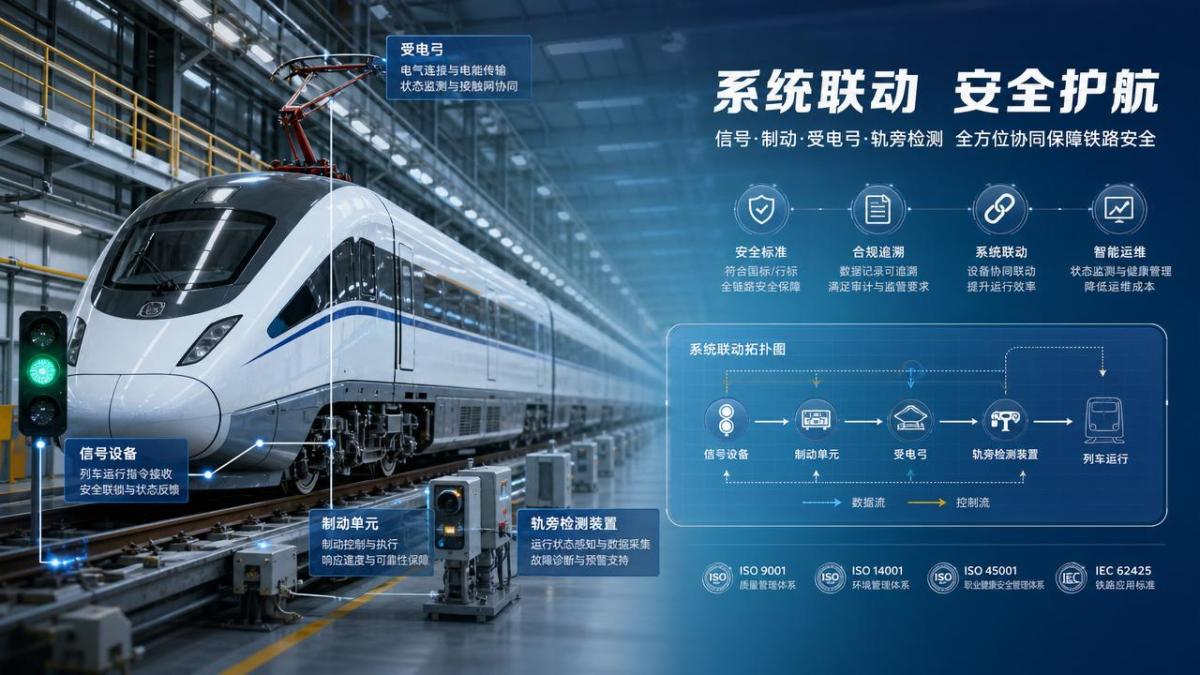
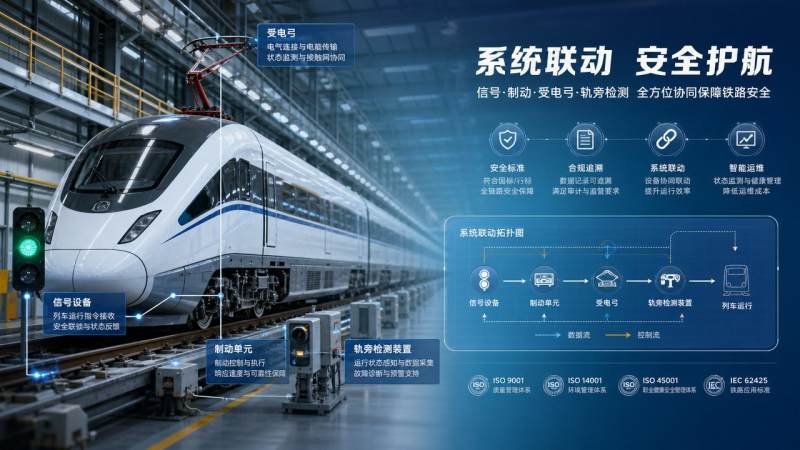
Railway safety standards look clear on paper, yet compliance gaps often appear in daily execution.
That is the real issue. Most incidents do not begin with missing rules. They begin with weak control of evidence, interfaces, and accountability.
In rail networks, safety depends on tightly linked systems.
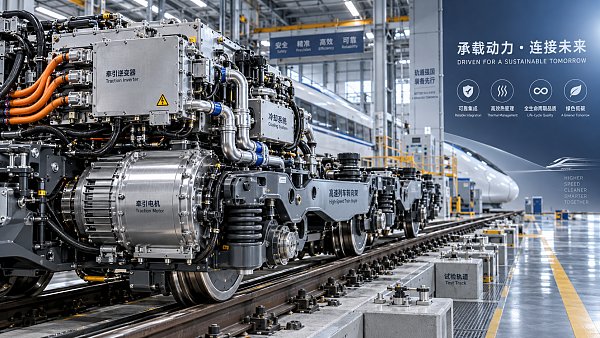
Signal control, traction power, pantographs, braking units, onboard electronics, and maintenance records must support one another without contradiction.
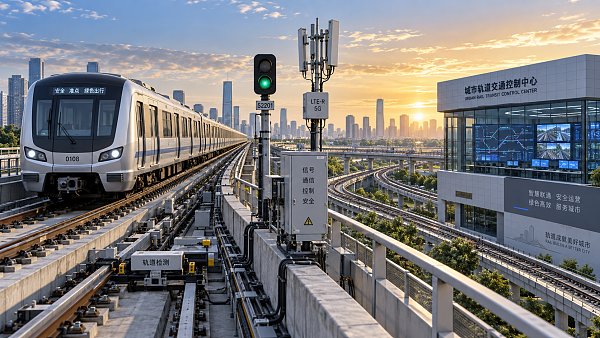
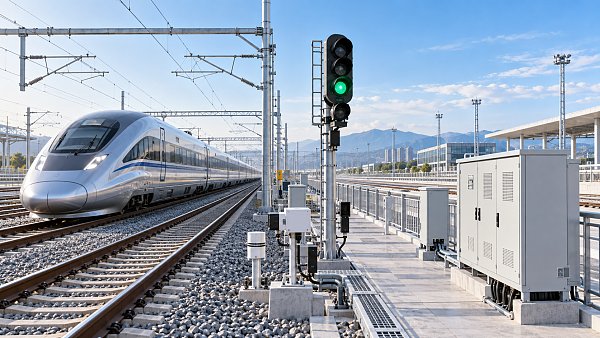
A SIL4 interlocking may be robust, but the broader compliance picture can still break if inspection records are incomplete or software changes are poorly tracked.
This is why railway safety standards matter beyond certification audits.
They shape whether a fleet can operate reliably under high density, high speed, and harsh environmental conditions.
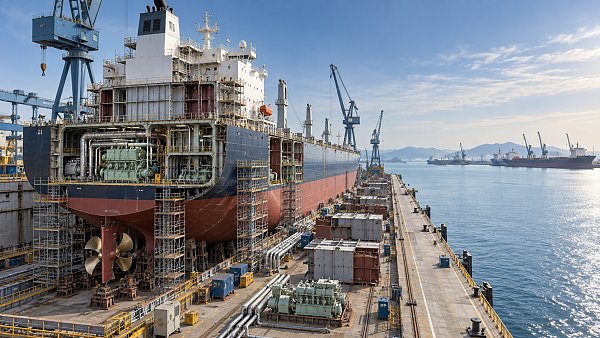
In complex transport ecosystems, the same discipline seen in advanced rail control also supports maritime asset integrity and cross-border logistics confidence.
That broader systems view is increasingly important in intelligence platforms such as GTOT, where railway control components and transport resilience are analyzed together.
Which compliance gaps create the highest risk under railway safety standards?
The most common gaps are not always dramatic.
More often, they build quietly across engineering files, maintenance routines, and supplier interfaces until a nonconformity becomes operational risk.
The following table helps identify where railway safety standards are most often weakened.
If one pattern appears again and again, it is this: evidence exists, but it is fragmented.
Railway safety standards are difficult to maintain when design teams, depots, and suppliers use disconnected records and different acceptance criteria.
How should documentation and validation be judged, not just collected?
Many teams believe they are compliant because every required document can be produced during an audit.
That is only a starting point.
Good railway safety standards demand traceability between hazard analysis, design assumptions, test plans, results, corrective action, and operating limits.
A document library alone does not prove that chain.
In practical terms, ask whether each safety claim can be traced to current evidence.
For example, if a braking subsystem is approved for defined stopping performance, the maintenance threshold, wear measurement method, and software configuration should align with that approval basis.
The same logic applies to pantographs under extreme vibration, or signalling subsystems operating under dense traffic automation.
A useful review framework includes the following checks:
- Does every critical function have a current validation reference?
- Can field settings be matched to approved engineering baselines?
- Are abnormal scenarios tested, not only nominal conditions?
- Do suppliers and operators use the same acceptance criteria?
When these answers are unclear, railway safety standards are already under pressure, even if no failure has yet occurred.
Where do maintenance traceability and staff competency usually break down?
The breakdown usually happens at the boundary between routine work and safety-critical work.
A scheduled inspection may be completed on time, yet the replacement batch, torque value, calibration status, or software patch history may remain weakly linked.
That creates blind spots during investigations.
Railway safety standards are especially vulnerable when maintenance records focus on completion, not technical condition.
A signed checklist is useful, but trend data is often more revealing.
Repeated overheating, intermittent signal loss, or abnormal contact strip wear should trigger review before a threshold breach becomes a safety event.
Competency has a similar problem.
Training attendance is easy to record. Practical judgment under degraded modes is harder to prove.
That is why mature railway safety standards increasingly favor evidence of task-specific authorization, simulator drills, and reassessment after technical changes.
This shift also reflects wider transport practice.
Across rail and maritime operations, asset safety now depends on how well complex technical information is stitched into usable decisions, not simply archived.
What is often missed when suppliers, subsystems, and standards overlap?
One of the most underestimated risks is interface drift.
A subsystem may meet its own specification, yet still create a compliance gap when integrated with signalling logic, vehicle control software, or maintenance tooling.
This is common in multi-supplier projects.
Railway safety standards require more than individual certificates. They require proof that the whole operating environment remains controlled after integration.
Need-to-check items usually include:
- Interface definitions for hardware, software, and diagnostics
- Responsibility split for alarms, resets, and failure handling
- Consistency between supplier test evidence and operator acceptance
- Configuration control after retrofit, overhaul, or firmware updates
This is where sector intelligence becomes useful.
Platforms that track signalling evolution, braking performance, and equipment reliability can help teams compare their own controls against broader industry movement.
GTOT, for example, frames rail safety within a larger land-and-sea operating context, which is valuable when supply chains, tender requirements, and technical credibility increasingly cross regional boundaries.
How can railway safety standards be strengthened without creating audit fatigue?
The answer is not more paperwork.
It is better alignment between risk, evidence, and action.
Strong railway safety standards become manageable when teams focus on a few high-value controls and review them consistently.
A practical approach is to build a short compliance cycle around critical interfaces and repeat defects.
- Map the top safety-critical assets and their approval basis.
- Connect maintenance evidence to serial number and configuration status.
- Review every engineering change for cross-system impact.
- Reassess competence after unusual events or major updates.
- Use trend data to challenge assumptions before audits do.
That method keeps railway safety standards tied to live operating reality.
It also reduces the familiar problem of compliance work becoming detached from performance.
If the next step is unclear, begin with a gap review of documentation traceability, validation depth, maintenance linkage, and staff authorization logic.
Those four areas usually reveal whether compliance is truly embedded or only formally presented.
In the end, railway safety standards work best when they support decisions early, long before they are tested by incident, audit, or public scrutiny.
Recommended News
 Sep 29, 2026What drives traction systems price differences between rail projects?Traction systems price differences explained: compare duty cycles, voltage compatibility, integration, localization, and lifecycle costs for smarter rail procurement.
 Sep 26, 2026What to assess before selecting an electric traction system manufacturerChoose an electric traction system manufacturer with confidence. Explore key criteria for performance, reliability, safety, integration, energy efficiency, and lifecycle support.
 Sep 25, 2026When do full digitalization systems justify the investment?Full digitalization systems: discover when rail and maritime operators can turn connected data into safer operations, higher availability, and measurable ROI.
 Sep 23, 2026What drives automatic train control systems cost on rail projects?Automatic train control systems cost depends on integration, migration, safety testing, communications, and lifecycle support. Explore the key budget drivers for rail projects.
 Sep 21, 2026How to assess an ocean going vessel builder’s delivery riskAssess an ocean going vessel builder’s delivery risk with proven checks for schedules, capacity, design maturity, critical equipment, quality, and project controls.
 Sep 20, 2026What drives rail safety technology costs over a project lifecycle?Rail safety technology cost goes beyond equipment—explore lifecycle drivers from integration and safety assurance to cybersecurity, commissioning, and obsolescence.
 Sep 16, 2026What to verify before choosing an advanced ocean-going vessels supplierAdvanced ocean-going vessels supplier checklist: verify design authority, build quality, digital systems, delivery reliability, and lifecycle support before you buy.
 Sep 15, 2026What rail safety technology best reduces level-crossing risks in Southeast Asia?Rail safety technology Southeast Asia: discover how fail-safe signalling, barriers, obstacle detection and remote monitoring reduce level-crossing risks.
 Sep 14, 2026How exporters can reduce customs delays in global trade logisticsGlobal trade logistics for exporters: reduce customs delays with accurate data, clearance-ready documents, early filing, and proactive exception management.
 Sep 13, 2026When do global transportation network systems reduce delivery delays?Global transportation network systems reduce delivery delays by improving rail-port-vessel coordination, real-time visibility, and proactive decisions across complex land-sea supply chains.
 Sep 09, 2026When should you choose a rail and maritime manufacturer with dual-sector capability?Rail and maritime manufacturer guide: learn when dual-sector capability reduces integration risk, improves lifecycle support, and strengthens rail-to-port operations.
 Sep 08, 2026What to verify before selecting a railway signalling equipment supplierRailway signalling equipment supplier checklist: verify safety evidence, integration, cybersecurity, delivery capability, and lifecycle support before award.
 Sep 07, 2026How to size a traction power transformer for railway load demandTraction power transformer sizing guide: model railway load demand, peak duty, voltage regulation, harmonics, and contingency capacity for reliable service.
 Sep 07, 2026How do customization options for industrial connectors affect lead times?Customization options for industrial connectors can impact lead times, cost, and compliance. Learn how to specify smarter for rail and marine projects.
 Sep 05, 2026What information should an industrial sourcing guide include?Industrial sourcing information procurement guide: evaluate suppliers, compliance, lifecycle costs, interfaces, and lead times for smarter rail and maritime purchasing decisions.
 Sep 01, 2026How to find reliable maritime tender information before biddingMaritime tender information: learn how to verify sources, define bid-ready scopes, check qualifications, and reduce risk before submitting competitive marine bids.
 Aug 30, 2026How to select railway automation equipment for depots with phased upgradesRailway automation equipment for depots: learn how to plan phased upgrades that improve safety, throughput, integration, and lifecycle control.
 Aug 27, 2026How industrial sourcing intelligence pricing data supports budget approvalIndustrial sourcing intelligence pricing data helps teams benchmark scope, assess supplier risk, and build defensible budget approvals for complex rail and maritime assets.
 Aug 26, 2026When does a marine fuel efficiency solution make financial sense in the Middle East?Marine fuel efficiency solution Middle East: learn when retrofit savings, compliance value, and vessel data align to deliver credible ROI and smarter shipping investment decisions.
 Aug 24, 2026When does maritime automation for tankers deliver a real payback?Maritime automation for tankers delivers real payback when it cuts fuel use, reduces cargo risk, and improves uptime. See how owners can time investment for stronger ROI.
 Aug 23, 2026When do maritime logistics systems in the Middle East justify the costMaritime logistics systems Middle East: discover when rising delays, manual coordination, and poor visibility make system investment the smarter move for regional operators.
 Aug 22, 2026What drives vessel navigation system price for commercial fleetsVessel navigation system price depends on integration, compliance, automation, and support—not just hardware. Learn what drives fleet costs and compare quotes with confidence.
 Aug 21, 2026How to assess shipbuilding maritime tenders before biddingShipbuilding maritime tenders require more than price checks. Learn how to assess technical scope, compliance, supply chain, and commercial risk before bidding with confidence.
 Aug 20, 2026When does working with an ocean-going vessels distributor reduce supply risk?Ocean-going vessels distributor: learn when this partner cuts supply risk through stronger compliance, faster response, and better sourcing resilience in complex maritime procurement.