



Search News
Industry Portal
Popular Tags
Rail Infrastructure Investment Opportunities: Where Returns and Policy Risk Diverge
Author
Time
Click Count
For financial decision-makers, rail infrastructure investment opportunities no longer hinge on growth forecasts alone. Returns can appear attractive, yet policy revisions often redraw actual risk boundaries.
This matters across the broader transport industry. Rail assets connect directly with supply chain reliability, port efficiency, signaling upgrades, and decarbonized freight corridors.
For GTOT, the topic sits at the intersection of railway control systems, traction power, braking safety, and land-sea logistics intelligence. Capital decisions now require technical context, not headline optimism.
When rail infrastructure investment opportunities look strong, but policy sensitivity is higher than expected
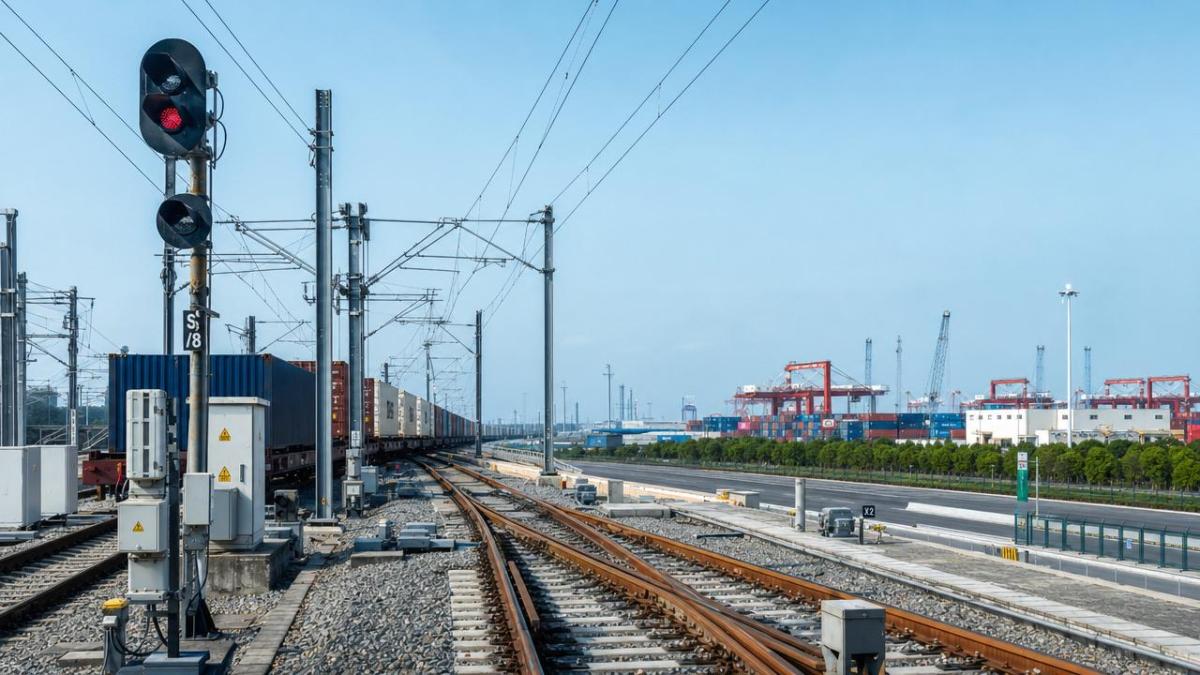
Not all rail infrastructure investment opportunities carry the same policy profile. Two projects may share similar traffic growth assumptions, yet diverge sharply in procurement timing and cash flow reliability.
The key background shift is simple. Governments still support rail modernization, but support increasingly comes with stricter local-content rules, safety mandates, and fiscal discipline.
That creates a gap between visible demand and bankable revenue. A line extension may be politically popular, while a signaling retrofit can be financially steadier.
In many markets, the strongest rail infrastructure investment opportunities are no longer greenfield projects. They often sit in selective upgrades with clear operational necessity.
Scenario one: brownfield modernization often delivers steadier returns than new corridor expansion
Brownfield programs usually benefit from existing demand, known passenger flows, and established maintenance ecosystems. That makes revenue assumptions easier to test and operating risks easier to price.
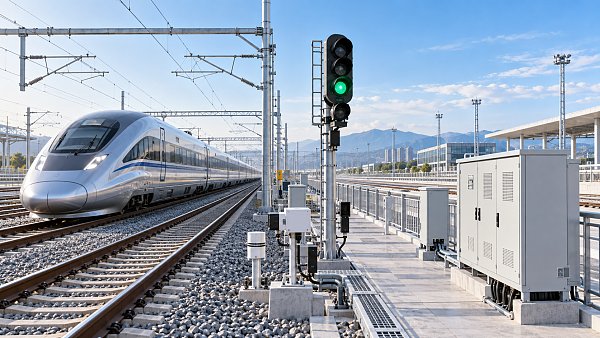
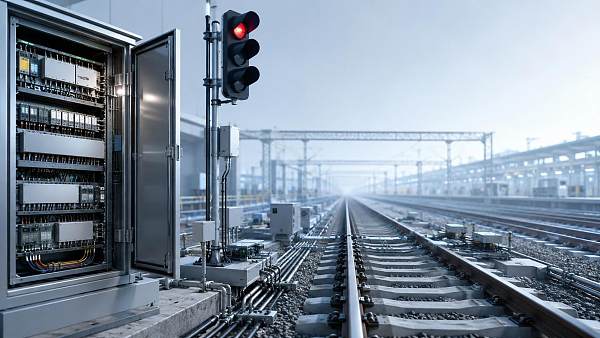
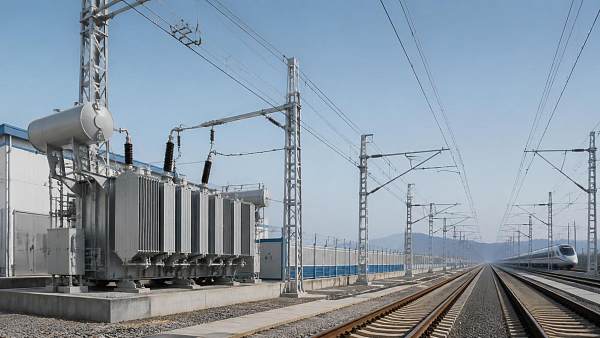
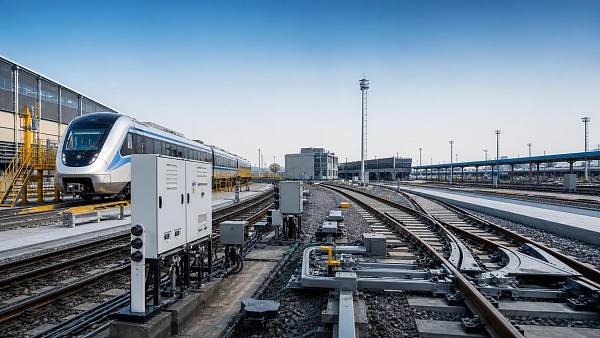
This is especially true for signaling migration, braking upgrades, power collection improvements, and digital traffic control. These assets support safety, headway compression, and network availability.
Returns improve when upgrades remove bottlenecks without waiting for entirely new ridership creation. Policy risk also tends to be lower because the public value is measurable and immediate.
Core judgment points in brownfield rail investment
- Whether the project raises capacity on already constrained routes
- Whether SIL4 safety compliance drives non-discretionary spending
- Whether digital control systems reduce delays and maintenance costs
- Whether procurement can proceed within existing regulatory frameworks
Among rail infrastructure investment opportunities, brownfield schemes often outperform because they monetize necessity rather than ambition. That distinction matters when public budgets tighten.
Scenario two: greenfield megaprojects can promise scale, but policy divergence becomes the real pricing variable
Large new corridors attract attention because they can transform regional mobility and freight patterns. However, their timelines frequently stretch beyond original fiscal and political cycles.
That exposes investors to election risk, land acquisition delays, revised subsidy structures, and updated environmental conditions. The project may remain strategic while the return profile deteriorates.
Greenfield rail infrastructure investment opportunities work best when sovereign support remains consistent and private participation aligns with milestone-based protections.
Core judgment points in greenfield rail investment
- Strength of long-term transport policy beyond one political cycle
- Clarity of tariff mechanisms and public payment commitments
- Exposure to imported components and foreign exchange pressure
- Realism of ridership, freight, and construction assumptions
Where those conditions weaken, policy risk diverges from engineering logic. A technically sound project can still become an unstable capital allocation case.
Scenario three: freight rail and intermodal links gain value when ports, shipping, and inland logistics move together
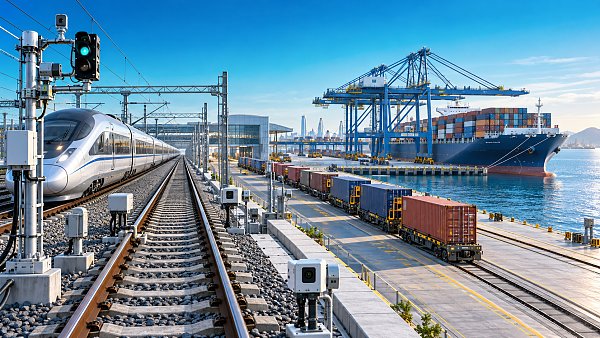
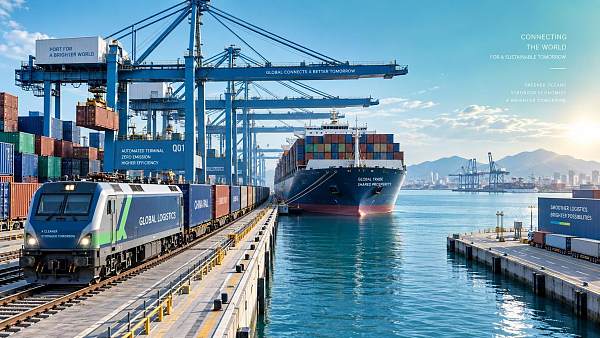
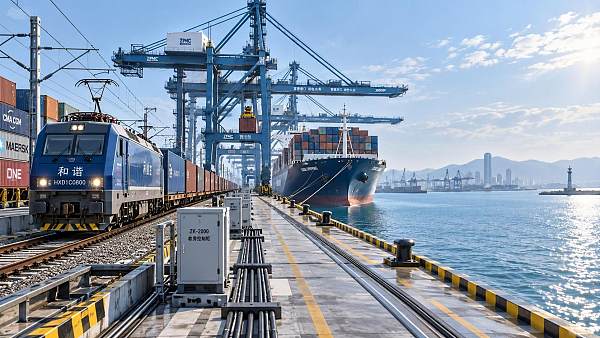
Some of the most compelling rail infrastructure investment opportunities appear in freight corridors tied to ports, smart container flows, and energy logistics.
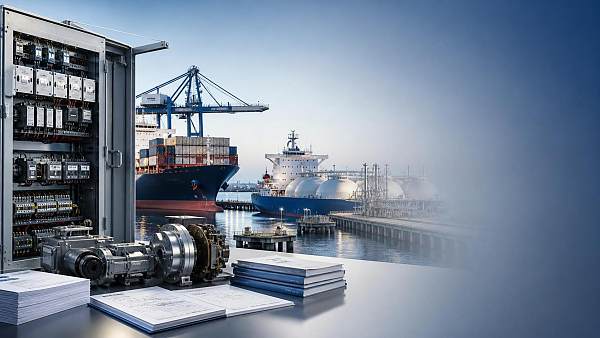
This is where GTOT’s land-sea perspective becomes useful. Rail performance cannot be evaluated in isolation when port congestion, vessel scheduling, and inland transfer efficiency shape actual throughput.
Intermodal rail assets often show stronger resilience when they serve recurring industrial demand, containerized trade, and energy movement rather than discretionary passenger volumes.
Freight-oriented projects also benefit from clearer productivity metrics. Turnaround time, axle-load utilization, braking reliability, and control-system uptime can be monitored directly.
Core judgment points in freight-linked rail opportunities
- Port connectivity and cargo anchoring strength
- Integration with customs, terminals, and inland depots
- Need for traction, braking, and signaling upgrades
- Ability to support decarbonization and modal shift targets
How scenario differences change the real risk profile of rail infrastructure investment opportunities
The same keyword hides very different capital behaviors. Below is a practical comparison of where returns and policy exposure typically separate.
This comparison shows why rail infrastructure investment opportunities should be screened by scenario, not by sector labels alone.
Scenario-based fit: where technical depth improves investment discipline
Technical components often reveal whether a project is discretionary or unavoidable. That distinction affects downside protection more than broad traffic forecasts.
Signals that support stronger opportunity selection
- Prioritize assets tied to network safety and operating continuity.
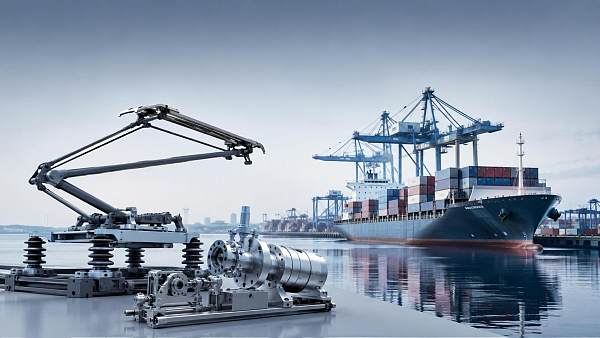
- Favor corridors where signaling, pantographs, and braking systems directly raise utilization.
- Check whether procurement structures reward lifecycle performance, not lowest upfront cost.
- Assess integration with ports, energy routes, and digital logistics platforms.
- Review component localization requirements before pricing foreign technology exposure.
Well-selected rail infrastructure investment opportunities usually combine engineering necessity, operating visibility, and policy durability. Missing any one of those weakens the thesis.
Common scenario misreads that distort rail infrastructure investment opportunities
A frequent mistake is treating all public support as equivalent. Capital grants, usage subsidies, and sovereign guarantees do not provide the same protection.
Another error is overvaluing ribbon-cutting visibility. Highly visible projects may face stronger policy interference than less public but operationally essential upgrades.
Investors also underestimate technical procurement constraints. Compliance testing, certification, and interoperability can delay monetization even after funding approval.
For freight corridors, one more blind spot is ignoring maritime linkage. If port capacity or vessel scheduling remains unstable, rail-side efficiency may not convert into expected returns.
What to do next when evaluating rail infrastructure investment opportunities
Start with scenario mapping, not generic optimism. Separate brownfield modernization, greenfield expansion, and freight-linked corridors before modeling returns.
Then test each case against three filters: revenue resilience, policy durability, and technical execution certainty. These filters expose where apparent value can quickly erode.
Use component-level intelligence as a decision tool. Signaling architecture, traction interfaces, braking performance, and intermodal connectivity often reveal hidden opportunity quality.
In today’s market, the best rail infrastructure investment opportunities are not simply the biggest. They are the ones where cash flow logic survives policy change and operational complexity.
GTOT’s cross-domain view of rail systems, smart shipping, and strategic transport intelligence helps turn that distinction into a more disciplined investment framework.
Recommended News
 Sep 29, 2026What drives traction systems price differences between rail projects?Traction systems price differences explained: compare duty cycles, voltage compatibility, integration, localization, and lifecycle costs for smarter rail procurement.
 Sep 26, 2026What to assess before selecting an electric traction system manufacturerChoose an electric traction system manufacturer with confidence. Explore key criteria for performance, reliability, safety, integration, energy efficiency, and lifecycle support.
 Sep 25, 2026When do full digitalization systems justify the investment?Full digitalization systems: discover when rail and maritime operators can turn connected data into safer operations, higher availability, and measurable ROI.
 Sep 23, 2026What drives automatic train control systems cost on rail projects?Automatic train control systems cost depends on integration, migration, safety testing, communications, and lifecycle support. Explore the key budget drivers for rail projects.
 Sep 21, 2026How to assess an ocean going vessel builder’s delivery riskAssess an ocean going vessel builder’s delivery risk with proven checks for schedules, capacity, design maturity, critical equipment, quality, and project controls.
 Sep 20, 2026What drives rail safety technology costs over a project lifecycle?Rail safety technology cost goes beyond equipment—explore lifecycle drivers from integration and safety assurance to cybersecurity, commissioning, and obsolescence.
 Sep 16, 2026What to verify before choosing an advanced ocean-going vessels supplierAdvanced ocean-going vessels supplier checklist: verify design authority, build quality, digital systems, delivery reliability, and lifecycle support before you buy.
 Sep 15, 2026What rail safety technology best reduces level-crossing risks in Southeast Asia?Rail safety technology Southeast Asia: discover how fail-safe signalling, barriers, obstacle detection and remote monitoring reduce level-crossing risks.
 Sep 14, 2026How exporters can reduce customs delays in global trade logisticsGlobal trade logistics for exporters: reduce customs delays with accurate data, clearance-ready documents, early filing, and proactive exception management.
 Sep 13, 2026When do global transportation network systems reduce delivery delays?Global transportation network systems reduce delivery delays by improving rail-port-vessel coordination, real-time visibility, and proactive decisions across complex land-sea supply chains.
 Sep 09, 2026When should you choose a rail and maritime manufacturer with dual-sector capability?Rail and maritime manufacturer guide: learn when dual-sector capability reduces integration risk, improves lifecycle support, and strengthens rail-to-port operations.
 Sep 08, 2026What to verify before selecting a railway signalling equipment supplierRailway signalling equipment supplier checklist: verify safety evidence, integration, cybersecurity, delivery capability, and lifecycle support before award.
 Sep 07, 2026How to size a traction power transformer for railway load demandTraction power transformer sizing guide: model railway load demand, peak duty, voltage regulation, harmonics, and contingency capacity for reliable service.
 Sep 07, 2026How do customization options for industrial connectors affect lead times?Customization options for industrial connectors can impact lead times, cost, and compliance. Learn how to specify smarter for rail and marine projects.
 Sep 05, 2026What information should an industrial sourcing guide include?Industrial sourcing information procurement guide: evaluate suppliers, compliance, lifecycle costs, interfaces, and lead times for smarter rail and maritime purchasing decisions.
 Sep 01, 2026How to find reliable maritime tender information before biddingMaritime tender information: learn how to verify sources, define bid-ready scopes, check qualifications, and reduce risk before submitting competitive marine bids.
 Aug 30, 2026How to select railway automation equipment for depots with phased upgradesRailway automation equipment for depots: learn how to plan phased upgrades that improve safety, throughput, integration, and lifecycle control.
 Aug 27, 2026How industrial sourcing intelligence pricing data supports budget approvalIndustrial sourcing intelligence pricing data helps teams benchmark scope, assess supplier risk, and build defensible budget approvals for complex rail and maritime assets.
 Aug 26, 2026When does a marine fuel efficiency solution make financial sense in the Middle East?Marine fuel efficiency solution Middle East: learn when retrofit savings, compliance value, and vessel data align to deliver credible ROI and smarter shipping investment decisions.
 Aug 24, 2026When does maritime automation for tankers deliver a real payback?Maritime automation for tankers delivers real payback when it cuts fuel use, reduces cargo risk, and improves uptime. See how owners can time investment for stronger ROI.
 Aug 23, 2026When do maritime logistics systems in the Middle East justify the costMaritime logistics systems Middle East: discover when rising delays, manual coordination, and poor visibility make system investment the smarter move for regional operators.
 Aug 22, 2026What drives vessel navigation system price for commercial fleetsVessel navigation system price depends on integration, compliance, automation, and support—not just hardware. Learn what drives fleet costs and compare quotes with confidence.
 Aug 21, 2026How to assess shipbuilding maritime tenders before biddingShipbuilding maritime tenders require more than price checks. Learn how to assess technical scope, compliance, supply chain, and commercial risk before bidding with confidence.
 Aug 20, 2026When does working with an ocean-going vessels distributor reduce supply risk?Ocean-going vessels distributor: learn when this partner cuts supply risk through stronger compliance, faster response, and better sourcing resilience in complex maritime procurement.