



Search News
Industry Portal
Popular Tags
Maritime Tenders: Hidden Cost Risks to Review

Author
Time
Click Count
In maritime tenders, the lowest bid rarely tells the full cost story. For business evaluation teams, hidden risks in compliance, lifecycle maintenance, fuel efficiency, digital integration, and delivery reliability can quickly erode project value. This article highlights the cost factors that deserve closer scrutiny, helping decision-makers compare suppliers more accurately and avoid expensive surprises in complex vessel procurement.
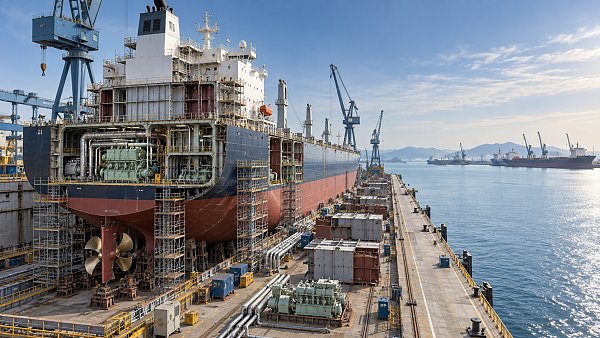
For procurement teams evaluating smart container ships, LNG carriers, or other advanced ocean-going assets, cost discipline starts long before contract award. A vessel can appear competitive on day 1 and become expensive by year 3 if technical assumptions, service obligations, or integration requirements were not tested during the maritime tenders process.
This matters even more in today’s transport environment, where digitalization, decarbonization, and schedule reliability now influence total project value as much as hull price or propulsion package. For business evaluation personnel, a robust tender review should cover at least 6 dimensions: regulatory compliance, operating efficiency, maintenance burden, software interoperability, delivery risk, and residual commercial exposure.
Why Bid Price Alone Distorts Maritime Tender Decisions
In many maritime tenders, commercial scoring still gives heavy weight to CAPEX. Yet a 5% lower acquisition price can be offset by 10% to 20% higher operating expense over a 15- to 25-year asset life. That gap becomes larger when the vessel is digitally enabled, dual-fuel capable, or built for demanding international routes.
For GTOT’s audience, this is not just a shipbuilding issue. It is a systems issue, similar to how rail signaling, braking, and traction components must be assessed beyond initial purchase cost. In both rail and maritime procurement, hidden cost exposure often sits in interfaces, uptime performance, and compliance continuity rather than in the headline quote.
The 4 Cost Layers Often Missed in Early Evaluation
Business evaluators should separate tender cost into 4 layers: acquisition cost, commissioning cost, operating cost, and risk cost. If these layers are merged into one financial line, suppliers with aggressive front-end pricing can look stronger than suppliers offering lower lifecycle exposure.
- Acquisition cost: hull, machinery, automation package, and basic documentation.
- Commissioning cost: sea trials, software tuning, crew familiarization, and interface validation.
- Operating cost: fuel use, maintenance intervals, spare parts, and service response.
- Risk cost: delay penalties, retrofit needs, regulatory non-conformance, and cyber remediation.
How Hidden Costs Typically Appear
The hidden cost pattern in maritime tenders is usually predictable. A supplier may offer a compliant baseline specification but price optional items separately. These optional items can include EEXI or CII improvement measures, digital diagnostics, class-required redundancy, or extended warranty coverage. Once added, the total offer may rise by 8% to 18%.
Another common issue is under-scoped integration. A vessel with AI-assisted routing, cargo monitoring, or ship-to-shore data exchange may require additional middleware, satellite bandwidth planning, cybersecurity hardening, and crew training. None of these line items are trivial if the operating profile depends on continuous data visibility.
Key Warning Signs During Commercial Review
- Warranty shorter than 12 months after delivery or limited to selected subsystems.
- Fuel performance stated only at ideal sea state, not across practical loading conditions.
- Software licenses priced annually but omitted from total lifecycle comparison.
- Critical spares not included for the first 24 months of operation.
- Delivery windows expressed broadly, such as 6 to 10 months, without milestone accountability.
The table below helps procurement teams translate these warning signs into measurable evaluation points during maritime tenders.
The practical lesson is simple: maritime tenders should not compare supplier prices without normalizing scope. Commercially, two offers may look similar. Operationally, they may carry very different 5-year cost burdens.
The Hidden Cost Risks Business Evaluation Teams Should Review
A disciplined review framework can reduce decision error significantly. In complex maritime tenders, the most important hidden costs usually sit in 5 categories: compliance, lifecycle maintenance, fuel and energy performance, digital integration, and delivery reliability. Each category deserves technical and commercial testing.
1. Compliance Gaps and Future Regulatory Exposure
A vessel may satisfy current class and flag requirements at bid stage but still create future cost pressure if the design margin is too narrow. This is particularly relevant for LNG carriers, dual-fuel vessels, and smart container ships expected to operate across multiple jurisdictions over 15 to 20 years.
Evaluation teams should ask whether emissions monitoring, reporting functions, ballast water provisions, cybersecurity controls, and energy efficiency upgrades are already supported in the base architecture. A retrofit 24 months after delivery is usually more expensive than incorporating design allowance at the shipyard stage.
Review Checklist
- Does the offer cover present and near-term regulatory obligations for the intended routes?
- Is there space, power, and software capacity for additional compliance modules?
- Are class approvals included in the bid or treated as owner-side extras?
2. Lifecycle Maintenance and Spare Parts Burden
Maintenance cost is one of the most underestimated variables in maritime tenders. Components with lower initial price may require shorter overhaul intervals, more specialized tooling, or OEM-only technician attendance. Over a 10-year period, these service conditions can materially change the cost ranking of bidders.
For advanced ships with integrated propulsion control, cargo condition monitoring, and remote diagnostics, maintenance should be assessed at subsystem level. Typical intervals may range from 4,000 to 8,000 running hours for some equipment categories, while software support contracts may renew every 12 months.
Questions That Prevent Underestimated OPEX
- What is included in the first spare package, and for how many operating hours?
- Can approved third-party service providers perform routine work, or only the OEM?
- What is the average lead time for critical parts: 7 days, 30 days, or more than 60 days?
- Are software patches and sensor calibration covered in the warranty or separately billed?
3. Fuel Efficiency, Energy Use, and Operating Profile Fit
Fuel performance claims should never be reviewed in isolation. Maritime tenders often present consumption figures at optimal speed, calm sea state, and selected draft conditions. Yet real routes involve variable weather, port waiting time, load shifts, and auxiliary demand peaks.
A 2% to 4% deviation in fuel consumption may look minor on paper, but across a high-utilization trade lane it can outweigh a modest bid-price advantage. For LNG carriers and smart container vessels, the review should also include boil-off management logic, power management strategy, and voyage optimization capability.
The following comparison structure can help commercial teams evaluate operating efficiency claims more objectively in maritime tenders.
This method improves comparability. It also helps business evaluators avoid a common mistake: treating supplier efficiency narratives as equal even when test boundaries are different.
4. Digital Integration and Cybersecurity Cost
Modern maritime tenders increasingly involve data layers, not just steel and machinery. Smart vessels may connect navigation systems, engine monitoring, cargo visibility platforms, port interfaces, and fleet management dashboards. If those systems do not interoperate cleanly, the owner may inherit integration delay, duplicate licensing, or cybersecurity remediation cost.
Evaluation teams should define interface ownership in detail. A useful rule is to identify at least 3 levels: onboard subsystem integration, shore-side platform connection, and post-delivery software support. If responsibility is ambiguous at any level, later variation claims are likely.
High-Risk Integration Areas
- API availability and data export format for owner systems.
- Cyber patch management cycle, such as quarterly or semiannual updates.
- Satellite bandwidth assumptions for remote diagnostics and route optimization.
- Crew training hours required before digital systems can operate reliably.
5. Delivery Reliability and Schedule Erosion
Late delivery is not just a planning inconvenience. In maritime tenders, it can trigger financing cost, lost charter opportunity, delayed route entry, and downstream contract penalties. A vessel promised in 8 months but delivered in 11 months may erase much of the initial bid advantage.
Delivery risk should be assessed through yard capacity, subsystem supply chain resilience, approval milestone realism, and testing readiness. For specialized ships, bottlenecks often emerge in automation integration, cryogenic containment components, power electronics, or imported control packages.
3 Delivery Questions That Matter
- Are long-lead items already secured, or only planned after award?
- How many critical path suppliers have single-source exposure?
- What liquidated damages or milestone remedies apply after a 30-, 60-, or 90-day delay?
A Practical Evaluation Framework for Maritime Tenders
To make maritime tenders more decision-ready, business evaluation teams need a scoring system that combines technical credibility with commercial realism. A practical framework should convert qualitative supplier claims into weighted decision points that procurement, engineering, and finance can review together.
Build a Weighted Review Model
Many organizations use 100-point tender matrices. For complex vessel procurement, a balanced structure might allocate 25 points to technical compliance, 20 points to lifecycle cost, 15 points to fuel and energy efficiency, 15 points to digital integration, 15 points to delivery confidence, and 10 points to after-sales support.
The exact weighting will vary by fleet strategy, but the principle remains consistent: price should be one part of value, not the whole value. This is especially relevant for operators pursuing long service life, lower emissions, or data-driven fleet control.
Use Scenario-Based Commercial Testing
A strong tender review tests each bid against 3 operating scenarios: normal utilization, stressed utilization, and delayed-delivery impact. This approach reveals whether a seemingly efficient offer remains efficient when fuel cost rises, spare lead time extends, or software integration takes 90 days longer than expected.
For example, finance teams can compare supplier bids under a 5-year model with different utilization assumptions. Engineering teams can then validate whether the technical architecture supports that model without hidden retrofit cost. This cross-functional process reduces bias caused by supplier presentation quality alone.
Recommended 5-Step Process
- Normalize scope across all bidders and remove ambiguous exclusions.
- Model 5-year operating cost using route-specific assumptions.
- Stress-test compliance and digital integration obligations.
- Review delivery credibility against long-lead component exposure.
- Negotiate warranty, service levels, and variation control before award.
Where Intelligence Platforms Add Value
For business evaluators, one of the biggest challenges in maritime tenders is converting fragmented technical data into comparable procurement insight. This is where sector intelligence matters. Platforms focused on advanced transport systems can help teams interpret component-level implications, supplier positioning, and technology trend maturity with more confidence.
GTOT’s cross-domain perspective is useful because ship procurement is increasingly systems-driven, much like high-speed rail. Whether the subject is smart vessel interconnection, LNG containment stress considerations, or control system reliability, decision quality improves when commercial review is informed by engineering logic rather than price spreadsheets alone.
Common Mistakes in Maritime Tender Reviews
Even experienced teams can miss hidden risk when timelines are compressed. In many maritime tenders, avoidable cost escalation comes from process shortcuts rather than from unknown technology. Recognizing these mistakes early can protect both budget discipline and supplier accountability.
Mistake 1: Comparing Specifications Without Comparing Boundaries
Two suppliers may both claim compliance, but one may include testing, integration, and training while the other excludes them. Unless bid boundaries are harmonized line by line, commercial comparison will be distorted from the start.
Mistake 2: Treating Software as a Minor Add-On
On digitally enabled vessels, software can affect route optimization, equipment diagnostics, emissions reporting, and shore-side coordination. Annual subscription fees, patch obligations, and compatibility maintenance can become material over 3 to 5 years.
Mistake 3: Accepting Broad Delivery Commitments
A supplier stating “estimated delivery within 8 to 12 months” is not offering the same commercial certainty as one providing milestone-linked schedules and remedy terms. In maritime tenders, schedule ambiguity often transfers risk to the buyer.
Mistake 4: Ignoring Post-Handover Support Geography
Service support that works in one region may fail in another if technician coverage, spare inventory, or response commitments are weak. For internationally deployed assets, after-sales capability should be mapped across likely operating corridors, not just the build location.
Maritime tenders reward disciplined review, not just aggressive negotiation. The most reliable procurement outcomes come from checking total value across compliance, maintenance, fuel performance, digital readiness, and schedule confidence before the contract is signed.
For business evaluation teams working on smart vessels, LNG carriers, or other advanced marine assets, GTOT provides an informed perspective on the technical and commercial signals that shape better decisions. To reduce hidden cost exposure and strengthen your next supplier comparison, contact us to get tailored insights, discuss product details, or explore more vessel procurement solutions.
Recommended News
 Sep 29, 2026What drives traction systems price differences between rail projects?Traction systems price differences explained: compare duty cycles, voltage compatibility, integration, localization, and lifecycle costs for smarter rail procurement.
 Sep 26, 2026What to assess before selecting an electric traction system manufacturerChoose an electric traction system manufacturer with confidence. Explore key criteria for performance, reliability, safety, integration, energy efficiency, and lifecycle support.
 Sep 25, 2026When do full digitalization systems justify the investment?Full digitalization systems: discover when rail and maritime operators can turn connected data into safer operations, higher availability, and measurable ROI.
 Sep 23, 2026What drives automatic train control systems cost on rail projects?Automatic train control systems cost depends on integration, migration, safety testing, communications, and lifecycle support. Explore the key budget drivers for rail projects.
 Sep 21, 2026How to assess an ocean going vessel builder’s delivery riskAssess an ocean going vessel builder’s delivery risk with proven checks for schedules, capacity, design maturity, critical equipment, quality, and project controls.
 Sep 20, 2026What drives rail safety technology costs over a project lifecycle?Rail safety technology cost goes beyond equipment—explore lifecycle drivers from integration and safety assurance to cybersecurity, commissioning, and obsolescence.
 Sep 16, 2026What to verify before choosing an advanced ocean-going vessels supplierAdvanced ocean-going vessels supplier checklist: verify design authority, build quality, digital systems, delivery reliability, and lifecycle support before you buy.
 Sep 15, 2026What rail safety technology best reduces level-crossing risks in Southeast Asia?Rail safety technology Southeast Asia: discover how fail-safe signalling, barriers, obstacle detection and remote monitoring reduce level-crossing risks.
 Sep 14, 2026How exporters can reduce customs delays in global trade logisticsGlobal trade logistics for exporters: reduce customs delays with accurate data, clearance-ready documents, early filing, and proactive exception management.
 Sep 13, 2026When do global transportation network systems reduce delivery delays?Global transportation network systems reduce delivery delays by improving rail-port-vessel coordination, real-time visibility, and proactive decisions across complex land-sea supply chains.
 Sep 09, 2026When should you choose a rail and maritime manufacturer with dual-sector capability?Rail and maritime manufacturer guide: learn when dual-sector capability reduces integration risk, improves lifecycle support, and strengthens rail-to-port operations.
 Sep 08, 2026What to verify before selecting a railway signalling equipment supplierRailway signalling equipment supplier checklist: verify safety evidence, integration, cybersecurity, delivery capability, and lifecycle support before award.
 Sep 07, 2026How to size a traction power transformer for railway load demandTraction power transformer sizing guide: model railway load demand, peak duty, voltage regulation, harmonics, and contingency capacity for reliable service.
 Sep 07, 2026How do customization options for industrial connectors affect lead times?Customization options for industrial connectors can impact lead times, cost, and compliance. Learn how to specify smarter for rail and marine projects.
 Sep 05, 2026What information should an industrial sourcing guide include?Industrial sourcing information procurement guide: evaluate suppliers, compliance, lifecycle costs, interfaces, and lead times for smarter rail and maritime purchasing decisions.
 Sep 01, 2026How to find reliable maritime tender information before biddingMaritime tender information: learn how to verify sources, define bid-ready scopes, check qualifications, and reduce risk before submitting competitive marine bids.
 Aug 30, 2026How to select railway automation equipment for depots with phased upgradesRailway automation equipment for depots: learn how to plan phased upgrades that improve safety, throughput, integration, and lifecycle control.
 Aug 27, 2026How industrial sourcing intelligence pricing data supports budget approvalIndustrial sourcing intelligence pricing data helps teams benchmark scope, assess supplier risk, and build defensible budget approvals for complex rail and maritime assets.
 Aug 26, 2026When does a marine fuel efficiency solution make financial sense in the Middle East?Marine fuel efficiency solution Middle East: learn when retrofit savings, compliance value, and vessel data align to deliver credible ROI and smarter shipping investment decisions.
 Aug 24, 2026When does maritime automation for tankers deliver a real payback?Maritime automation for tankers delivers real payback when it cuts fuel use, reduces cargo risk, and improves uptime. See how owners can time investment for stronger ROI.
 Aug 23, 2026When do maritime logistics systems in the Middle East justify the costMaritime logistics systems Middle East: discover when rising delays, manual coordination, and poor visibility make system investment the smarter move for regional operators.
 Aug 22, 2026What drives vessel navigation system price for commercial fleetsVessel navigation system price depends on integration, compliance, automation, and support—not just hardware. Learn what drives fleet costs and compare quotes with confidence.
 Aug 21, 2026How to assess shipbuilding maritime tenders before biddingShipbuilding maritime tenders require more than price checks. Learn how to assess technical scope, compliance, supply chain, and commercial risk before bidding with confidence.
 Aug 20, 2026When does working with an ocean-going vessels distributor reduce supply risk?Ocean-going vessels distributor: learn when this partner cuts supply risk through stronger compliance, faster response, and better sourcing resilience in complex maritime procurement.