



Search News
Industry Portal
Popular Tags
EPC Contractors for Maritime Projects: Key Risks Before Contract Award
Author
Time
Click Count
Choosing EPC contractors for maritime projects can determine whether a vessel program starts with confidence or costly exposure. Before contract award, decision-makers must assess technical capability, supply chain resilience, compliance readiness, and risk allocation to avoid delays, claims, and performance gaps. This article outlines the key risks that matter most when evaluating contractors in complex maritime environments.
For shipowners, infrastructure investors, offshore logistics groups, and industrial buyers, the pre-award stage is where most controllable risk still exists. Once a contract is signed, weak assumptions on engineering scope, integration capability, or delivery planning can turn into 6- to 18-month schedule pressure, variation claims, and expensive retrofit work.
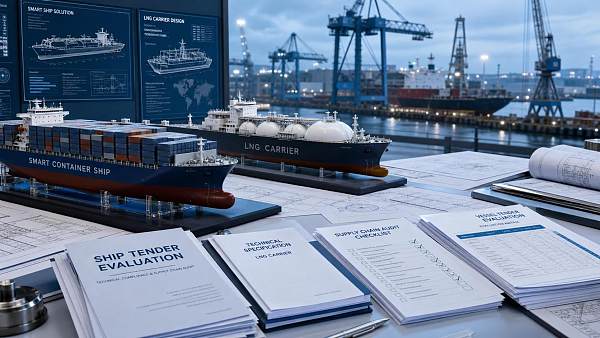
That is why selecting EPC contractors for maritime projects should go far beyond price comparison. In complex vessel programs such as smart container ships, LNG carriers, terminal-linked marine systems, and hybrid propulsion upgrades, the contractor must perform under technical, regulatory, and supply chain stress at the same time.
Why Pre-Award Assessment Matters in Maritime EPC
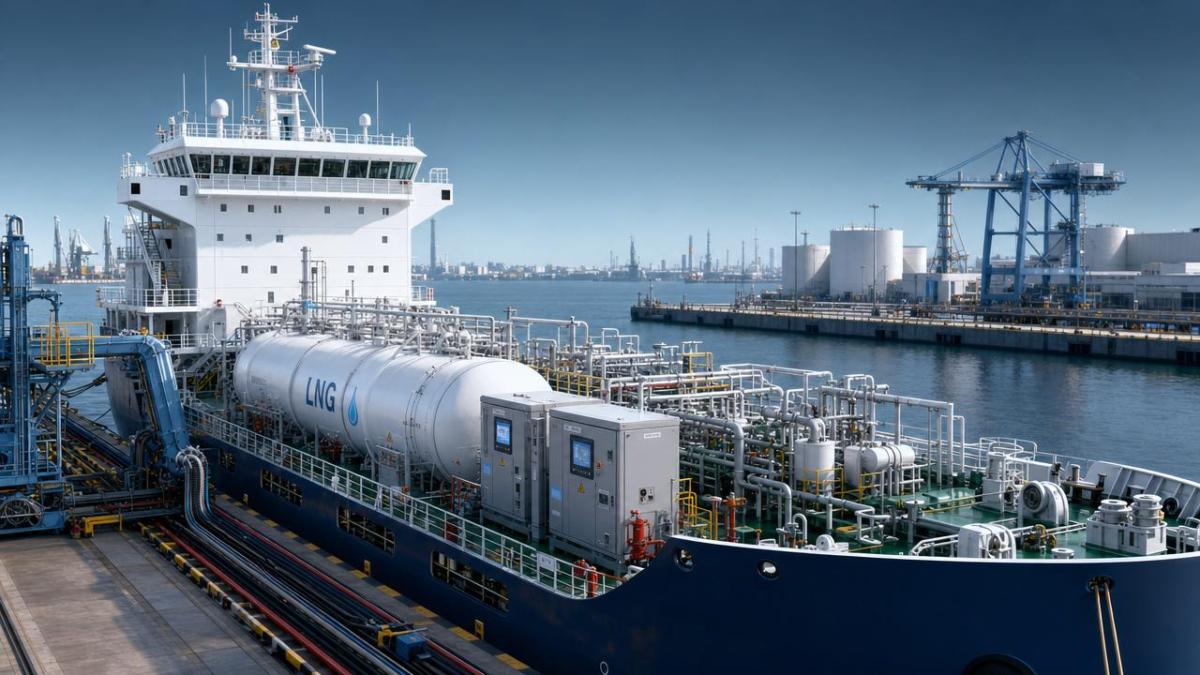
Maritime EPC work combines engineering, procurement, and construction or integration in one high-risk package. Unlike simpler industrial procurement, vessel-related projects often involve 4 to 6 interdependent workstreams: class compliance, equipment integration, dockyard coordination, digital systems, commissioning, and sea trials.
A contractor that appears strong in fabrication may still be weak in systems integration. Another may show competitive pricing but rely on a supplier base with 20- to 40-week lead times for switchboards, automation modules, cryogenic components, or propulsion auxiliaries. These gaps usually surface after award, when recovery options are limited and expensive.
The Main Exposure Areas Before Contract Signature
Decision-makers evaluating EPC contractors for maritime projects should focus on five practical questions. Can the contractor engineer the scope to the right level of maturity? Can it secure long-lead equipment on time? Can it manage class, flag, and port-related compliance? Can it coordinate interfaces across multiple vendors? Can it absorb risk without destabilizing delivery?
Typical consequences of weak pre-award review
- Design freeze delayed by 4 to 12 weeks because of unresolved interface data.
- Equipment substitutions that trigger re-approval by class or owner representatives.
- Commissioning overruns caused by software, control logic, or sensor integration issues.
- Claims arising from unclear battery limits, yard access limits, or owner-supplied items.
- Performance shortfalls in fuel efficiency, cargo handling, maneuverability, or safety systems.
In high-value vessel programs, even a 2% to 5% budget swing can materially affect project returns. For this reason, GTOT regularly sees buyers place more weight on technical due diligence, subsystem intelligence, and delivery transparency than on headline contract price alone.
Key Risks When Evaluating EPC Contractors for Maritime Projects
The strongest evaluations use a structured risk lens rather than a sales presentation lens. Before contract award, buyers should compare EPC contractors for maritime projects across capability depth, execution control, and commercial resilience, not just references and bid speed.
1. Technical capability risk
The first question is whether the contractor can execute the actual vessel scope, not simply a similar marine scope. There is a major difference between installing standard auxiliaries and integrating smart navigation, energy management, LNG handling systems, or digital monitoring architecture across 30 to 80 subsystems.
Review its engineering team composition, interface management process, and design review gates. A credible contractor should define at least 3 formal review stages: conceptual alignment, detailed design freeze, and pre-commissioning verification. If these gates are vague, risk is already high.
2. Supply chain and procurement risk
Procurement weakness is one of the most underestimated maritime risks. Long-lead items such as propulsion drives, integrated bridge components, cryogenic valves, cargo pumps, and automation cabinets may require 16 to 45 weeks depending on specification and origin. If sourcing plans are not validated before award, the schedule baseline may be unrealistic from day one.
Buyers should ask for approved vendor strategy, alternates list, logistics assumptions, and supplier concentration exposure. Heavy reliance on 1 or 2 niche suppliers can be acceptable, but only with transparent contingency planning and owner visibility on critical path items.
3. Compliance and approval risk
Marine projects rarely operate under a single approval layer. Class society requirements, flag-state rules, port restrictions, environmental regulations, emissions thresholds, and owner technical standards can all apply at once. For LNG carriers or smart vessel retrofits, document approval cycles can stretch from 2 weeks to 10 weeks per package.
If the contractor lacks a disciplined document control and approval tracking system, every late comment can cascade into fabrication or installation delay. That is especially dangerous when steel work, piping routes, control cabinets, and software logic must be coordinated with minimal rework.
4. Contractual and risk allocation gaps
Many disputes begin not with poor performance but with poorly assigned responsibility. In EPC contractors for maritime projects, unclear scope boundaries commonly affect owner-supplied equipment, yard services, cable routing, software interfaces, sea-trial criteria, and spare parts packages.
A well-structured contract should define risk ownership in measurable terms, including interface matrices, deliverable dates, review periods, testing obligations, and liquidated damage triggers. Where there are more than 10 major interfaces, a dedicated interface responsibility schedule is often essential.
The following table helps decision-makers compare the most common pre-award risk categories and the warning signs that deserve closer review.
The key takeaway is simple: most serious risk signals are visible before signature if buyers insist on evidence rather than assurances. The best EPC contractors for maritime projects can show how they control uncertainty, not just how they price it.
A Practical Due Diligence Framework for Decision-Makers
A disciplined contractor review process should combine technical, operational, and commercial scoring. In practice, many maritime buyers use 4 to 6 weighted categories, with technical capability and schedule realism carrying the highest weighting. Price remains important, but only after execution credibility is tested.
Core evaluation criteria before award
- Relevant vessel or marine system experience within the last 3 to 5 years.
- Engineering resources available during peak design and integration periods.
- Supplier network depth for critical equipment and spare parts support.
- Documented approach to class approval, testing, commissioning, and sea trials.
- Financial and contractual capacity to absorb delay, variation, or rework pressure.
Questions worth asking in bidder clarification rounds
- Which 5 components sit on the current critical procurement path?
- What percentage of engineering is complete at bid submission?
- How many approval cycles are assumed for class and owner comments?
- What is the fallback plan if one nominated supplier misses delivery by 6 weeks?
- Who owns integration testing between owner-furnished and contractor-furnished systems?
These questions quickly separate presentation strength from execution strength. In many cases, the quality of the bidder’s answers is more useful than the bidder’s slide deck. Specificity matters: names of deliverables, decision dates, hold points, and escalation routes are signs of real operating maturity.
The table below provides a practical scoring structure for comparing EPC contractors for maritime projects during final evaluation.
This type of framework reduces subjective decision-making. It also helps procurement, technical, and executive stakeholders align around the same award logic, which is especially important when vessel programs involve cross-border shipyards, equipment vendors, and digital system suppliers.
Common Mistakes Buyers Make Before Award
Even experienced teams can misjudge maritime contractor risk when project timelines are tight. The most common mistake is treating a marine EPC tender like a standard industrial package. Vessel-based projects are more interface-heavy, more approval-sensitive, and less tolerant of late design changes.
Mistake 1: Overvaluing low bid price
A bid that is 8% lower may look attractive, but if it excludes commissioning support, software integration, insulation details, or owner training, the final cost can easily exceed the stronger bid. Total installed cost and operational readiness matter more than nominal contract value.
Mistake 2: Accepting generic references
References should match project complexity, not just industry labels. A contractor with offshore steelwork experience is not automatically qualified for smart vessel integration or LNG-related containment interfaces. Ask for references tied to similar propulsion logic, cargo systems, control architectures, or environmental compliance conditions.
Mistake 3: Waiting too long to test interface ownership
If owner, yard, OEM, and EPC roles are not mapped before award, interface disputes become almost inevitable. A simple matrix listing 20 to 50 key interfaces can prevent months of confusion later, especially where communications, sensors, power distribution, and software packages must interoperate.
Mistake 4: Ignoring post-award service capability
For advanced ships and mission-critical marine systems, support after delivery is not optional. Response targets of 24 to 72 hours for troubleshooting, spares identification, and remote technical review can materially reduce downtime. Buyers should evaluate lifecycle support before signature, not after a fault event.
What Strong Maritime EPC Contractors Usually Demonstrate
Reliable EPC contractors for maritime projects tend to show the same patterns. They define scope in detail, challenge ambiguous owner requirements early, identify critical-path equipment before commercial close, and maintain a realistic link between engineering maturity and site execution.
They also speak the language of integrated delivery. That means understanding how propulsion, cargo handling, automation, navigation, safety systems, and dockside constraints affect one another. In marine projects, technical excellence is rarely isolated within one package; it sits in the quality of coordination between packages.
A practical final checkpoint
Before award, executive teams should require one final cross-functional review covering 4 points: scope certainty, critical procurement exposure, approval pathway, and contract risk balance. If any one of these remains unresolved, a short clarification round is usually cheaper than post-award recovery.
For organizations active across vessel technology, smart shipping, and complex transport assets, the lesson is consistent. Better decisions come from better technical intelligence. GTOT supports this decision process by helping buyers and project teams interpret system-level risk across advanced maritime equipment, supply chains, and tender environments.
If you are screening EPC contractors for maritime projects and need sharper visibility into technical due diligence, procurement exposure, or tender positioning, contact GTOT to get tailored insight, discuss project requirements, and explore more practical maritime solutions.
Recommended News
 Sep 29, 2026What drives traction systems price differences between rail projects?Traction systems price differences explained: compare duty cycles, voltage compatibility, integration, localization, and lifecycle costs for smarter rail procurement.
 Sep 26, 2026What to assess before selecting an electric traction system manufacturerChoose an electric traction system manufacturer with confidence. Explore key criteria for performance, reliability, safety, integration, energy efficiency, and lifecycle support.
 Sep 25, 2026When do full digitalization systems justify the investment?Full digitalization systems: discover when rail and maritime operators can turn connected data into safer operations, higher availability, and measurable ROI.
 Sep 23, 2026What drives automatic train control systems cost on rail projects?Automatic train control systems cost depends on integration, migration, safety testing, communications, and lifecycle support. Explore the key budget drivers for rail projects.
 Sep 21, 2026How to assess an ocean going vessel builder’s delivery riskAssess an ocean going vessel builder’s delivery risk with proven checks for schedules, capacity, design maturity, critical equipment, quality, and project controls.
 Sep 20, 2026What drives rail safety technology costs over a project lifecycle?Rail safety technology cost goes beyond equipment—explore lifecycle drivers from integration and safety assurance to cybersecurity, commissioning, and obsolescence.
 Sep 16, 2026What to verify before choosing an advanced ocean-going vessels supplierAdvanced ocean-going vessels supplier checklist: verify design authority, build quality, digital systems, delivery reliability, and lifecycle support before you buy.
 Sep 15, 2026What rail safety technology best reduces level-crossing risks in Southeast Asia?Rail safety technology Southeast Asia: discover how fail-safe signalling, barriers, obstacle detection and remote monitoring reduce level-crossing risks.
 Sep 14, 2026How exporters can reduce customs delays in global trade logisticsGlobal trade logistics for exporters: reduce customs delays with accurate data, clearance-ready documents, early filing, and proactive exception management.
 Sep 13, 2026When do global transportation network systems reduce delivery delays?Global transportation network systems reduce delivery delays by improving rail-port-vessel coordination, real-time visibility, and proactive decisions across complex land-sea supply chains.
 Sep 09, 2026When should you choose a rail and maritime manufacturer with dual-sector capability?Rail and maritime manufacturer guide: learn when dual-sector capability reduces integration risk, improves lifecycle support, and strengthens rail-to-port operations.
 Sep 08, 2026What to verify before selecting a railway signalling equipment supplierRailway signalling equipment supplier checklist: verify safety evidence, integration, cybersecurity, delivery capability, and lifecycle support before award.
 Sep 07, 2026How to size a traction power transformer for railway load demandTraction power transformer sizing guide: model railway load demand, peak duty, voltage regulation, harmonics, and contingency capacity for reliable service.
 Sep 07, 2026How do customization options for industrial connectors affect lead times?Customization options for industrial connectors can impact lead times, cost, and compliance. Learn how to specify smarter for rail and marine projects.
 Sep 05, 2026What information should an industrial sourcing guide include?Industrial sourcing information procurement guide: evaluate suppliers, compliance, lifecycle costs, interfaces, and lead times for smarter rail and maritime purchasing decisions.
 Sep 01, 2026How to find reliable maritime tender information before biddingMaritime tender information: learn how to verify sources, define bid-ready scopes, check qualifications, and reduce risk before submitting competitive marine bids.
 Aug 30, 2026How to select railway automation equipment for depots with phased upgradesRailway automation equipment for depots: learn how to plan phased upgrades that improve safety, throughput, integration, and lifecycle control.
 Aug 27, 2026How industrial sourcing intelligence pricing data supports budget approvalIndustrial sourcing intelligence pricing data helps teams benchmark scope, assess supplier risk, and build defensible budget approvals for complex rail and maritime assets.
 Aug 26, 2026When does a marine fuel efficiency solution make financial sense in the Middle East?Marine fuel efficiency solution Middle East: learn when retrofit savings, compliance value, and vessel data align to deliver credible ROI and smarter shipping investment decisions.
 Aug 24, 2026When does maritime automation for tankers deliver a real payback?Maritime automation for tankers delivers real payback when it cuts fuel use, reduces cargo risk, and improves uptime. See how owners can time investment for stronger ROI.
 Aug 23, 2026When do maritime logistics systems in the Middle East justify the costMaritime logistics systems Middle East: discover when rising delays, manual coordination, and poor visibility make system investment the smarter move for regional operators.
 Aug 22, 2026What drives vessel navigation system price for commercial fleetsVessel navigation system price depends on integration, compliance, automation, and support—not just hardware. Learn what drives fleet costs and compare quotes with confidence.
 Aug 21, 2026How to assess shipbuilding maritime tenders before biddingShipbuilding maritime tenders require more than price checks. Learn how to assess technical scope, compliance, supply chain, and commercial risk before bidding with confidence.
 Aug 20, 2026When does working with an ocean-going vessels distributor reduce supply risk?Ocean-going vessels distributor: learn when this partner cuts supply risk through stronger compliance, faster response, and better sourcing resilience in complex maritime procurement.