



Search News
Industry Portal
Popular Tags
Decarbonization in Maritime Logistics: Which Measures Pay Off Fastest?
Author
Time
Click Count
Decarbonization in maritime logistics is no longer a long-range ambition—it is a near-term business decision. For commercial evaluators, the key question is which measures can reduce fuel costs, compliance risk, and carbon intensity fastest without undermining vessel uptime or asset value. This article examines the highest-payback options, from voyage optimization to energy-efficiency retrofits, through a practical investment lens.
Why decarbonization in maritime logistics now depends on operating scenario
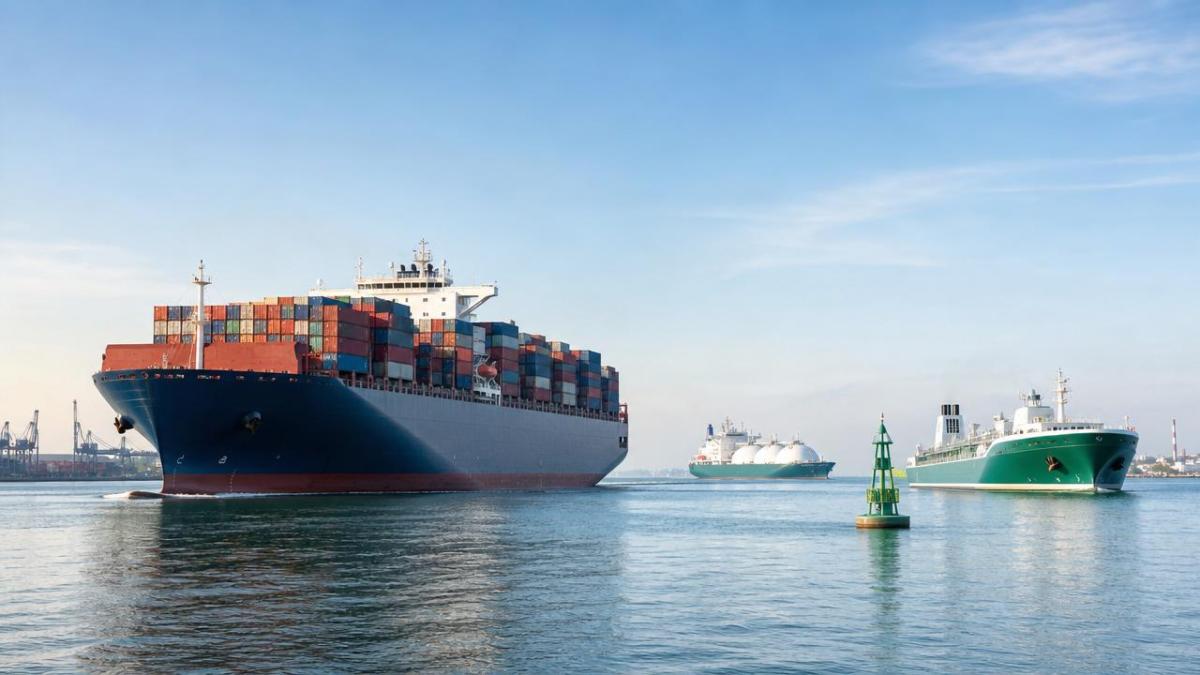
Decarbonization in maritime logistics does not reward every fleet in the same way. Payback speed changes with route length, vessel age, bunker profile, charter structure, and port congestion.
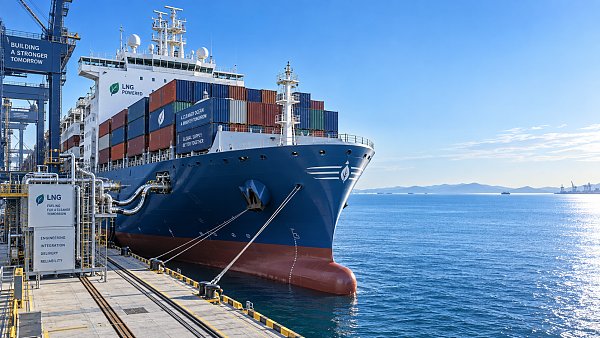
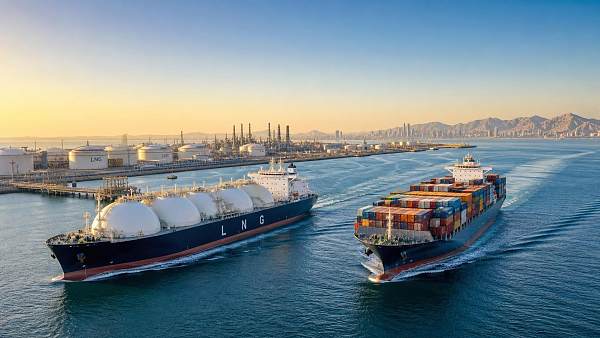
A smart container ship on fixed loops faces different economics than an LNG carrier on energy-sensitive voyages. The same retrofit can look excellent in one case and weak in another.
This matters across the wider transport industry. GTOT’s land-sea intelligence view shows that efficiency gains come fastest when digital control, equipment reliability, and asset utilization are assessed together.
The immediate pressure is also structural. IMO carbon targets, CII performance expectations, fuel price volatility, and customer disclosure rules are turning decarbonization in maritime logistics into an everyday operating constraint.
Scenario 1: Fixed-route container services usually gain fastest from voyage optimization
For scheduled liner services, the fastest-return measure is often voyage optimization. It needs limited hardware investment and can start delivering savings within weeks.
The core value lies in better speed profiles, weather routing, port arrival timing, and reduced idle fuel burn. These actions improve schedule discipline while lowering emissions intensity.
What to examine first
- Historical waiting time outside port
- Average speed variance by lane
- Fuel consumption under different sea states
- Data quality from onboard and shore systems
In many fixed loops, just-in-time arrival can outperform expensive technical upgrades at the start. It cuts unnecessary acceleration, anchorage time, and emissions per transported unit.
For decarbonization in maritime logistics, this is often the first measure because it combines low capex, fast implementation, and measurable reporting outcomes.
Scenario 2: Older bulk and tanker fleets often benefit first from proven efficiency retrofits
Where vessels are older and routes less predictable, technical retrofits can pay off faster than advanced digital layers alone. The vessel’s baseline efficiency gap is usually wider.
Popular options include hull coatings, propeller upgrades, air lubrication, variable frequency drives, and waste heat recovery. Not all fit every hull or duty cycle.
Core judgment points
The first question is drydock timing. A strong retrofit can lose attractiveness if installation creates extra off-hire or fragmented service interruptions.
The second question is fuel savings consistency. Measures that depend on narrow speed bands may underperform on volatile charter patterns.
The third question is residual life. A ten-year-old vessel can still justify investment, but only if remaining service years support the return window.
In this scenario, decarbonization in maritime logistics works best when engineering simplicity and maintenance familiarity are prioritized over experimental technologies.
Scenario 3: LNG carriers and dual-fuel vessels need fuel-flexibility decisions, not only carbon math
For LNG carriers, emissions strategy cannot be separated from cargo handling logic, boil-off management, and propulsion mode selection. Carbon reduction is linked to energy security economics.
A dual-fuel vessel may show attractive decarbonization potential, yet actual payback depends on methane slip control, fuel availability, and route-specific bunkering resilience.
Where fast returns usually appear
- Engine tuning and operating mode optimization
- Boil-off gas management improvements
- Digital monitoring for cryogenic and propulsion efficiency
- Reduced deviations through smarter bunker planning
This is where GTOT’s intelligence model becomes relevant. Deep-sea navigation logic, equipment data, and fuel system behavior must be stitched together before ranking investments.
In decarbonization in maritime logistics, fuel pathway choices are strategic, but operational optimization still usually delivers the earliest financial wins.
How payback differs across maritime logistics scenarios
This comparison shows a clear pattern. Decarbonization in maritime logistics pays back fastest when the chosen measure matches actual operating friction, not generic sustainability ambition.
Which measures deserve priority when capital is limited
When budgets are constrained, sequence matters more than technology breadth. Starting with highly visible but slow-payback projects can delay overall transition performance.
A practical priority ladder
- Use voyage data to remove avoidable fuel burn.
- Add low-disruption retrofits during planned maintenance windows.
- Upgrade monitoring for engines, hull, and routing decisions.
- Only then assess larger fuel-transition investments.
This sequence reduces both technical and commercial risk. It also generates operating data that improves later decisions on methanol, LNG, ammonia readiness, or hybrid pathways.
For decarbonization in maritime logistics, the best early moves are usually the ones that create immediate savings and better decision evidence at the same time.
Common misjudgments that slow decarbonization in maritime logistics
One common mistake is assuming that alternative fuel readiness automatically means fast return. In reality, infrastructure gaps and price volatility can extend payback significantly.
Another mistake is treating compliance scores as the same as economic performance. A measure may improve ratings while offering weak fuel savings in actual service conditions.
A third error is ignoring data integrity. Route optimization tools and digital twins cannot produce reliable savings if sensor streams, noon reports, and port updates are inconsistent.
Finally, some fleets overfocus on hardware and underweight coordination. Better shore-vessel communication can unlock low-cost decarbonization in maritime logistics before major capital deployment.
Action steps for choosing the fastest-payback path
Begin with a scenario-based screening. Segment vessels by route stability, age, fuel type, drydock timing, and current carbon intensity trend.
Next, rank measures by three factors: implementation speed, expected fuel reduction, and operational disruption. This creates a more realistic short list.
Then validate with real voyage data. The strongest candidates for decarbonization in maritime logistics should show clear benefit under normal, not ideal, operating conditions.
For organizations tracking both sea and land transport efficiency, this wider system view is increasingly valuable. GTOT highlights how digital control discipline often determines whether equipment investments truly compound.
The fastest wins usually come from actions that cut waste now, strengthen compliance posture, and preserve optionality for later fuel transitions. In today’s market, that is the most bankable form of decarbonization in maritime logistics.
Recommended News
 Sep 29, 2026What drives traction systems price differences between rail projects?Traction systems price differences explained: compare duty cycles, voltage compatibility, integration, localization, and lifecycle costs for smarter rail procurement.
 Sep 26, 2026What to assess before selecting an electric traction system manufacturerChoose an electric traction system manufacturer with confidence. Explore key criteria for performance, reliability, safety, integration, energy efficiency, and lifecycle support.
 Sep 25, 2026When do full digitalization systems justify the investment?Full digitalization systems: discover when rail and maritime operators can turn connected data into safer operations, higher availability, and measurable ROI.
 Sep 23, 2026What drives automatic train control systems cost on rail projects?Automatic train control systems cost depends on integration, migration, safety testing, communications, and lifecycle support. Explore the key budget drivers for rail projects.
 Sep 21, 2026How to assess an ocean going vessel builder’s delivery riskAssess an ocean going vessel builder’s delivery risk with proven checks for schedules, capacity, design maturity, critical equipment, quality, and project controls.
 Sep 20, 2026What drives rail safety technology costs over a project lifecycle?Rail safety technology cost goes beyond equipment—explore lifecycle drivers from integration and safety assurance to cybersecurity, commissioning, and obsolescence.
 Sep 16, 2026What to verify before choosing an advanced ocean-going vessels supplierAdvanced ocean-going vessels supplier checklist: verify design authority, build quality, digital systems, delivery reliability, and lifecycle support before you buy.
 Sep 15, 2026What rail safety technology best reduces level-crossing risks in Southeast Asia?Rail safety technology Southeast Asia: discover how fail-safe signalling, barriers, obstacle detection and remote monitoring reduce level-crossing risks.
 Sep 14, 2026How exporters can reduce customs delays in global trade logisticsGlobal trade logistics for exporters: reduce customs delays with accurate data, clearance-ready documents, early filing, and proactive exception management.
 Sep 13, 2026When do global transportation network systems reduce delivery delays?Global transportation network systems reduce delivery delays by improving rail-port-vessel coordination, real-time visibility, and proactive decisions across complex land-sea supply chains.
 Sep 09, 2026When should you choose a rail and maritime manufacturer with dual-sector capability?Rail and maritime manufacturer guide: learn when dual-sector capability reduces integration risk, improves lifecycle support, and strengthens rail-to-port operations.
 Sep 08, 2026What to verify before selecting a railway signalling equipment supplierRailway signalling equipment supplier checklist: verify safety evidence, integration, cybersecurity, delivery capability, and lifecycle support before award.
 Sep 07, 2026How to size a traction power transformer for railway load demandTraction power transformer sizing guide: model railway load demand, peak duty, voltage regulation, harmonics, and contingency capacity for reliable service.
 Sep 07, 2026How do customization options for industrial connectors affect lead times?Customization options for industrial connectors can impact lead times, cost, and compliance. Learn how to specify smarter for rail and marine projects.
 Sep 05, 2026What information should an industrial sourcing guide include?Industrial sourcing information procurement guide: evaluate suppliers, compliance, lifecycle costs, interfaces, and lead times for smarter rail and maritime purchasing decisions.
 Sep 01, 2026How to find reliable maritime tender information before biddingMaritime tender information: learn how to verify sources, define bid-ready scopes, check qualifications, and reduce risk before submitting competitive marine bids.
 Aug 30, 2026How to select railway automation equipment for depots with phased upgradesRailway automation equipment for depots: learn how to plan phased upgrades that improve safety, throughput, integration, and lifecycle control.
 Aug 27, 2026How industrial sourcing intelligence pricing data supports budget approvalIndustrial sourcing intelligence pricing data helps teams benchmark scope, assess supplier risk, and build defensible budget approvals for complex rail and maritime assets.
 Aug 26, 2026When does a marine fuel efficiency solution make financial sense in the Middle East?Marine fuel efficiency solution Middle East: learn when retrofit savings, compliance value, and vessel data align to deliver credible ROI and smarter shipping investment decisions.
 Aug 24, 2026When does maritime automation for tankers deliver a real payback?Maritime automation for tankers delivers real payback when it cuts fuel use, reduces cargo risk, and improves uptime. See how owners can time investment for stronger ROI.
 Aug 23, 2026When do maritime logistics systems in the Middle East justify the costMaritime logistics systems Middle East: discover when rising delays, manual coordination, and poor visibility make system investment the smarter move for regional operators.
 Aug 22, 2026What drives vessel navigation system price for commercial fleetsVessel navigation system price depends on integration, compliance, automation, and support—not just hardware. Learn what drives fleet costs and compare quotes with confidence.
 Aug 21, 2026How to assess shipbuilding maritime tenders before biddingShipbuilding maritime tenders require more than price checks. Learn how to assess technical scope, compliance, supply chain, and commercial risk before bidding with confidence.
 Aug 20, 2026When does working with an ocean-going vessels distributor reduce supply risk?Ocean-going vessels distributor: learn when this partner cuts supply risk through stronger compliance, faster response, and better sourcing resilience in complex maritime procurement.