



Search News
Industry Portal
Popular Tags
Absolute Safety Standards That Reduce Operating Risk
Author
Time
Click Count
In rail and maritime operations, absolute safety is not a slogan but a measurable standard that directly reduces operating risk. For quality control and safety management professionals, every signal system, braking response, pantograph interface, and vessel control decision can affect uptime, compliance, and asset integrity. This article explores the safety principles and technical benchmarks that help high-stakes transport systems perform with greater reliability across land and sea.
What does absolute safety mean in complex transport systems?
Absolute safety means designing operations so failures become predictable, isolated, and controllable before they create larger consequences.
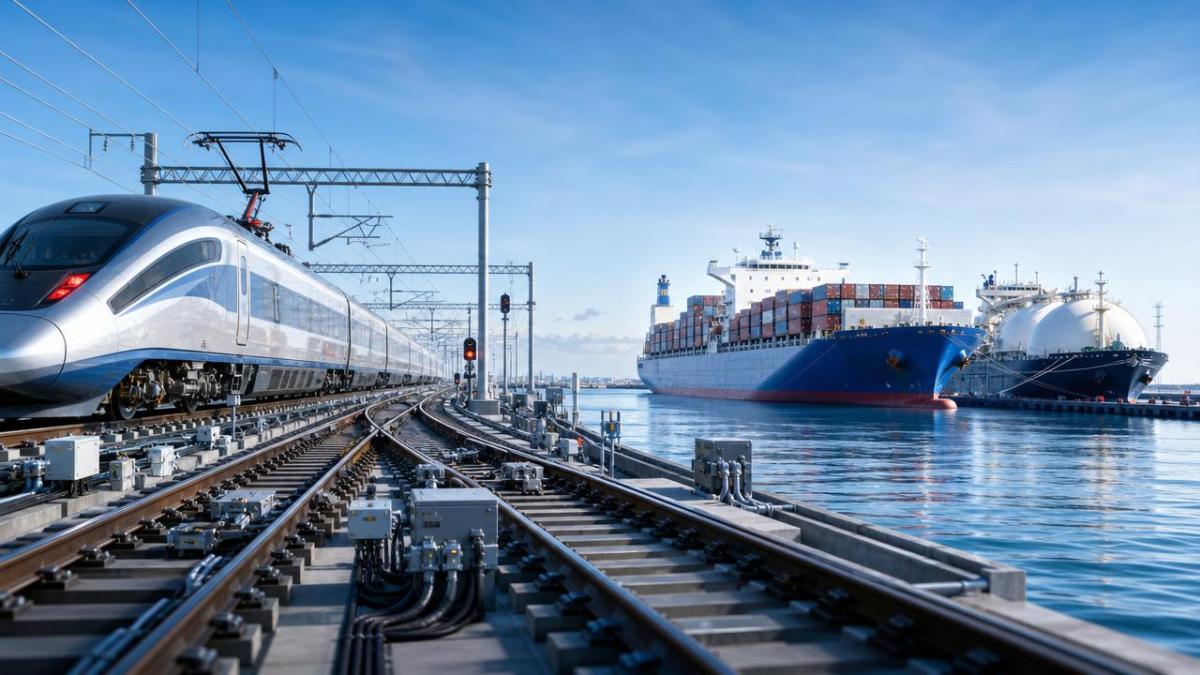
In practice, absolute safety combines engineering limits, control logic, inspection discipline, and fast recovery mechanisms.
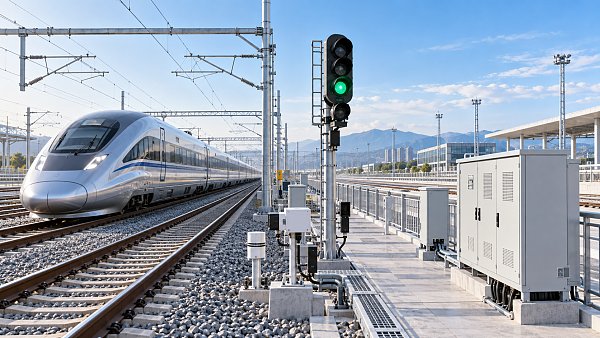
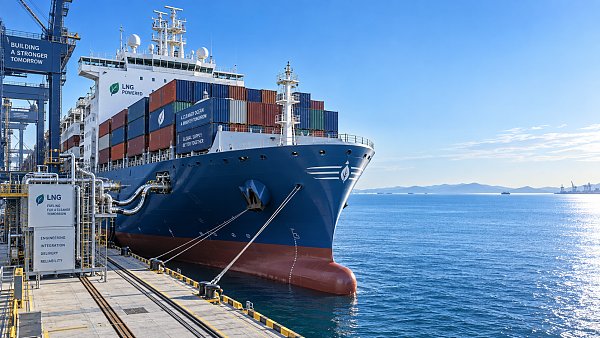
For GTOT-related sectors, this applies to railway signalling, pantographs, braking systems, smart container ships, and LNG carriers.
The goal is not zero activity risk. The goal is risk reduction through verified standards, redundancy, and continuous condition awareness.
A railway signal control system, for example, must fail safely under disrupted communication, power fluctuation, or sensor inconsistency.
A smart vessel must also maintain safe routing when data quality drops, weather shifts, or propulsion performance deviates from plan.
Absolute safety standards reduce operating risk by turning hidden uncertainty into visible control points.
These control points usually include:
- Defined failure thresholds
- Automatic protective responses
- Redundant hardware or logic paths
- Traceable event recording
- Maintenance actions linked to condition data
Which technical standards most effectively reduce operating risk?
Not all standards carry equal weight. The most effective ones directly shape system behavior during abnormal conditions.
In rail, SIL4 remains a critical benchmark for signalling integrity. It supports extremely low tolerance for dangerous failures.
For braking systems, effective standards focus on stopping distance consistency, response latency, thermal fade resistance, and control stability.
Pantograph safety benchmarks emphasize contact stability, arcing control, uplift force accuracy, and endurance under vibration and crosswind.
At sea, absolute safety depends on navigation integrity, propulsion redundancy, collision avoidance logic, and cargo containment reliability.
For LNG carriers, cryogenic insulation performance and membrane stress management are not secondary details. They are core safety determinants.
The strongest safety frameworks usually share five features:
- They define measurable pass or fail values.
- They include abnormal operating scenarios.
- They require validation, not assumption.
- They connect design with maintenance.
- They support traceability during audits or incidents.
Absolute safety becomes credible only when standards influence daily operation, testing cycles, software updates, and repair decisions.
How do rail systems apply absolute safety in real operating environments?
Rail systems face dense traffic, high speeds, variable loads, and strict timetable demands. Small deviations can quickly escalate.
That is why absolute safety in rail depends on coordinated performance rather than isolated component quality.
Signal control as the first barrier
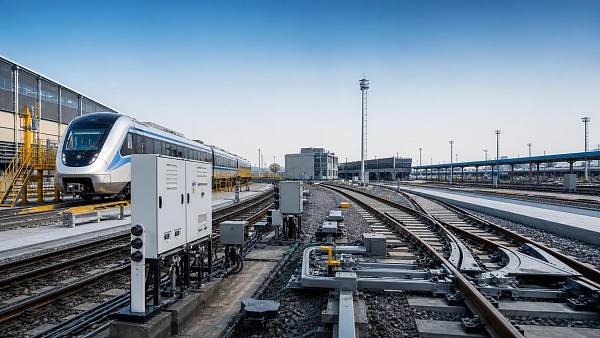
Signal control acts as the network’s central nervous system. It decides movement authority, spacing, and conflict prevention.
When interlocking logic, communication channels, and onboard responses align, operating risk drops sharply.
Pantographs as a power stability issue
Pantographs affect more than power collection. Unstable contact can trigger overheating, arcing, network disturbances, and premature wear.
Absolute safety here requires controlled contact force, aerodynamic resilience, and consistent interface monitoring at high speed.
Braking systems as the final protection layer
Braking performance determines whether a train stops within expected margins during routine and emergency events.
Microelectronic control, pneumatic response, and friction material behavior must be validated together, not separately.
In rail, absolute safety standards reduce operating risk when every subsystem shares consistent timing, diagnostics, and fail-safe logic.
How does absolute safety work differently in smart ships and LNG carriers?
Maritime operations add distance, weather uncertainty, crew variation, and slower intervention windows. Safety architecture must reflect that reality.
Smart container ships rely on route optimization, sensor fusion, and ship-to-shore coordination. Efficiency gains matter, but only within safety boundaries.
If data latency, cyber disruption, or equipment drift appears, the vessel still needs conservative decision logic.
That is where absolute safety differs from simple automation. Automation seeks efficiency. Absolute safety protects continuity under uncertainty.
LNG carriers face even tighter constraints because the cargo environment is extreme and unforgiving.
At minus 163 degrees, insulation degradation, membrane stress, and fuel handling faults can produce major operating consequences.
Key maritime safety checks often include:
- Navigation and route risk modeling
- Dual-fuel propulsion response verification
- Cryogenic containment monitoring
- Hull and stress trend analysis
- Shore-connected decision escalation rules
When these controls are linked through one intelligence framework, absolute safety becomes operational rather than theoretical.
What common mistakes weaken absolute safety programs?
Many safety efforts fail because they focus on certification documents while ignoring live operating behavior.
One common mistake is treating compliance as the endpoint. Real absolute safety requires post-deployment verification and feedback loops.
Another mistake is judging components in isolation. A safe part can still create unsafe interactions within a larger system.
Overconfidence in automation is also dangerous. Intelligent systems need override logic, sensor validation, and degraded-mode procedures.
Maintenance gaps create another hidden risk. If inspection intervals ignore real stress cycles, failures emerge between scheduled checks.
A final mistake is using fragmented data. When rail, traction, vessel, and cargo indicators stay disconnected, pattern recognition weakens.
To protect absolute safety, review whether the system can:
- Detect drift before failure
- Maintain safe degraded operation
- Record root-cause evidence clearly
- Connect inspection data with control decisions
How can organizations evaluate and improve absolute safety step by step?
Improvement starts with visibility. Map where operating risk concentrates across control, power, braking, navigation, and containment functions.
Then compare design assumptions with field conditions. Actual vibration, load variation, route density, and weather exposure often differ.
A practical improvement path usually follows this sequence:
- Define critical failure modes by subsystem.
- Assign measurable safety thresholds.
- Install or refine condition monitoring.
- Test degraded and emergency scenarios.
- Update maintenance using real performance data.
- Review events through one cross-domain intelligence process.
This method supports absolute safety because it links design intent with operating evidence and corrective action.
FAQ quick-reference table
Absolute safety is strongest when standards, intelligence, and maintenance form one closed loop across land and sea operations.
For GTOT, that means connecting SIL4 signalling discipline, high-speed traction reliability, braking precision, smart vessel logic, and LNG containment insight.
The next practical step is simple: identify the subsystem where uncertainty is least visible, then make it measurable.
That is how absolute safety reduces operating risk, protects asset value, and supports resilient transport performance at scale.
Recommended News
 Sep 29, 2026What drives traction systems price differences between rail projects?Traction systems price differences explained: compare duty cycles, voltage compatibility, integration, localization, and lifecycle costs for smarter rail procurement.
 Sep 26, 2026What to assess before selecting an electric traction system manufacturerChoose an electric traction system manufacturer with confidence. Explore key criteria for performance, reliability, safety, integration, energy efficiency, and lifecycle support.
 Sep 25, 2026When do full digitalization systems justify the investment?Full digitalization systems: discover when rail and maritime operators can turn connected data into safer operations, higher availability, and measurable ROI.
 Sep 23, 2026What drives automatic train control systems cost on rail projects?Automatic train control systems cost depends on integration, migration, safety testing, communications, and lifecycle support. Explore the key budget drivers for rail projects.
 Sep 21, 2026How to assess an ocean going vessel builder’s delivery riskAssess an ocean going vessel builder’s delivery risk with proven checks for schedules, capacity, design maturity, critical equipment, quality, and project controls.
 Sep 20, 2026What drives rail safety technology costs over a project lifecycle?Rail safety technology cost goes beyond equipment—explore lifecycle drivers from integration and safety assurance to cybersecurity, commissioning, and obsolescence.
 Sep 16, 2026What to verify before choosing an advanced ocean-going vessels supplierAdvanced ocean-going vessels supplier checklist: verify design authority, build quality, digital systems, delivery reliability, and lifecycle support before you buy.
 Sep 15, 2026What rail safety technology best reduces level-crossing risks in Southeast Asia?Rail safety technology Southeast Asia: discover how fail-safe signalling, barriers, obstacle detection and remote monitoring reduce level-crossing risks.
 Sep 14, 2026How exporters can reduce customs delays in global trade logisticsGlobal trade logistics for exporters: reduce customs delays with accurate data, clearance-ready documents, early filing, and proactive exception management.
 Sep 13, 2026When do global transportation network systems reduce delivery delays?Global transportation network systems reduce delivery delays by improving rail-port-vessel coordination, real-time visibility, and proactive decisions across complex land-sea supply chains.
 Sep 09, 2026When should you choose a rail and maritime manufacturer with dual-sector capability?Rail and maritime manufacturer guide: learn when dual-sector capability reduces integration risk, improves lifecycle support, and strengthens rail-to-port operations.
 Sep 08, 2026What to verify before selecting a railway signalling equipment supplierRailway signalling equipment supplier checklist: verify safety evidence, integration, cybersecurity, delivery capability, and lifecycle support before award.
 Sep 07, 2026How to size a traction power transformer for railway load demandTraction power transformer sizing guide: model railway load demand, peak duty, voltage regulation, harmonics, and contingency capacity for reliable service.
 Sep 07, 2026How do customization options for industrial connectors affect lead times?Customization options for industrial connectors can impact lead times, cost, and compliance. Learn how to specify smarter for rail and marine projects.
 Sep 05, 2026What information should an industrial sourcing guide include?Industrial sourcing information procurement guide: evaluate suppliers, compliance, lifecycle costs, interfaces, and lead times for smarter rail and maritime purchasing decisions.
 Sep 01, 2026How to find reliable maritime tender information before biddingMaritime tender information: learn how to verify sources, define bid-ready scopes, check qualifications, and reduce risk before submitting competitive marine bids.
 Aug 30, 2026How to select railway automation equipment for depots with phased upgradesRailway automation equipment for depots: learn how to plan phased upgrades that improve safety, throughput, integration, and lifecycle control.
 Aug 27, 2026How industrial sourcing intelligence pricing data supports budget approvalIndustrial sourcing intelligence pricing data helps teams benchmark scope, assess supplier risk, and build defensible budget approvals for complex rail and maritime assets.
 Aug 26, 2026When does a marine fuel efficiency solution make financial sense in the Middle East?Marine fuel efficiency solution Middle East: learn when retrofit savings, compliance value, and vessel data align to deliver credible ROI and smarter shipping investment decisions.
 Aug 24, 2026When does maritime automation for tankers deliver a real payback?Maritime automation for tankers delivers real payback when it cuts fuel use, reduces cargo risk, and improves uptime. See how owners can time investment for stronger ROI.
 Aug 23, 2026When do maritime logistics systems in the Middle East justify the costMaritime logistics systems Middle East: discover when rising delays, manual coordination, and poor visibility make system investment the smarter move for regional operators.
 Aug 22, 2026What drives vessel navigation system price for commercial fleetsVessel navigation system price depends on integration, compliance, automation, and support—not just hardware. Learn what drives fleet costs and compare quotes with confidence.
 Aug 21, 2026How to assess shipbuilding maritime tenders before biddingShipbuilding maritime tenders require more than price checks. Learn how to assess technical scope, compliance, supply chain, and commercial risk before bidding with confidence.
 Aug 20, 2026When does working with an ocean-going vessels distributor reduce supply risk?Ocean-going vessels distributor: learn when this partner cuts supply risk through stronger compliance, faster response, and better sourcing resilience in complex maritime procurement.