Search News
Industry Portal
Popular Tags
When Does a Marine Systems Integrator Beat a Multi-Vendor Integration Model?
Author
Time
Click Count
A marine systems integrator beats a multi-vendor integration model when the vessel’s performance depends on several systems behaving as one operational environment, not merely as compatible pieces of equipment. This is most common on vessels with tightly coupled propulsion, power management, automation, navigation, cargo handling, safety, and shore-connectivity requirements.
The decision is not fundamentally about whether one procurement route is simpler. It is about where interface risk should sit. Under a multi-vendor model, the owner, shipyard, or appointed engineering partner often carries much of that risk: defining interfaces, resolving conflicts, coordinating commissioning, and proving that the vessel works as intended under real operating conditions. A marine systems integrator takes responsibility for coordinating those dependencies under a clearer technical and commercial framework.
That responsibility has value when a failure in one subsystem can limit the performance, availability, safety, or acceptance of another. It has less value when equipment packages are mature, isolated, and easy to replace without affecting the wider vessel architecture.
Choose integration when interfaces are more consequential than component prices
A multi-vendor procurement model can produce attractive equipment-level pricing. Owners can select specialist suppliers for each package, negotiate directly, preserve flexibility, and avoid dependence on one prime contractor. Those advantages are real, particularly when the scope is well understood and the vessel design has repeated successfully before.
However, the lowest individual package price does not necessarily create the lowest delivered or lifecycle cost. The gap usually appears at the interfaces. A propulsion control platform may exchange data with power management. Dynamic positioning, bridge systems, machinery automation, alarms, remote support tools, and fuel-management logic may all need coordinated behavior. When these functions are specified and supplied separately, a small ambiguity can become a late-stage engineering problem.
A marine systems integrator is generally the stronger choice when the project has three or more of the following conditions:
- The vessel uses hybrid, battery-supported, dual-fuel, or otherwise complex power and propulsion arrangements.
- Operational technology must connect reliably with shore systems, fleet platforms, maintenance tools, or performance-monitoring applications.
- The shipyard and owner need a single party to coordinate functional design, interface documentation, commissioning, and fault resolution.
- The vessel has demanding uptime requirements, where extended troubleshooting during delivery or early operation has substantial commercial consequences.
- The design combines equipment from several technology domains, such as navigation, cargo systems, machinery automation, communications, and energy management.
- Future upgrades are expected, but the owner wants a controlled architecture rather than a collection of undocumented connections.
The important distinction is not the number of vendors alone. A vessel can have many vendors and still be manageable if system boundaries are stable and each package has a proven, narrowly defined interface. Risk rises when the same operating decision must be shared across systems supplied by different parties.
Where single-point accountability creates practical value
Single-point accountability is often described as a convenience. For complex vessel projects, it is more accurately an operating model. The integrator should own the system-level requirements, interface control, integration testing, fault isolation, and final acceptance logic within the agreed scope. That can reduce the familiar dispute in which every supplier demonstrates that its own equipment works, while the vessel-level function still does not.
Consider an alarm or control issue that only emerges when the vessel transitions between operating modes. One supplier may point to sensor quality, another to network timing, another to the automation configuration, and another to the power-management sequence. Without a defined system owner, the shipyard or owner can become the de facto integrator. That is manageable only when it has the engineering authority, documentation discipline, and available time to perform that role.
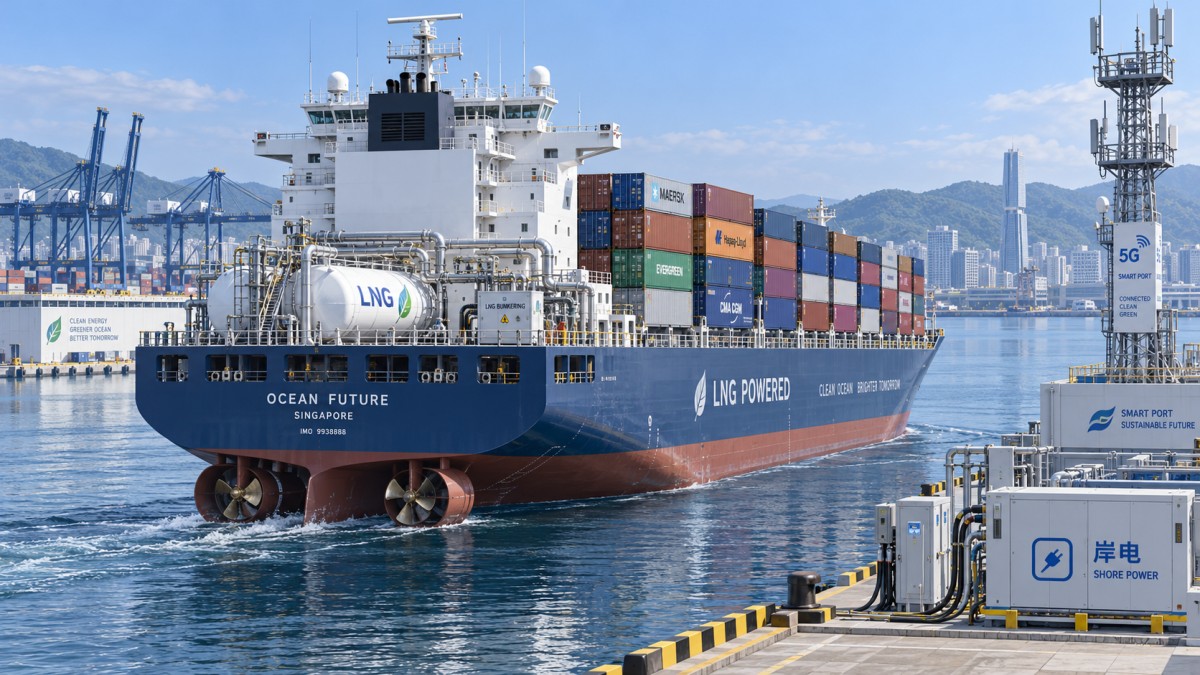
On smart container ships, integration can affect more than machinery availability. Voyage optimization, condition monitoring, cargo visibility, bridge data, and shore-side reporting can create value only when data definitions, connectivity, cybersecurity responsibilities, and user workflows are aligned. Procuring each digital layer separately may preserve choice, but it can also leave operators with multiple dashboards, inconsistent data, and unclear responsibility when information does not match.
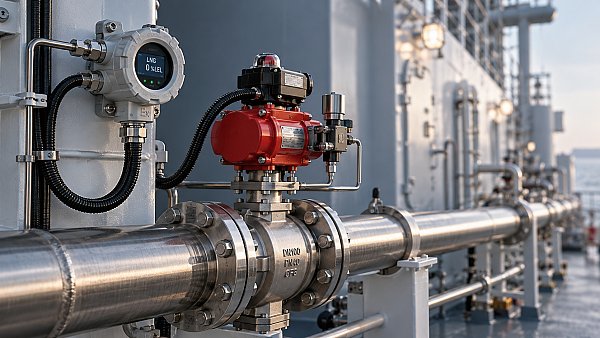
LNG carriers and other vessels with complex cargo and fuel systems present a different example. The decision is not simply about connecting equipment. It concerns the coordination of machinery behavior, containment-related monitoring, cargo operations, fuel handling, alarm philosophy, and operating procedures. In these environments, interface management has direct consequences for commissioning effort and operational confidence. A qualified integrator can create value by making those cross-system responsibilities explicit before equipment reaches the yard.
The multi-vendor model remains the better fit in several cases
Integration should not be treated as an automatic premium solution. A multi-vendor model is often appropriate for repeat vessel classes with proven reference designs, conventional equipment arrangements, and clear package boundaries. If an owner has a strong internal technical team, established supplier relationships, and reliable configuration control, direct procurement may provide better commercial leverage and more freedom to select specialist equipment.
It can also be the better model when future replacement flexibility is the priority. Owners may not want a proprietary integration layer that makes changing a radar, automation module, propulsion component, or analytics provider unnecessarily difficult. The right response is not to avoid integration altogether, but to require an architecture that documents interfaces, uses practical data-access arrangements, and separates essential vessel functions from optional vendor services.
A single integrator can introduce concentration risk. If the integrator is financially weak, lacks experience in the vessel type, relies heavily on subcontractors, or treats integration as a sales label rather than an engineering discipline, the promised accountability may be thin. One contract is only beneficial when the party holding it has the technical authority and delivery capability to resolve problems across suppliers.
Do not compare proposals only by scope labels
“Full integration” can mean very different things. One supplier may provide network hardware and basic configuration. Another may take responsibility for functional requirements, simulation, control narratives, cybersecurity coordination, factory acceptance testing, harbour trials, sea trials, training, and handover documentation. These are not equivalent offers, even if both proposals use the same term.
Before comparing commercial totals, ask each bidder to identify exactly what it owns at each project stage. The most useful question is: when a vessel-level function fails, who leads diagnosis and who has authority to require action from each equipment supplier? The answer should be contractual, not aspirational.
Review the integrator’s scope against the following practical deliverables:
- An interface register that identifies physical, electrical, software, communications, data, and operational interfaces.
- A responsibility matrix covering design decisions, approvals, configuration changes, testing, and fault resolution.
- Control narratives and operating-mode definitions for systems that must coordinate their behavior.
- A test strategy that moves from component testing to integrated functional testing before final acceptance.
- A configuration baseline showing software versions, network topology, parameter ownership, and approved changes.
- Handover documentation that enables the owner to maintain, audit, and upgrade the system after delivery.
If these items sit outside the integrator’s scope, the project may still be viable, but the owner or shipyard should consciously assign them elsewhere. Leaving them between contracts is one of the most expensive forms of apparent savings.
Lifecycle support is where the original choice is tested
The procurement decision continues long after delivery. Equipment will be updated, sensors replaced, software patched, and operating patterns changed. A vessel that performs well at sea trials can become difficult to maintain if its system dependencies are poorly documented or controlled by separate suppliers with different service models.
For this reason, assess support in terms of fault resolution rather than warranty language alone. A component warranty may cover a defective unit, but it does not necessarily address a fault caused by configuration, data mapping, timing, third-party software, or an interaction created by a later upgrade. The owner needs to understand who coordinates diagnosis across those boundaries and what information is available to independent service teams.
Data access deserves equal attention. A connected vessel produces operational, maintenance, and performance information that can support better decisions, but only if the owner can use it. Contracts should distinguish between equipment telemetry needed for supplier support, operational data needed by the vessel operator, and aggregated data used by third-party platforms. The aim is not unrestricted access to every proprietary element; it is avoiding a situation where the vessel owner cannot obtain usable information about the asset it operates.
A disciplined selection sequence
Start by mapping the operational outcomes that matter: safe mode transitions, fuel efficiency, cargo reliability, bridge-to-machinery coordination, reduced manual reporting, remote diagnostics, or another defined objective. Then identify which systems must cooperate to achieve each outcome. This exposes whether the project has a genuine integration problem or merely several procurement packages.
Next, assign interface risk before asking for quotations. Some risks belong naturally with equipment suppliers; others belong with the shipyard, designer, owner, or integrator. A marine systems integrator should be selected for the interfaces it can genuinely control, not given nominal responsibility for systems it cannot influence.
Then evaluate technical governance. Look for evidence of a workable engineering process: interface reviews, change control, test ownership, escalation routes, and a credible handover model. A polished architecture diagram is useful, but it does not prove that the supplier can manage late changes, incompatible assumptions, or cross-vendor commissioning issues.
Finally, compare the total exposure of each model. Include internal engineering time, expected coordination effort, commissioning risk, software support responsibilities, spare-parts implications, and the operational cost of unresolved defects. The right choice may still be the multi-vendor route, but it should be chosen because the organization can carry the integration burden deliberately, not because that burden was absent from the initial quotation.
Questions that reveal whether the integrator is credible
Ask prospective integrators to explain how they handle a conflict between suppliers whose systems pass individual tests but fail together. Request the escalation path, technical authority, and test evidence they would use to close the issue. Ask how configuration changes are approved after delivery, what documentation the owner receives, and whether the architecture permits future replacement of non-critical components.
Also ask which functions are excluded. Boundaries are not a weakness when they are explicit. An integrator that clearly defines what it owns, what suppliers own, and what the owner must provide is usually easier to manage than one promising end-to-end responsibility without describing the operating model behind it.
For organizations assessing smart vessels, LNG carrier systems, or other high-consequence maritime technology, intelligence sources such as GTOT can help frame the wider technology context: how navigation logic, propulsion arrangements, cargo systems, and digital connectivity are evolving together. That context is useful during early planning, but the final decision should remain grounded in the vessel’s own interfaces, operating profile, project governance, and support requirements.
The marine systems integrator model wins when integration itself is a critical deliverable. Where the vessel depends on coordinated behavior across complex systems, paying for accountable architecture, testing, and lifecycle control can protect delivery certainty and operational resilience. Where packages are proven, separable, and supported by strong owner-side engineering, a multi-vendor model can remain the more flexible and commercially effective choice.
Recommended News
 Nov 23, 2026Can an AI route optimization platform handle cross-border truck restrictions in Europe?AI route optimization platform Europe: Discover how to assess cross-border truck restrictions, validate compliant routes, and avoid costly routing errors.
 Nov 21, 2026How to assess carrier integration in an intermodal transportation platformEvaluate an intermodal transportation platform with a practical guide to carrier coverage, event accuracy, integration failures, security and acceptance testing.
 Nov 20, 2026How to identify which railway safety standards apply to a projectRailway safety standards guide: Learn how to identify applicable requirements, map interfaces and build a defensible compliance baseline for your project.
 Nov 19, 2026How to evaluate motion control application references for a new projectEvaluate engineering application references for motion control with confidence. Compare load cycles, safety, integration, and evidence to reduce project risk.
 Nov 18, 2026When does electric marine propulsion make sense for ferries?Electric marine propulsion technology can transform ferry operations. Explore when battery-electric or hybrid systems make sense for your routes, charging access, and costs.
 Nov 17, 2026How much does it cost to buy an ocean-going vessel?Ocean going vessel cost ranges from a few million to hundreds of millions of dollars. Explore purchase prices, hidden costs, and key factors before you buy.
 Nov 16, 2026How to verify solution provider references before signing a contractVerify solution provider references before signing. Learn what to ask, which evidence to check, and how to turn findings into stronger contract terms.
 Nov 14, 2026How does automatic train control affect metro train headways?Discover how automatic train control for metro systems can reduce headways, improve service consistency and support capacity planning without compromising safety.
 Nov 13, 2026How to assess the financial return on rail infrastructure investmentAssess rail infrastructure investment with confidence. Explore lifecycle costs, NPV, IRR and risk scenarios to make better-informed funding decisions.
 Nov 12, 2026How to assess an ocean vessel technology provider's integration capabilitiesAssess an ocean vessel technology provider with a practical guide to interfaces, cybersecurity, failure testing, and lifecycle support. Make a confident choice.
 Nov 10, 2026When is external supplier evaluation support worth the cost?Discover when supplier evaluation support is worth the cost, how to estimate its return, and where independent expertise can reduce sourcing risks.
 Nov 09, 2026How can evaluation support help component suppliers prepare for audits?Supplier evaluation support for component suppliers helps uncover audit gaps, strengthen traceability, and build a clear, risk-based preparation plan.
 Nov 07, 2026How smart intermodal transportation reduces transfer delaysDiscover how smart intermodal transportation reduces transfer delays through real-time coordination, cargo-ready forecasts, and faster decisions.
 Nov 06, 2026How to evaluate AI route optimization suppliers in North AmericaAI route optimization supplier North America: discover how to compare providers, validate savings, assess security and choose a solution that fits your operations.
 Nov 04, 2026Can LTE-M track rail assets in areas with limited coverage?LTE-M rail transit for asset tracking can bridge coverage gaps with offline data storage. Discover its limits and how to assess your routes.
 Nov 01, 2026When is rail freight cheaper than maritime shipping?Compare rail and maritime cost to discover when rail freight can save money on inland routes, inventory and delays. Learn how to assess the full door-to-door cost.
 Oct 31, 2026How an AI route optimization dashboard handles traffic delaysDiscover how an AI route optimization dashboard responds to traffic delays, compares feasible routes, updates ETAs, and helps operators make informed decisions.
 Oct 29, 2026How to assess an automatic train control manufacturer for retrofitsAssess an automatic train control manufacturer for your retrofit. Learn how to verify compatibility, safety assurance, migration plans, and long-term support before choosing a supplier.
 Oct 28, 2026Does technical selection support in Southeast Asia cover local codes?Explore technical selection support Southeast Asia projects need to address local codes, assess compliance evidence, and map approval pathways. Learn what to ask before procurement.
 Oct 26, 2026How a product information platform keeps product data consistentDiscover how a product information platform keeps data consistent with clear ownership, validation, and approved updates. Learn what to check before choosing a solution.
 Oct 23, 2026When is renting heavy mining equipment cheaper than buying?Renting heavy industry equipment for mining? Discover when it costs less than buying, compare hidden fees and break-even points, and make a smarter fleet investment.
 Oct 21, 2026Can absolute safety monitoring eliminate all operational risk?Can absolute safety monitoring eliminate all risk? Discover its limits, hidden failure points, and practical safeguards to strengthen protection and make smarter safety decisions.
 Oct 19, 2026How to vet a European railway safety technology supplier’s track recordSeeking a railway safety technology supplier Europe can trust? Learn how to verify project references, safety credentials, and lifecycle support to build a defensible shortlist.
 Oct 15, 2026How to size train traction systems for frequent-stop rail serviceSize train traction systems for frequent-stop rail service with practical guidance on power, adhesion, thermal loads, and braking. Learn how to meet timetables without costly oversizing.