Search News
Industry Portal
Popular Tags
Should You Use Single-Source or Multi-Source Signalling Suppliers?

Author
Time
Click Count
Should You Use Single-Source or Multi-Source Signalling Suppliers?
Should I choose a single-source or multi-source supplier for signalling equipment? It is a reasonable question, but it is rarely a simple procurement decision. In railway signalling, the supplier model affects how safely a route is commissioned, how quickly faults can be isolated, who owns interface risk, whether spare parts remain available years later, and how much freedom the operator retains during the next modernization cycle.
For a low-complexity renewal, one supplier may offer a cleaner path. For a large network with legacy relay interlockings, electronic interlockings, onboard protection, telecoms, platform systems, and several generations of rolling stock, putting every critical layer in one vendor’s hands can create a different kind of risk: technical dependence that only becomes visible when an upgrade, cyber patch, or emergency replacement is needed.
The practical answer is usually not “single-source” or “multi-source” in the absolute sense. It is deciding where standardization genuinely improves safety and maintainability, and where controlled diversification protects the railway from supply disruption, commercial lock-in, and obsolete technology.
Why signalling sourcing is different from ordinary component purchasing
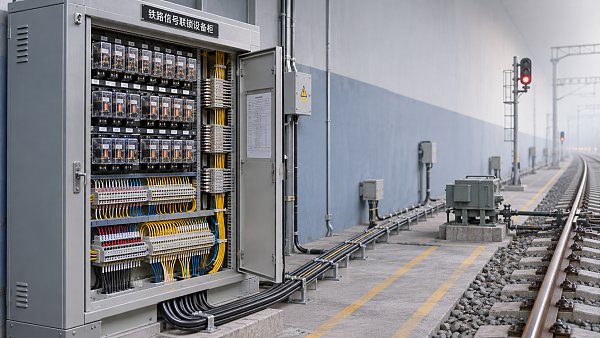
A signalling system is not a collection of independent boxes. Interlockings, axle counters or track circuits, point machines, train detection, radio links, traffic management, onboard equipment, and control-centre software interact through defined but often highly engineered interfaces. A fault at one boundary can create consequences far beyond the original component.
That is why buyers should be cautious when applying a generic “dual-source everything” policy to railway control systems. Two suppliers may both provide equipment that meets a stated specification, yet integration, configuration control, safety evidence, diagnostic access, and lifecycle responsibilities can be very different. In a SIL4-oriented environment, proving that a changed interface remains safe can take far more effort than the purchase-order saving that prompted the change.
The same principle appears elsewhere in high-consequence transport assets. A high-speed pantograph cannot be evaluated only as a replaceable mechanical assembly; its behaviour under vibration, contact-wire interaction, wind loading, and vehicle control logic matters. An LNG carrier’s containment and propulsion choices similarly create long-term dependencies between design, inspection methods, spares, and specialist support. Signalling deserves the same lifecycle view.
At GTOT, the useful lens is not simply equipment price. It is the continuity of the full operating chain: engineering authority, safety assurance, maintainability, cyber resilience, and the ability to procure support when the asset is under pressure.
When a single-source signalling strategy makes sense
Single-source procurement is often most defensible when a railway is delivering a tightly integrated new line or replacing a clearly bounded legacy subsystem. One accountable supplier can reduce interface ambiguity during design, factory acceptance, site testing, commissioning, and handover. If a train protection function, interlocking platform, wayside objects, and supervision software are designed as one validated architecture, there are fewer arguments over whether a defect sits on the “other side” of an interface.
This can be particularly valuable where the project team has limited internal signalling engineering capacity. A strong prime supplier may coordinate configuration management, safety documentation, test procedures, training, and defect rectification under a single governance structure. For EPC contractors working to a fixed opening date, that clarity can be worth more than a marginally lower equipment price from separate packages.
Consolidation can also simplify operations after commissioning. Maintenance teams work with one diagnostic environment, one training pathway, fewer software-release calendars, and a narrower spare-parts catalogue. Where a network needs high availability but has a relatively uniform operating model, that simplicity is not trivial.
Still, a single-source approach works only when the contract goes beyond delivery. The operator should understand who controls configuration data, what happens when a product family is withdrawn, how long repair capability will be maintained, how cybersecurity updates are handled, and whether independent maintainers can access the diagnostic information they need. A supplier relationship without those answers can look efficient at commissioning and become expensive ten years later.

What multi-source procurement can protect—and what it can complicate
A multi-source model is usually adopted for resilience, bargaining power, regional support, or access to specialist technology. It can reduce exposure when a factory faces capacity constraints, a product is discontinued, trade conditions change, or a supplier’s local service organization cannot support a growing network. It may also prevent the operator from being locked into one proprietary renewal path.
Diversification is especially relevant for items where interfaces can be controlled and verification is manageable. Some field equipment, cable systems, power supplies, cabinets, or selected detection technologies may be procured from more than one approved source if the system architecture, acceptance criteria, and responsibility boundaries are clear. The important word is “approved.” Equivalent in a commercial sense does not automatically mean interchangeable in a safety case.
The weak version of multi-sourcing is awarding packages separately and assuming integration will take care of itself. That often produces duplicated testing, incompatible diagnostics, uncertain software ownership, and prolonged debates during failures. A project may gain supplier competition but lose time at the exact point when the railway needs a coherent commissioning plan.
A stronger model is multi-source by design: one architecture, explicit interface control documents, a named integration authority, agreed change-management rules, and contractual access to the evidence required for safety and cyber assurance. In that arrangement, supplier diversity is a deliberate engineering choice rather than a purchasing reflex.
The decision should be made layer by layer
The phrase “signalling supplier” can conceal very different procurement categories. An operator does not have to use the same sourcing logic for every layer of the system. In fact, it usually should not.
This layered view changes the conversation. Rather than asking whether one supplier should own the whole programme, buyers can ask which functions require a single technical authority and which markets can sustain competition without weakening assurance.
Do not underestimate lifecycle and obsolescence risk
Signalling assets commonly remain in service far longer than the commercial cycle of their electronics. A processor board, operating-system dependency, communications module, or engineering workstation may become difficult to support while the interlocking itself is expected to remain operational. This is where sourcing strategy becomes very real for maintenance managers.
Before selecting either model, require a credible lifecycle position. It should address notification of obsolescence, repair and replacement routes, software version support, access to configuration records, stockholding responsibilities, and the process for approving changes. “Supported for the duration of the project” is not enough if the railway will operate for decades.
Single-source buyers should seek protections against forced migration. Multi-source buyers should avoid accumulating several small proprietary islands that each demand separate tools and scarce specialist knowledge. Both situations can create a costly dependency; they simply create it in different ways.
Cybersecurity has made supplier boundaries more consequential
Modern signalling no longer sits apart from the wider digital railway. Remote condition monitoring, centralized traffic control, LTE-M or other communications developments, maintenance laptops, data gateways, and supplier remote-access arrangements all expand the number of interfaces that need governance.
A single supplier may make patch coordination easier, but it does not remove cyber risk. The buyer still needs visibility of vulnerabilities, update responsibilities, access-control procedures, and the operational impact of patching. With several suppliers, responsibilities need to be sharper still: who monitors vulnerabilities across the integrated environment, who validates a patch against safety functions, and who has authority to approve deployment?
Procurement teams should not leave these questions to a late-stage IT annex. For a live railway, cybersecurity changes can affect availability, testing windows, and operational rules. They belong in the core technical and lifecycle discussion from the beginning.
A practical way to choose
If the project is a new, time-critical, safety-critical deployment with limited internal integration capability, a single prime supplier for the safety core is often the lower-risk route. The buyer should then negotiate hard for data rights, transparent lifecycle obligations, cyber support, and measurable service commitments.
If the operator has mature engineering governance, a stable reference architecture, and enough capability to control interfaces, multi-sourcing can improve resilience and preserve competitive options. But it must be backed by disciplined configuration control and a clearly funded integration function. There is no cheap substitute for that capability.
A hybrid strategy is often the most credible answer: consolidate the functions where fragmented accountability would threaten safe operation, while qualifying alternatives for selected equipment, spares, communications layers, or future renewal packages. This is less tidy than an all-or-nothing policy, but railways are rarely tidy systems.
Before issuing a tender, test one final question: if the chosen supplier cannot support a critical component, software release, or site intervention five years from now, what practical options remain? If the answer is unclear, the sourcing strategy is not finished—regardless of how attractive the initial bid looks.
Recommended News
 Nov 23, 2026Can an AI route optimization platform handle cross-border truck restrictions in Europe?AI route optimization platform Europe: Discover how to assess cross-border truck restrictions, validate compliant routes, and avoid costly routing errors.
 Nov 21, 2026How to assess carrier integration in an intermodal transportation platformEvaluate an intermodal transportation platform with a practical guide to carrier coverage, event accuracy, integration failures, security and acceptance testing.
 Nov 20, 2026How to identify which railway safety standards apply to a projectRailway safety standards guide: Learn how to identify applicable requirements, map interfaces and build a defensible compliance baseline for your project.
 Nov 19, 2026How to evaluate motion control application references for a new projectEvaluate engineering application references for motion control with confidence. Compare load cycles, safety, integration, and evidence to reduce project risk.
 Nov 18, 2026When does electric marine propulsion make sense for ferries?Electric marine propulsion technology can transform ferry operations. Explore when battery-electric or hybrid systems make sense for your routes, charging access, and costs.
 Nov 17, 2026How much does it cost to buy an ocean-going vessel?Ocean going vessel cost ranges from a few million to hundreds of millions of dollars. Explore purchase prices, hidden costs, and key factors before you buy.
 Nov 16, 2026How to verify solution provider references before signing a contractVerify solution provider references before signing. Learn what to ask, which evidence to check, and how to turn findings into stronger contract terms.
 Nov 14, 2026How does automatic train control affect metro train headways?Discover how automatic train control for metro systems can reduce headways, improve service consistency and support capacity planning without compromising safety.
 Nov 13, 2026How to assess the financial return on rail infrastructure investmentAssess rail infrastructure investment with confidence. Explore lifecycle costs, NPV, IRR and risk scenarios to make better-informed funding decisions.
 Nov 12, 2026How to assess an ocean vessel technology provider's integration capabilitiesAssess an ocean vessel technology provider with a practical guide to interfaces, cybersecurity, failure testing, and lifecycle support. Make a confident choice.
 Nov 10, 2026When is external supplier evaluation support worth the cost?Discover when supplier evaluation support is worth the cost, how to estimate its return, and where independent expertise can reduce sourcing risks.
 Nov 09, 2026How can evaluation support help component suppliers prepare for audits?Supplier evaluation support for component suppliers helps uncover audit gaps, strengthen traceability, and build a clear, risk-based preparation plan.
 Nov 07, 2026How smart intermodal transportation reduces transfer delaysDiscover how smart intermodal transportation reduces transfer delays through real-time coordination, cargo-ready forecasts, and faster decisions.
 Nov 06, 2026How to evaluate AI route optimization suppliers in North AmericaAI route optimization supplier North America: discover how to compare providers, validate savings, assess security and choose a solution that fits your operations.
 Nov 04, 2026Can LTE-M track rail assets in areas with limited coverage?LTE-M rail transit for asset tracking can bridge coverage gaps with offline data storage. Discover its limits and how to assess your routes.
 Nov 01, 2026When is rail freight cheaper than maritime shipping?Compare rail and maritime cost to discover when rail freight can save money on inland routes, inventory and delays. Learn how to assess the full door-to-door cost.
 Oct 31, 2026How an AI route optimization dashboard handles traffic delaysDiscover how an AI route optimization dashboard responds to traffic delays, compares feasible routes, updates ETAs, and helps operators make informed decisions.
 Oct 29, 2026How to assess an automatic train control manufacturer for retrofitsAssess an automatic train control manufacturer for your retrofit. Learn how to verify compatibility, safety assurance, migration plans, and long-term support before choosing a supplier.
 Oct 28, 2026Does technical selection support in Southeast Asia cover local codes?Explore technical selection support Southeast Asia projects need to address local codes, assess compliance evidence, and map approval pathways. Learn what to ask before procurement.
 Oct 26, 2026How a product information platform keeps product data consistentDiscover how a product information platform keeps data consistent with clear ownership, validation, and approved updates. Learn what to check before choosing a solution.
 Oct 23, 2026When is renting heavy mining equipment cheaper than buying?Renting heavy industry equipment for mining? Discover when it costs less than buying, compare hidden fees and break-even points, and make a smarter fleet investment.
 Oct 21, 2026Can absolute safety monitoring eliminate all operational risk?Can absolute safety monitoring eliminate all risk? Discover its limits, hidden failure points, and practical safeguards to strengthen protection and make smarter safety decisions.
 Oct 19, 2026How to vet a European railway safety technology supplier’s track recordSeeking a railway safety technology supplier Europe can trust? Learn how to verify project references, safety credentials, and lifecycle support to build a defensible shortlist.
 Oct 15, 2026How to size train traction systems for frequent-stop rail serviceSize train traction systems for frequent-stop rail service with practical guidance on power, adhesion, thermal loads, and braking. Learn how to meet timetables without costly oversizing.