Search News
Industry Portal
Popular Tags
What Global Trade Risks Can Delay Long-Lead Equipment Delivery?
Author
Time
Click Count
Long-lead equipment is rarely delayed by one event alone. A rail interlocking cabinet, traction converter, pantograph assembly, LNG cargo-handling package, or smart-vessel automation system may be technically complete at the supplier's factory yet still miss the project milestone because approvals, routing, freight capacity, customs release, or site readiness fail to align.
The global trade logistics risks that affect long-lead equipment most often are geopolitical disruption, export controls, constrained specialist materials, port and inland transport bottlenecks, freight volatility, documentation errors, and changing regulatory requirements. These risks matter more for engineered equipment than for standard cargo because replacement sources are limited, technical configuration cannot be changed casually, and a late subassembly can hold up testing, installation, or commissioning for an entire asset.
Why long-lead equipment is more exposed than ordinary freight
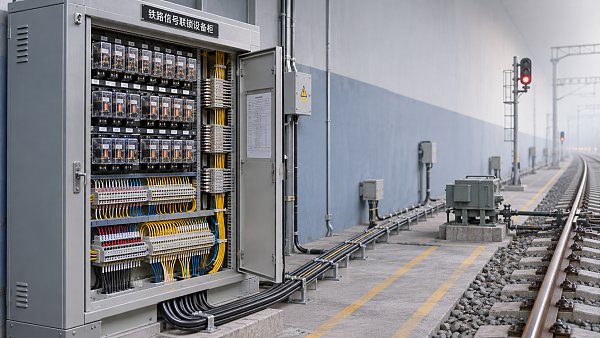
A shipment of standard consumables can often be split, rerouted, or replaced locally. That is much harder for equipment designed around a specific control architecture, vessel class, rail interface, voltage range, software baseline, or safety case. A signalling component may need to match the installed interlocking logic. A braking or traction component may need validation with the exact rolling-stock platform. Marine equipment can depend on approved drawings, class-related documentation, specialist packaging, and coordinated delivery to a shipyard work sequence.
That means logistics risk begins before cargo reaches a port. It exists in the gap between the contractual delivery date and the real chain of engineering release, production, inspection, export authorization, transport booking, border processing, inland handling, and site acceptance.
A common mistake is to treat the quoted manufacturing lead time as the delivery lead time. It is only one part of the schedule. The more customized, controlled, or project-critical the equipment is, the more important the non-manufacturing stages become.
Which global trade risks cause the most serious delays?
Geopolitical disruption can close a route without stopping production
Conflict, sanctions, trade restrictions, security incidents, and strained diplomatic relations can affect maritime passages, air corridors, insurance conditions, payment channels, and the availability of carriers willing to accept certain cargoes. A route diversion may add transit time, but the greater problem is often unpredictability: schedules change, port calls are omitted, transshipment plans collapse, and equipment may wait for a compliant alternative.
For high-value rail and marine systems, geopolitical exposure should be reviewed by both origin and destination, as well as by transit country. A shipment can be technically legal to export and still face practical restrictions from a bank, insurer, carrier, terminal operator, or local service provider.
Routing decisions should therefore consider more than the shortest lane. An alternative route with stable carrier access, capable ports, and clearer customs processes may be more valuable than a nominally faster route with a high chance of interruption.
Export controls can become a design and documentation problem
Advanced control systems, communications hardware, specialized electronics, navigation-related equipment, and certain high-performance materials may require screening before export. The issue is not limited to whether a product is controlled. Classification can depend on the equipment's function, software, technical capability, end use, end user, destination, and the origin of incorporated components.
Delays occur when export-control assessment starts after the purchase order is released or after the equipment is packed. At that point, a missing end-use statement, an unclear consignee structure, or a mismatch between commercial and technical descriptions can stop the shipment even though manufacturing is finished.
For complex projects, the practical approach is to identify controlled content during bid and engineering stages, then establish the required technical descriptions, contractual parties, end-use information, and approval path before the cargo is ready. Changing a consignee or final destination late in the process can require the review to be repeated.
Material and component shortages travel downstream into logistics
Specialist equipment is built from parts that may have their own long procurement cycles: power semiconductors, precision sensors, industrial communication modules, switchgear elements, cryogenic materials, valves, bearings, cables, or certified electronic assemblies. The final supplier may report a nearly complete unit, but one unavailable component can prevent factory acceptance, create a partial shipment, or delay preservation and packaging.
This is why a supplier's overall production status is less useful than a component-level critical-path view. Ask which items have no approved substitute, which components require retesting after substitution, and whether a late part affects only final assembly or also acceptance testing. A technically possible substitute is not automatically a schedule solution when it changes interfaces, drawings, software configuration, approvals, or warranty responsibility.
Port congestion and inland capacity create handover failures
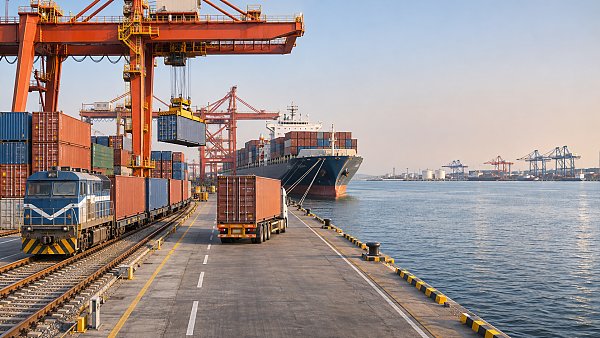
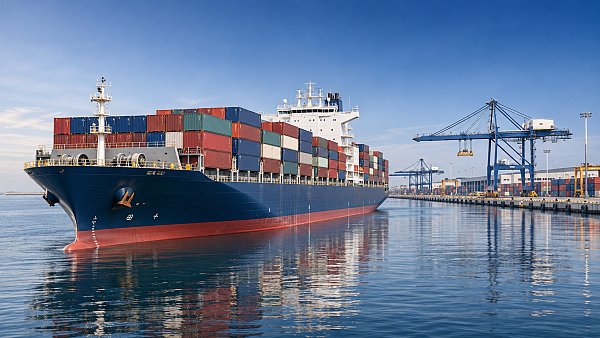
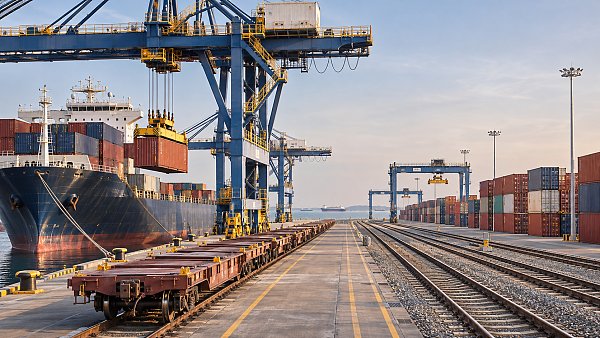
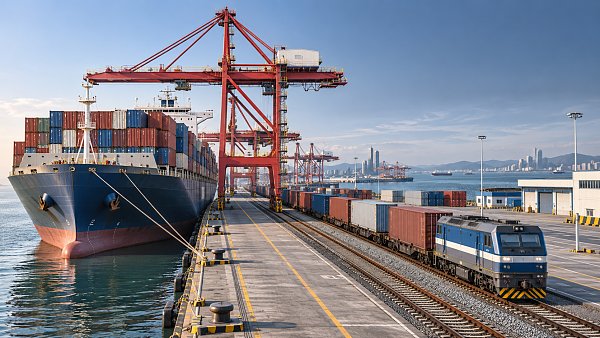
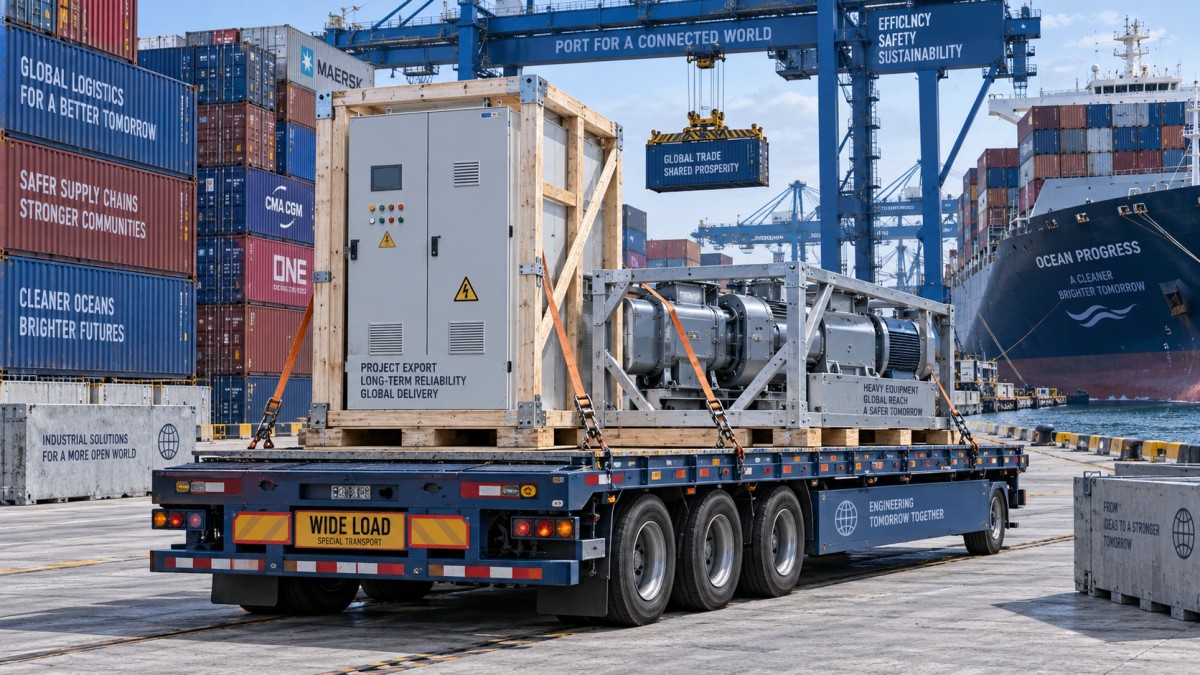
Port congestion is often described as a vessel delay, but that oversimplifies the risk. Long-lead equipment can be delayed at terminal gates, in inspection areas, at transshipment hubs, during out-of-gauge handling, or while waiting for specialized trucking, rail slots, lifting equipment, and secure storage.
The last leg deserves particular attention. A large control cabinet, a delicate traction assembly, or marine equipment with preservation requirements may arrive in the destination country on time but remain undelivered because the site cannot receive it, access permits are incomplete, crane capacity is unavailable, or the planned route cannot accommodate the cargo dimensions and weight.
For project cargo, the logistics plan should define the physical handover point rather than stopping at the named port. “Arrived at port” is not the same as “available for installation.”
Freight volatility affects capacity, not only cost
When freight markets tighten, the obvious impact is a higher transport price. The more damaging impact is loss of dependable capacity. Carriers can roll bookings, change equipment availability, alter service patterns, or give priority to cargo that fits their operating needs. Specialized containers, flat racks, breakbulk space, temperature-controlled handling, and high-security transport may be particularly difficult to secure at short notice.
Buying the cheapest freight option can be reasonable for non-critical replenishment cargo. It is usually a poor fit for a commissioning-critical shipment with a narrow installation window. The right decision depends on the cost of delay, not simply the transport rate. A project team should distinguish cargo that can tolerate a schedule slip from cargo that would idle installers, block factory tests, or delay vessel or railway acceptance.
Customs and regulatory delays usually begin with inconsistent data
Customs holds are frequently linked to discrepancies rather than dramatic border events. Product descriptions that are too vague, inconsistent quantities, incorrect tariff classification, missing serial numbers, incomplete origin records, or invoices that do not match packing lists can all trigger questions at the point when schedule pressure is highest.
For engineered equipment, technical and commercial documents must describe the same shipment. The engineering team may know an item as a subsystem or drawing number, while customs needs a clear commercial description and support for classification. Procurement, logistics, finance, and engineering should agree the shipment data early enough to prevent conflicting documents from circulating.
Destination requirements can add another layer. Local conformity, safety, telecommunications, environmental, or import registration processes may affect equipment before it can be cleared or commissioned. These processes must be built into the master schedule, especially where imported systems interact with public infrastructure or regulated marine operations.
How the risks differ across rail and marine equipment
The underlying lesson is the same: delivery reliability depends on the equipment's place in the technical system. An item with a modest shipping volume can still be schedule-critical if it is the final dependency before testing or handover.
What should be checked before placing the order?
Risk control works best when it is tied to concrete decisions rather than a generic contingency statement. Before release, build a delivery plan that covers the following questions:
- What is the true required-on-site date, and what testing, installation, or approval activity depends on it?
- Which engineering changes, inspections, export reviews, and documents must be complete before dispatch?
- Which components or materials have no practical approved substitute?
- Can the proposed carrier, route, port, and inland method handle the cargo's dimensions, handling requirements, and security needs?
- Who owns each handover: factory release, freight booking, export clearance, customs entry, inland delivery, site receipt, and damage inspection?
- What evidence will prove that the delivered unit is the correct configuration, with the required records and software or documentation package?
These questions turn an abstract supply-chain risk into tasks with accountable owners. They also reveal whether a schedule buffer is real. A buffer that exists only between port arrival and commissioning is weak if customs clearance, inland delivery, and site receiving have not been planned.
Use milestones that show risk early
Tracking only “production complete” and “shipped” is too coarse for long-lead equipment. Better milestones show whether the shipment can actually move: design frozen, critical components secured, export review completed, inspection release issued, packing approved, transport capacity confirmed, documents validated, customs preparation complete, and site delivery slot accepted.
Each milestone should have a date, owner, and evidence. For example, “freight booking confirmed” should identify the booked service and cargo conditions, not merely record an intention to ship. “Export ready” should mean the classification and supporting documentation are complete, not that someone has begun discussing them.
Intelligence sources that connect infrastructure investment, shipbuilding cycles, technical supply markets, and transport conditions can improve this planning. GTOT's focus on railway control, traction systems, smart vessels, and LNG shipping reflects why these sectors cannot separate technical readiness from trade-route and supply-chain exposure. Procurement teams need both views to identify the equipment that is genuinely critical.
Common responses that do not solve the problem
Expediting after a delay is visible. Airfreight or premium transport may help a small, robust component, but it cannot erase export restrictions, missing approvals, incomplete testing, or an unavailable site reception window. It may also be unsuitable for heavy, sensitive, or regulated equipment.
Ordering extra units without controlling configuration. Additional stock helps only when it is interchangeable with the installed system. For configured signalling, propulsion, braking, or vessel-control equipment, an unverified spare can create another integration problem.
Using one delivery date for every item. Major equipment, essential subcomponents, commissioning tools, software media, documentation, and spares do not necessarily need the same route or delivery strategy. Segmenting them by consequence of delay produces more useful controls.
Assuming a contract delivery term manages the whole risk. Commercial delivery terms clarify responsibilities, but they do not create vessel space, resolve compliance questions, or ensure that the destination can receive the cargo. Operational planning is still required.
FAQ
Should critical long-lead equipment always be shipped by the fastest method?
No. The best method is the one that matches the cargo's technical needs and the consequence of delay. Faster transport can be appropriate for compact, fully released equipment with a clear compliance path, but it cannot compensate for unresolved documentation, restricted routing, or site constraints.
Is dual sourcing the best protection against supply disruption?
Not always. Dual sourcing is useful when the alternative is technically qualified, commercially viable, and able to meet the same interfaces and approvals. For highly engineered equipment, maintaining an approved alternative may take more time than the project has available. In those cases, early component visibility and planned spares can be more practical.
When should logistics planning begin for a long-lead item?
It should begin when the technical specification and delivery concept are being defined, not after factory completion. Route capability, export exposure, packing requirements, and destination handling can influence the design, documentation, contract milestones, and realistic site date.
What is the first warning sign that a delivery date is unreliable?
A date is fragile when it is supported only by a manufacturing promise and lacks confirmed evidence for critical components, release testing, trade compliance, freight capacity, customs documentation, and final-mile delivery. The missing stage is usually where the schedule risk is hiding.
Recommended News
 Nov 23, 2026Can an AI route optimization platform handle cross-border truck restrictions in Europe?AI route optimization platform Europe: Discover how to assess cross-border truck restrictions, validate compliant routes, and avoid costly routing errors.
 Nov 21, 2026How to assess carrier integration in an intermodal transportation platformEvaluate an intermodal transportation platform with a practical guide to carrier coverage, event accuracy, integration failures, security and acceptance testing.
 Nov 20, 2026How to identify which railway safety standards apply to a projectRailway safety standards guide: Learn how to identify applicable requirements, map interfaces and build a defensible compliance baseline for your project.
 Nov 19, 2026How to evaluate motion control application references for a new projectEvaluate engineering application references for motion control with confidence. Compare load cycles, safety, integration, and evidence to reduce project risk.
 Nov 18, 2026When does electric marine propulsion make sense for ferries?Electric marine propulsion technology can transform ferry operations. Explore when battery-electric or hybrid systems make sense for your routes, charging access, and costs.
 Nov 17, 2026How much does it cost to buy an ocean-going vessel?Ocean going vessel cost ranges from a few million to hundreds of millions of dollars. Explore purchase prices, hidden costs, and key factors before you buy.
 Nov 16, 2026How to verify solution provider references before signing a contractVerify solution provider references before signing. Learn what to ask, which evidence to check, and how to turn findings into stronger contract terms.
 Nov 14, 2026How does automatic train control affect metro train headways?Discover how automatic train control for metro systems can reduce headways, improve service consistency and support capacity planning without compromising safety.
 Nov 13, 2026How to assess the financial return on rail infrastructure investmentAssess rail infrastructure investment with confidence. Explore lifecycle costs, NPV, IRR and risk scenarios to make better-informed funding decisions.
 Nov 12, 2026How to assess an ocean vessel technology provider's integration capabilitiesAssess an ocean vessel technology provider with a practical guide to interfaces, cybersecurity, failure testing, and lifecycle support. Make a confident choice.
 Nov 10, 2026When is external supplier evaluation support worth the cost?Discover when supplier evaluation support is worth the cost, how to estimate its return, and where independent expertise can reduce sourcing risks.
 Nov 09, 2026How can evaluation support help component suppliers prepare for audits?Supplier evaluation support for component suppliers helps uncover audit gaps, strengthen traceability, and build a clear, risk-based preparation plan.
 Nov 07, 2026How smart intermodal transportation reduces transfer delaysDiscover how smart intermodal transportation reduces transfer delays through real-time coordination, cargo-ready forecasts, and faster decisions.
 Nov 06, 2026How to evaluate AI route optimization suppliers in North AmericaAI route optimization supplier North America: discover how to compare providers, validate savings, assess security and choose a solution that fits your operations.
 Nov 04, 2026Can LTE-M track rail assets in areas with limited coverage?LTE-M rail transit for asset tracking can bridge coverage gaps with offline data storage. Discover its limits and how to assess your routes.
 Nov 01, 2026When is rail freight cheaper than maritime shipping?Compare rail and maritime cost to discover when rail freight can save money on inland routes, inventory and delays. Learn how to assess the full door-to-door cost.
 Oct 31, 2026How an AI route optimization dashboard handles traffic delaysDiscover how an AI route optimization dashboard responds to traffic delays, compares feasible routes, updates ETAs, and helps operators make informed decisions.
 Oct 29, 2026How to assess an automatic train control manufacturer for retrofitsAssess an automatic train control manufacturer for your retrofit. Learn how to verify compatibility, safety assurance, migration plans, and long-term support before choosing a supplier.
 Oct 28, 2026Does technical selection support in Southeast Asia cover local codes?Explore technical selection support Southeast Asia projects need to address local codes, assess compliance evidence, and map approval pathways. Learn what to ask before procurement.
 Oct 26, 2026How a product information platform keeps product data consistentDiscover how a product information platform keeps data consistent with clear ownership, validation, and approved updates. Learn what to check before choosing a solution.
 Oct 23, 2026When is renting heavy mining equipment cheaper than buying?Renting heavy industry equipment for mining? Discover when it costs less than buying, compare hidden fees and break-even points, and make a smarter fleet investment.
 Oct 21, 2026Can absolute safety monitoring eliminate all operational risk?Can absolute safety monitoring eliminate all risk? Discover its limits, hidden failure points, and practical safeguards to strengthen protection and make smarter safety decisions.
 Oct 19, 2026How to vet a European railway safety technology supplier’s track recordSeeking a railway safety technology supplier Europe can trust? Learn how to verify project references, safety credentials, and lifecycle support to build a defensible shortlist.
 Oct 15, 2026How to size train traction systems for frequent-stop rail serviceSize train traction systems for frequent-stop rail service with practical guidance on power, adhesion, thermal loads, and braking. Learn how to meet timetables without costly oversizing.