



Search News
Industry Portal
Popular Tags
What drives gas carrier technology price differences between vessels?
Author
Time
Click Count
Why comparable-looking gas carriers can carry very different price tags
Gas carrier technology price differences usually reflect the vessel's ability to preserve cargo, consume less fuel, meet a specific trading pattern, and remain commercially usable as regulations and charterer expectations change. Two ships with similar deadweight or cargo volume may therefore have materially different contract prices without either quotation being unreasonable.
For a business evaluator, the first distinction is between a lower construction price and a lower cost of transporting gas over the vessel's working life. A basic configuration may suit a short, predictable trade with established terminal infrastructure. A higher-specification vessel can be justified when cargo retention, fuel flexibility, port access, emissions exposure, uptime, or charter requirements create a measurable operational advantage. The technology premium should be examined against those operating conditions rather than treated as a general measure of vessel quality.
The largest price differences tend to come from four linked areas: cargo containment, propulsion and boil-off gas handling, automation and redundancy, and the extent to which a vessel is designed for a particular gas cargo or trade route. Yard capacity, delivery timing, and equipment sourcing can move the final figure, but they do not explain why one technical specification has greater long-term value than another.
Containment technology is often the first major cost divide
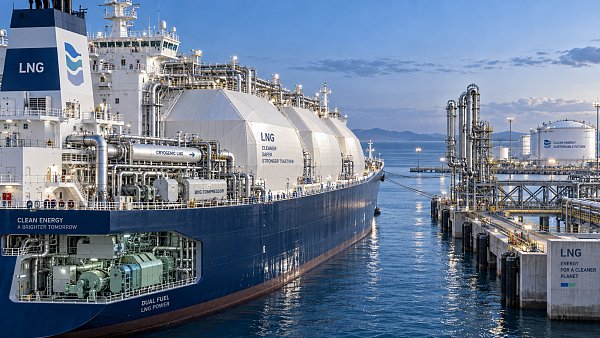
A gas carrier is fundamentally a cryogenic cargo system built into a ship. The vessel structure, tanks, insulation, pumping arrangements, piping, instrumentation, and safety systems must work as one. This is especially apparent in LNG shipping, where cargo is carried at extremely low temperatures and a small heat ingress can create boil-off gas that has to be managed continuously.
Containment design changes both the initial capital requirement and the commercial behavior of the vessel. In broad terms, buyers may compare membrane systems with independent tank arrangements, while LPG, ethane, ammonia, and multi-gas trades bring additional tank-material and temperature-pressure requirements. The suitable design depends on the cargo, scale, loading and discharge terminals, expected voyage profile, and intended flexibility.
Membrane containment systems can offer a favorable cargo-volume relationship for large LNG carriers, but their economics depend on the technical package around the tanks: insulation performance, construction quality, monitoring capability, repair approach, and the shipyard's demonstrated ability to execute the work consistently. An independent tank design may offer different advantages in certain cargoes, sizes, or operating profiles, but it can affect cargo-space efficiency, steel weight, construction complexity, and lifecycle maintenance planning.
A comparison that only lists cargo capacity can therefore be misleading. Evaluators should establish whether quoted capacity is based on the same filling limits, cargo temperature assumptions, tank arrangement, and allowable boil-off rate. A vessel that appears less expensive per cubic metre may have higher cargo losses, lower usable capacity on a particular trade, or a less attractive operational envelope.
Questions worth putting to the builder and technology provider include:
- What cargoes, temperatures, pressures, and loading conditions is the containment system explicitly designed to handle?
- What boil-off assumptions were used in the commercial proposal, and how do they change with voyage duration and ambient conditions?
- Which performance guarantees are contractual, and what measurement method will be used at sea trials or during operation?
- How are tank inspections, fault detection, repairs, and spare materials addressed after delivery?
- Does the design preserve optionality for future cargoes, or is it economically optimized for a narrow trade?
These questions matter because containment technology does not produce value in isolation. Its value is expressed through cargo delivered, fuel consumed, time available for trading, and the vessel's acceptability to charterers and terminals.
Boil-off gas management can change the economics more than the fuel label suggests
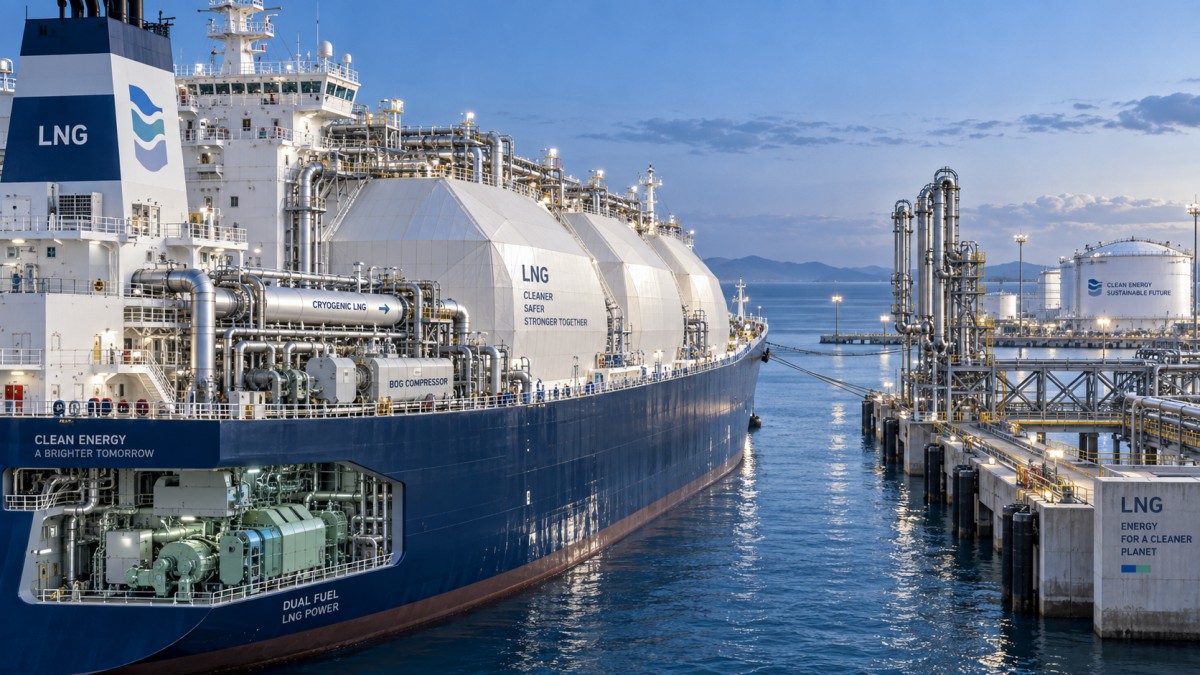
Propulsion is frequently described in shorthand: conventional, dual-fuel, or more efficient. That shorthand is too coarse for evaluating gas carrier technology price. On LNG carriers, the relevant issue is the integrated handling of boil-off gas, reliquefaction capability where applicable, fuel supply systems, engines, cargo compressors, and control logic. A more expensive machinery arrangement may reduce cargo loss, improve fuel flexibility, or make the vessel better suited to long voyages. It may also introduce more equipment that requires specialist support and disciplined maintenance.
For an LNG carrier, natural boil-off can be used as fuel, managed through machinery systems, returned to cargo handling equipment, or controlled through other approved arrangements depending on vessel design and operating circumstances. The preferred solution changes with freight market conditions, fuel pricing, port restrictions, voyage length, engine efficiency, and charter-party allocation of fuel and cargo-value risk.
A proposal with dual-fuel propulsion should not automatically be treated as the superior economic choice. The buyer should ask what happens when gas availability, fuel economics, or maintenance conditions do not match the base-case assumptions. Some machinery configurations perform well when operating steadily on a well-defined long-haul route but offer less benefit in variable coastal, shuttle, or spot-market employment. Conversely, a more flexible arrangement may command a higher capital cost yet reduce dispatch risk across a wider range of trades.
Technical differences that merit separate pricing in a bid comparison include fuel gas supply equipment, engine type, cargo compression and reliquefaction arrangements, shaft generators, power-management design, waste-heat utilization, and the redundancy philosophy for cargo and propulsion systems. Combining these into a single “dual-fuel package” hides the items most likely to affect fuel use, cargo retention, maintenance burden, and off-hire exposure.
Look beyond the promised consumption figure
Fuel-consumption claims are meaningful only when the operating assumptions match the intended trade. Request a complete operating matrix rather than one headline number. It should distinguish laden and ballast conditions, service speed, weather margin, power take-off assumptions, cargo-handling loads, gas mode and liquid-fuel mode where relevant, and the treatment of boil-off gas. A vessel optimized around one speed and voyage duration may lose its advantage when scheduling changes.
The same discipline applies to emissions-related equipment. Compliance-oriented technology may carry a premium because it affects engine configuration, fuel systems, monitoring, reporting, or future retrofit readiness. That premium can be commercially sensible, particularly where charterers impose environmental requirements or where a vessel is expected to trade for many years. It should still be separated from claims about operational efficiency. Compliance capability and fuel-saving performance are related, but they are not the same purchase decision.
Automation adds value when it protects availability and operating control
Gas carrier automation is another source of price variation that is often under-scoped in early commercial discussions. Integrated cargo control, alarm management, tank monitoring, predictive diagnostics, remote support interfaces, and cyber-resilient network architecture can all add cost. Their value lies in reducing the probability that a manageable condition becomes a cargo, safety, or schedule disruption.
The right question is not whether the ship has a “smart” system. It is whether the automation scope matches the operator's crewing model, shore-support structure, maintenance capability, and reporting obligations. A highly integrated platform may simplify monitoring and decision-making when the operator has trained personnel and reliable service access. It may create avoidable dependency if critical diagnostics, software support, or proprietary spare parts are difficult to obtain during the vessel's intended deployment.
Business evaluators should separate the automation quotation into functions. Cargo safety instrumentation, emergency shutdown interfaces, machinery-control redundancy, voyage and energy management, condition monitoring, and fleet-data connections serve different purposes and have different failure consequences. Treating them as a single digitalization premium makes it difficult to remove nonessential scope without weakening safety-critical capability.
Cybersecurity also belongs in the commercial review. Gas carriers increasingly depend on interconnected control and communications systems, yet an apparently modest cybersecurity requirement can affect hardware architecture, software configuration, documentation, testing, update procedures, and supplier responsibilities. The lowest initial price may exclude long-term support, access controls, patch management, or a clear division of responsibility between yard, equipment vendor, owner, and operator.
Capacity is a commercial variable, not just a size specification
Larger cargo capacity generally increases the hull, containment, propulsion, and terminal-interface requirements. However, capacity alone does not explain gas carrier technology price differences. A larger vessel may deliver lower transportation cost per unit of cargo only when the trade can support its draft, berth, loading rate, discharge rate, storage timing, and charter utilization.
For this reason, the capacity decision should begin with the cargo program rather than an assumed preference for scale. If cargo parcels are irregular, terminal constraints are tight, or discharge locations vary, a smaller or less specialized vessel can produce better annual utilization. A highly optimized large carrier may be economically attractive on a stable long-haul route but less adaptable when the vessel must seek alternative employment.
Comparisons should also distinguish nominal cargo volume from annual transport capability. Annual capability depends on round-voyage duration, port turnaround, weather exposure, cargo conditioning, maintenance availability, and the treatment of boil-off gas. A lower-priced vessel with a weaker cargo-handling system can lose value if it repeatedly adds time at terminals or requires operating restrictions that are absent from the higher-priced proposal.
Price comparisons fail when quotations do not share the same boundary
The most common procurement error is comparing contract prices before aligning what each contract includes. One shipbuilder may include a fuller commissioning package, owner-supplied equipment integration, class documentation, training, trials, spare parts, or warranty support. Another may quote a lower construction number while placing those items outside the yard scope. Neither structure is inherently wrong, but they cannot be evaluated as equivalent bids.
A practical comparison should normalize at least the following areas:
- Containment-system license, engineering, testing, and warranty obligations.
- Propulsion, fuel gas, cargo-handling, and emissions-related equipment by named manufacturer and technical scope.
- Class requirements, flag-state assumptions, hazardous-area classification, and terminal compatibility requirements.
- Guaranteed performance, permissible tolerances, liquidated damages, and the test conditions that govern acceptance.
- Owner-furnished equipment, integration work, installation responsibility, and interface risks.
- Commissioning, crew familiarization, documentation quality, start-up assistance, and spares.
- Warranty duration, response commitments, exclusions, and access to critical service support.
- Delivery schedule, escalation exposure, payment structure, and the consequences of late delivery.
This exercise often reveals that the apparent gas carrier technology price gap is partly a scope gap. It can also expose a more consequential difference: one bidder has priced a system with clear responsibility for interfaces, while another has left those interfaces to be resolved after contract award. On a technically dense vessel, unresolved interfaces can become expensive through redesign, delayed commissioning, or disputes over performance responsibility.
When a higher technology price is justified
A premium is easier to defend when it protects a revenue-critical constraint. Examples include a containment and propulsion combination that reduces cargo loss on long voyages, redundancy that limits the operational impact of a single equipment failure, terminal-specific capability required for a committed trade, or a compliance configuration that preserves charter eligibility. The financial case should be built around those defined constraints, not around a generic expectation that advanced technology will retain more value.
By contrast, a premium deserves challenge when its benefits rely on vague future flexibility, untested operational assumptions, or cost savings that cannot be tied to an expected duty cycle. A buyer should ask what event the technology is intended to prevent, how often that event is likely to matter for the vessel's planned employment, and whether the same risk can be managed through operating procedures, contractual terms, or a less costly technical alternative.
The disciplined way to assess gas carrier technology price is to build a scenario-based comparison: expected trade, alternative employment, cargo and fuel assumptions, port constraints, maintenance plan, and compliance horizon. The vessel with the lowest yard price may be the right choice for a stable, well-understood service. The vessel with the higher technology specification may be the better asset when it preserves cargo value, avoids trading restrictions, and remains operationally credible after the original business case changes.
Recommended News
 Oct 06, 2026What drives gas carrier technology price differences between vessels?Gas carrier technology price differences explained: compare containment, boil-off gas systems, automation, capacity, and lifecycle value to make smarter vessel investment decisions.
 Oct 05, 2026How EN 45545 shapes material selection for railway safety systemsRailway safety systems EN 45545 guide explains how to select fire-safe materials, verify evidence, and reduce approval risk across rail vehicle assemblies.
 Oct 04, 2026What makes a technical product comparison platform reliable?Technical product comparison platform reliability starts with traceable data, operating context, interface evidence, and transparent methods. Learn what makes comparisons trustworthy.
 Oct 03, 2026What to verify before selecting ocean going vessels suppliersOcean going vessels suppliers: verify shipyard capability, compliance, fuel readiness, digital systems, quality control, delivery reliability, and after-sales support.
 Oct 02, 2026What should operators compare when sourcing high speed rail equipment in Europe?High speed rail equipment Europe sourcing guide: compare interoperability, safety evidence, lifecycle cost and supplier support to protect fleet availability.
 Sep 29, 2026What drives traction systems price differences between rail projects?Traction systems price differences explained: compare duty cycles, voltage compatibility, integration, localization, and lifecycle costs for smarter rail procurement.
 Sep 26, 2026What to assess before selecting an electric traction system manufacturerChoose an electric traction system manufacturer with confidence. Explore key criteria for performance, reliability, safety, integration, energy efficiency, and lifecycle support.
 Sep 25, 2026When do full digitalization systems justify the investment?Full digitalization systems: discover when rail and maritime operators can turn connected data into safer operations, higher availability, and measurable ROI.
 Sep 23, 2026What drives automatic train control systems cost on rail projects?Automatic train control systems cost depends on integration, migration, safety testing, communications, and lifecycle support. Explore the key budget drivers for rail projects.
 Sep 21, 2026How to assess an ocean going vessel builder’s delivery riskAssess an ocean going vessel builder’s delivery risk with proven checks for schedules, capacity, design maturity, critical equipment, quality, and project controls.
 Sep 20, 2026What drives rail safety technology costs over a project lifecycle?Rail safety technology cost goes beyond equipment—explore lifecycle drivers from integration and safety assurance to cybersecurity, commissioning, and obsolescence.
 Sep 16, 2026What to verify before choosing an advanced ocean-going vessels supplierAdvanced ocean-going vessels supplier checklist: verify design authority, build quality, digital systems, delivery reliability, and lifecycle support before you buy.
 Sep 15, 2026What rail safety technology best reduces level-crossing risks in Southeast Asia?Rail safety technology Southeast Asia: discover how fail-safe signalling, barriers, obstacle detection and remote monitoring reduce level-crossing risks.
 Sep 14, 2026How exporters can reduce customs delays in global trade logisticsGlobal trade logistics for exporters: reduce customs delays with accurate data, clearance-ready documents, early filing, and proactive exception management.
 Sep 13, 2026When do global transportation network systems reduce delivery delays?Global transportation network systems reduce delivery delays by improving rail-port-vessel coordination, real-time visibility, and proactive decisions across complex land-sea supply chains.
 Sep 09, 2026When should you choose a rail and maritime manufacturer with dual-sector capability?Rail and maritime manufacturer guide: learn when dual-sector capability reduces integration risk, improves lifecycle support, and strengthens rail-to-port operations.
 Sep 08, 2026What to verify before selecting a railway signalling equipment supplierRailway signalling equipment supplier checklist: verify safety evidence, integration, cybersecurity, delivery capability, and lifecycle support before award.
 Sep 07, 2026How to size a traction power transformer for railway load demandTraction power transformer sizing guide: model railway load demand, peak duty, voltage regulation, harmonics, and contingency capacity for reliable service.
 Sep 07, 2026How do customization options for industrial connectors affect lead times?Customization options for industrial connectors can impact lead times, cost, and compliance. Learn how to specify smarter for rail and marine projects.
 Sep 05, 2026What information should an industrial sourcing guide include?Industrial sourcing information procurement guide: evaluate suppliers, compliance, lifecycle costs, interfaces, and lead times for smarter rail and maritime purchasing decisions.
 Sep 01, 2026How to find reliable maritime tender information before biddingMaritime tender information: learn how to verify sources, define bid-ready scopes, check qualifications, and reduce risk before submitting competitive marine bids.
 Aug 30, 2026How to select railway automation equipment for depots with phased upgradesRailway automation equipment for depots: learn how to plan phased upgrades that improve safety, throughput, integration, and lifecycle control.
 Aug 27, 2026How industrial sourcing intelligence pricing data supports budget approvalIndustrial sourcing intelligence pricing data helps teams benchmark scope, assess supplier risk, and build defensible budget approvals for complex rail and maritime assets.
 Aug 26, 2026When does a marine fuel efficiency solution make financial sense in the Middle East?Marine fuel efficiency solution Middle East: learn when retrofit savings, compliance value, and vessel data align to deliver credible ROI and smarter shipping investment decisions.