



Search News
Industry Portal
Popular Tags
What to verify before selecting ocean going vessels suppliers

Author
Time
Click Count
A vessel purchase rarely fails because a procurement team forgot to compare the headline specifications. It fails when a promising quotation hides an immature design, a weak supply chain, unclear responsibility for integration, or a service model that ends at delivery. For buyers evaluating ocean going vessels suppliers, the task is not simply to identify who can build a ship. It is to determine who can deliver a compliant, operable, maintainable asset that will keep moving through changing trade lanes, port rules, fuel requirements, and weather conditions.
That distinction matters whether the requirement is for a smart container ship, an LNG carrier, a specialized cargo vessel, or another class of deep-sea asset. A low acquisition price may look attractive in a capital approval meeting, but the real decision is shaped by lifecycle cost, schedule certainty, technical maturity, crew usability, and the supplier’s ability to stand behind the vessel after handover.
The following verification points give procurement teams a practical framework for selecting ocean going vessels suppliers without reducing the process to a box-ticking exercise.
Start with the operating profile, not the supplier brochure
Before assessing shipyards, designers, or equipment integrators, translate the business need into a working vessel profile. “Ocean-going” is too broad to guide a serious sourcing decision. A ship intended for high-frequency container routes faces a different set of priorities from an LNG carrier operating under stringent cargo containment and safety requirements.
Clarify the routes, cargo, expected port stays, annual operating days, weather exposure, manning concept, fuel strategy, and maintenance philosophy. Also consider the realities that may change before the vessel reaches midlife: tighter emissions controls, increasing demand for route optimization, shore-power availability, and rising expectations for data exchange between ship and shore.
A supplier should be able to discuss these conditions in operational terms. If every conversation returns to generic tonnage, installed power, or a catalog of optional features, the supplier may not yet understand the commercial mission of the vessel.
- Which cargo volumes, load patterns, and turnaround times must the vessel support?
- What are the route-specific constraints: draft, canal passage, ice class, port emissions rules, or terminal interfaces?
- What fuel and propulsion pathways remain viable over the vessel’s expected service life?
- How much autonomy, remote monitoring, and ship-to-shore connectivity does the operator actually need?
- Which failures would create the most serious safety, financial, or reputational consequences?
A clear operating profile allows the procurement team to separate meaningful technical value from features that sound advanced but do not improve availability or earnings.
Verify shipyard capability at the level of the vessel you are buying
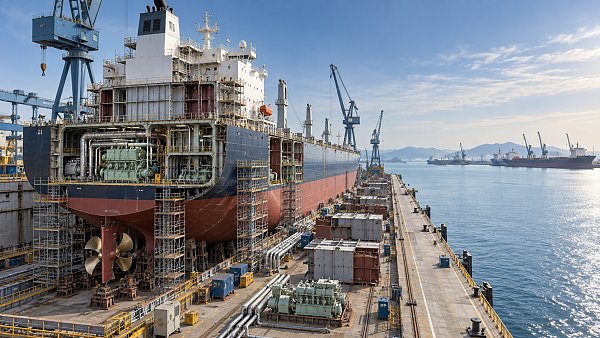
Not all shipbuilding capacity is interchangeable. A yard may have a long orderbook and visible delivery history, yet lack direct experience with the vessel type, containment system, digital architecture, or production tolerances your project requires. Ask for evidence that is relevant, recent, and sufficiently detailed to be useful.
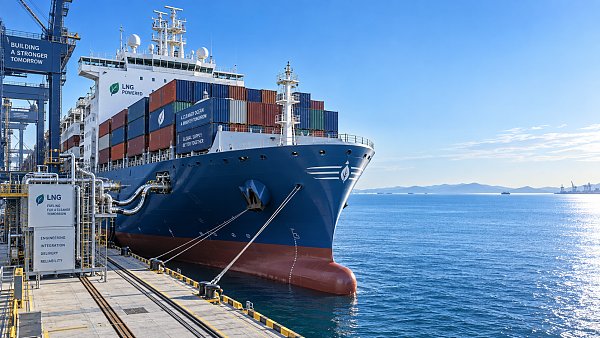
For example, an LNG carrier assessment should extend beyond whether the yard has built gas vessels. Buyers need to understand its familiarity with cryogenic systems, membrane or alternative containment technologies, boil-off gas management, insulation quality control, cargo handling integration, and the testing discipline required before delivery. For smart container ships, the focus may shift toward propulsion efficiency, machinery automation, onboard network resilience, cybersecurity responsibilities, and the practical usefulness of route and performance data.
Review the supplier’s engineering depth as well as its fabrication capacity. A capable supplier can explain design trade-offs, flag interface risks early, and show how changes will be controlled. One warning sign is an organization that treats every buyer requirement as easy to accommodate without asking difficult questions about class, operations, interfaces, or maintainability.
Useful evidence includes completed vessels in comparable service, production schedules, subcontractor oversight processes, change-control records, commissioning plans, and access to the project team—not only commercial representatives. Where possible, speak with current operators of comparable vessels. Their experience during sea trials and the first years of operation often reveals more than a polished reference list.

Confirm class, statutory compliance, and responsibility boundaries
Compliance is not a document to collect near contract signature. It is a design and project-management discipline that affects equipment selection, layout, testing, training, and future modification options. Buyers should verify how the supplier manages requirements from the selected classification society, flag administration, international conventions, and port-state expectations.
Key areas commonly include SOLAS, MARPOL, the International Safety Management framework, ballast water rules, energy-efficiency requirements, and applicable cyber-risk expectations. The exact obligations depend on vessel type, flag, cargo, and trading pattern, so a generic compliance statement is not enough.
Ask a simple but revealing question: Who owns each compliance interface if the rule interpretation changes during design or construction? The answer should identify responsible parties, escalation routes, approval gates, and the financial treatment of changes. Ambiguity between owner, designer, yard, equipment maker, and system integrator is a frequent source of delay.
Procurement teams should also inspect the supplier’s approach to documentation. Handover packages must be complete, searchable, and aligned with the final as-built configuration. Missing drawings, inconsistent equipment lists, or poorly organized test records can make later maintenance, insurance reviews, and retrofits unnecessarily difficult.
Evaluate propulsion and emissions readiness as a lifecycle decision
Fuel choice has become one of the most consequential decisions in vessel procurement. The right solution is shaped by route economics, bunkering access, cargo requirements, charterer expectations, regulatory exposure, and the owner’s tolerance for technology risk. It should not be chosen solely because one propulsion arrangement produces the most favorable initial comparison.
When comparing ocean going vessels suppliers, ask them to show the assumptions behind their efficiency and emissions claims. What loading conditions were used? Which sea states, speed profiles, auxiliary loads, and maintenance intervals were assumed? How will performance be measured after delivery?
For dual-fuel or LNG-capable vessels, verify fuel containment, gas handling, safety zoning, redundancy philosophy, bunkering interfaces, crew procedures, and spare-parts availability. For conventional fuel arrangements with future conversion potential, request an honest explanation of what “ready” means. Space reservation alone may not constitute a credible retrofit pathway if structural reinforcement, piping routes, electrical capacity, control-system updates, or class approvals remain unresolved.
The goal is not to demand a single fuel answer from every supplier. It is to select a vessel architecture that aligns with the operator’s transition plan and does not create avoidable constraints five or ten years from now.
Do not treat smart-vessel technology as a standalone add-on
Digital capability is increasingly connected to fuel efficiency, maintenance planning, cargo visibility, navigational support, and shore-side decision-making. Yet many procurement specifications still list sensors, dashboards, and connectivity as isolated options. That approach can leave the owner with multiple systems that generate data but do not create a coherent operational picture.
A stronger assessment looks at the full data chain: sensing, onboard collection, network design, edge processing, transmission, shore platform, user access, cybersecurity, and ownership of the resulting data. Suppliers should be able to explain how navigation, machinery, cargo, and energy-performance information will be integrated—or kept safely separated where necessary.
For a smart container ship, route optimization and ship-to-shore coordination can improve planning only when the underlying data is reliable and the crew can act on it. For any vessel, remote support functions should not compromise onboard control or create hidden dependence on a single proprietary platform.
Request answers on these points:
- Who owns operational data, and can the owner export it in usable formats?
- What happens if a communications link fails during a voyage?
- How are software patches, vulnerability management, and access rights governed?
- Can third-party equipment be integrated without voiding warranties or creating unsupported interfaces?
- What training is provided for crew, fleet managers, and maintenance teams?
Technology that cannot be maintained, interpreted, or securely updated becomes an expense rather than an operating advantage.
Inspect quality assurance where problems are actually created
Quality management should be assessed on the shop floor and across the supplier network, not only through ISO-style certificates or polished procedures. Complex ships rely on thousands of decisions involving welding, coatings, cable routing, insulation, piping cleanliness, machinery alignment, software configuration, and preservation during construction.
Ask to review inspection and test plans, non-conformance handling, traceability methods, factory acceptance testing, harbor acceptance testing, and sea-trial criteria. The procurement team should understand which tests are witnessed by the owner or class representative, what constitutes acceptance, and how deficiencies are closed.
Subcontractor control deserves special attention. Even a technically strong lead supplier may depend on specialist firms for automation, valves, cargo equipment, electrical systems, insulation, or navigation equipment. Verify how those parties are qualified, monitored, and brought into the project schedule. A late subsystem can disrupt commissioning even when the hull construction itself is on track.
Where the vessel includes critical safety or cryogenic functions, require clear traceability from design requirement to installed component and final test result. This is particularly important when future audits, incidents, or modification projects demand reliable evidence.
Test delivery reliability beyond the promised date
A delivery milestone has value only when the vessel is ready to trade. Procurement teams should distinguish between launch, mechanical completion, sea-trial completion, formal delivery, and operational readiness. These moments are not identical.
Review the supplier’s current workload, berth availability, engineering resources, long-lead equipment exposure, and recent delivery performance. Supply-chain risk should be discussed openly: engines, control electronics, specialized steel, cryogenic components, and marine-grade electrical equipment can all affect schedule certainty.
Contractual protections matter, but they should not substitute for due diligence. Milestone payments, delay provisions, performance guarantees, and liquidated damages need to be paired with realistic reporting rights. Insist on regular schedule visibility, change notifications, and a process for reviewing emerging risks before they become claims.
It is also wise to ask how the supplier handles owner-requested changes. A disciplined partner will explain the cost, schedule, approval, and configuration consequences. An informal “we will work it out later” approach can be expensive once construction is underway.
Measure after-sales support from the operator’s perspective
Once a vessel is at sea, a procurement decision becomes an operational reality. Spare-parts access, field service coverage, remote diagnostics, warranty response, and technical documentation determine whether a problem is resolved in days or allowed to disrupt a voyage.
Evaluate the support network in the ports and regions the fleet will actually use. Ask about escalation paths for critical failures, parts lead times, service availability during dry docking, and whether the supplier maintains trained personnel for the main systems delivered. For integrated smart-vessel solutions, support should cover software and communications as well as mechanical equipment.
Warranty terms need practical reading. Look beyond duration to exclusions, reporting deadlines, labor responsibility, travel costs, and the process for determining root cause. A broad warranty statement offers limited comfort if the operator must navigate several subcontractors to resolve one system failure.
Use a weighted decision record, then challenge the result
A supplier scorecard can bring discipline to a complex selection, provided it does not conceal important risks behind an average score. Weight categories according to the vessel’s mission: technical fit, class and regulatory readiness, project execution, digital integration, lifecycle economics, quality assurance, and service support. Include commercial terms, but avoid allowing price to dominate every other criterion.
After scoring, hold a challenge session. Which assumption would most damage the business case if it proved wrong? Which supplier dependency is hardest to replace? Where is the evidence weak? This final discussion often exposes the difference between a bidder that has presented well and a partner that can reliably support an ocean-going asset for decades.
For procurement teams navigating shipbuilding cycles, fuel uncertainty, and increasingly connected operations, selecting ocean going vessels suppliers is fundamentally an exercise in reducing uncertainty before steel is cut. The strongest choice is not always the lowest bidder or the most familiar name. It is the supplier whose technical judgment, production control, compliance discipline, and long-term support can be verified against the real demands of the voyage ahead.
Recommended News
 Oct 03, 2026What to verify before selecting ocean going vessels suppliersOcean going vessels suppliers: verify shipyard capability, compliance, fuel readiness, digital systems, quality control, delivery reliability, and after-sales support.
 Oct 02, 2026What should operators compare when sourcing high speed rail equipment in Europe?High speed rail equipment Europe sourcing guide: compare interoperability, safety evidence, lifecycle cost and supplier support to protect fleet availability.
 Sep 29, 2026What drives traction systems price differences between rail projects?Traction systems price differences explained: compare duty cycles, voltage compatibility, integration, localization, and lifecycle costs for smarter rail procurement.
 Sep 26, 2026What to assess before selecting an electric traction system manufacturerChoose an electric traction system manufacturer with confidence. Explore key criteria for performance, reliability, safety, integration, energy efficiency, and lifecycle support.
 Sep 25, 2026When do full digitalization systems justify the investment?Full digitalization systems: discover when rail and maritime operators can turn connected data into safer operations, higher availability, and measurable ROI.
 Sep 23, 2026What drives automatic train control systems cost on rail projects?Automatic train control systems cost depends on integration, migration, safety testing, communications, and lifecycle support. Explore the key budget drivers for rail projects.
 Sep 21, 2026How to assess an ocean going vessel builder’s delivery riskAssess an ocean going vessel builder’s delivery risk with proven checks for schedules, capacity, design maturity, critical equipment, quality, and project controls.
 Sep 20, 2026What drives rail safety technology costs over a project lifecycle?Rail safety technology cost goes beyond equipment—explore lifecycle drivers from integration and safety assurance to cybersecurity, commissioning, and obsolescence.
 Sep 16, 2026What to verify before choosing an advanced ocean-going vessels supplierAdvanced ocean-going vessels supplier checklist: verify design authority, build quality, digital systems, delivery reliability, and lifecycle support before you buy.
 Sep 15, 2026What rail safety technology best reduces level-crossing risks in Southeast Asia?Rail safety technology Southeast Asia: discover how fail-safe signalling, barriers, obstacle detection and remote monitoring reduce level-crossing risks.
 Sep 14, 2026How exporters can reduce customs delays in global trade logisticsGlobal trade logistics for exporters: reduce customs delays with accurate data, clearance-ready documents, early filing, and proactive exception management.
 Sep 13, 2026When do global transportation network systems reduce delivery delays?Global transportation network systems reduce delivery delays by improving rail-port-vessel coordination, real-time visibility, and proactive decisions across complex land-sea supply chains.
 Sep 09, 2026When should you choose a rail and maritime manufacturer with dual-sector capability?Rail and maritime manufacturer guide: learn when dual-sector capability reduces integration risk, improves lifecycle support, and strengthens rail-to-port operations.
 Sep 08, 2026What to verify before selecting a railway signalling equipment supplierRailway signalling equipment supplier checklist: verify safety evidence, integration, cybersecurity, delivery capability, and lifecycle support before award.
 Sep 07, 2026How to size a traction power transformer for railway load demandTraction power transformer sizing guide: model railway load demand, peak duty, voltage regulation, harmonics, and contingency capacity for reliable service.
 Sep 07, 2026How do customization options for industrial connectors affect lead times?Customization options for industrial connectors can impact lead times, cost, and compliance. Learn how to specify smarter for rail and marine projects.
 Sep 05, 2026What information should an industrial sourcing guide include?Industrial sourcing information procurement guide: evaluate suppliers, compliance, lifecycle costs, interfaces, and lead times for smarter rail and maritime purchasing decisions.
 Sep 01, 2026How to find reliable maritime tender information before biddingMaritime tender information: learn how to verify sources, define bid-ready scopes, check qualifications, and reduce risk before submitting competitive marine bids.
 Aug 30, 2026How to select railway automation equipment for depots with phased upgradesRailway automation equipment for depots: learn how to plan phased upgrades that improve safety, throughput, integration, and lifecycle control.
 Aug 27, 2026How industrial sourcing intelligence pricing data supports budget approvalIndustrial sourcing intelligence pricing data helps teams benchmark scope, assess supplier risk, and build defensible budget approvals for complex rail and maritime assets.
 Aug 26, 2026When does a marine fuel efficiency solution make financial sense in the Middle East?Marine fuel efficiency solution Middle East: learn when retrofit savings, compliance value, and vessel data align to deliver credible ROI and smarter shipping investment decisions.
 Aug 24, 2026When does maritime automation for tankers deliver a real payback?Maritime automation for tankers delivers real payback when it cuts fuel use, reduces cargo risk, and improves uptime. See how owners can time investment for stronger ROI.
 Aug 23, 2026When do maritime logistics systems in the Middle East justify the costMaritime logistics systems Middle East: discover when rising delays, manual coordination, and poor visibility make system investment the smarter move for regional operators.
 Aug 22, 2026What drives vessel navigation system price for commercial fleetsVessel navigation system price depends on integration, compliance, automation, and support—not just hardware. Learn what drives fleet costs and compare quotes with confidence.