



Search News
Industry Portal
Popular Tags
When does a smart container ship platform reduce port turnaround delays?
Author
Time
Click Count
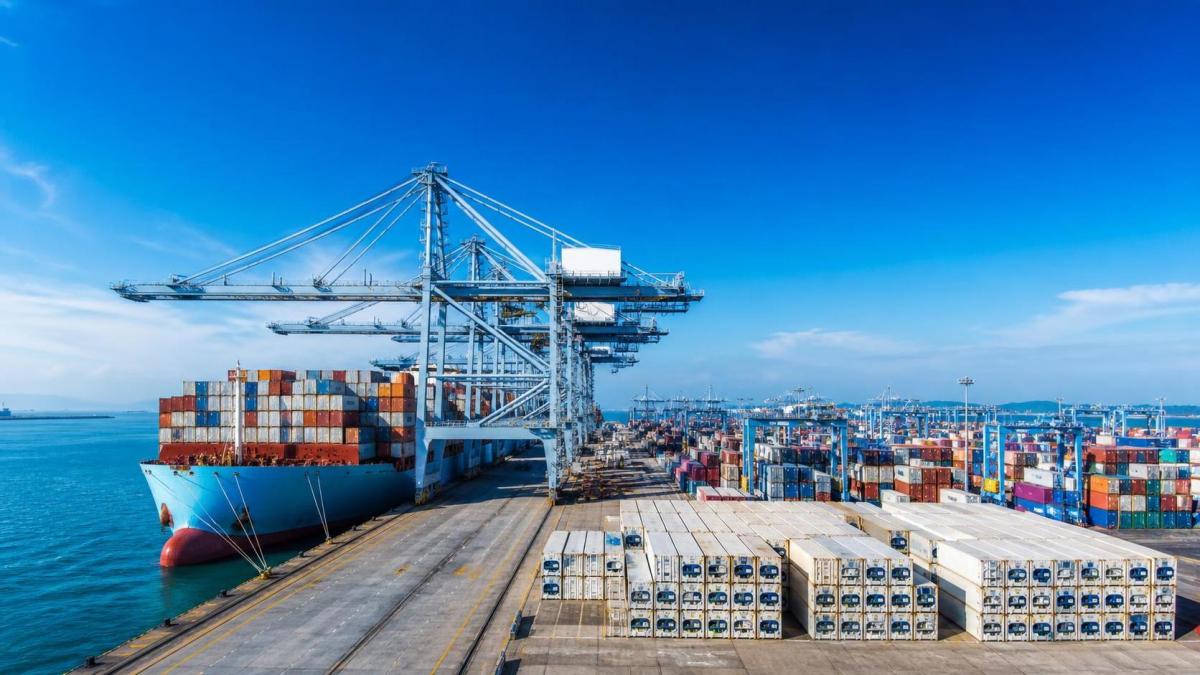
A vessel can be physically alongside the quay and still be losing time. The delay often starts before the first container move: the arrival estimate changes, the berth plan is not updated soon enough, one crane team is reassigned, and a late cargo document creates an inspection hold that reaches the terminal only after the discharge sequence has been set. By the time each party notices the mismatch, the ship has already entered an expensive waiting cycle.
This is a familiar operational problem in container shipping. The master, carrier operations desk, terminal planner, feeder operator, truck appointment team, and cargo interests may all hold useful information, but they do not always see the same version at the same time. A smart container ship platform can reduce port turnaround delays when it turns those scattered signals into an agreed operational picture and supports decisions before a disruption becomes a berth-side problem. It does not make congestion disappear, and it cannot create crane capacity where none exists. Its practical role is to shorten the gap between a change occurring and the right people acting on it.
The delay usually begins long before port arrival
When a turnaround target is missed, attention often goes straight to the visible event: slow crane productivity, a late pilot, weather interruption, or customs hold. Those events matter, but they are frequently the final expression of an earlier coordination failure.
Consider a vessel approaching a busy port after a weather-related speed reduction. The carrier has an updated arrival forecast. The terminal has a berth window based on an older time. The pilotage request is tied to the original estimate, while the stowage team is still planning around containers expected to connect onward by rail. If the changed arrival time is shared by email, telephone, and separate operational systems, each party may respond at a different pace. The berth might be temporarily used by another vessel, labor may be allocated elsewhere, and connection-sensitive boxes may miss their preferred handling sequence.
None of these decisions is unreasonable in isolation. The problem is that the port call is being managed as a chain of separate tasks rather than a shared, changing operation. A smart container ship platform becomes useful only when it helps close that gap without adding another manual reporting burden.
For an engineering or operations team evaluating such a system, the first question should not be, “Does it have artificial intelligence?” A more useful question is: “Which delay decisions will this connect, and who will change their actions when the information changes?” If that cannot be answered clearly, the deployment is likely to become another dashboard that is viewed after the event.
Recognizing the conditions where digital coordination makes a difference
Not every port call needs the same level of integration. A stable service calling at a lightly loaded terminal with predictable cargo flows may improve through disciplined planning and routine data exchange alone. A smart container ship platform is more likely to reduce delay when several sources of variability interact at once.
One common condition is uncertain estimated time of arrival. Ocean weather, traffic separation schemes, canal timing, bunkering changes, mechanical restrictions, and preceding port delays can all alter the actual arrival profile. If arrival updates are late or inconsistent, berth allocation becomes reactive. The terminal may protect itself by keeping buffers, but buffers can turn into idle time when no one has confidence in the forecast.
Another condition is a complex cargo mix. Transshipment containers, reefer units, dangerous goods, out-of-gauge cargo, customs-selected units, and rail-connected containers do not move through the terminal in the same way. A general vessel arrival message is not enough when these categories need different yard positions, inspection arrangements, power connections, or onward transport timing. The value of a shared operating view rises when cargo exceptions are identified early enough to change the plan.
Port congestion is also not the only trigger. A terminal can have available berth space and still experience long turnaround because the ship’s bay plan, crane deployment, yard strategy, and gate flow are poorly synchronized. Similarly, a vessel may berth on time yet lose its schedule because discharge and loading priorities were planned using incomplete or outdated information. The relevant measure is not simply arrival punctuality; it is the time from operational readiness to departure readiness.
Start with the decisions, not the data feed
Teams sometimes begin an implementation by connecting every available system: vessel monitoring, terminal operating systems, cargo booking tools, weather feeds, equipment telemetry, port community data, and inland transport records. This can create a technically impressive environment while leaving the main operating decisions unchanged.
A better starting point is to map the moments at which delay can still be prevented. In many port calls, those moments include revising the arrival forecast, confirming berth readiness, arranging pilotage and towage, freezing a workable stowage sequence, identifying blocked or high-priority containers, adjusting crane plans, and managing late changes before loading close-out.
For each moment, define four practical points:
- Which person or function owns the decision?
- What information must be reliable enough to support it?
- How early must an update arrive to remain useful?
- What action is expected when the status changes?
This exercise exposes a frequent weakness: data may be available, but no operating rule connects it to a response. For example, an arrival prediction may show that a vessel will miss its planned berth window. If there is no agreement on whether the terminal revises berth sequencing, the carrier alters speed, or the port adjusts marine services, the prediction merely documents a future delay.
The same applies to cargo exceptions. A notification that a container lacks a release, requires inspection, or has a documentation discrepancy needs an owner and a resolution path. The platform should show the exception in the context of the vessel plan, not as an isolated administrative alert. A blocked import container in a low-priority stack is one issue; a restricted unit occupying a position that affects a critical loading sequence is another.
Build one operational timeline from vessel to hinterland
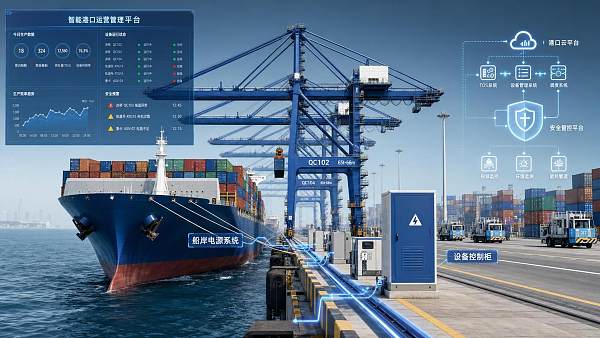
The most useful design principle is a common timeline rather than a collection of disconnected screens. The timeline should cover the expected arrival, notice of readiness where relevant, pilot boarding, berth availability, first line, start and completion of cargo work, marine service windows, cargo cut-offs, and planned departure. It should also show the assumptions behind those times.
That last point is important. A predicted berth time is not equally reliable in every situation. It may depend on the departure of a vessel currently occupying the berth, a tide restriction, a crane availability assumption, or confirmation of cargo documentation. A smart container ship platform should make those dependencies visible. When users see only a single timestamp, they may treat a provisional estimate as a firm commitment and make downstream plans that cannot be supported.
Data quality should be treated as an operational issue, not solely an IT issue. Teams need to agree on time formats, event definitions, identifiers for vessel calls and containers, update frequency, and responsibility for correcting conflicting records. “Actual time of arrival” can mean anchorage arrival, pilot station arrival, berth arrival, or first line ashore depending on the system. Unless definitions are aligned, reports can appear precise while causing confusion in planning meetings.
It is usually wiser to start with a limited set of high-value events. Vessel position and forecast arrival, berth status, terminal work progress, stowage changes, priority cargo exceptions, and onward transport constraints are often more actionable than a large volume of low-impact telemetry. Additional feeds can be added after the team has demonstrated that the first set changes real decisions.
Where route and speed recommendations fit—and where they do not
AI-assisted route or speed recommendations can help reduce avoidable waiting when they are linked to credible port readiness information. If a vessel is likely to arrive well before a berth can be made available, a revised speed profile may be operationally preferable to arriving early only to anchor. If the berth plan improves and an earlier arrival can be accommodated, the vessel and port need a timely way to align that change.
However, route optimization should not be treated as an automatic command. Navigation safety, charter-party obligations, fuel planning, weather risk, traffic conditions, engine limitations, and master’s authority remain central. A recommendation is useful when its inputs and constraints are understandable, when it can be reviewed by the responsible people, and when the resulting change is communicated to port-side planning.
This is where many deployments lose value. A vessel receives an optimized arrival suggestion, but the terminal continues using a previous ETA. Or the terminal changes berth availability without the change reaching the vessel operations team in time. The technology may calculate well, yet the handoff fails. The operational design must therefore include confirmation states: proposed, reviewed, accepted, superseded, and completed. Simple status discipline prevents teams from acting on assumptions that another party has already changed.
Use exception management to protect the cargo operation
Normal operations do not need constant intervention. Exceptions do. A delayed pilot, crane outage, damaged container, reefer alarm, documentation hold, unexpected hazardous cargo restriction, missing rail slot, or late load-list amendment can affect more than one function. The earlier the impact is assessed, the more options remain.
A practical exception workflow begins by separating alerts from decisions. An alert may state that a reefer container has an abnormal temperature reading. The decision question is whether power capacity, yard placement, inspection access, loading sequence, or notification procedures need to change. A smart container ship platform should help users trace that relationship rather than flood them with unprioritized notifications.
Exceptions should also be ranked by operational consequence. A message that arrives late but does not alter the work sequence may be handled routinely. A small discrepancy affecting a container scheduled for a narrow rail connection or a critical bay can require rapid cross-functional action. Teams benefit from agreed escalation thresholds, but they should avoid turning every deviation into a major incident. Excessive escalation causes alert fatigue and encourages people to work around the system.
During initial deployment, review the exceptions that caused manual calls, spreadsheet changes, or last-minute workarounds. Those are usually better candidates for configuration than generic software categories. The goal is not to digitize every conversation. It is to make the conversations that affect berth time, cargo flow, and departure readiness faster and better informed.
A phased rollout is safer than a port-wide switch-on
Because a port call crosses organizational boundaries, implementation can become difficult if it begins with a demand for universal participation. Different parties may have different systems, data standards, commercial sensitivities, and working rhythms. A phased rollout creates room to test practical behavior rather than assuming technical connectivity equals adoption.
Begin with one service loop, a limited group of ports, or a narrow operational use such as arrival-and-berth coordination. Select a process with recurring friction and enough variability to show whether shared visibility improves decisions. Before connecting additional sources, establish who validates ETA changes, who updates berth constraints, and how users resolve contradictory information.
Then observe the working process over several calls. Are users receiving changes early enough? Do the timestamps match physical events? Are planners taking action from the system, or returning to informal channels? Are exceptions being closed with clear ownership? These questions reveal whether the process design is sound.
Only after the initial flow is stable should the scope expand to stowage coordination, cargo exception management, equipment condition signals, or inland connection planning. This order matters because later capabilities depend on trust in the earlier timeline. If users doubt basic arrival or berth information, they will not rely on more sophisticated recommendations.
Measure delay reduction without creating misleading scorecards
Turnaround performance should be assessed through operational measures that teams can influence. Total time in port is useful, but it can hide the source of the problem. Break the call into stages: waiting before berth, time from berth to cargo start, cargo work duration, time from cargo completion to departure, and delay caused by unresolved exceptions. Review trends alongside the reasons recorded for major deviations.
It is equally important to distinguish planned changes from uncontrolled delay. A revised berth sequence may be the correct decision for the overall terminal plan even if one vessel waits longer. The objective is not to make every individual timestamp appear shorter; it is to reduce avoidable idle time and prevent local decisions from damaging the wider network.
Teams should resist claiming that a digital system alone caused an improvement. Weather, seasonal demand, port labor conditions, vessel deployment, and schedule design all influence outcomes. The more credible approach is to ask whether the smart container ship platform improved the timeliness, accuracy, and usability of the information behind each decision. If it did, its contribution can be seen in fewer late surprises, clearer handoffs, and more deliberate responses to disruption.
When the tool will not solve the underlying problem
A connected operating environment cannot substitute for inadequate berth capacity, insufficient yard space, unresolved labor constraints, unreliable physical equipment, or unclear commercial agreements. It also cannot repair a process in which parties refuse to share the minimum information needed for coordination. In these conditions, visibility may make the constraint more obvious, but it will not remove it.
The right response is to use the visibility to separate structural issues from coordination issues. If every vessel waits because berth demand exceeds capacity, that calls for operational and investment decisions beyond software. If waits occur because ETA updates, marine services, and berth plans are not synchronized, a smart container ship platform can provide a practical route to improvement.
The deciding condition is simple: the platform reduces turnaround delays when connected data leads to earlier, agreed action across the vessel-port-cargo chain. Start with a real delay pattern, define the decisions that can change it, build a trusted timeline, and make exceptions visible in their operational context. When those foundations are in place, digital coordination becomes part of the port call itself rather than another layer of reporting after the vessel has sailed.
Recommended News
 Sep 22, 2026When smart vessels equipment improves port turnaround timeSmart vessels equipment helps reduce port turnaround time with reliable arrival forecasts, cargo visibility, and equipment readiness. Explore practical integration strategies.
 Sep 17, 2026When does a port vessel integration platform reduce turnaround delays?Port vessel integration platform: discover when connected data, coordinated workflows, and early alerts reduce turnaround delays and improve port-call reliability.
 Sep 04, 2026How smart land-sea interconnection improves cargo visibility at portsSmart land sea interconnection gives ports real-time cargo visibility across vessels, terminals, rail, and inland networks—reducing delays, risk, and costly disruptions.
 Aug 31, 2026When does a smart container ship platform reduce port turnaround delays?Smart container ship platform insights: reduce port turnaround delays with shared timelines, proactive exception management, and faster vessel-port coordination.
 Jul 28, 2026Integrated Ship to Shore Systems: Key Factors for Reliable Port IntegrationIntegrated ship to shore systems guide reliable port integration by addressing interfaces, latency, cybersecurity, failure recovery, and retrofit risks—essential reading before choosing a vendor.
 Jul 13, 2026How to Evaluate a Port Vessel Integration ProviderPort vessel integration provider evaluation starts with scope, interoperability, cybersecurity, and delivery strength. Learn how to choose a reliable partner for safer, smarter port operations.
 Jul 12, 2026How Smart Container Ships Technology Cuts Port DelaysSmart container ships technology helps cut port delays with live ETA data, better berth planning, and faster cargo handling. See how it improves reliability and lowers supply chain disruption.
 Jul 09, 2026Vessel Connectivity for Cargo Ships: Solving Data Gaps at SeaVessel connectivity for cargo ships explained through real voyage scenarios—learn how to reduce data gaps, improve fleet decisions, and choose smarter sea-to-shore connectivity.
 Jul 08, 2026Real Time Ship to Shore: What Delays Data Sync in Port Operations?Real time ship to shore delays can disrupt port efficiency, safety, and turnaround. Discover the hidden causes of data sync issues and practical fixes to improve maritime operations.
![]() Jul 07, 2026Smart Ship Connectivity for Fleet Monitoring: What Delivers ROISmart ship connectivity for fleet monitoring delivers ROI when data, alerts, and workflows match real fleet operations. Learn how to reduce delays, control risk, and improve asset performance.
Jul 07, 2026Smart Ship Connectivity for Fleet Monitoring: What Delivers ROISmart ship connectivity for fleet monitoring delivers ROI when data, alerts, and workflows match real fleet operations. Learn how to reduce delays, control risk, and improve asset performance. Jun 29, 2026Digital Ship to Shore Integration: Key Risks Before DeploymentDigital ship to shore integration: discover the top pre-deployment risks in interoperability, cybersecurity, data quality, workflows, and compliance to ensure a smoother rollout.
 Jun 26, 2026Ship to Shore Integration: Key Performance Checks Before DeploymentShip to shore integration is critical before deployment. Check interface stability, data accuracy, cyber resilience, and crane coordination to boost safety, reduce delays, and improve terminal performance.
 Jun 15, 2026Land-Sea Interconnection Challenges in Port Logistics and Cargo FlowLand-sea interconnection challenges in port logistics can disrupt cargo flow, raise costs, and delay delivery. Discover practical strategies to improve coordination, visibility, and resilience.
 Jun 10, 2026Improving Port Efficiency with Better Ship-to-Shore SynergyShip-to-shore synergy is the key to improving port efficiency. Discover how better vessel-terminal coordination reduces delays, supports rail-yard flow, and boosts reliable throughput.
 Jun 07, 2026How to Compare Intermodal Transport Systems for Port-Centric Cargo FlowsIntermodal transport systems for port-centric cargo flows: compare reliability, rail-sea coordination, scalability, and data visibility to choose smarter, more resilient logistics solutions.
![]() May 23, 2026How Smart Maritime Technology Cuts Port Delay RisksSmart maritime technology helps cut port delay risks with predictive ETA, AI routing, and connected port visibility—reducing fuel waste, improving berth planning, and strengthening supply chain resilience.
May 23, 2026How Smart Maritime Technology Cuts Port Delay RisksSmart maritime technology helps cut port delay risks with predictive ETA, AI routing, and connected port visibility—reducing fuel waste, improving berth planning, and strengthening supply chain resilience. May 21, 2026Maritime Logistics Optimization Techniques That Reduce Port Dwell TimeMaritime logistics optimization techniques help cut port dwell time through smarter berth planning, yard coordination, and real-time visibility—discover practical ways to boost flow and reliability.
 May 17, 2026Land-Sea Interconnection Models That Improve Cargo TurnaroundLand-sea interconnection models that improve cargo turnaround: explore fixed-slot rail-berth links, dry ports, smart visibility, and safer corridor design to cut dwell time and boost logistics performance.