



Search News
Industry Portal
Popular Tags
Real Time Ship to Shore: What Delays Data Sync in Port Operations?
Author
Time
Click Count
Real Time Ship to Shore: What Delays Data Sync in Port Operations?
In modern port operations, real time ship to shore visibility is critical for keeping cargo, crews, and schedules aligned.
Yet even advanced terminals face hidden obstacles that slow data synchronization.
Common issues include unstable onboard networks, weak coverage near berths, and poor integration between vessels, cranes, gates, and control platforms.
Understanding these delays is the first step toward safer decisions, faster turnaround, and smarter maritime logistics.
Why Real Time Ship to Shore Matters More Than Ever
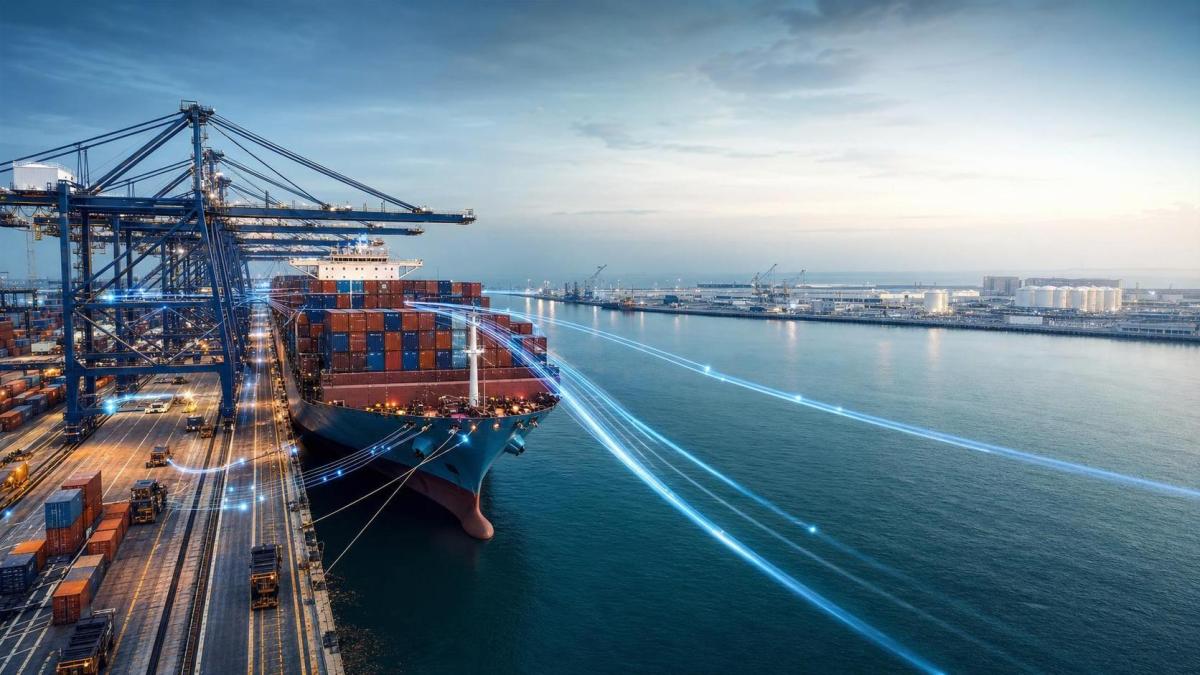
Port teams now work under tighter berth windows, stricter fuel targets, and rising pressure to avoid idle moves.
That makes real time ship to shore data far more than a convenience.
It connects what happens onboard with what happens ashore, minute by minute.
When the link works well, crane sequencing improves, truck dispatch becomes smoother, and vessel turnaround stays predictable.
When it lags, the entire chain starts making decisions on outdated information.
In practice, a few minutes of bad synchronization can trigger much larger operational losses.
A missed container status update may delay yard planning.
A late machinery alert may force manual checks.
An inaccurate ETA feed may leave labor and equipment waiting at the wrong time.
That is why real time ship to shore performance now affects safety, cost, asset use, and customer trust at the same time.
The Most Common Reasons Data Sync Gets Delayed
Most delays do not come from a single failure.
They usually build up across network, software, hardware, and process layers.
1. Unstable vessel connectivity
Ships often shift between satellite, cellular, Wi-Fi, and private port networks.
That handoff is not always clean.
Signal drops near terminal structures, interference from metal surfaces, and bandwidth congestion can interrupt real time ship to shore traffic.
Even brief gaps may create timestamp conflicts later.
2. Legacy onboard systems
Many vessels still run mixed generations of navigation, engine, cargo, and monitoring systems.
Some export data slowly.
Some require manual polling.
Some were never designed for continuous ship-to-shore synchronization.
This creates bottlenecks before data even reaches the network edge.
3. Weak integration between terminal platforms
A terminal may use separate systems for TOS, yard planning, crane control, customs, security, and fleet coordination.
If those systems exchange data in batches, real time ship to shore visibility becomes fragmented.
The vessel may report one status while shore software still shows another.
4. Poor data standards and mapping
One system may log local time.
Another may log UTC.
One sensor may name a status as “loaded.”
Another may call the same event “confirmed aboard.”
Without clear mapping rules, real time ship to shore data looks live but behaves inconsistently.
5. Edge device overload
Gateways, onboard servers, and edge controllers often handle too many tasks at once.
If compute resources are limited, queues build quietly.
By the time data appears ashore, it is already stale.
6. Cybersecurity controls without performance tuning
Security is non-negotiable, especially in maritime operations.
Still, inspection layers, VPN routing, deep packet checks, and repeated authentication can add delay.
If they are deployed without latency testing, real time ship to shore performance suffers.
How Delayed Sync Shows Up in Daily Port Operations
Data lag is not always obvious on a dashboard.
More often, it appears as small operational frictions.
- Crane operators receive container moves too late to keep a steady rhythm.
- Yard planners reshuffle slots because incoming status feeds arrive out of sequence.
- Maintenance teams react slowly because equipment alarms were buffered onboard.
- Berth managers lose confidence in ETA and ETD estimates.
- Customs or compliance records need manual correction later.
Over time, these frictions become structural inefficiency.
That is why teams should treat real time ship to shore delays as an operational health issue, not just an IT issue.
A Practical Checklist to Diagnose Real Time Ship to Shore Delays
The fastest way to improve performance is to locate where delay enters the chain.
A simple review usually reveals more than a large redesign at the start.
- Measure end-to-end latency from onboard source to shore dashboard.
- Compare timestamp logic across vessel, port, and cloud systems.
- Check handoff performance between network types during approach and berthing.
- Review whether critical updates run as events or scheduled batches.
- Inspect queue lengths on gateways, brokers, and API layers.
- Verify that alarms, container events, and ETA feeds share the same priority policy.
- Test cybersecurity controls under peak traffic conditions, not only in quiet hours.
- Ask operators where screens disagree with actual field conditions.
That last step matters more than many teams expect.
When people stop trusting live data, they create manual workarounds.
Once that happens, real time ship to shore loses much of its value.
What Improvements Usually Deliver the Fastest Results
Not every port needs a full digital rebuild.
In many cases, targeted fixes restore stable real time ship to shore performance.
Prioritize event-based architecture
Critical status changes should move as events, not wait for batch windows.
This is especially useful for berth updates, crane exceptions, and cargo milestones.
Strengthen edge processing
Filter, compress, and prioritize data before transmission.
That reduces noise and protects bandwidth for high-value real time ship to shore traffic.
Standardize data models
A shared dictionary for events, asset names, timestamps, and status codes removes silent confusion.
It also makes future integrations much easier.
Segment traffic by business priority
Not every data point needs the same speed.
Safety alerts and operational events should outrank routine logs and historical archives.
Monitor trust, not just uptime
A system can be available while still delivering poor real time ship to shore value.
Track freshness, consistency, and operator confidence together.
Where GTOT Sees the Strongest Direction of Change
From a broader transport technology view, the stronger signal is convergence.
Ports no longer treat vessel data, terminal automation, and supply chain orchestration as separate worlds.
That shift aligns with how GTOT studies intelligent rail control, traction power stability, and smart maritime systems.
In all of them, timing quality is as important as data quantity.
For smart container ships and connected terminals, real time ship to shore capability is becoming a core competitiveness issue.
The ports that improve it first will usually gain better berth productivity, clearer exception handling, and more reliable customer commitments.
Final Takeaway
Real time ship to shore delays rarely come from one dramatic breakdown.
They come from small timing losses across connectivity, integration, standards, and workflow design.
The good news is that these problems are measurable.
They are also fixable with disciplined diagnosis and practical prioritization.
If live vessel-to-terminal data feels unreliable, start by tracing latency step by step.
Then focus on the points where real time ship to shore performance affects decisions the most.
That is usually where faster turnaround, lower risk, and better coordination begin.
Recommended News
 Sep 22, 2026When smart vessels equipment improves port turnaround timeSmart vessels equipment helps reduce port turnaround time with reliable arrival forecasts, cargo visibility, and equipment readiness. Explore practical integration strategies.
 Sep 17, 2026When does a port vessel integration platform reduce turnaround delays?Port vessel integration platform: discover when connected data, coordinated workflows, and early alerts reduce turnaround delays and improve port-call reliability.
 Sep 04, 2026How smart land-sea interconnection improves cargo visibility at portsSmart land sea interconnection gives ports real-time cargo visibility across vessels, terminals, rail, and inland networks—reducing delays, risk, and costly disruptions.
 Aug 31, 2026When does a smart container ship platform reduce port turnaround delays?Smart container ship platform insights: reduce port turnaround delays with shared timelines, proactive exception management, and faster vessel-port coordination.
 Jul 28, 2026Integrated Ship to Shore Systems: Key Factors for Reliable Port IntegrationIntegrated ship to shore systems guide reliable port integration by addressing interfaces, latency, cybersecurity, failure recovery, and retrofit risks—essential reading before choosing a vendor.
 Jul 13, 2026How to Evaluate a Port Vessel Integration ProviderPort vessel integration provider evaluation starts with scope, interoperability, cybersecurity, and delivery strength. Learn how to choose a reliable partner for safer, smarter port operations.
 Jul 12, 2026How Smart Container Ships Technology Cuts Port DelaysSmart container ships technology helps cut port delays with live ETA data, better berth planning, and faster cargo handling. See how it improves reliability and lowers supply chain disruption.
 Jul 09, 2026Vessel Connectivity for Cargo Ships: Solving Data Gaps at SeaVessel connectivity for cargo ships explained through real voyage scenarios—learn how to reduce data gaps, improve fleet decisions, and choose smarter sea-to-shore connectivity.
 Jul 08, 2026Real Time Ship to Shore: What Delays Data Sync in Port Operations?Real time ship to shore delays can disrupt port efficiency, safety, and turnaround. Discover the hidden causes of data sync issues and practical fixes to improve maritime operations.
![]() Jul 07, 2026Smart Ship Connectivity for Fleet Monitoring: What Delivers ROISmart ship connectivity for fleet monitoring delivers ROI when data, alerts, and workflows match real fleet operations. Learn how to reduce delays, control risk, and improve asset performance.
Jul 07, 2026Smart Ship Connectivity for Fleet Monitoring: What Delivers ROISmart ship connectivity for fleet monitoring delivers ROI when data, alerts, and workflows match real fleet operations. Learn how to reduce delays, control risk, and improve asset performance. Jun 29, 2026Digital Ship to Shore Integration: Key Risks Before DeploymentDigital ship to shore integration: discover the top pre-deployment risks in interoperability, cybersecurity, data quality, workflows, and compliance to ensure a smoother rollout.
 Jun 26, 2026Ship to Shore Integration: Key Performance Checks Before DeploymentShip to shore integration is critical before deployment. Check interface stability, data accuracy, cyber resilience, and crane coordination to boost safety, reduce delays, and improve terminal performance.
 Jun 15, 2026Land-Sea Interconnection Challenges in Port Logistics and Cargo FlowLand-sea interconnection challenges in port logistics can disrupt cargo flow, raise costs, and delay delivery. Discover practical strategies to improve coordination, visibility, and resilience.
 Jun 10, 2026Improving Port Efficiency with Better Ship-to-Shore SynergyShip-to-shore synergy is the key to improving port efficiency. Discover how better vessel-terminal coordination reduces delays, supports rail-yard flow, and boosts reliable throughput.
 Jun 07, 2026How to Compare Intermodal Transport Systems for Port-Centric Cargo FlowsIntermodal transport systems for port-centric cargo flows: compare reliability, rail-sea coordination, scalability, and data visibility to choose smarter, more resilient logistics solutions.
![]() May 23, 2026How Smart Maritime Technology Cuts Port Delay RisksSmart maritime technology helps cut port delay risks with predictive ETA, AI routing, and connected port visibility—reducing fuel waste, improving berth planning, and strengthening supply chain resilience.
May 23, 2026How Smart Maritime Technology Cuts Port Delay RisksSmart maritime technology helps cut port delay risks with predictive ETA, AI routing, and connected port visibility—reducing fuel waste, improving berth planning, and strengthening supply chain resilience. May 21, 2026Maritime Logistics Optimization Techniques That Reduce Port Dwell TimeMaritime logistics optimization techniques help cut port dwell time through smarter berth planning, yard coordination, and real-time visibility—discover practical ways to boost flow and reliability.
 May 17, 2026Land-Sea Interconnection Models That Improve Cargo TurnaroundLand-sea interconnection models that improve cargo turnaround: explore fixed-slot rail-berth links, dry ports, smart visibility, and safer corridor design to cut dwell time and boost logistics performance.