



Search News
Industry Portal
Popular Tags
Digital Ship to Shore Integration: Key Risks Before Deployment
Author
Time
Click Count
Digital Ship to Shore Integration: Key Risks Before Deployment
Before investing in digital ship to shore integration, project teams need a wider view than faster data exchange.
The promise is real. Better berth planning, cleaner handoffs, and fewer blind spots can raise terminal and vessel efficiency.
Still, many deployments stall because the hard risks appear after budgets are approved and timelines are fixed.
That is why digital ship to shore integration should begin with risk mapping, not only technology selection.
In practical terms, the main concerns usually sit in interoperability, cyber resilience, latency, workflow design, and regulatory control.
The sections below break down the issues that matter most before rollout and show how to reduce deployment friction early.
Why Digital Ship to Shore Integration Looks Simple on Paper
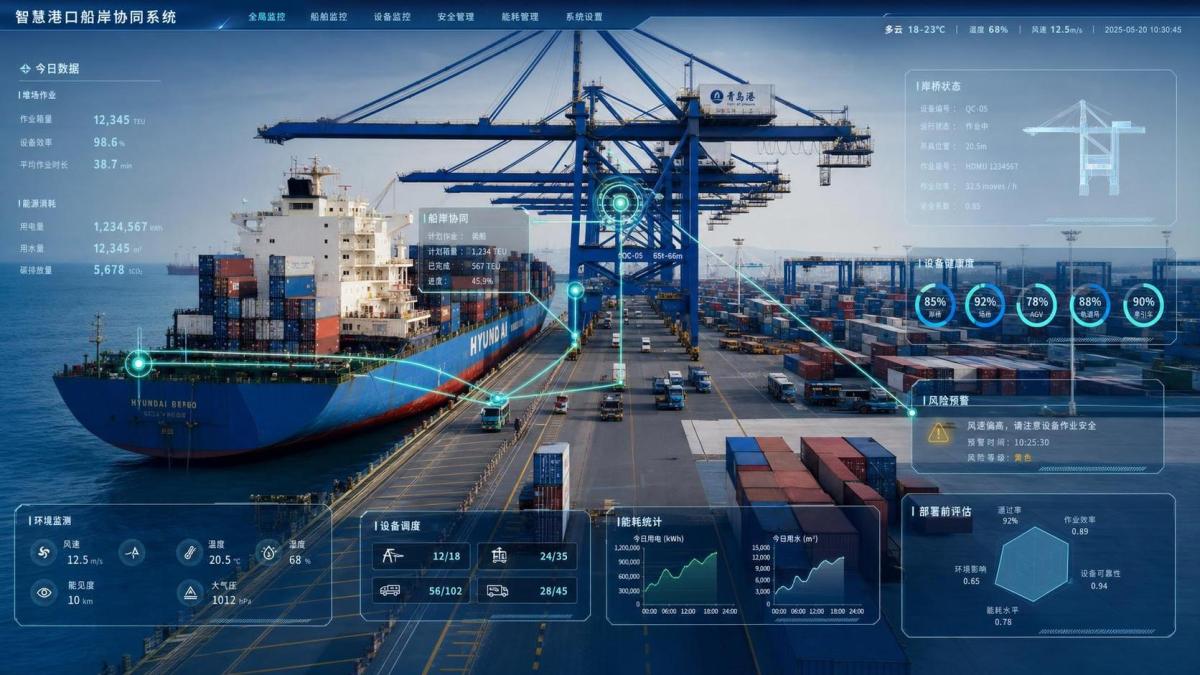
Most digital ship to shore integration programs start with a clear business case.
Operators expect faster cargo status visibility, improved ETA accuracy, less radio traffic, and fewer manual updates across quay, bridge, and control room.
Those outcomes are achievable, but only when the surrounding systems are ready to share reliable operational context.
A common problem is treating integration as a software layer rather than an operating model change.
In reality, digital ship to shore integration touches vessel systems, terminal platforms, communications links, crew routines, and commercial reporting lines.
Once that broader impact is visible, risk planning becomes much more realistic.
Risk 1: Interoperability Gaps Between Ship and Terminal Systems
Interoperability is usually the first major barrier in digital ship to shore integration.
Vessels, terminal operating systems, quay cranes, and third-party logistics tools often speak different data languages.
Even when APIs exist, field definitions may not match actual operations.
For example, an arrival event may mean pilot boarding in one system and all-fast confirmation in another.
That small mismatch can cascade into wrong berth windows, labor allocation errors, and cargo sequencing conflicts.
From recent deployment patterns, the bigger signal is not missing interfaces. It is inconsistent operational semantics.
- Map each critical event across ship, terminal, and hinterland systems.
- Define a single source of truth for timestamps, status codes, and ownership.
- Run interface simulation using real voyage and berth scenarios before procurement freeze.
This step alone can prevent expensive redesign later in the digital ship to shore integration program.
Risk 2: Cyber Exposure Increases as Connectivity Expands
Every new connection point adds operational value and attack surface at the same time.
That tension sits at the center of digital ship to shore integration risk.
Shipboard OT, terminal IT, vendor remote access, and cloud dashboards rarely mature at the same speed.
As a result, one weak segment can expose the wider operating chain.
The practical risk is not only data theft. It includes false status data, delayed commands, or unavailable coordination tools during port calls.
For smart container ship operations, that can quickly turn into berth disruption and contractual penalties.
- Separate OT and IT trust zones clearly.
- Limit remote access by role, device, and time window.
- Validate vendor patch cycles against voyage and terminal schedules.
- Test incident response on a live operational timeline, not a classroom script.
A digital ship to shore integration project should never reach commissioning without those controls being proven.
Risk 3: Data Latency and Quality Can Break Operational Trust
Many teams focus on whether data can be shared. Fewer teams ask whether it arrives in time to matter.
This is where digital ship to shore integration often loses user trust.
If berth planners see stale ETAs, or bridge teams receive delayed shore updates, people go back to phone calls and spreadsheets.
Once that happens, the integration platform becomes background noise instead of a control tool.
Latency risk also includes sensor inconsistency, duplicate records, missing acknowledgments, and weak exception handling.
In actual operations, one unreliable feed can discredit ten accurate ones.
The lesson is simple. Digital ship to shore integration succeeds when data quality rules are built before dashboards are designed.
Risk 4: Crew and Terminal Workflows May Resist the New Logic
Technology can be correct and still fail in use.
That usually happens when digital ship to shore integration is added on top of old workflows without redesigning decision points.
Bridge officers, port coordinators, crane planners, and maintenance teams do not all need the same alerts, timing, or screens.
If the platform ignores role-specific realities, users create workarounds immediately.
More importantly, workflow friction can create safety exposure when manual and digital instructions overlap.
This also means training should be tied to real scenarios, not feature walkthroughs.
- Identify which role owns each digital handoff.
- Remove duplicate manual approval steps where policy allows.
- Pilot the process during normal port pressure, not only during quiet shifts.
- Measure adoption by task completion behavior, not login counts.
When digital ship to shore integration matches daily work, adoption moves much faster and benefits become visible sooner.
Risk 5: Compliance and Liability Boundaries Are Often Underestimated
Another weak point appears in governance.
Digital ship to shore integration can cross flag requirements, port regulations, cybersecurity guidance, data residency rules, and contractual duties between operators.
The issue is not just formal compliance. It is decision accountability when shared data drives action.
If a terminal acts on wrong vessel data, or a ship follows outdated shore instructions, responsibility can become disputed very quickly.
That is why project documents need operational legal clarity, not only technical scope.
In complex land-sea operations, GTOT has consistently observed that unclear accountability slows deployment more than hardware lead times.
- Document who owns each data object and each action trigger.
- Align digital procedures with port state and company safety management rules.
- Review retention, audit trails, and evidence requirements early.
That groundwork makes digital ship to shore integration easier to defend internally and externally.
A Practical Pre-Deployment Checklist
Before final approval, the project should be able to answer a short set of hard questions.
These questions help test whether digital ship to shore integration is ready for live operations.
- Do critical vessel and terminal events have common definitions?
- Can the network maintain required performance during peak port activity?
- Have cyber controls been tested under operational constraints?
- Will crews and shore teams use one process, not parallel versions?
- Are liability, audit, and data ownership rules contractually clear?
- Is there a fallback mode when digital exchange becomes unavailable?
If several answers remain vague, deployment timing is probably too optimistic.
What Stronger Rollouts Usually Have in Common
The best digital ship to shore integration rollouts are usually less dramatic than expected.
They start with a narrow operational scope, tight data governance, and measurable use cases such as berth coordination or container event synchronization.
They also combine technical testing with real operational rehearsals.
That combination matters because a platform may pass interface checks while still failing under live workload timing.
For decision-makers, the practical takeaway is clear.
Digital ship to shore integration creates value when it improves operational certainty, not when it simply adds more connected screens.
Assess the risks early, pressure-test the assumptions, and deploy in stages that teams can actually absorb.
That approach gives digital ship to shore integration a better chance of delivering safer coordination, steadier ROI, and long-term maritime resilience.
Recommended News
 Sep 22, 2026When smart vessels equipment improves port turnaround timeSmart vessels equipment helps reduce port turnaround time with reliable arrival forecasts, cargo visibility, and equipment readiness. Explore practical integration strategies.
 Sep 17, 2026When does a port vessel integration platform reduce turnaround delays?Port vessel integration platform: discover when connected data, coordinated workflows, and early alerts reduce turnaround delays and improve port-call reliability.
 Sep 04, 2026How smart land-sea interconnection improves cargo visibility at portsSmart land sea interconnection gives ports real-time cargo visibility across vessels, terminals, rail, and inland networks—reducing delays, risk, and costly disruptions.
 Aug 31, 2026When does a smart container ship platform reduce port turnaround delays?Smart container ship platform insights: reduce port turnaround delays with shared timelines, proactive exception management, and faster vessel-port coordination.
 Jul 28, 2026Integrated Ship to Shore Systems: Key Factors for Reliable Port IntegrationIntegrated ship to shore systems guide reliable port integration by addressing interfaces, latency, cybersecurity, failure recovery, and retrofit risks—essential reading before choosing a vendor.
 Jul 13, 2026How to Evaluate a Port Vessel Integration ProviderPort vessel integration provider evaluation starts with scope, interoperability, cybersecurity, and delivery strength. Learn how to choose a reliable partner for safer, smarter port operations.
 Jul 12, 2026How Smart Container Ships Technology Cuts Port DelaysSmart container ships technology helps cut port delays with live ETA data, better berth planning, and faster cargo handling. See how it improves reliability and lowers supply chain disruption.
 Jul 09, 2026Vessel Connectivity for Cargo Ships: Solving Data Gaps at SeaVessel connectivity for cargo ships explained through real voyage scenarios—learn how to reduce data gaps, improve fleet decisions, and choose smarter sea-to-shore connectivity.
 Jul 08, 2026Real Time Ship to Shore: What Delays Data Sync in Port Operations?Real time ship to shore delays can disrupt port efficiency, safety, and turnaround. Discover the hidden causes of data sync issues and practical fixes to improve maritime operations.
![]() Jul 07, 2026Smart Ship Connectivity for Fleet Monitoring: What Delivers ROISmart ship connectivity for fleet monitoring delivers ROI when data, alerts, and workflows match real fleet operations. Learn how to reduce delays, control risk, and improve asset performance.
Jul 07, 2026Smart Ship Connectivity for Fleet Monitoring: What Delivers ROISmart ship connectivity for fleet monitoring delivers ROI when data, alerts, and workflows match real fleet operations. Learn how to reduce delays, control risk, and improve asset performance. Jun 29, 2026Digital Ship to Shore Integration: Key Risks Before DeploymentDigital ship to shore integration: discover the top pre-deployment risks in interoperability, cybersecurity, data quality, workflows, and compliance to ensure a smoother rollout.
 Jun 26, 2026Ship to Shore Integration: Key Performance Checks Before DeploymentShip to shore integration is critical before deployment. Check interface stability, data accuracy, cyber resilience, and crane coordination to boost safety, reduce delays, and improve terminal performance.
 Jun 15, 2026Land-Sea Interconnection Challenges in Port Logistics and Cargo FlowLand-sea interconnection challenges in port logistics can disrupt cargo flow, raise costs, and delay delivery. Discover practical strategies to improve coordination, visibility, and resilience.
 Jun 10, 2026Improving Port Efficiency with Better Ship-to-Shore SynergyShip-to-shore synergy is the key to improving port efficiency. Discover how better vessel-terminal coordination reduces delays, supports rail-yard flow, and boosts reliable throughput.
 Jun 07, 2026How to Compare Intermodal Transport Systems for Port-Centric Cargo FlowsIntermodal transport systems for port-centric cargo flows: compare reliability, rail-sea coordination, scalability, and data visibility to choose smarter, more resilient logistics solutions.
![]() May 23, 2026How Smart Maritime Technology Cuts Port Delay RisksSmart maritime technology helps cut port delay risks with predictive ETA, AI routing, and connected port visibility—reducing fuel waste, improving berth planning, and strengthening supply chain resilience.
May 23, 2026How Smart Maritime Technology Cuts Port Delay RisksSmart maritime technology helps cut port delay risks with predictive ETA, AI routing, and connected port visibility—reducing fuel waste, improving berth planning, and strengthening supply chain resilience. May 21, 2026Maritime Logistics Optimization Techniques That Reduce Port Dwell TimeMaritime logistics optimization techniques help cut port dwell time through smarter berth planning, yard coordination, and real-time visibility—discover practical ways to boost flow and reliability.
 May 17, 2026Land-Sea Interconnection Models That Improve Cargo TurnaroundLand-sea interconnection models that improve cargo turnaround: explore fixed-slot rail-berth links, dry ports, smart visibility, and safer corridor design to cut dwell time and boost logistics performance.