



Search News
Industry Portal
Popular Tags
How to Compare Intermodal Transport Systems for Port-Centric Cargo Flows
Author
Time
Click Count
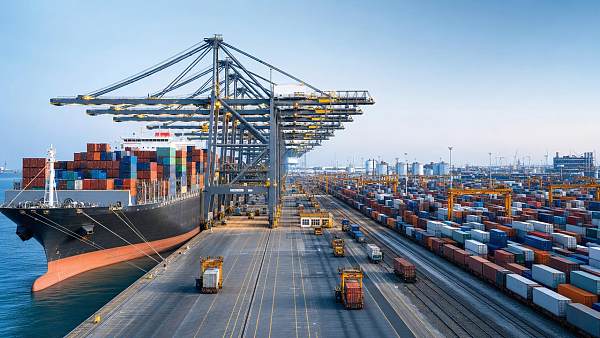
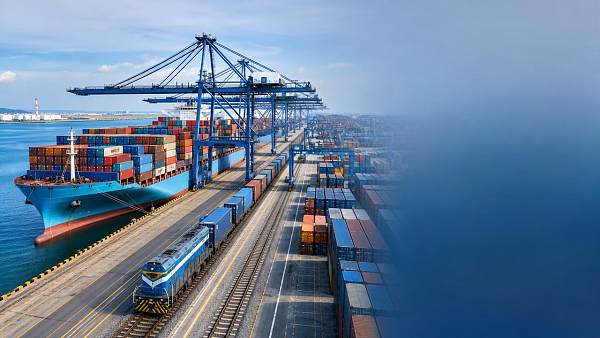
Comparing intermodal transport systems for port-centric cargo flows has become a strategic task rather than a narrow freight calculation. Port projects now sit at the meeting point of vessel turnaround pressure, inland rail performance, digital visibility, and decarbonization targets. In that environment, the best choice is rarely the cheapest configuration on paper. It is the system that moves cargo reliably across sea-terminal-rail interfaces while protecting future capacity, operational resilience, and asset value.
Why port-centric comparisons matter now
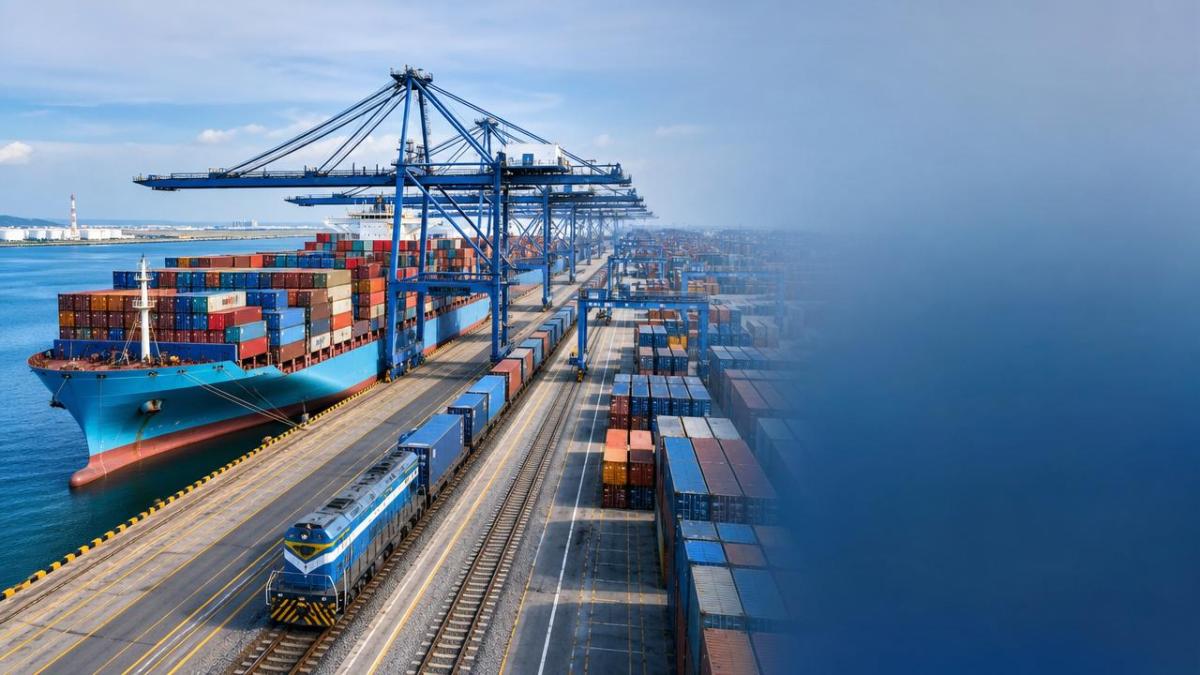
A port-centric flow concentrates volume close to the quay, then pushes containers or bulk units inland through rail, road, barge, or mixed corridors. The comparison challenge starts where modal handoffs begin.
Congested ports can no longer rely on isolated terminal upgrades. A faster crane cycle means little if inland dispatch windows fail, train paths remain unstable, or gate operations absorb the delay.
This is why intermodal transport systems matter. They connect physical assets, control logic, scheduling discipline, and information exchange into one operating model.
From GTOT’s land-sea perspective, the comparison also reflects a broader industry shift. Smart container ships, advanced railway control systems, and digital coordination platforms are now shaping the same cargo journey.
What should be compared in an intermodal system
A useful comparison goes beyond mode labels such as rail-sea or truck-rail-sea. The real question is how the system performs under actual port conditions.
In practice, intermodal transport systems should be examined across five linked layers: infrastructure, control, equipment, data, and service design.
Physical layout and transfer design
Terminal track geometry, sidings, yard stacking logic, gate lanes, and berth access all shape transfer efficiency. Poor layout can erase the theoretical benefit of a rail-heavy solution.
Control and operational synchronization
Rail signaling, dispatch windows, berth planning, crane assignment, and truck appointment tools must work on compatible time logic. Fragmented control often creates hidden dwell time.
Equipment compatibility
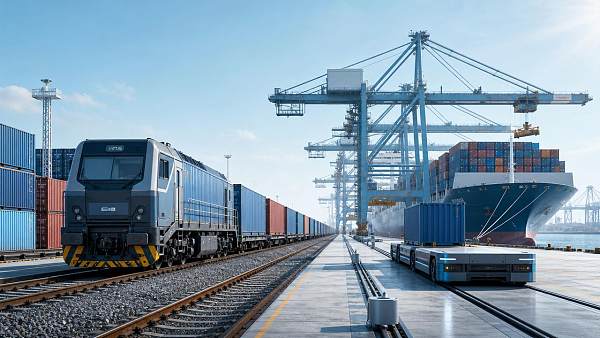
Wagons, reach stackers, automated guided vehicles, cranes, and vessel interfaces must match cargo profile, loading rate, and maintenance realities. Equipment speed alone does not guarantee system speed.
Data quality and visibility
A modern comparison must include data latency, event accuracy, handoff confirmation, and exception alerts. Without those elements, decision-makers are effectively managing blind transitions.
Commercial and service structure
Some intermodal transport systems look efficient technically but fail commercially because service frequency, contractual accountability, or inland network access remains weak.
The metrics that reveal real performance
Cost per unit is necessary, but it should never stand alone. Port-centric operations require a fuller scorecard that captures both throughput and reliability.
These metrics are especially relevant when vessel sizes increase and inland rail capacity remains constrained. A system may win on headline throughput yet fail under weekly volume surges.
Rail-sea coordination is often the decisive factor
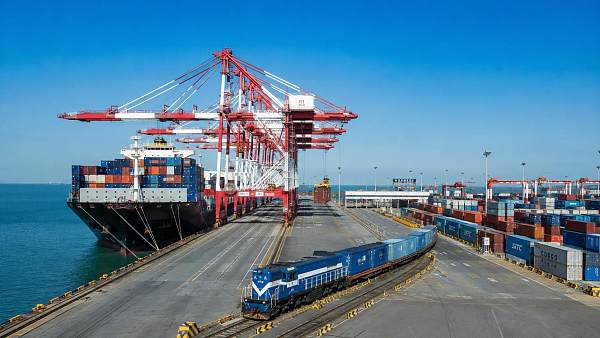
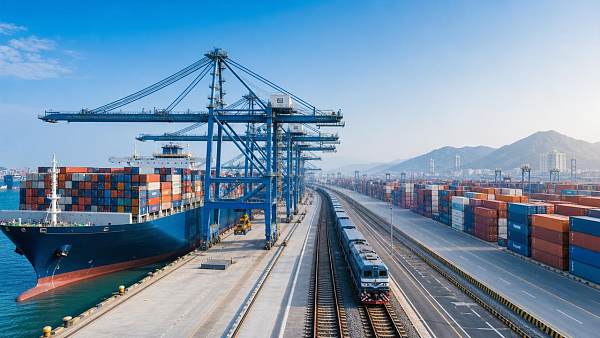
For many port-centric cargo flows, the strongest differentiator is not the terminal alone. It is the quality of rail-sea coordination behind it.
GTOT’s coverage of railway signal control systems offers a useful lens here. Rail corridors with stable signaling, safe automation, and predictable dispatch capacity usually support tighter port windows.
That matters because intermodal transport systems break down when one leg operates at engineering precision and the next relies on informal recovery. The result is misaligned arrival patterns, idle handling assets, and avoidable storage cost.
The same logic applies at sea. Smart container ships increasingly arrive with richer ETA intelligence, route optimization inputs, and ship-to-shore planning signals. Ports that cannot absorb this data into inland planning lose a major advantage.
Questions worth asking
- Can the rail network support consistent departure slots after vessel discharge peaks?
- Does the terminal operating system share reliable events with inland carriers?
- Are signaling and yard control limitations creating hidden capacity ceilings?
- How quickly can the system recover from one missed connection window?
Different cargo flows require different system logic
Not all intermodal transport systems should be judged by the same model. Cargo profile changes the comparison criteria.
Containerized retail and manufactured goods
These flows usually value schedule integrity, customs predictability, and inland distribution speed. Data transparency and handoff discipline often matter more than raw lifting capacity.
Industrial project cargo
Heavy and oversized movements require stronger attention to route clearance, crane envelope, axle load, and transfer risk. Here, engineered exceptions define system quality.
Energy and temperature-sensitive cargo
LNG-linked logistics and other sensitive chains place more value on safety, containment discipline, and emergency response structure. Transfer delays may create risk beyond simple cost exposure.
This is why comparison matrices should be cargo-specific. A single ranking for all flows usually hides operational reality.
Where many comparisons go wrong
A common mistake is evaluating intermodal transport systems with average performance data only. Port operations live in the peaks, not the averages.
Another mistake is separating capital expenditure from control capability. New cranes, extra tracks, or added yard equipment cannot compensate for weak orchestration.
Some teams also underestimate maintenance and reliability engineering. A technically advanced system with poor spare parts planning can become less dependable than a simpler alternative.
From a GTOT-style asset intelligence viewpoint, this is where component-level understanding becomes practical. Signaling reliability, traction power stability, braking performance, and vessel digital readiness all affect corridor confidence.
A practical framework for comparing options
A disciplined review process usually produces better choices than a one-time vendor comparison. The sequence below keeps the evaluation grounded in actual operating conditions.
- Map cargo flows by volume pattern, cargo type, and inland destination cluster.
- Define interface points where delays, damage, or visibility loss usually occur.
- Score intermodal transport systems against reliability, recoverability, and expansion path.
- Stress-test each option using disruption scenarios rather than best-case assumptions.
- Review lifecycle implications, including maintenance access, digital upgrades, and energy performance.
When possible, compare system options with a three-horizon view: immediate operation, medium-term network growth, and long-term technology integration. That structure helps avoid decisions that become obsolete after one trade cycle shift.
What a strong decision usually looks like
The strongest choice is often the one that balances predictable rail-sea handoffs, acceptable cost, digital interoperability, and realistic upgrade potential. It may not be the most automated or the most visible option.
It is simply the system with the fewest weak links across the full cargo journey.
Turning comparison into the next decision
A useful review of intermodal transport systems should end with sharper questions, not just a preferred layout. The next step is to align cargo profile, control maturity, and inland network realities into one decision baseline.
That may involve revisiting rail interface assumptions, checking vessel schedule data quality, or testing whether terminal expansion plans match actual dispatch capability. In many cases, the best insight comes from examining where land-side precision and sea-side intelligence still fail to connect.
For organizations tracking cross-border transport infrastructure, GTOT’s perspective is a useful reminder: port-centric performance is no longer created by one terminal asset. It is created by how intermodal transport systems stitch ships, control systems, equipment intelligence, and inland corridors into a dependable operating chain.
A solid comparison starts with measurable interfaces. The better decision follows from testing those interfaces against real cargo conditions, not ideal diagrams.
Recommended News
 Sep 22, 2026When smart vessels equipment improves port turnaround timeSmart vessels equipment helps reduce port turnaround time with reliable arrival forecasts, cargo visibility, and equipment readiness. Explore practical integration strategies.
 Sep 17, 2026When does a port vessel integration platform reduce turnaround delays?Port vessel integration platform: discover when connected data, coordinated workflows, and early alerts reduce turnaround delays and improve port-call reliability.
 Sep 04, 2026How smart land-sea interconnection improves cargo visibility at portsSmart land sea interconnection gives ports real-time cargo visibility across vessels, terminals, rail, and inland networks—reducing delays, risk, and costly disruptions.
 Aug 31, 2026When does a smart container ship platform reduce port turnaround delays?Smart container ship platform insights: reduce port turnaround delays with shared timelines, proactive exception management, and faster vessel-port coordination.
 Jul 28, 2026Integrated Ship to Shore Systems: Key Factors for Reliable Port IntegrationIntegrated ship to shore systems guide reliable port integration by addressing interfaces, latency, cybersecurity, failure recovery, and retrofit risks—essential reading before choosing a vendor.
 Jul 13, 2026How to Evaluate a Port Vessel Integration ProviderPort vessel integration provider evaluation starts with scope, interoperability, cybersecurity, and delivery strength. Learn how to choose a reliable partner for safer, smarter port operations.
 Jul 12, 2026How Smart Container Ships Technology Cuts Port DelaysSmart container ships technology helps cut port delays with live ETA data, better berth planning, and faster cargo handling. See how it improves reliability and lowers supply chain disruption.
 Jul 09, 2026Vessel Connectivity for Cargo Ships: Solving Data Gaps at SeaVessel connectivity for cargo ships explained through real voyage scenarios—learn how to reduce data gaps, improve fleet decisions, and choose smarter sea-to-shore connectivity.
 Jul 08, 2026Real Time Ship to Shore: What Delays Data Sync in Port Operations?Real time ship to shore delays can disrupt port efficiency, safety, and turnaround. Discover the hidden causes of data sync issues and practical fixes to improve maritime operations.
![]() Jul 07, 2026Smart Ship Connectivity for Fleet Monitoring: What Delivers ROISmart ship connectivity for fleet monitoring delivers ROI when data, alerts, and workflows match real fleet operations. Learn how to reduce delays, control risk, and improve asset performance.
Jul 07, 2026Smart Ship Connectivity for Fleet Monitoring: What Delivers ROISmart ship connectivity for fleet monitoring delivers ROI when data, alerts, and workflows match real fleet operations. Learn how to reduce delays, control risk, and improve asset performance. Jun 29, 2026Digital Ship to Shore Integration: Key Risks Before DeploymentDigital ship to shore integration: discover the top pre-deployment risks in interoperability, cybersecurity, data quality, workflows, and compliance to ensure a smoother rollout.
 Jun 26, 2026Ship to Shore Integration: Key Performance Checks Before DeploymentShip to shore integration is critical before deployment. Check interface stability, data accuracy, cyber resilience, and crane coordination to boost safety, reduce delays, and improve terminal performance.
 Jun 15, 2026Land-Sea Interconnection Challenges in Port Logistics and Cargo FlowLand-sea interconnection challenges in port logistics can disrupt cargo flow, raise costs, and delay delivery. Discover practical strategies to improve coordination, visibility, and resilience.
 Jun 10, 2026Improving Port Efficiency with Better Ship-to-Shore SynergyShip-to-shore synergy is the key to improving port efficiency. Discover how better vessel-terminal coordination reduces delays, supports rail-yard flow, and boosts reliable throughput.
 Jun 07, 2026How to Compare Intermodal Transport Systems for Port-Centric Cargo FlowsIntermodal transport systems for port-centric cargo flows: compare reliability, rail-sea coordination, scalability, and data visibility to choose smarter, more resilient logistics solutions.
![]() May 23, 2026How Smart Maritime Technology Cuts Port Delay RisksSmart maritime technology helps cut port delay risks with predictive ETA, AI routing, and connected port visibility—reducing fuel waste, improving berth planning, and strengthening supply chain resilience.
May 23, 2026How Smart Maritime Technology Cuts Port Delay RisksSmart maritime technology helps cut port delay risks with predictive ETA, AI routing, and connected port visibility—reducing fuel waste, improving berth planning, and strengthening supply chain resilience. May 21, 2026Maritime Logistics Optimization Techniques That Reduce Port Dwell TimeMaritime logistics optimization techniques help cut port dwell time through smarter berth planning, yard coordination, and real-time visibility—discover practical ways to boost flow and reliability.
 May 17, 2026Land-Sea Interconnection Models That Improve Cargo TurnaroundLand-sea interconnection models that improve cargo turnaround: explore fixed-slot rail-berth links, dry ports, smart visibility, and safer corridor design to cut dwell time and boost logistics performance.