



Search News
Industry Portal
Popular Tags
Vessel Connectivity for Cargo Ships: Solving Data Gaps at Sea
Author
Time
Click Count
Why vessel connectivity for cargo ships now starts with operational reality
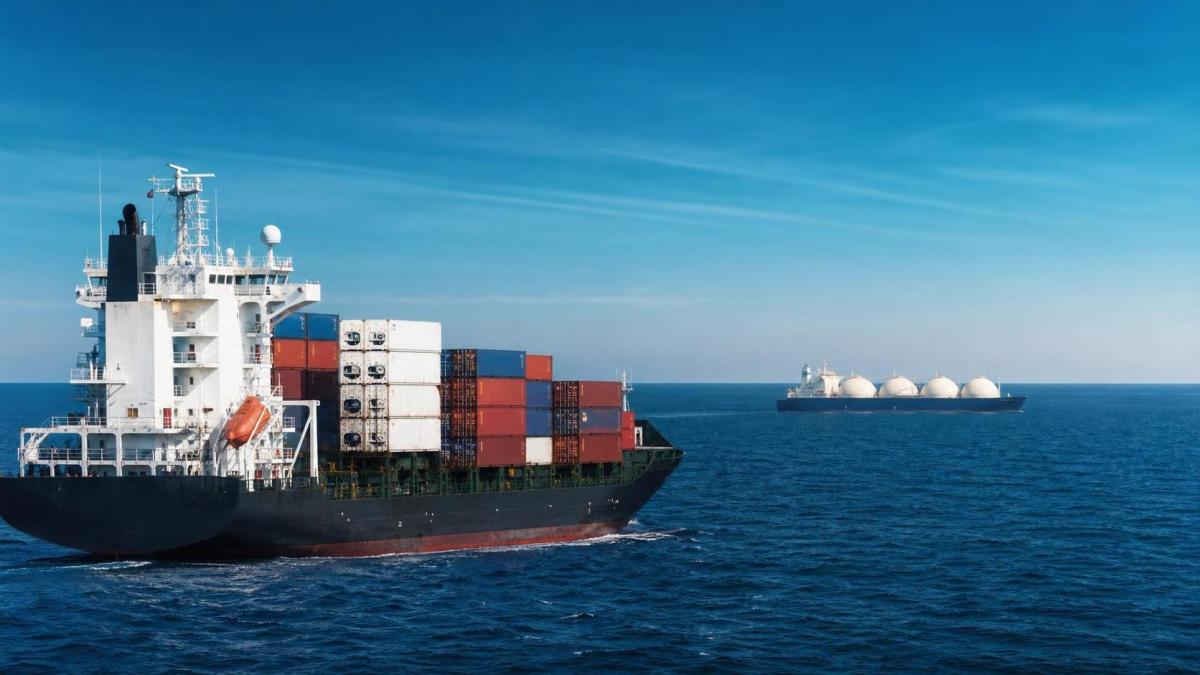
Vessel connectivity for cargo ships has moved from optional modernization to daily operational discipline.
The reason is simple. Cargo fleets now run inside tighter schedules, stricter reporting rules, and more data-hungry supply chains.
When connections fail at sea, the visible issue is delayed data. The deeper issue is delayed judgment.
Route changes arrive late, machinery warnings stay onboard too long, and shore teams work from partial fleet visibility.
For a portal like GTOT, this matters beyond shipping alone.
Its land-sea perspective already links rail control logic, traction reliability, braking precision, smart container ships, and LNG transport intelligence.
That broader transport view shows a common rule across complex assets: decision quality depends on trustworthy data flow.
In rail, signal integrity supports safe automation. At sea, vessel connectivity for cargo ships supports navigation, maintenance, compliance, and commercial coordination.
The practical question is not whether connectivity matters. It is which operating scenario needs which kind of connectivity discipline.
Actual deployment decisions change with route, cargo, and onboard systems
Not every ship experiences the same data gap problem.
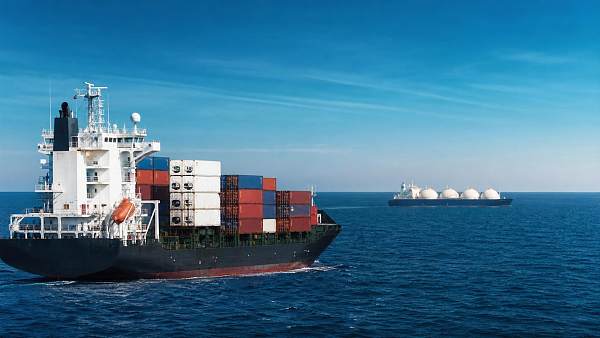
A container ship on dense trade lanes needs fast coordination with terminals and planners. A long-haul LNG carrier may prioritize engineering telemetry stability and safety reporting continuity.
The onboard digital stack also changes the answer.
Some vessels mainly transmit noon reports and compliance records. Others push engine data, weather overlays, voyage optimization inputs, and reefer status in near real time.
In actual use, vessel connectivity for cargo ships should be judged by four variables:
- how often operational decisions change during a voyage
- how critical onboard equipment data is to shore support
- how expensive communication loss becomes in delays, fuel, or risk
- how well shipboard systems can prioritize, compress, and route data
This is where many evaluations go wrong.
They compare bandwidth packages first, while the real fit depends on decision timing, system integration, and operational consequence.
Container shipping usually cares most about coordination speed
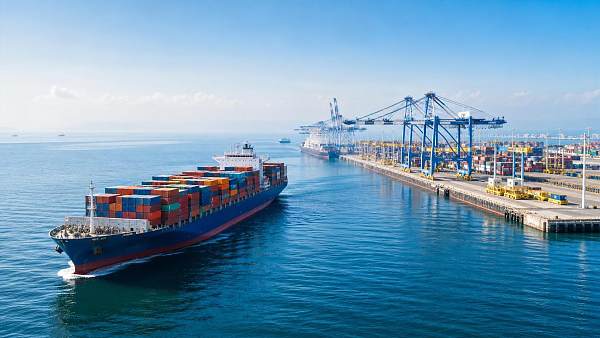
For smart container operations, vessel connectivity for cargo ships is closely tied to network rhythm.
Arrival windows shift, berth instructions change, and route optimization models react to weather, congestion, and fuel economics.
In this setting, the main value of connectivity is not raw communication volume. It is synchronization.
Shore planners need accurate ETA updates. Engineering teams need fault alerts early enough to prepare parts or technical support at the next port.
Reefer-heavy voyages add another layer. Temperature excursions, power interruptions, and container exceptions cannot wait for batch uploads.
A good fit here often means resilient hybrid communications, clear data prioritization, and direct links between ship systems and port-facing workflows.
What matters most is whether high-value events move first, even when bandwidth degrades.
Where the judgment point usually shifts
On short or medium loops, latency can matter more than total monthly capacity.
On intercontinental services, data continuity and route-wide coverage usually matter more than peak speed alone.
LNG and high-risk cargo voyages place more weight on engineering integrity
The picture changes with LNG carriers and other technically demanding vessels.
Here, vessel connectivity for cargo ships supports more than logistics visibility. It supports safe asset behavior under demanding thermal, propulsion, and compliance conditions.
Cryogenic cargo systems, dual-fuel propulsion, and condition-sensitive equipment increase the value of stable remote diagnostics.
The goal is not constant streaming of everything onboard.
The better approach is selective transmission of trusted engineering signals, alarm context, trend deviations, and maintenance-relevant history.
That matches GTOT's wider focus on high-value equipment intelligence.
Just as rail braking systems depend on precise control under stress, advanced vessels depend on connectivity that preserves the meaning of critical data, not only the quantity.
In this scenario, a resilient data model, alarm discipline, and compatibility with vessel management systems often deserve more attention than headline bandwidth figures.
Different scenarios do not ask the same questions
A side-by-side view makes the differences easier to judge before rollout.
The table shows why vessel connectivity for cargo ships should be framed as an operational architecture decision, not only a communications purchase.
Mixed-age fleets often reveal the hardest implementation gap
The most difficult case is often not the newest smart vessel.
It is the mixed fleet where newer vessels already generate structured data, while older ships still depend on fragmented interfaces and manual reporting habits.
In that environment, vessel connectivity for cargo ships succeeds only when data collection standards are realistic.
Trying to force every vessel into the same reporting depth usually creates noise, crew burden, and expensive retrofits with weak return.
A better path is tiered deployment.
Start with navigation, machinery health, fuel performance, and exception alerts. Expand only after data quality and transmission logic prove stable.
This is especially relevant in global supply chains where ships, ports, rail links, and inland handoffs must exchange consistent operational signals.
GTOT's cross-modal perspective is useful here because transport bottlenecks rarely stay inside one asset class.
What teams often overlook before choosing vessel connectivity for cargo ships
Several recurring misjudgments appear in real deployments.
- Treating all vessel data as equally urgent, which overloads limited links.
- Focusing on satellite package size, while ignoring application integration and onboard routing logic.
- Assuming similar vessel classes have the same reporting priorities.
- Underestimating crew workflow changes required for exception handling and data validation.
- Measuring only equipment cost, while neglecting retrofit labor, cybersecurity hardening, and maintenance support.
Another overlooked point is regulatory drift.
Today’s reporting structure may not match tomorrow’s emissions transparency, charter-party visibility, or port-call documentation needs.
That is why vessel connectivity for cargo ships should leave room for evolving data policies, not just current transmission volumes.
A practical way to match connectivity design to the voyage profile
Before rollout, it helps to map the voyage profile rather than begin with hardware selection.
A workable evaluation usually includes these checks:
- List the decisions that must be made during the voyage, and how late data affects each one.
- Separate critical signals from routine records, then define transmission priority.
- Review existing onboard systems for protocol compatibility, gateway needs, and cybersecurity constraints.
- Test connectivity performance against actual routes, weather exposure, and handover conditions.
- Estimate maintenance effort, remote support demands, and the cost of data cleansing after deployment.
This approach keeps vessel connectivity for cargo ships tied to measurable operating value.
It also prevents a common mistake: building a technically impressive link that does not improve the decisions that matter.
The next useful step is to define fit before scale
The strongest vessel connectivity for cargo ships strategy usually begins with a narrower question.
Which voyages, assets, and shore-side actions lose the most value when data arrives late or incomplete?
From there, the path becomes clearer.
Compare route conditions, onboard system maturity, compliance obligations, and maintenance workflows. Then set a practical hierarchy for data, alerts, and integration depth.
For organizations working across interconnected rail and maritime corridors, that discipline is even more valuable.
It supports the same objective GTOT emphasizes across land and sea: reliable intelligence that turns complex equipment into coordinated operational performance.
A clear scenario map, a realistic retrofit plan, and a tested data priority model are usually the best place to start.
Recommended News
 Sep 22, 2026When smart vessels equipment improves port turnaround timeSmart vessels equipment helps reduce port turnaround time with reliable arrival forecasts, cargo visibility, and equipment readiness. Explore practical integration strategies.
 Sep 17, 2026When does a port vessel integration platform reduce turnaround delays?Port vessel integration platform: discover when connected data, coordinated workflows, and early alerts reduce turnaround delays and improve port-call reliability.
 Sep 04, 2026How smart land-sea interconnection improves cargo visibility at portsSmart land sea interconnection gives ports real-time cargo visibility across vessels, terminals, rail, and inland networks—reducing delays, risk, and costly disruptions.
 Aug 31, 2026When does a smart container ship platform reduce port turnaround delays?Smart container ship platform insights: reduce port turnaround delays with shared timelines, proactive exception management, and faster vessel-port coordination.
 Jul 28, 2026Integrated Ship to Shore Systems: Key Factors for Reliable Port IntegrationIntegrated ship to shore systems guide reliable port integration by addressing interfaces, latency, cybersecurity, failure recovery, and retrofit risks—essential reading before choosing a vendor.
 Jul 13, 2026How to Evaluate a Port Vessel Integration ProviderPort vessel integration provider evaluation starts with scope, interoperability, cybersecurity, and delivery strength. Learn how to choose a reliable partner for safer, smarter port operations.
 Jul 12, 2026How Smart Container Ships Technology Cuts Port DelaysSmart container ships technology helps cut port delays with live ETA data, better berth planning, and faster cargo handling. See how it improves reliability and lowers supply chain disruption.
 Jul 09, 2026Vessel Connectivity for Cargo Ships: Solving Data Gaps at SeaVessel connectivity for cargo ships explained through real voyage scenarios—learn how to reduce data gaps, improve fleet decisions, and choose smarter sea-to-shore connectivity.
 Jul 08, 2026Real Time Ship to Shore: What Delays Data Sync in Port Operations?Real time ship to shore delays can disrupt port efficiency, safety, and turnaround. Discover the hidden causes of data sync issues and practical fixes to improve maritime operations.
![]() Jul 07, 2026Smart Ship Connectivity for Fleet Monitoring: What Delivers ROISmart ship connectivity for fleet monitoring delivers ROI when data, alerts, and workflows match real fleet operations. Learn how to reduce delays, control risk, and improve asset performance.
Jul 07, 2026Smart Ship Connectivity for Fleet Monitoring: What Delivers ROISmart ship connectivity for fleet monitoring delivers ROI when data, alerts, and workflows match real fleet operations. Learn how to reduce delays, control risk, and improve asset performance. Jun 29, 2026Digital Ship to Shore Integration: Key Risks Before DeploymentDigital ship to shore integration: discover the top pre-deployment risks in interoperability, cybersecurity, data quality, workflows, and compliance to ensure a smoother rollout.
 Jun 26, 2026Ship to Shore Integration: Key Performance Checks Before DeploymentShip to shore integration is critical before deployment. Check interface stability, data accuracy, cyber resilience, and crane coordination to boost safety, reduce delays, and improve terminal performance.
 Jun 15, 2026Land-Sea Interconnection Challenges in Port Logistics and Cargo FlowLand-sea interconnection challenges in port logistics can disrupt cargo flow, raise costs, and delay delivery. Discover practical strategies to improve coordination, visibility, and resilience.
 Jun 10, 2026Improving Port Efficiency with Better Ship-to-Shore SynergyShip-to-shore synergy is the key to improving port efficiency. Discover how better vessel-terminal coordination reduces delays, supports rail-yard flow, and boosts reliable throughput.
 Jun 07, 2026How to Compare Intermodal Transport Systems for Port-Centric Cargo FlowsIntermodal transport systems for port-centric cargo flows: compare reliability, rail-sea coordination, scalability, and data visibility to choose smarter, more resilient logistics solutions.
![]() May 23, 2026How Smart Maritime Technology Cuts Port Delay RisksSmart maritime technology helps cut port delay risks with predictive ETA, AI routing, and connected port visibility—reducing fuel waste, improving berth planning, and strengthening supply chain resilience.
May 23, 2026How Smart Maritime Technology Cuts Port Delay RisksSmart maritime technology helps cut port delay risks with predictive ETA, AI routing, and connected port visibility—reducing fuel waste, improving berth planning, and strengthening supply chain resilience. May 21, 2026Maritime Logistics Optimization Techniques That Reduce Port Dwell TimeMaritime logistics optimization techniques help cut port dwell time through smarter berth planning, yard coordination, and real-time visibility—discover practical ways to boost flow and reliability.
 May 17, 2026Land-Sea Interconnection Models That Improve Cargo TurnaroundLand-sea interconnection models that improve cargo turnaround: explore fixed-slot rail-berth links, dry ports, smart visibility, and safer corridor design to cut dwell time and boost logistics performance.