



Search News
Industry Portal
Popular Tags
How Smart Maritime Technology Cuts Port Delay Risks

Author
Time
Click Count
For global trade networks, port delays now create wider risks than simple schedule disruption.
They raise fuel costs, distort berth planning, weaken inventory reliability, and reduce trust across shipping, rail, and inland logistics links.
That is why smart maritime technology is moving from optional innovation to operational necessity.
With AI routing, predictive ETA tools, connected port systems, and vessel data visibility, companies can cut avoidable waiting time and respond faster.
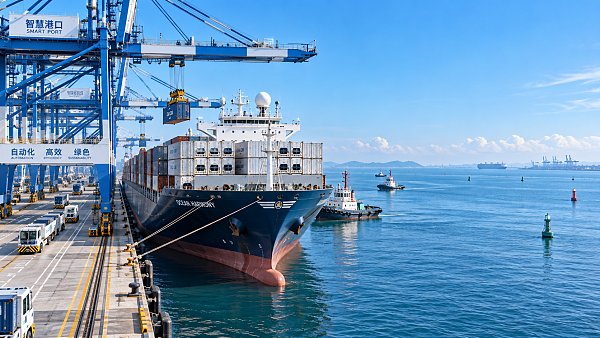
For GTOT, this transition matters because smart ships, intelligent control systems, and intermodal coordination now define transport efficiency across land and sea.
What does smart maritime technology actually mean in port delay management?
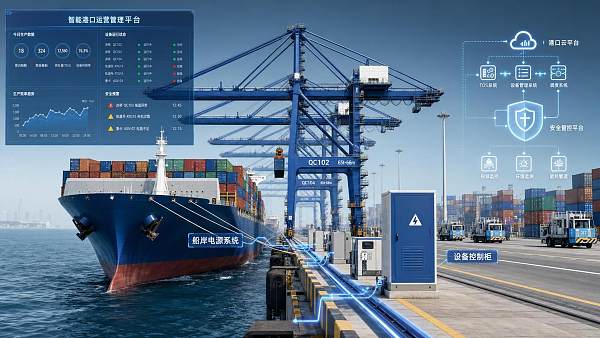
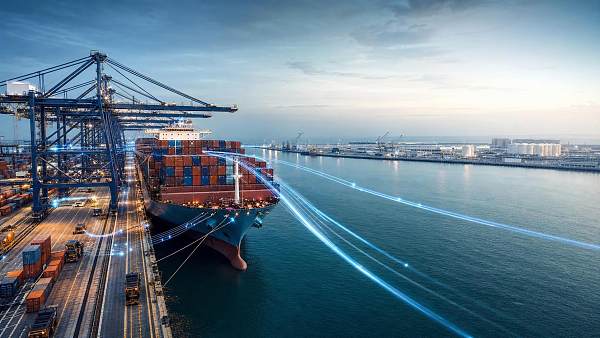
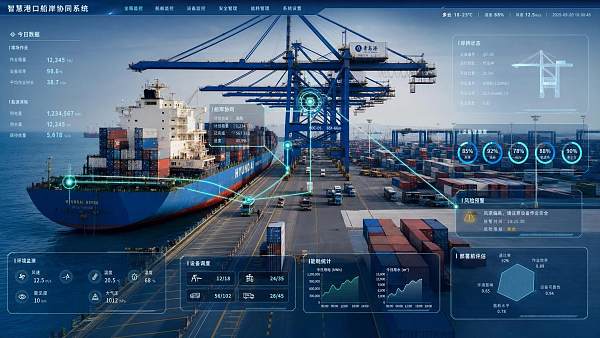
Smart maritime technology combines onboard sensors, satellite links, cloud platforms, port software, and analytics into one decision environment.
Its goal is not only monitoring vessels.
Its main value is reducing uncertainty before a ship reaches anchorage, berth, terminal gate, or hinterland transfer point.
Traditional operations often rely on fragmented updates.
One system knows the ship position, another tracks cranes, and another handles customs or gate release timing.
Smart maritime technology connects these data streams.
This creates a shared operating picture for arrivals, resource allocation, and turnaround sequencing.
In practice, smart maritime technology usually includes:
- Real-time vessel position and speed tracking
- Predictive ETA and congestion forecasting
- Weather and tide-linked route optimization
- Ship-to-shore communication platforms
- Digital berth, yard, and crane coordination
- Exception alerts for delays, rerouting, or resource conflicts
The result is better timing discipline.
Instead of reacting after a queue forms, operators can act while delay risks are still manageable.
How does smart maritime technology reduce port delay risks in real operations?
Port delay rarely comes from one issue alone.
It often emerges from small timing failures across navigation, berth assignment, cargo readiness, and inland transfer coordination.
Smart maritime technology reduces these risks through earlier detection and faster alignment.
1. Better arrival prediction
Static schedules cannot reflect weather shifts, route changes, or terminal congestion.
Predictive ETA engines use live inputs to improve arrival confidence and update stakeholders continuously.
2. Smarter berth and terminal planning
When a vessel arrival forecast changes, connected systems can reassign berth windows, labor slots, and equipment resources earlier.
That prevents last-minute reshuffling and idle periods.
3. Reduced anchorage waiting
A vessel that slows strategically can arrive closer to its true berth window.
This cuts fuel waste and reduces congestion around busy port approaches.
4. Faster disruption response
If weather, labor issues, customs delays, or equipment faults arise, smart maritime technology supports scenario planning instead of blind reaction.
Alternative timing options become visible sooner.
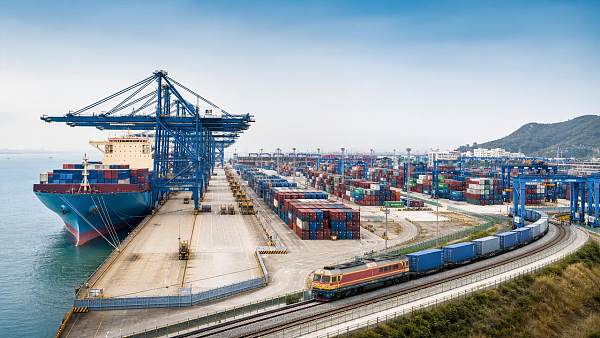
5. Stronger intermodal synchronization
Ports do not work in isolation.
Rail departures, truck appointments, warehousing, and customs processing all affect vessel dwell time and cargo flow.
Smart maritime technology helps align these interfaces.
Which applications of smart maritime technology matter most for complex supply chains?
Not every digital feature delivers the same operational value.
For delay reduction, the highest impact usually comes from applications linked to timing, visibility, and coordination.
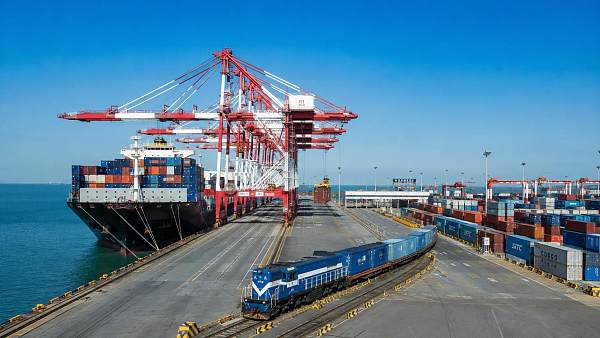
For integrated logistics environments, smart maritime technology becomes even more valuable when linked with rail scheduling and inland equipment planning.
That wider visibility reflects GTOT’s focus on land-sea interconnection and strategic transport intelligence.
How can you judge whether smart maritime technology is truly effective?
Many digital platforms look impressive in demonstrations.
However, delay reduction depends on measurable execution outcomes, not dashboard complexity.
Use practical evaluation criteria before expanding investment.
- ETA accuracy improvement over manual estimates
- Reduction in average anchorage waiting time
- Berth utilization stability during congestion periods
- Data integration depth across ship, terminal, and inland systems
- Alert response time for disruption events
- Fuel savings from just-in-time arrival planning
An effective smart maritime technology program should also support human decisions rather than overload teams with disconnected alerts.
The strongest solutions simplify action paths.
They show what changed, why it matters, and what timing option is best.
What common mistakes weaken smart maritime technology projects?
Delay reduction projects often fail because organizations buy tools before defining operating logic.
Technology alone cannot solve process fragmentation.
Mistake 1: Treating visibility as transformation
Seeing a vessel on a screen is useful, but not enough.
Smart maritime technology must trigger coordinated operational decisions.
Mistake 2: Ignoring port and inland data quality
If terminal status, gate flows, or rail dispatch updates are inaccurate, predictive systems lose reliability fast.
Mistake 3: Focusing only on the vessel
Port delay is a network problem.
A smart ship without smart coordination still faces avoidable waiting.
Mistake 4: Underestimating change management
Teams need workflow redesign, escalation rules, and shared timing standards.
Without these, digital recommendations remain unused.
Mistake 5: Chasing short-term savings only
The best smart maritime technology delivers resilience, predictability, and service credibility in addition to immediate cost reduction.
What is a practical roadmap for implementing smart maritime technology?
A phased approach usually works better than a full platform overhaul.
The objective is to improve delay decisions step by step while preserving operational continuity.
- Map where delays actually start, spread, and become costly.
- Choose one priority corridor, port pair, or vessel segment first.
- Connect live vessel data with berth and terminal planning inputs.
- Set measurable KPIs for waiting time, ETA accuracy, and turnaround stability.
- Create response rules for forecast changes and exception alerts.
- Expand integration to rail, truck, and yard systems after early validation.
For organizations tied to large transport corridors, the bigger opportunity lies in connecting maritime intelligence with broader infrastructure planning.
That includes smart vessels, terminal automation, and data bridges to rail control ecosystems.
FAQ: key questions about smart maritime technology and port delay risks
Port delays will remain part of global trade, but unmanaged uncertainty does not have to be.
Smart maritime technology gives transport networks a better way to predict, coordinate, and act before disruption becomes backlog.
For organizations working across shipping, terminals, rail, and strategic equipment ecosystems, the greatest advantage comes from connected intelligence.
GTOT continues to track how smart maritime technology, advanced vessels, and integrated transport systems reshape efficient global movement.
The next practical step is simple: identify one delay-prone route, measure the hidden timing losses, and build a focused digital coordination model from there.
Recommended News
 Sep 22, 2026When smart vessels equipment improves port turnaround timeSmart vessels equipment helps reduce port turnaround time with reliable arrival forecasts, cargo visibility, and equipment readiness. Explore practical integration strategies.
 Sep 17, 2026When does a port vessel integration platform reduce turnaround delays?Port vessel integration platform: discover when connected data, coordinated workflows, and early alerts reduce turnaround delays and improve port-call reliability.
 Sep 04, 2026How smart land-sea interconnection improves cargo visibility at portsSmart land sea interconnection gives ports real-time cargo visibility across vessels, terminals, rail, and inland networks—reducing delays, risk, and costly disruptions.
 Aug 31, 2026When does a smart container ship platform reduce port turnaround delays?Smart container ship platform insights: reduce port turnaround delays with shared timelines, proactive exception management, and faster vessel-port coordination.
 Jul 28, 2026Integrated Ship to Shore Systems: Key Factors for Reliable Port IntegrationIntegrated ship to shore systems guide reliable port integration by addressing interfaces, latency, cybersecurity, failure recovery, and retrofit risks—essential reading before choosing a vendor.
 Jul 13, 2026How to Evaluate a Port Vessel Integration ProviderPort vessel integration provider evaluation starts with scope, interoperability, cybersecurity, and delivery strength. Learn how to choose a reliable partner for safer, smarter port operations.
 Jul 12, 2026How Smart Container Ships Technology Cuts Port DelaysSmart container ships technology helps cut port delays with live ETA data, better berth planning, and faster cargo handling. See how it improves reliability and lowers supply chain disruption.
 Jul 09, 2026Vessel Connectivity for Cargo Ships: Solving Data Gaps at SeaVessel connectivity for cargo ships explained through real voyage scenarios—learn how to reduce data gaps, improve fleet decisions, and choose smarter sea-to-shore connectivity.
 Jul 08, 2026Real Time Ship to Shore: What Delays Data Sync in Port Operations?Real time ship to shore delays can disrupt port efficiency, safety, and turnaround. Discover the hidden causes of data sync issues and practical fixes to improve maritime operations.
![]() Jul 07, 2026Smart Ship Connectivity for Fleet Monitoring: What Delivers ROISmart ship connectivity for fleet monitoring delivers ROI when data, alerts, and workflows match real fleet operations. Learn how to reduce delays, control risk, and improve asset performance.
Jul 07, 2026Smart Ship Connectivity for Fleet Monitoring: What Delivers ROISmart ship connectivity for fleet monitoring delivers ROI when data, alerts, and workflows match real fleet operations. Learn how to reduce delays, control risk, and improve asset performance. Jun 29, 2026Digital Ship to Shore Integration: Key Risks Before DeploymentDigital ship to shore integration: discover the top pre-deployment risks in interoperability, cybersecurity, data quality, workflows, and compliance to ensure a smoother rollout.
 Jun 26, 2026Ship to Shore Integration: Key Performance Checks Before DeploymentShip to shore integration is critical before deployment. Check interface stability, data accuracy, cyber resilience, and crane coordination to boost safety, reduce delays, and improve terminal performance.
 Jun 15, 2026Land-Sea Interconnection Challenges in Port Logistics and Cargo FlowLand-sea interconnection challenges in port logistics can disrupt cargo flow, raise costs, and delay delivery. Discover practical strategies to improve coordination, visibility, and resilience.
 Jun 10, 2026Improving Port Efficiency with Better Ship-to-Shore SynergyShip-to-shore synergy is the key to improving port efficiency. Discover how better vessel-terminal coordination reduces delays, supports rail-yard flow, and boosts reliable throughput.
 Jun 07, 2026How to Compare Intermodal Transport Systems for Port-Centric Cargo FlowsIntermodal transport systems for port-centric cargo flows: compare reliability, rail-sea coordination, scalability, and data visibility to choose smarter, more resilient logistics solutions.
![]() May 23, 2026How Smart Maritime Technology Cuts Port Delay RisksSmart maritime technology helps cut port delay risks with predictive ETA, AI routing, and connected port visibility—reducing fuel waste, improving berth planning, and strengthening supply chain resilience.
May 23, 2026How Smart Maritime Technology Cuts Port Delay RisksSmart maritime technology helps cut port delay risks with predictive ETA, AI routing, and connected port visibility—reducing fuel waste, improving berth planning, and strengthening supply chain resilience. May 21, 2026Maritime Logistics Optimization Techniques That Reduce Port Dwell TimeMaritime logistics optimization techniques help cut port dwell time through smarter berth planning, yard coordination, and real-time visibility—discover practical ways to boost flow and reliability.
 May 17, 2026Land-Sea Interconnection Models That Improve Cargo TurnaroundLand-sea interconnection models that improve cargo turnaround: explore fixed-slot rail-berth links, dry ports, smart visibility, and safer corridor design to cut dwell time and boost logistics performance.