



Search News
Industry Portal
Popular Tags
How Smart Container Ships Technology Cuts Port Delays
Author
Time
Click Count
How Smart Container Ships Technology Cuts Port Delays
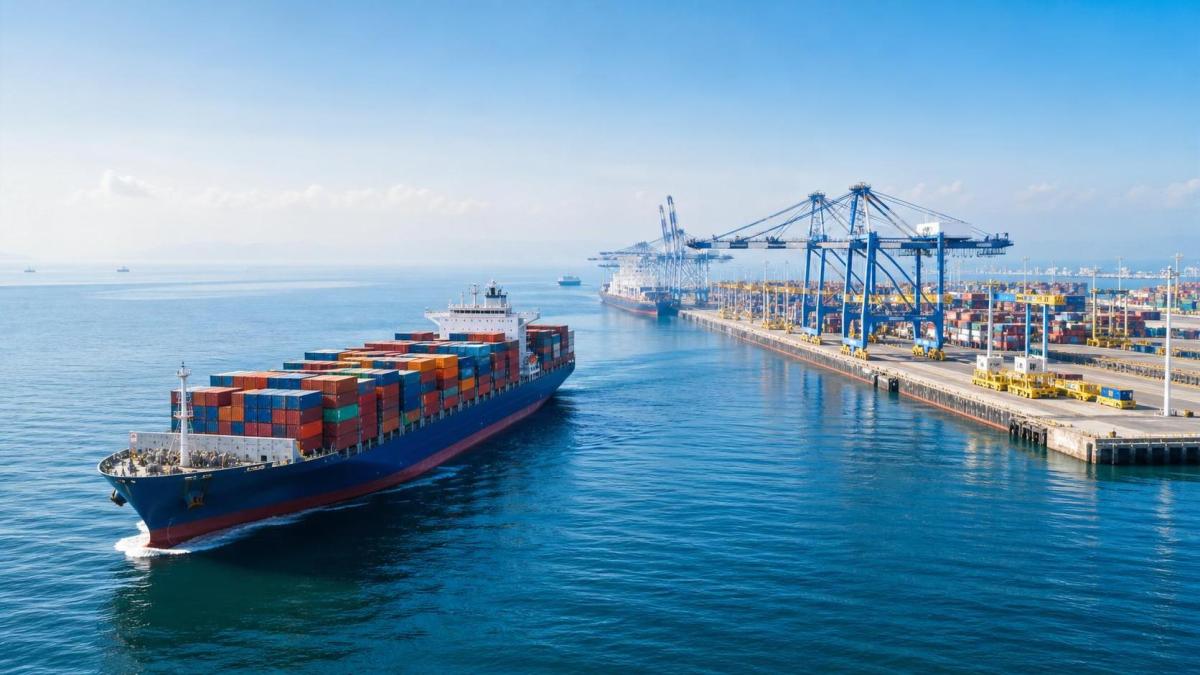
Port delays are no longer a narrow terminal problem. They now affect inventory, contracts, freight cost, and customer confidence across entire supply chains.
That is why smart container ships technology is moving from innovation talk to operational priority.
For operators dealing with congestion, schedule volatility, and rising service expectations, the value is practical. Better data creates better timing.
When vessels, terminals, and logistics partners share live information, port calls become easier to predict, plan, and execute.
In simple terms, smart container ships technology helps reduce waiting time before berthing, shorten handling cycles, and improve departure reliability.
This matters in a market where a few lost hours at one port can trigger days of disruption downstream.
From a business perspective, the biggest advantage is not just automation at sea. It is coordinated decision-making across the voyage and port interface.
That is where smart container ships technology begins to change outcomes instead of just adding digital features.
Why Port Delays Still Hurt Profits
Many shipping networks still run on fragmented visibility. The ship knows one thing, the terminal sees another, and inland partners react too late.
This gap creates avoidable idle time. A vessel may arrive early, but no berth is ready. Or it arrives late, and labor plans are already locked.
The cost does not stop at demurrage or fuel. Delays also weaken slot utilization, disrupt feeder links, and increase pressure on warehouse and trucking schedules.
More importantly, repeated delays make network planning less credible. Once confidence falls, companies start building expensive buffers into every step.
That is the hidden tax of poor coordination. It raises working capital needs and lowers the effective capacity of assets already in service.
Smart container ships technology addresses this problem by improving timing accuracy before the vessel reaches port.
How Smart Container Ships Technology Works in Practice
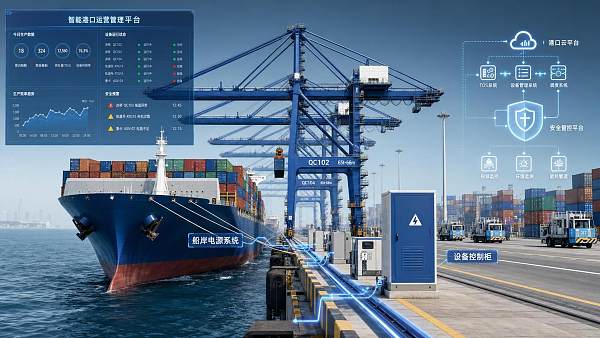
The concept is broader than onboard automation. It combines sensors, connectivity, analytics, and coordinated workflows between ship and shore.
A smart vessel continuously shares position, speed, fuel status, cargo conditions, and estimated arrival time. That data becomes useful when port systems can act on it.
AI route optimization is one core layer. It adjusts speed and routing based on weather, currents, congestion patterns, and berth windows.
This is sometimes called just-in-time arrival. Instead of racing toward a queue, the vessel arrives when service capacity is actually available.
Another layer is cargo visibility. Operators can see container status, priority shipments, reefer conditions, and discharge sequences earlier.
That allows terminals to prepare yard allocation, crane sequencing, labor deployment, and gate planning with fewer last-minute changes.
At a higher level, smart container ships technology supports a shared operating picture. Everyone works from the same version of arrival and handling reality.
- Live ETA updates improve berth and pilot scheduling.
- Cargo intelligence helps prioritize high-value or time-sensitive containers.
- Remote diagnostics reduce technical surprises during port calls.
- Data synchronization supports faster exception handling.
In actual operations, these features matter most when they reduce uncertainty for multiple parties at once.
Where Delay Reduction Happens First
The first gain usually appears before arrival. Better ETA prediction helps ports assign berths with more confidence.
The second gain appears during the port call. When terminal teams already know stowage priorities and equipment needs, crane moves become more efficient.
The third gain shows up after departure. More reliable turnaround improves the next port window and stabilizes the wider schedule loop.
This is why smart container ships technology should be viewed as a network tool, not a vessel-only upgrade.
From recent market shifts, a clearer signal is emerging. Carriers and cargo owners increasingly value predictable flow over nominal speed.
That changes investment logic. A system that prevents recurring delay can outperform a faster asset that still runs on weak coordination.
Key Business Use Cases for Smart Container Ships Technology
Different trade lanes and cargo profiles need different applications. Still, several use cases consistently deliver value.
1. Congested Gateway Ports
In high-volume gateways, queue management is critical. Smart container ships technology supports dynamic arrival planning and reduces random bunching.
2. Temperature-Controlled Cargo
For reefer cargo, delays quickly become product risk. Real-time condition monitoring and priority discharge visibility improve control.
3. Tight Inland Delivery Windows
When rail or truck connections are tightly scheduled, more accurate vessel data helps avoid missed transfers and empty repositioning.
4. Fuel and Emissions Management
Smart container ships technology also supports slower, optimized sailing without sacrificing service reliability. That lowers fuel burn and unnecessary anchorage emissions.
What to Check Before Investment
Not every digital shipping project produces operational value. The strongest results come from solving a defined delay pattern first.
A useful evaluation starts with three questions. Where do delays begin, who owns the data, and which decisions improve when visibility gets better?
In practical terms, decision-makers should review the following areas carefully.
- Data interoperability between vessel systems, terminal platforms, and logistics partners.
- ETA prediction accuracy under weather and congestion variability.
- Cybersecurity controls for operational technology and cargo data exchange.
- Change management for crews, port operators, planners, and customer service teams.
- A clear KPI model tied to waiting time, berth productivity, and schedule reliability.
This also means avoiding technology purchases based only on hardware sophistication. Without cross-party workflow design, value can stall.
Common Risks and How to Manage Them
The first risk is isolated deployment. A smart vessel connected to disconnected ports will not fully cut delays.
The second risk is poor data quality. If timestamps, cargo status, or berth availability are unreliable, the analytics layer will amplify confusion.
The third risk is weak operational ownership. Teams may receive dashboards, but no one is empowered to change plans quickly.
These issues can be managed with phased rollout.
- Start on one trade lane with repeat congestion patterns.
- Use shared KPIs across ship, terminal, and inland operations.
- Build exception workflows, not only visibility screens.
- Validate results against actual port dwell and schedule recovery data.
In the real world, operational discipline matters as much as digital capability.
A Practical Roadmap for Deployment
A sensible rollout does not begin with full fleet transformation. It begins with a measurable delay problem and a narrow business case.
A four-step approach is often effective.
- Map delay sources across voyage, berth, yard, and inland handoff.
- Connect priority data streams for ETA, cargo status, and berth planning.
- Pilot smart container ships technology on selected routes and ports.
- Scale only after KPI improvement is proven over several cycles.
This sequence helps keep investment grounded. It also creates internal evidence before broader capital decisions.
For organizations following land-sea equipment intelligence, this is especially relevant. Vessel data becomes stronger when connected with port, rail, and broader supply chain planning.
Conclusion
Smart container ships technology is not a future concept waiting for perfect conditions. It is already a workable answer to costly, recurring port delays.
Its strongest impact comes from timing precision, shared visibility, and better ship-to-shore coordination.
For companies seeking more reliable trade flows, the right move is to focus on use cases where delay reduction can be measured quickly.
From there, smart container ships technology can evolve from a pilot tool into a core capability for resilient maritime logistics.
The next step is straightforward: identify one congested route, align the data owners, and test a port-call workflow that turns visibility into action.
Recommended News
 Sep 22, 2026When smart vessels equipment improves port turnaround timeSmart vessels equipment helps reduce port turnaround time with reliable arrival forecasts, cargo visibility, and equipment readiness. Explore practical integration strategies.
 Sep 17, 2026When does a port vessel integration platform reduce turnaround delays?Port vessel integration platform: discover when connected data, coordinated workflows, and early alerts reduce turnaround delays and improve port-call reliability.
 Sep 04, 2026How smart land-sea interconnection improves cargo visibility at portsSmart land sea interconnection gives ports real-time cargo visibility across vessels, terminals, rail, and inland networks—reducing delays, risk, and costly disruptions.
 Aug 31, 2026When does a smart container ship platform reduce port turnaround delays?Smart container ship platform insights: reduce port turnaround delays with shared timelines, proactive exception management, and faster vessel-port coordination.
 Jul 28, 2026Integrated Ship to Shore Systems: Key Factors for Reliable Port IntegrationIntegrated ship to shore systems guide reliable port integration by addressing interfaces, latency, cybersecurity, failure recovery, and retrofit risks—essential reading before choosing a vendor.
 Jul 13, 2026How to Evaluate a Port Vessel Integration ProviderPort vessel integration provider evaluation starts with scope, interoperability, cybersecurity, and delivery strength. Learn how to choose a reliable partner for safer, smarter port operations.
 Jul 12, 2026How Smart Container Ships Technology Cuts Port DelaysSmart container ships technology helps cut port delays with live ETA data, better berth planning, and faster cargo handling. See how it improves reliability and lowers supply chain disruption.
 Jul 09, 2026Vessel Connectivity for Cargo Ships: Solving Data Gaps at SeaVessel connectivity for cargo ships explained through real voyage scenarios—learn how to reduce data gaps, improve fleet decisions, and choose smarter sea-to-shore connectivity.
 Jul 08, 2026Real Time Ship to Shore: What Delays Data Sync in Port Operations?Real time ship to shore delays can disrupt port efficiency, safety, and turnaround. Discover the hidden causes of data sync issues and practical fixes to improve maritime operations.
![]() Jul 07, 2026Smart Ship Connectivity for Fleet Monitoring: What Delivers ROISmart ship connectivity for fleet monitoring delivers ROI when data, alerts, and workflows match real fleet operations. Learn how to reduce delays, control risk, and improve asset performance.
Jul 07, 2026Smart Ship Connectivity for Fleet Monitoring: What Delivers ROISmart ship connectivity for fleet monitoring delivers ROI when data, alerts, and workflows match real fleet operations. Learn how to reduce delays, control risk, and improve asset performance. Jun 29, 2026Digital Ship to Shore Integration: Key Risks Before DeploymentDigital ship to shore integration: discover the top pre-deployment risks in interoperability, cybersecurity, data quality, workflows, and compliance to ensure a smoother rollout.
 Jun 26, 2026Ship to Shore Integration: Key Performance Checks Before DeploymentShip to shore integration is critical before deployment. Check interface stability, data accuracy, cyber resilience, and crane coordination to boost safety, reduce delays, and improve terminal performance.
 Jun 15, 2026Land-Sea Interconnection Challenges in Port Logistics and Cargo FlowLand-sea interconnection challenges in port logistics can disrupt cargo flow, raise costs, and delay delivery. Discover practical strategies to improve coordination, visibility, and resilience.
 Jun 10, 2026Improving Port Efficiency with Better Ship-to-Shore SynergyShip-to-shore synergy is the key to improving port efficiency. Discover how better vessel-terminal coordination reduces delays, supports rail-yard flow, and boosts reliable throughput.
 Jun 07, 2026How to Compare Intermodal Transport Systems for Port-Centric Cargo FlowsIntermodal transport systems for port-centric cargo flows: compare reliability, rail-sea coordination, scalability, and data visibility to choose smarter, more resilient logistics solutions.
![]() May 23, 2026How Smart Maritime Technology Cuts Port Delay RisksSmart maritime technology helps cut port delay risks with predictive ETA, AI routing, and connected port visibility—reducing fuel waste, improving berth planning, and strengthening supply chain resilience.
May 23, 2026How Smart Maritime Technology Cuts Port Delay RisksSmart maritime technology helps cut port delay risks with predictive ETA, AI routing, and connected port visibility—reducing fuel waste, improving berth planning, and strengthening supply chain resilience. May 21, 2026Maritime Logistics Optimization Techniques That Reduce Port Dwell TimeMaritime logistics optimization techniques help cut port dwell time through smarter berth planning, yard coordination, and real-time visibility—discover practical ways to boost flow and reliability.
 May 17, 2026Land-Sea Interconnection Models That Improve Cargo TurnaroundLand-sea interconnection models that improve cargo turnaround: explore fixed-slot rail-berth links, dry ports, smart visibility, and safer corridor design to cut dwell time and boost logistics performance.