



Search News
Industry Portal
Popular Tags
How to Evaluate a Port Vessel Integration Provider
Author
Time
Click Count
How to Evaluate a Port Vessel Integration Provider
Selecting the right port vessel integration provider can determine whether your project delivers seamless operations, regulatory compliance, and long-term ROI.
The decision goes far beyond software features or a polished proposal.
A capable port vessel integration provider must connect vessel systems, terminal operations, data visibility, and safety controls into one reliable operating model.
That is especially important as ports handle smarter vessels, tighter schedules, and stricter reporting obligations.
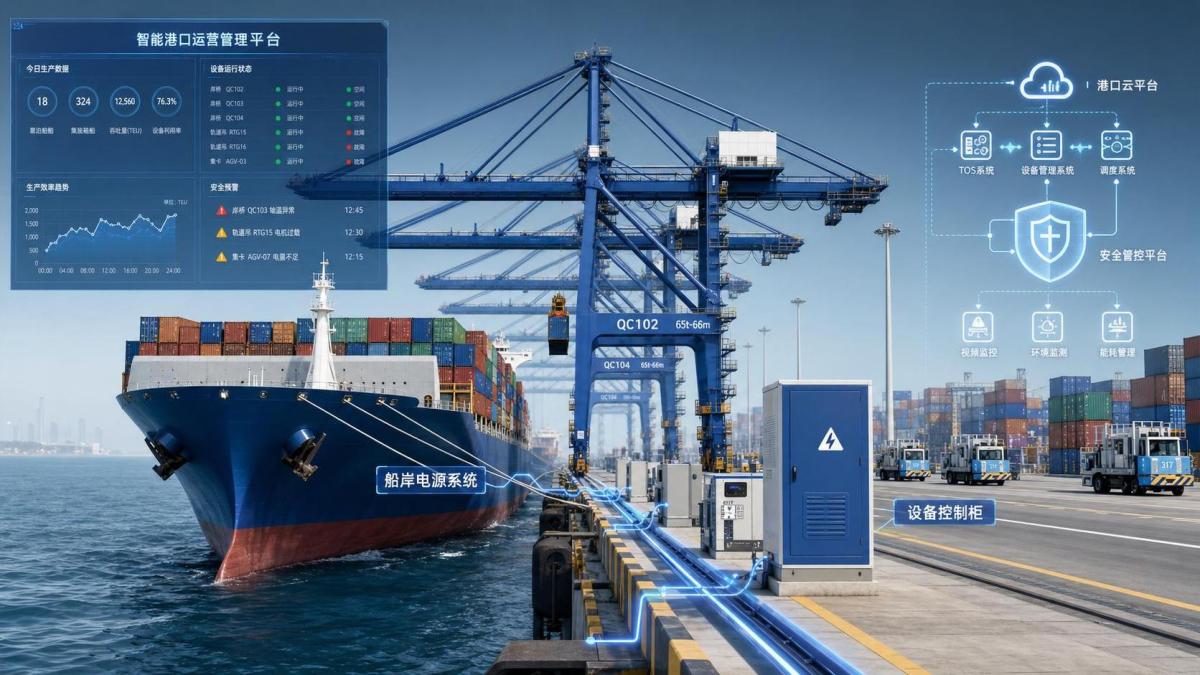
In practical terms, evaluation should focus on operational fit, integration depth, execution discipline, and future readiness.
A weak match in any one area can create delays, fragmented data, and costly rework later.
This guide breaks down how to assess a port vessel integration provider with a clearer, more decision-oriented lens.
Start with the Real Scope of Integration
Before comparing vendors, define what integration actually means for your project.
Some projects need basic ship-to-shore data exchange.
Others require orchestration across navigation systems, cargo handling, berth planning, maintenance, energy management, and compliance reporting.
A credible port vessel integration provider should help refine the scope, not just respond to a checklist.
That includes identifying interfaces, dependencies, control layers, and operational handoff points.
From recent market shifts, the clearer signal is that ports now expect real-time coordination rather than isolated automation packages.
This means your evaluation should map each integration requirement to a measurable business outcome.
- Reduced vessel turnaround time
- Fewer manual coordination steps
- Higher berth and crane utilization
- Stronger audit and compliance traceability
- Better resilience during peak traffic or disruption
If a provider cannot translate integration scope into operating impact, the proposal is still too shallow.
Check Domain Experience, Not Just General Integration Claims
Many firms can integrate systems.
Far fewer understand the operational logic of ports and ocean-going vessels.
A strong port vessel integration provider should show direct experience with maritime workflows, vessel interfaces, terminal systems, and safety-critical processes.
Ask for examples that resemble your environment in vessel type, cargo profile, automation level, and regional compliance context.
This matters because container terminals, LNG operations, and smart vessel ecosystems have different integration risks.
Relevant experience often shows up in the questions a provider asks early.
Do they probe data latency tolerances, fallback modes, handover logic, or cybersecurity zones?
Those details separate maritime specialists from generic integrators.
A useful screening list includes:
- Completed projects involving port operating systems, vessel data platforms, or ship-to-shore synchronization
- Knowledge of IMO, class, and local port authority requirements
- Experience with mixed fleets, legacy equipment, and phased modernization
- Documented incident response and support processes for maritime operations
Evaluate Interoperability at a Technical and Operational Level
Interoperability is often where a port vessel integration provider proves its real value.
Brochures may promise open architecture, but the real test is how well systems exchange reliable, actionable data.
Look closely at interfaces with terminal operating systems, vessel monitoring systems, ERP platforms, maintenance tools, and traffic management layers.
In actual operations, bad integration usually appears as duplicated inputs, timing mismatches, poor alarm logic, or conflicting data ownership.
Your provider should be able to explain how these issues are prevented.
Review their approach to APIs, middleware, data normalization, event handling, and exception management.
More importantly, ask who owns interface testing, version control, and change governance after go-live.
A mature port vessel integration provider should present interoperability as an operating discipline, not a one-time technical task.
Assess Delivery Reliability and Program Control
Technical strength alone does not make a dependable port vessel integration provider.
Execution discipline is just as important.
Port and vessel projects often involve multiple contractors, limited outage windows, and strict commissioning sequences.
That creates real schedule risk if the provider lacks control over milestones, dependencies, and documentation.
Ask to see a sample delivery framework.
It should cover design reviews, interface freeze dates, FAT, SAT, training, cutover planning, and warranty support.
Also review how the provider handles scope changes.
In this sector, uncontrolled changes are one of the fastest ways to lose budget and operational confidence.
A reliable port vessel integration provider should provide:
- Named project leadership with clear decision authority
- A realistic commissioning and risk register
- Structured reporting on progress, issues, and interface status
- Documented acceptance criteria tied to operational outcomes
When a provider cannot show process maturity, the delivery burden often shifts back to your internal team.
Review Cybersecurity, Compliance, and Safety Integration
Connected maritime operations bring a larger attack surface and more regulatory exposure.
That makes cybersecurity and compliance central to selecting a port vessel integration provider.
Do not treat them as side topics for legal review later.
Ask how the provider segments networks, manages remote access, protects operational data, and records system events.
For safety-related functions, confirm how alarms, interlocks, overrides, and fallback modes are handled during integration.
This is especially relevant where vessel automation, cargo systems, and port-side controls interact.
A qualified port vessel integration provider should also understand documentation needs for audits, insurers, and classification review.
The best providers integrate compliance into system design from the beginning.
That reduces late redesign and helps maintain operational continuity.
Measure Scalability, Support, and Long-Term Value
A port vessel integration provider should solve today’s problem without limiting tomorrow’s expansion.
That means evaluating architecture scalability, service support, and lifecycle economics.
Can the solution support new berths, additional vessel classes, upgraded sensors, or AI-driven optimization tools later?
Will software upgrades disrupt operations?
Is there a local or regional support model with defined response times?
These questions matter because the cheapest proposal can become the most expensive over five years.
Look beyond upfront integration cost.
Review licensing logic, support scope, spare capacity, training needs, and dependency on proprietary tools.
A strong port vessel integration provider will be transparent about total cost of ownership and roadmap assumptions.
That transparency is usually a good signal of partnership quality.
Use a Structured Evaluation Framework Before Final Selection
The final decision should not depend on presentation quality alone.
Use a weighted framework to compare each port vessel integration provider against the same criteria.
This keeps procurement, engineering, operations, and management aligned.
A practical scorecard often includes technical fit, maritime experience, cybersecurity posture, delivery capability, support model, and commercial clarity.
It also helps to run scenario-based reviews.
For example, ask each provider how they would handle a berth system outage, a vessel interface change, or a phased terminal upgrade.
Their answers will reveal practical maturity much faster than generic capability slides.
In the end, the best port vessel integration provider is the one that can connect systems, protect operations, and adapt as your maritime environment evolves.
A disciplined evaluation now usually prevents expensive correction later.
Start with scope clarity, test real interoperability, verify execution depth, and make long-term resilience part of the selection decision.
Recommended News
 Sep 22, 2026When smart vessels equipment improves port turnaround timeSmart vessels equipment helps reduce port turnaround time with reliable arrival forecasts, cargo visibility, and equipment readiness. Explore practical integration strategies.
 Sep 17, 2026When does a port vessel integration platform reduce turnaround delays?Port vessel integration platform: discover when connected data, coordinated workflows, and early alerts reduce turnaround delays and improve port-call reliability.
 Sep 04, 2026How smart land-sea interconnection improves cargo visibility at portsSmart land sea interconnection gives ports real-time cargo visibility across vessels, terminals, rail, and inland networks—reducing delays, risk, and costly disruptions.
 Aug 31, 2026When does a smart container ship platform reduce port turnaround delays?Smart container ship platform insights: reduce port turnaround delays with shared timelines, proactive exception management, and faster vessel-port coordination.
 Jul 28, 2026Integrated Ship to Shore Systems: Key Factors for Reliable Port IntegrationIntegrated ship to shore systems guide reliable port integration by addressing interfaces, latency, cybersecurity, failure recovery, and retrofit risks—essential reading before choosing a vendor.
 Jul 13, 2026How to Evaluate a Port Vessel Integration ProviderPort vessel integration provider evaluation starts with scope, interoperability, cybersecurity, and delivery strength. Learn how to choose a reliable partner for safer, smarter port operations.
 Jul 12, 2026How Smart Container Ships Technology Cuts Port DelaysSmart container ships technology helps cut port delays with live ETA data, better berth planning, and faster cargo handling. See how it improves reliability and lowers supply chain disruption.
 Jul 09, 2026Vessel Connectivity for Cargo Ships: Solving Data Gaps at SeaVessel connectivity for cargo ships explained through real voyage scenarios—learn how to reduce data gaps, improve fleet decisions, and choose smarter sea-to-shore connectivity.
 Jul 08, 2026Real Time Ship to Shore: What Delays Data Sync in Port Operations?Real time ship to shore delays can disrupt port efficiency, safety, and turnaround. Discover the hidden causes of data sync issues and practical fixes to improve maritime operations.
![]() Jul 07, 2026Smart Ship Connectivity for Fleet Monitoring: What Delivers ROISmart ship connectivity for fleet monitoring delivers ROI when data, alerts, and workflows match real fleet operations. Learn how to reduce delays, control risk, and improve asset performance.
Jul 07, 2026Smart Ship Connectivity for Fleet Monitoring: What Delivers ROISmart ship connectivity for fleet monitoring delivers ROI when data, alerts, and workflows match real fleet operations. Learn how to reduce delays, control risk, and improve asset performance. Jun 29, 2026Digital Ship to Shore Integration: Key Risks Before DeploymentDigital ship to shore integration: discover the top pre-deployment risks in interoperability, cybersecurity, data quality, workflows, and compliance to ensure a smoother rollout.
 Jun 26, 2026Ship to Shore Integration: Key Performance Checks Before DeploymentShip to shore integration is critical before deployment. Check interface stability, data accuracy, cyber resilience, and crane coordination to boost safety, reduce delays, and improve terminal performance.
 Jun 15, 2026Land-Sea Interconnection Challenges in Port Logistics and Cargo FlowLand-sea interconnection challenges in port logistics can disrupt cargo flow, raise costs, and delay delivery. Discover practical strategies to improve coordination, visibility, and resilience.
 Jun 10, 2026Improving Port Efficiency with Better Ship-to-Shore SynergyShip-to-shore synergy is the key to improving port efficiency. Discover how better vessel-terminal coordination reduces delays, supports rail-yard flow, and boosts reliable throughput.
 Jun 07, 2026How to Compare Intermodal Transport Systems for Port-Centric Cargo FlowsIntermodal transport systems for port-centric cargo flows: compare reliability, rail-sea coordination, scalability, and data visibility to choose smarter, more resilient logistics solutions.
![]() May 23, 2026How Smart Maritime Technology Cuts Port Delay RisksSmart maritime technology helps cut port delay risks with predictive ETA, AI routing, and connected port visibility—reducing fuel waste, improving berth planning, and strengthening supply chain resilience.
May 23, 2026How Smart Maritime Technology Cuts Port Delay RisksSmart maritime technology helps cut port delay risks with predictive ETA, AI routing, and connected port visibility—reducing fuel waste, improving berth planning, and strengthening supply chain resilience. May 21, 2026Maritime Logistics Optimization Techniques That Reduce Port Dwell TimeMaritime logistics optimization techniques help cut port dwell time through smarter berth planning, yard coordination, and real-time visibility—discover practical ways to boost flow and reliability.
 May 17, 2026Land-Sea Interconnection Models That Improve Cargo TurnaroundLand-sea interconnection models that improve cargo turnaround: explore fixed-slot rail-berth links, dry ports, smart visibility, and safer corridor design to cut dwell time and boost logistics performance.