



Search News
Industry Portal
Popular Tags
How smart land-sea interconnection improves cargo visibility at ports
Author
Time
Click Count
Introduction: For project managers overseeing complex port operations, smart land-sea interconnection turns fragmented cargo tracking into a coordinated operational capability across maritime, terminal, rail, and inland networks.
It connects smart container ships, terminal equipment, railway control systems, sensors, and data platforms so teams can understand cargo status, location, condition, and next-handling requirements continuously.
The practical objective is not simply more data. It is to create timely, trusted visibility that supports decisions before congestion, missed connections, safety incidents, or detention costs escalate.
For engineering leaders, the value depends on integration quality, data governance, operational ownership, and whether the system improves real workflows rather than adding another isolated dashboard.
What Project Leaders Need to Decide First
Project managers searching for smart land sea interconnection usually want to know whether it can reduce uncertainty across cargo handoffs without creating expensive, difficult-to-maintain technology dependencies.
The central question is straightforward: can the port reliably connect vessel arrival information with yard activity, rail schedules, truck appointments, customs clearance, and inland delivery milestones?
Traditional cargo visibility often breaks at organizational boundaries. Shipping lines, terminal operators, rail operators, freight forwarders, customs authorities, and cargo owners may hold separate versions of operational truth.
These disconnected systems cause teams to rely on emails, phone calls, spreadsheets, manual status updates, and assumptions when responding to vessel delays or changing cargo priorities.
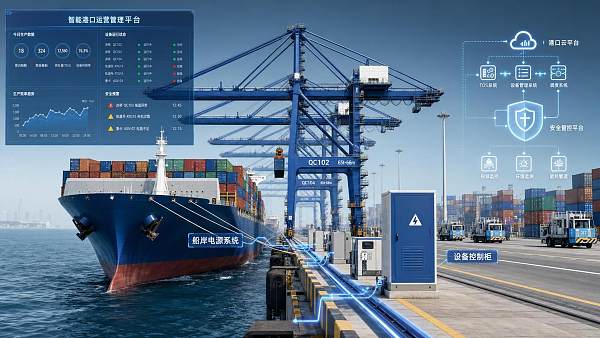
Smart land-sea interconnection creates a shared operational picture by combining physical asset data with event data, planning data, and exception alerts across the cargo journey.
For a project manager, the important outcome is earlier intervention. A delayed vessel, unavailable crane, rail path constraint, or customs hold becomes visible before it disrupts downstream commitments.
This approach is especially valuable at ports serving high-volume container flows, rail-connected terminals, industrial cargo corridors, energy logistics networks, and time-sensitive distribution operations.
However, technology alone cannot resolve poor process design. Cargo visibility improves only when stakeholders agree on data definitions, decision rights, escalation procedures, and performance targets.
Before approving a program, leaders should identify the cargo movements where uncertainty creates the greatest financial, safety, or customer-service exposure.
Common priorities include reducing berth-to-rail transfer delays, improving container dwell management, protecting reefer cargo, avoiding missed export cutoffs, and managing inland capacity constraints.
The strongest business case focuses on measurable operational bottlenecks rather than broad promises about digital transformation or generic supply chain modernization.
Projects should therefore begin with a clear baseline: current visibility gaps, manual coordination effort, exception response times, dwell duration, missed connections, and avoidable cost events.
Once these baselines are understood, smart land sea interconnection can be assessed as an operational investment with defined benefits, risks, implementation stages, and accountability.
That framing helps project teams distinguish useful integration from technology that displays information without improving how decisions are made or executed.
How Smart Land-Sea Interconnection Creates a Continuous Cargo View
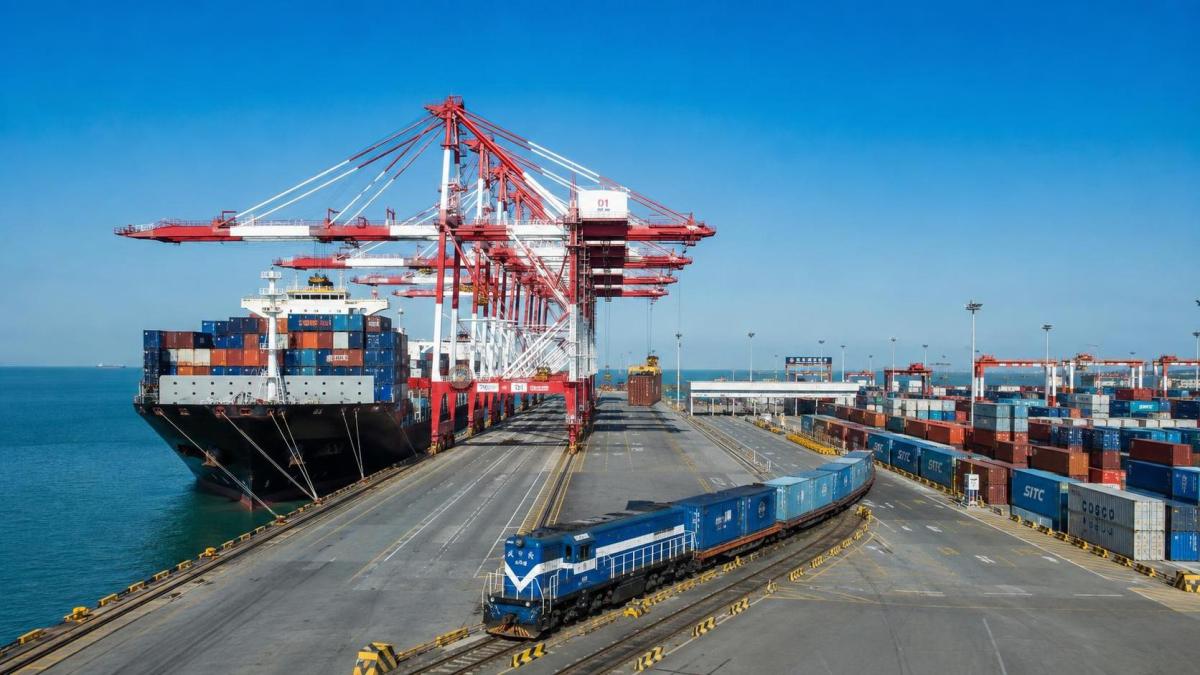
Smart land sea interconnection works by linking events from the vessel, port terminal, rail network, gate operations, and inland logistics systems into one coordinated information model.
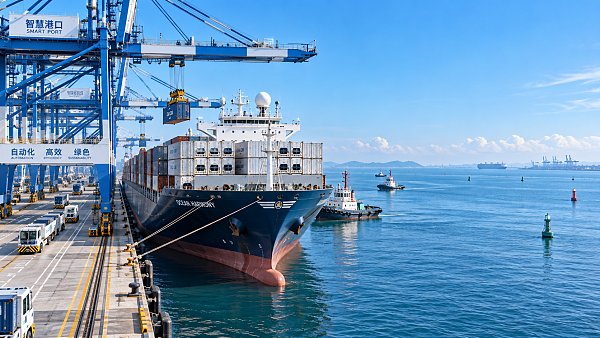
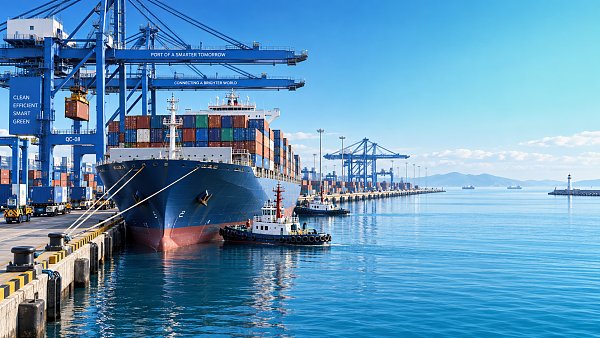
At sea, smart container ships can provide estimated arrival times, route deviations, weather impacts, container condition data, stowage updates, and equipment-status information before reaching the port.
These maritime signals allow terminals to revise berth plans, labor allocation, crane sequences, yard capacity plans, and rail loading priorities before the vessel arrives.
Within the terminal, sensors, terminal operating systems, automated stacking equipment, optical character recognition, and gate platforms record the movement of containers through critical handling points.
Each event should answer a practical question: where is the cargo, what condition is it in, what process step is complete, and what must happen next?
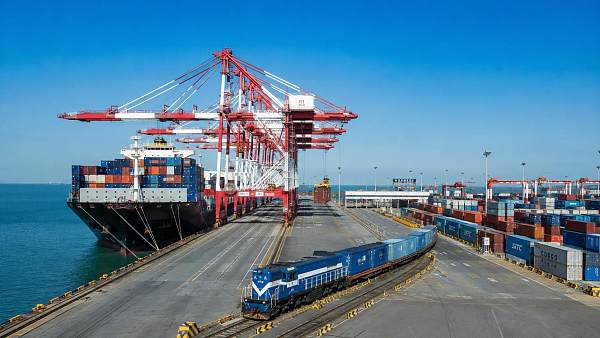
Railway control and scheduling data extend visibility beyond the quay. Train position, path availability, braking-system readiness, loading windows, and terminal departure plans affect inland cargo reliability.
For rail-connected ports, this matters because a container is not truly available when discharged. It is available when the next transport mode can safely and predictably accept it.
A shared data platform can correlate vessel discharge events with container release status, customs documentation, yard location, rail wagon assignment, gate booking, and final destination requirements.
The result is a cargo digital thread. Instead of viewing individual systems separately, operators can follow the same container across maritime arrival, terminal processing, inland transfer, and delivery milestones.
Importantly, a digital thread should retain event timestamps and source information. Teams must know not only the latest status, but also how reliable the status is.
For example, a predicted arrival time based on a vessel’s live position should be distinguished from a manually entered estimate that has not been recently validated.
This confidence level is essential during disruptions. Project leaders should require systems to make uncertainty visible rather than presenting uncertain information as a confirmed operational fact.
Where Visibility Delivers the Most Operational Value
The greatest benefits usually emerge at handoff points, where cargo changes custody, location, transport mode, or operational status.
Vessel-to-terminal handoffs are a primary example. Earlier and more accurate arrival information enables terminals to prepare berth resources and reduce last-minute schedule changes.
Terminal-to-rail handoffs require equally close coordination. Rail plans must reflect container availability, hazardous cargo restrictions, wagon capacity, loading sequence, and network operating constraints.
When vessel discharge and train departure plans are disconnected, containers can accumulate in the yard even when a rail service is nominally scheduled.
Smart land sea interconnection helps identify these mismatches early. It can flag containers unlikely to meet a rail cutoff because of delayed discharge, inspection requirements, or yard congestion.
Gate operations also benefit from connected visibility. Carriers and truck drivers can receive more accurate appointment information, reducing unnecessary arrivals and smoothing terminal access patterns.
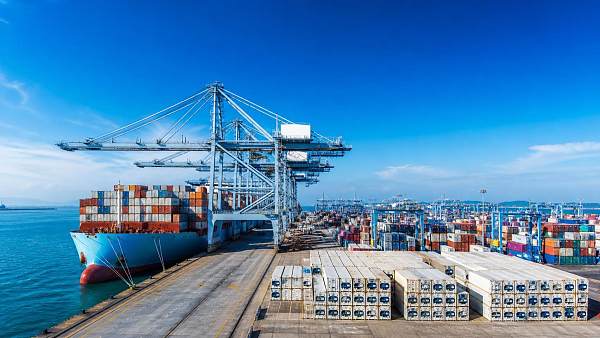
For reefer cargo, continuous monitoring is particularly valuable. Temperature deviations, power connection status, handling delays, and inspection actions can be managed before product quality is compromised.
For hazardous cargo, visibility supports safer planning by connecting manifest information, storage location, segregation requirements, emergency procedures, and onward transport restrictions.
Project teams should focus on exceptions that cause cascading disruption. A single late vessel may affect berth occupancy, crane availability, rail departure timing, yard density, and customer collection appointments.
Connected data enables a control tower or operations center to assess these impacts together, instead of asking each department to manually reconstruct the situation.
This improves response speed, but it also improves decision quality. Teams can prioritize cargo according to customer commitments, safety requirements, dwell risk, equipment needs, and network capacity.
The operational value is therefore not only knowing where cargo is. It is understanding the consequences of its status and selecting the next action with confidence.
What Data and Systems Must Be Connected
A successful visibility program does not need to integrate every available data source on day one. It needs a deliberate architecture focused on high-value operational events.
The foundation normally includes vessel schedules, live estimated arrival times, berth plans, terminal operating system events, gate records, customs status, and rail service data.
Container-level identifiers are critical because they connect records across organizations. Without consistent identifiers, systems may create duplicate records or lose track of cargo during handoffs.
Standardized event definitions are equally important. “Available,” “released,” “loaded,” “departed,” and “delivered” must mean the same thing for every participating stakeholder.
Port community systems can provide a practical collaboration layer, particularly where many shipping lines, agencies, terminals, and transport providers need controlled information exchange.
Application programming interfaces should be preferred where possible because they support near-real-time data exchange and reduce manual re-entry between systems.
However, integration design must account for legacy equipment. Older terminal machinery, railway signaling interfaces, and maritime systems may require gateways, edge devices, or staged modernization.
Sensor data should be used selectively. GPS, RFID, IoT condition monitoring, crane telemetry, and equipment health data are useful only when they support a defined decision or automation rule.
For example, equipment telemetry can help predict whether a quay crane or rail loading asset may become unavailable during a critical operating window.
Project managers should avoid collecting data simply because it is technically possible. Excess data without ownership can create false alerts, unclear priorities, and operator fatigue.
Cybersecurity must be designed into the program from the start. Ports connect operational technology, commercial systems, external partners, and critical infrastructure, increasing the attack surface.
Role-based access, network segmentation, audit trails, secure interfaces, incident response procedures, and vendor security requirements are operational necessities rather than optional compliance features.
How to Build a Practical Implementation Roadmap
Implementation should begin with a specific operational corridor, such as vessel discharge to rail departure, import gate release, or reefer cargo monitoring.
A focused use case allows project leaders to test data quality, operating procedures, partner engagement, and technical integration before expanding across the port ecosystem.
The first stage should map the current cargo journey in detail. Teams need to identify systems, responsible parties, decision points, manual workarounds, delays, and information gaps.
Next, define a limited set of business outcomes. These may include reducing dwell time, increasing rail connection reliability, shortening exception response, or improving estimated departure accuracy.
Every outcome should have a measurable baseline and named owner. Without this discipline, a visibility initiative can become an open-ended technology program with unclear value.
The design phase should establish a common event model. It should define required events, source systems, data timeliness expectations, exception thresholds, and accountability for corrections.
Operational users must participate in this phase. Dispatchers, terminal planners, railway coordinators, vessel agents, maintenance teams, and gate supervisors understand where decisions actually fail.
After integration, project teams should run a controlled pilot during normal operations and during planned disruption scenarios, including delayed arrivals, equipment outages, and customs exceptions.
The pilot should test whether alerts arrive early enough, whether users trust the information, and whether the escalation process leads to faster corrective action.
Only then should the program move toward broader automation, such as dynamic yard prioritization, predictive equipment maintenance, automated customer notifications, or optimized rail allocation.
Expansion should remain modular. A port may add new terminals, inland depots, shipping partners, or rail operators over time without rebuilding the core visibility model.
This phased approach reduces implementation risk while giving senior stakeholders evidence that smart land sea interconnection produces measurable operating improvements.
How to Measure Return on Investment and Manage Risk
Project managers should measure return on investment through operational outcomes, not through the number of connected systems, sensors installed, or dashboards deployed.
Useful metrics include container dwell time, berth schedule adherence, rail departure reliability, gate turnaround time, unplanned rehandling, reefer incident response, and exception resolution speed.
Financial measures may include reduced demurrage and detention exposure, lower overtime, fewer manual coordination hours, improved asset utilization, and avoided disruption costs.
Customer-facing measures are also important. More reliable milestone information can improve booking confidence, reduce status inquiries, and support better inventory planning for cargo owners.
Data quality is one of the largest implementation risks. Incomplete, delayed, or inconsistent data can undermine user trust faster than an absence of visibility altogether.
To manage this risk, assign ownership for each critical data field and monitor accuracy, completeness, latency, and reconciliation performance continuously.
Another risk is organizational resistance. Teams may see shared visibility as a threat to existing control, especially where information has traditionally been managed within separate departments.
Clear governance helps address this concern. Stakeholders need agreed rules about data access, commercial confidentiality, operational authority, and responsibility during disruptions.
Vendor lock-in should also be considered. Systems should support open standards, documented interfaces, data portability, and realistic integration options for future partners and equipment.
Finally, avoid assuming that all decisions should be automated. Critical safety, customs, hazardous cargo, and customer-priority decisions may still require experienced human approval.
The best systems support human judgment with reliable context, recommendations, and early warning rather than removing accountability from complex operational decisions.
A disciplined measurement framework ensures that investment remains tied to service reliability, resilience, safety performance, and sustainable capacity improvement.
Making Cargo Visibility a Strategic Port Capability
Smart land sea interconnection is most valuable when treated as a long-term operational capability, not as a standalone software deployment.
It creates a common language between maritime and landside teams, allowing vessel schedules, terminal activity, rail capacity, and inland demand to be managed as one system.
For project managers, the priority is to connect high-impact cargo handoffs, establish trustworthy data ownership, and build response workflows around real exceptions.
Programs that start with measurable bottlenecks can demonstrate value quickly while creating a scalable foundation for broader port automation and supply chain coordination.
Ultimately, better cargo visibility means better control of time, capacity, risk, and customer commitments. It helps ports move from reacting to disruption toward managing it proactively.
When maritime intelligence, terminal operations, and railway coordination are connected effectively, cargo becomes more predictable throughout the journey from ship to inland destination.
Recommended News
 Sep 22, 2026When smart vessels equipment improves port turnaround timeSmart vessels equipment helps reduce port turnaround time with reliable arrival forecasts, cargo visibility, and equipment readiness. Explore practical integration strategies.
 Sep 17, 2026When does a port vessel integration platform reduce turnaround delays?Port vessel integration platform: discover when connected data, coordinated workflows, and early alerts reduce turnaround delays and improve port-call reliability.
 Sep 04, 2026How smart land-sea interconnection improves cargo visibility at portsSmart land sea interconnection gives ports real-time cargo visibility across vessels, terminals, rail, and inland networks—reducing delays, risk, and costly disruptions.
 Aug 31, 2026When does a smart container ship platform reduce port turnaround delays?Smart container ship platform insights: reduce port turnaround delays with shared timelines, proactive exception management, and faster vessel-port coordination.
 Jul 28, 2026Integrated Ship to Shore Systems: Key Factors for Reliable Port IntegrationIntegrated ship to shore systems guide reliable port integration by addressing interfaces, latency, cybersecurity, failure recovery, and retrofit risks—essential reading before choosing a vendor.
 Jul 13, 2026How to Evaluate a Port Vessel Integration ProviderPort vessel integration provider evaluation starts with scope, interoperability, cybersecurity, and delivery strength. Learn how to choose a reliable partner for safer, smarter port operations.
 Jul 12, 2026How Smart Container Ships Technology Cuts Port DelaysSmart container ships technology helps cut port delays with live ETA data, better berth planning, and faster cargo handling. See how it improves reliability and lowers supply chain disruption.
 Jul 09, 2026Vessel Connectivity for Cargo Ships: Solving Data Gaps at SeaVessel connectivity for cargo ships explained through real voyage scenarios—learn how to reduce data gaps, improve fleet decisions, and choose smarter sea-to-shore connectivity.
 Jul 08, 2026Real Time Ship to Shore: What Delays Data Sync in Port Operations?Real time ship to shore delays can disrupt port efficiency, safety, and turnaround. Discover the hidden causes of data sync issues and practical fixes to improve maritime operations.
![]() Jul 07, 2026Smart Ship Connectivity for Fleet Monitoring: What Delivers ROISmart ship connectivity for fleet monitoring delivers ROI when data, alerts, and workflows match real fleet operations. Learn how to reduce delays, control risk, and improve asset performance.
Jul 07, 2026Smart Ship Connectivity for Fleet Monitoring: What Delivers ROISmart ship connectivity for fleet monitoring delivers ROI when data, alerts, and workflows match real fleet operations. Learn how to reduce delays, control risk, and improve asset performance. Jun 29, 2026Digital Ship to Shore Integration: Key Risks Before DeploymentDigital ship to shore integration: discover the top pre-deployment risks in interoperability, cybersecurity, data quality, workflows, and compliance to ensure a smoother rollout.
 Jun 26, 2026Ship to Shore Integration: Key Performance Checks Before DeploymentShip to shore integration is critical before deployment. Check interface stability, data accuracy, cyber resilience, and crane coordination to boost safety, reduce delays, and improve terminal performance.
 Jun 15, 2026Land-Sea Interconnection Challenges in Port Logistics and Cargo FlowLand-sea interconnection challenges in port logistics can disrupt cargo flow, raise costs, and delay delivery. Discover practical strategies to improve coordination, visibility, and resilience.
 Jun 10, 2026Improving Port Efficiency with Better Ship-to-Shore SynergyShip-to-shore synergy is the key to improving port efficiency. Discover how better vessel-terminal coordination reduces delays, supports rail-yard flow, and boosts reliable throughput.
 Jun 07, 2026How to Compare Intermodal Transport Systems for Port-Centric Cargo FlowsIntermodal transport systems for port-centric cargo flows: compare reliability, rail-sea coordination, scalability, and data visibility to choose smarter, more resilient logistics solutions.
![]() May 23, 2026How Smart Maritime Technology Cuts Port Delay RisksSmart maritime technology helps cut port delay risks with predictive ETA, AI routing, and connected port visibility—reducing fuel waste, improving berth planning, and strengthening supply chain resilience.
May 23, 2026How Smart Maritime Technology Cuts Port Delay RisksSmart maritime technology helps cut port delay risks with predictive ETA, AI routing, and connected port visibility—reducing fuel waste, improving berth planning, and strengthening supply chain resilience. May 21, 2026Maritime Logistics Optimization Techniques That Reduce Port Dwell TimeMaritime logistics optimization techniques help cut port dwell time through smarter berth planning, yard coordination, and real-time visibility—discover practical ways to boost flow and reliability.
 May 17, 2026Land-Sea Interconnection Models That Improve Cargo TurnaroundLand-sea interconnection models that improve cargo turnaround: explore fixed-slot rail-berth links, dry ports, smart visibility, and safer corridor design to cut dwell time and boost logistics performance.