



Search News
Industry Portal
Popular Tags
When does a port vessel integration platform reduce turnaround delays?
Author
Time
Click Count
A port vessel integration platform reduces turnaround delays when the delay is caused by coordination failure rather than by a fixed physical constraint. It is most effective where a vessel’s arrival, berth availability, marine services, terminal labor, equipment readiness, cargo release status, and departure clearance are managed by different teams or systems that do not share a reliable operating picture.
For a project manager, the practical test is simple: if people regularly spend time asking for status, reconciling conflicting estimates, or manually re-planning work after each schedule change, an integration platform can remove material delay. If the port is constrained by an unavailable berth, insufficient cranes, draft restrictions, weather closures, or an upstream cargo problem that no digital system can resolve, the platform may improve visibility but will not create capacity.
The strongest business case therefore comes from reducing avoidable waiting between activities. A ship can only leave when a series of dependencies has been completed in the right order. Delays often emerge in the gaps: a pilot is assigned using an outdated arrival estimate; a berth plan changes but tug scheduling is not updated; cargo handling begins later because the terminal has not received a confirmed stowage sequence; departure documentation is complete, but the next tidal window has already been missed. A connected operating layer can shorten these gaps if it supplies timely, trusted information to the people who make operational decisions.
Where turnaround time is actually lost
Turnaround is often measured from arrival at a port limit or anchorage through sailing, but its causes are distributed across the port call. A vessel may arrive early and wait for a berth. It may berth on time but lose hours waiting for gang allocation, cargo instructions, shore power, bunkering coordination, customs release, maintenance access, or a departure pilot. Looking only at total port stay can hide the operational handoffs responsible for the lost time.
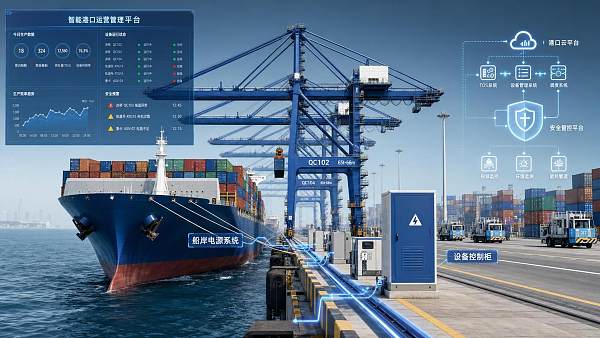
A port vessel integration platform earns its place when it makes those handoffs visible and manageable as dependencies. It should combine estimated and actual times for key milestones, including arrival, pilot boarding, berth alongside, commencement of operations, cargo completion, documentation readiness, unberthing, and sailing. More importantly, it should show what is preventing the next milestone from happening.
That distinction matters. A dashboard that reports a vessel as “delayed” after the fact provides little operational value. A useful platform tells the berth planner that an inbound vessel will miss its planned window, identifies which downstream reservations are affected, and gives the marine, terminal, and landside teams enough time to decide whether to hold, resequence, or reassign resources.
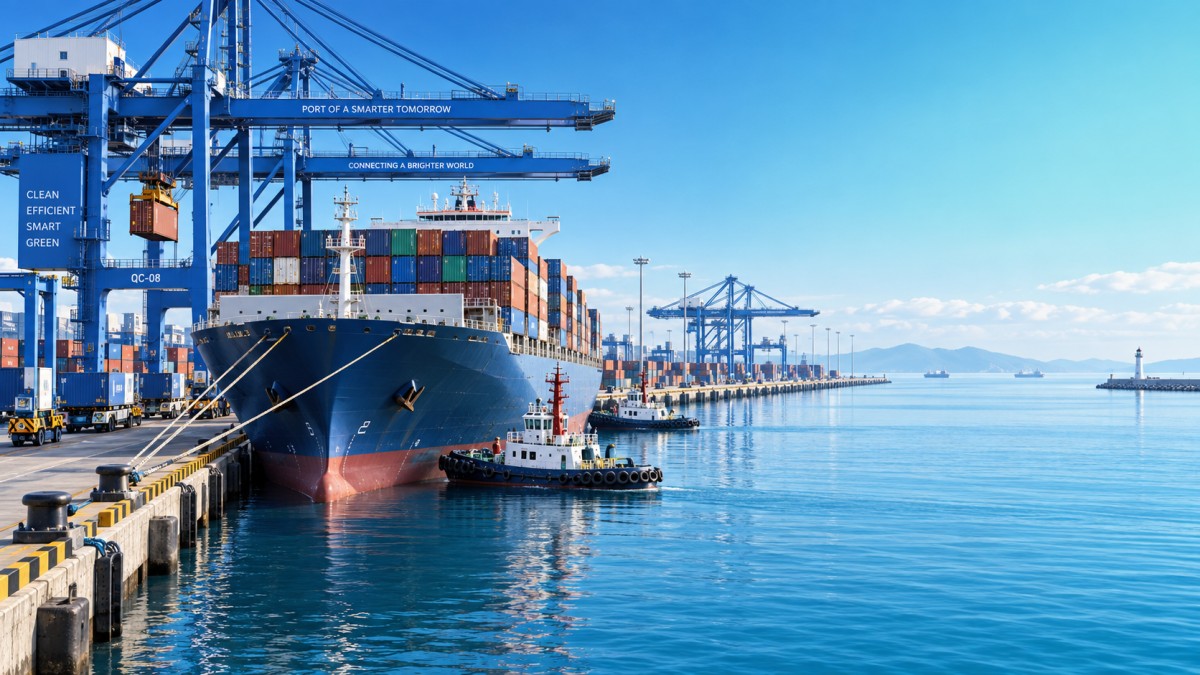
Ports with several vessel types and overlapping services tend to benefit most. Container terminals may need close synchronization between berth windows, quay crane plans, yard readiness, feeder connections, and landside flows. Bulk and breakbulk operations may depend more heavily on cargo readiness, loading sequences, stockpile conditions, and specialist equipment. LNG, energy, and other high-consequence port calls introduce additional checks around safety zones, inspections, permits, tug availability, and weather operating limits. The technology does not remove those controls. It helps prevent their timing and status from becoming a source of unnecessary uncertainty.
Four conditions that make integration worthwhile
First, the port call must involve decisions that can still be changed before the delay occurs. Predictive arrival information has limited value if berth allocations are fixed days in advance and cannot be adjusted. It has much greater value when planners can resequence calls, revise resource assignments, notify service providers, or align terminal work to a revised estimated time of arrival.
Second, the participating parties need to be working from fragmented information. Many ports already have terminal operating systems, vessel traffic services, port management tools, gate systems, maintenance platforms, and shipping-line portals. The presence of these systems does not itself justify another layer. The justification appears where teams must re-enter data, exchange spreadsheets, phone multiple operators for confirmation, or reconcile timestamp differences before committing a decision.
Third, the operational information must arrive early enough to influence resource deployment. A berth conflict discovered ten minutes before a ship arrives is primarily a disruption-management problem. The same conflict detected several hours earlier may permit a different tug sequence, a revised pilotage plan, an adjusted crane start time, or advance notification to a vessel agent and cargo interests. Integration improves the quality of that lead time only when source systems provide sufficiently current events and estimates.
Fourth, there must be a clear owner for cross-functional decisions. Platforms frequently underperform when each department shares data but retains no agreed process for acting on it. A project should establish who can change a berth plan, who confirms a revised vessel schedule, what event triggers an escalation, and which party owns the final operational timestamp. Without this operating model, the platform can become a better view of the same unresolved conflicts.
What the platform needs to connect
Project teams sometimes approach integration as a procurement exercise focused on interfaces. Interfaces matter, but the selection question should begin with operating decisions. Which decisions are currently slow, error-prone, or dependent on informal coordination? Each should be mapped to the information required, the source of that information, the decision owner, and the action that follows.
For turnaround reduction, the priority connections commonly include:
- Vessel position, voyage updates, and estimated arrival information, with a clear distinction between predictive estimates and confirmed operational times.
- Berth planning and berth status, including berth suitability, availability, planned occupancy, and changes that affect adjacent calls.
- Pilot, tug, mooring, launch, and other marine service schedules, where vessel movement dependencies are often missed by terminal-focused planning tools.
- Terminal operational status, such as berth readiness, cargo sequence, equipment availability, labor allocation, yard constraints, and completion forecasts.
- Port-call documentation, permits, inspections, customs or clearance milestones, and safety requirements that can block a departure despite completed cargo work.
- Notifications and workflow management so that an exception produces assigned action rather than a passive alert.
The platform should preserve the source and timestamp of each critical event. A common source of dispute is that different systems use the same label for different moments: “arrival” may mean crossing a port boundary, anchoring, pilot boarding, or all-fast alongside. If the integration layer normalizes data without retaining definitions, reports can look consistent while operational decisions are based on incompatible assumptions.
Integration does not solve every source of delay
There is a recurring expectation that real-time visibility will automatically produce faster vessel calls. It will not solve constraints that are genuinely physical, regulatory, or commercial. A platform cannot add quay length, dredge a channel, provide a missing pilot, accelerate an inspection that must be completed, or clear cargo that is not ready. It cannot prevent weather-related restrictions, although it can help the port plan around forecast operating windows.
It can also expose a capacity problem more clearly than before. That outcome should not be treated as failure. If the system consistently shows that crane demand exceeds available capacity during certain call patterns, or that vessel arrivals regularly bunch around tide windows, the port has obtained evidence for operational redesign, contractual changes, or capital planning. The first result may be a more explicit picture of delay rather than an immediate reduction in delay.
For this reason, project sponsors should separate three objectives that are often bundled together:
The implementation risks that affect the result
Data quality is usually the first risk, but it should be described precisely. The issue is rarely that every data point is wrong. More often, critical fields are late, manually updated, incomplete for some vessel calls, or defined differently by separate participants. A vessel ETA calculated from AIS data may be useful for planning, yet it should not be treated as an operational commitment. A terminal completion forecast may change quickly if cargo conditions or equipment availability changes. The platform needs confidence indicators, update histories, and practical rules for deciding when a forecast should trigger action.
Another risk is building too wide an integration scope before proving the operational use case. Connecting every available system can create a long implementation with limited impact on turnaround. A more disciplined sequence begins with one or two high-cost handoffs, such as berth-to-tug coordination or cargo-completion-to-departure clearance. Once users can see a measurable improvement in response time, the platform can expand into adjacent workflows.
Security and access control also deserve attention because port-call information includes commercial schedules, vessel movements, operational restrictions, and sometimes safety-sensitive details. Participants need access to the information necessary for their role without receiving unrestricted visibility into another party’s commercial operations. This is an operating design question as much as a technical one. The project should define data ownership, retention, permission levels, audit requirements, and the process for correcting disputed records before interfaces are opened at scale.
A final risk is designing for the ideal schedule rather than disruption. Port operations are judged on how they respond when an inbound vessel changes speed, a berth is delayed, a tug becomes unavailable, cargo work pauses, or an inspection takes longer than planned. The chosen platform should support rapid replanning, show downstream impact, record decisions, and distribute updated information to affected teams. A polished planned schedule has limited value if staff return to calls and messages as soon as it changes.
How project leaders should assess impact
Before committing to a broad rollout, establish a baseline around specific delay categories. Total port stay is useful, but it is too broad to show whether the platform changed the process. Track time at anchorage or waiting area, variance between planned and actual berth times, idle time between cargo completion and departure readiness, marine service waiting, resource conflicts, schedule revisions, and the time required to resolve exceptions. The appropriate measures depend on the port’s operating model, but they should be tied to decisions the platform is expected to improve.
It is also useful to examine variation, not only averages. A port may have an acceptable average turnaround while still imposing unreliable departure times on carriers, cargo owners, and downstream logistics partners. Better coordination can be valuable when it narrows the range of avoidable delay, even where the average improvement appears modest. Predictability allows vessels to manage speed, fuel use, crew activity, onward schedules, and port-call services with less contingency.
The most credible deployment path is to start with a defined operating corridor: a terminal, a vessel class, a set of berths, or a recurring service pattern. Include the groups that must act on the information, not only the teams that operate the software. Test whether the shared view changes decisions before testing how many screens or reports can be produced. When the result is a shorter, more reliable path from forecast change to coordinated action, the platform is addressing turnaround delay at its source.
A port vessel integration platform is therefore justified when the port has usable capacity but loses time coordinating that capacity across organizational boundaries. Its value is highest where schedule changes are frequent, services are interdependent, and decision-makers can intervene early. Where delay is rooted in a hard capacity constraint, the same platform still has a role: it can make the constraint visible, quantify its operational consequences, and help leaders decide whether the next step is process change, commercial redesign, or infrastructure investment.
Recommended News
 Sep 22, 2026When smart vessels equipment improves port turnaround timeSmart vessels equipment helps reduce port turnaround time with reliable arrival forecasts, cargo visibility, and equipment readiness. Explore practical integration strategies.
 Sep 17, 2026When does a port vessel integration platform reduce turnaround delays?Port vessel integration platform: discover when connected data, coordinated workflows, and early alerts reduce turnaround delays and improve port-call reliability.
 Sep 04, 2026How smart land-sea interconnection improves cargo visibility at portsSmart land sea interconnection gives ports real-time cargo visibility across vessels, terminals, rail, and inland networks—reducing delays, risk, and costly disruptions.
 Aug 31, 2026When does a smart container ship platform reduce port turnaround delays?Smart container ship platform insights: reduce port turnaround delays with shared timelines, proactive exception management, and faster vessel-port coordination.
 Jul 28, 2026Integrated Ship to Shore Systems: Key Factors for Reliable Port IntegrationIntegrated ship to shore systems guide reliable port integration by addressing interfaces, latency, cybersecurity, failure recovery, and retrofit risks—essential reading before choosing a vendor.
 Jul 13, 2026How to Evaluate a Port Vessel Integration ProviderPort vessel integration provider evaluation starts with scope, interoperability, cybersecurity, and delivery strength. Learn how to choose a reliable partner for safer, smarter port operations.
 Jul 12, 2026How Smart Container Ships Technology Cuts Port DelaysSmart container ships technology helps cut port delays with live ETA data, better berth planning, and faster cargo handling. See how it improves reliability and lowers supply chain disruption.
 Jul 09, 2026Vessel Connectivity for Cargo Ships: Solving Data Gaps at SeaVessel connectivity for cargo ships explained through real voyage scenarios—learn how to reduce data gaps, improve fleet decisions, and choose smarter sea-to-shore connectivity.
 Jul 08, 2026Real Time Ship to Shore: What Delays Data Sync in Port Operations?Real time ship to shore delays can disrupt port efficiency, safety, and turnaround. Discover the hidden causes of data sync issues and practical fixes to improve maritime operations.
![]() Jul 07, 2026Smart Ship Connectivity for Fleet Monitoring: What Delivers ROISmart ship connectivity for fleet monitoring delivers ROI when data, alerts, and workflows match real fleet operations. Learn how to reduce delays, control risk, and improve asset performance.
Jul 07, 2026Smart Ship Connectivity for Fleet Monitoring: What Delivers ROISmart ship connectivity for fleet monitoring delivers ROI when data, alerts, and workflows match real fleet operations. Learn how to reduce delays, control risk, and improve asset performance. Jun 29, 2026Digital Ship to Shore Integration: Key Risks Before DeploymentDigital ship to shore integration: discover the top pre-deployment risks in interoperability, cybersecurity, data quality, workflows, and compliance to ensure a smoother rollout.
 Jun 26, 2026Ship to Shore Integration: Key Performance Checks Before DeploymentShip to shore integration is critical before deployment. Check interface stability, data accuracy, cyber resilience, and crane coordination to boost safety, reduce delays, and improve terminal performance.
 Jun 15, 2026Land-Sea Interconnection Challenges in Port Logistics and Cargo FlowLand-sea interconnection challenges in port logistics can disrupt cargo flow, raise costs, and delay delivery. Discover practical strategies to improve coordination, visibility, and resilience.
 Jun 10, 2026Improving Port Efficiency with Better Ship-to-Shore SynergyShip-to-shore synergy is the key to improving port efficiency. Discover how better vessel-terminal coordination reduces delays, supports rail-yard flow, and boosts reliable throughput.
 Jun 07, 2026How to Compare Intermodal Transport Systems for Port-Centric Cargo FlowsIntermodal transport systems for port-centric cargo flows: compare reliability, rail-sea coordination, scalability, and data visibility to choose smarter, more resilient logistics solutions.
![]() May 23, 2026How Smart Maritime Technology Cuts Port Delay RisksSmart maritime technology helps cut port delay risks with predictive ETA, AI routing, and connected port visibility—reducing fuel waste, improving berth planning, and strengthening supply chain resilience.
May 23, 2026How Smart Maritime Technology Cuts Port Delay RisksSmart maritime technology helps cut port delay risks with predictive ETA, AI routing, and connected port visibility—reducing fuel waste, improving berth planning, and strengthening supply chain resilience. May 21, 2026Maritime Logistics Optimization Techniques That Reduce Port Dwell TimeMaritime logistics optimization techniques help cut port dwell time through smarter berth planning, yard coordination, and real-time visibility—discover practical ways to boost flow and reliability.
 May 17, 2026Land-Sea Interconnection Models That Improve Cargo TurnaroundLand-sea interconnection models that improve cargo turnaround: explore fixed-slot rail-berth links, dry ports, smart visibility, and safer corridor design to cut dwell time and boost logistics performance.