



Search News
Industry Portal
Popular Tags
Dual-Fuel Propulsion: Cost, Range, and Emissions Trade-Offs in 2026
Author
Time
Click Count
As shipowners and transport investors prepare for tighter 2026 regulations, dual-fuel propulsion is no longer just a technical upgrade. It is becoming a capital allocation question, a compliance hedge, and a range planning tool at the same time.
For enterprises operating across shipping, logistics, energy transport, and connected land-sea infrastructure, the appeal is clear. A vessel with dual-fuel propulsion can switch fuels, respond to price swings, and reduce emissions exposure without fully locking into one pathway.
Still, the trade-offs are real. Upfront equipment costs rise. Tank design affects cargo space. Crew capability matters more. Bunkering access can either support the investment or weaken it.
At GTOT, where rail control precision and ocean-going vessel intelligence meet, this question fits a larger pattern. The same strategic logic used to assess SIL4 signalling resilience or high-speed traction stability now applies to propulsion choices: reliability, flexibility, lifecycle value, and risk containment.
Why dual-fuel propulsion matters more in 2026
The pressure is coming from three directions at once. Fuel economics remain volatile, emissions rules are getting tighter, and charterers increasingly prefer lower-carbon tonnage with credible operational data.
That makes dual-fuel propulsion attractive because it gives operators room to adapt. It does not remove uncertainty, but it can reduce the cost of being wrong about one fuel pathway.
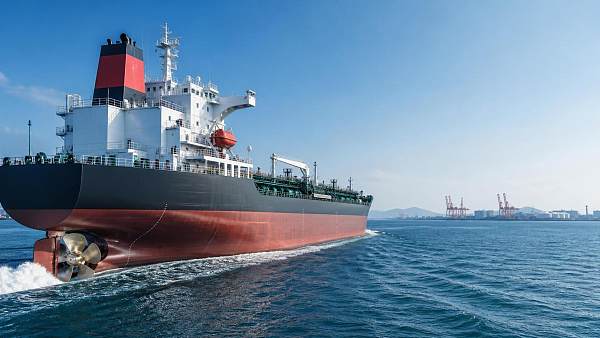
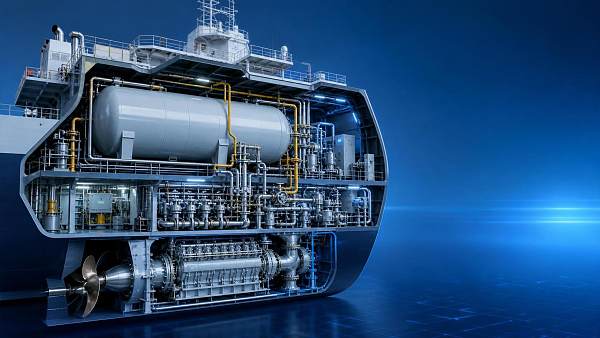
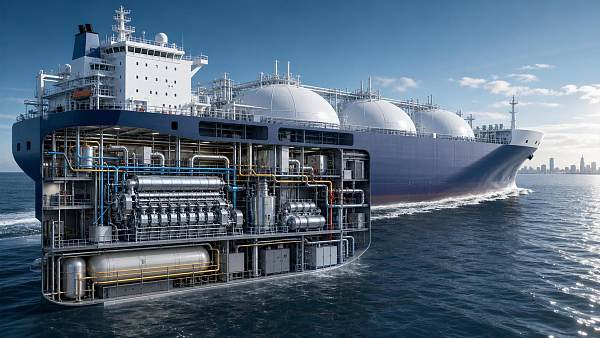
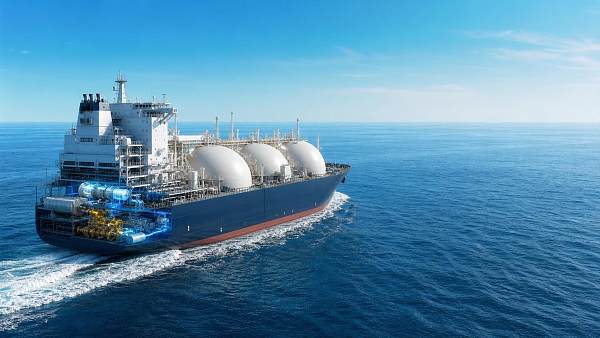
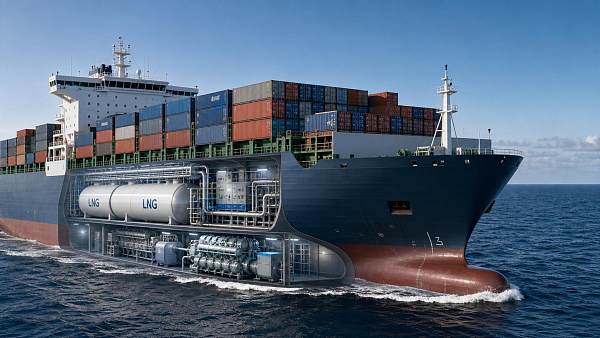
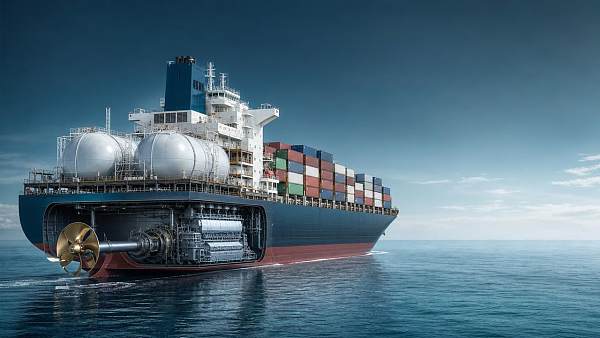
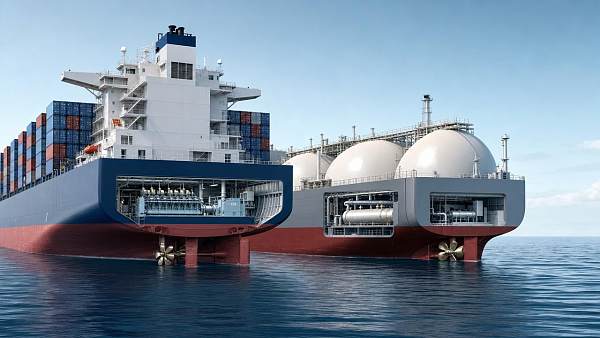
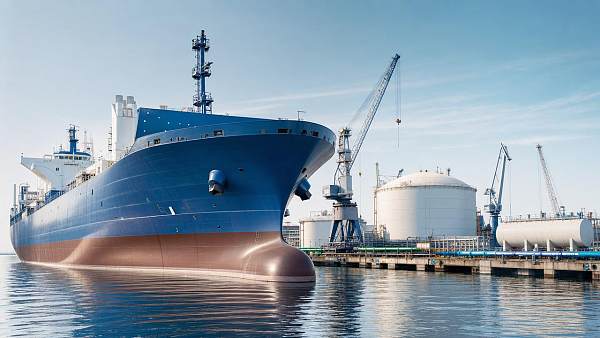
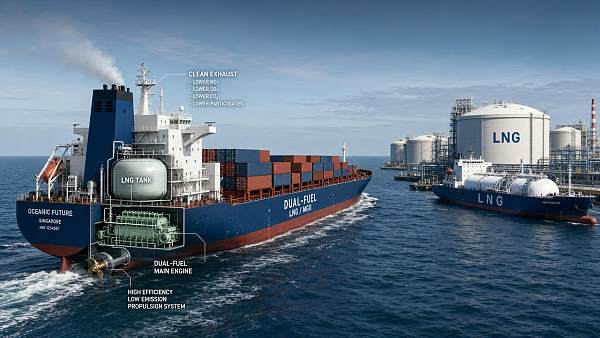
[Image 01: Dual-fuel propulsion decision framework for cost, range, and emissions in 2026 vessel procurement]
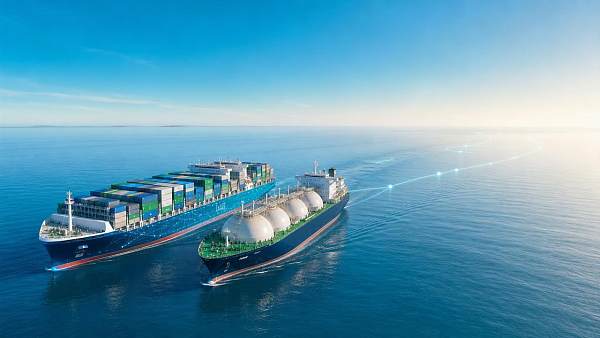
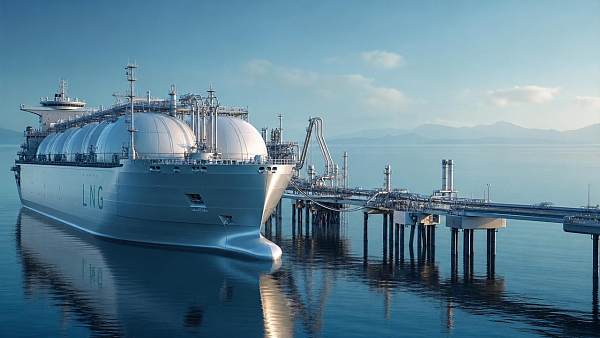
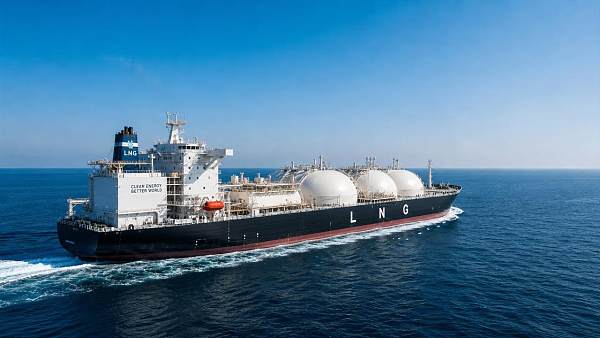
For LNG carriers, smart container ships, and other high-value ocean assets, this flexibility can be especially important. GTOT’s coverage of cryogenic engineering, route optimization, and asset intelligence shows that propulsion decisions now sit inside a much broader operating system.
What to verify before comparing proposals
- Confirm whether the quoted dual-fuel propulsion package includes tanks, gas handling, control integration, crew training, and class approval support. Many budget gaps appear after the base engine price is accepted.
- Check route-level bunkering access, not just regional fuel availability. A technically capable vessel loses strategic value if fuel switching becomes frequent because supply points are commercially weak.
- Model cargo loss from tank volume and system layout early. In some trades, reduced payload can erode the lifecycle savings that justify dual-fuel propulsion in the first place.
- Ask for emissions performance under real operating profiles, including low-load periods, port stays, and switching cycles. Brochure figures often look stronger than actual voyage patterns.
- Review maintenance intervals for both fuel modes together. A cheaper fuel strategy can become expensive if spare parts, diagnostics, and downtime planning are not aligned from day one.
The cost side: where the premium pays back, and where it does not
The first question is usually simple: how much more does dual-fuel propulsion cost? The better question is narrower: under what operating conditions does that premium return value within the target asset life?
Capital cost premiums vary by vessel type, engine choice, containment solution, and retrofit complexity. The headline number matters, but financing terms, utilization rates, and fuel spread assumptions matter more over time.
A common mistake is to evaluate the premium only against fuel savings. In practice, lower compliance risk, improved charterability, and stronger residual value often drive the investment case just as much.
Cost checks that deserve executive attention
- Separate headline engine cost from total installed cost. The real dual-fuel propulsion premium usually sits in fuel storage, safety systems, controls, and commissioning, not only in the engine itself.
- Test the business case against three fuel spread scenarios. A single optimistic LNG or alternative fuel assumption can make payback look solid when the downside case is actually weak.
- Include the cost of reporting, monitoring, and emissions verification. In 2026, compliance quality becomes part of vessel economics, especially for internationally exposed fleets and tender-driven projects.
Range and operational flexibility: the hidden advantage
Range is not only about how far a vessel can travel. It is also about how confidently it can complete voyages when fuel availability, weather, congestion, or cargo schedules change.
This is where dual-fuel propulsion often becomes more compelling than a simple cost model suggests. The ability to switch between fuel modes can protect schedule integrity and reduce commercial disruption.
For example, on long intercontinental routes, a vessel may use cleaner fuel in emission-sensitive zones and optimize conventional fuel use elsewhere. That creates operational room without forcing a single-fuel commitment across the whole voyage.
GTOT’s focus on smart container ships and global supply chain arteries is relevant here. Propulsion flexibility works best when paired with route intelligence, cargo planning, and digital performance monitoring.
Questions that clarify the real range benefit
- Map fuel switching points against actual port rotation, waiting time, and weather buffers. The range value of dual-fuel propulsion rises when it supports schedule certainty, not just theoretical endurance.
- Review tank placement with cargo planners early. Extended gas-fuel capability is useful only when the extra storage does not create unacceptable payload or loading flexibility penalties.
- Check whether voyage optimization software is compatible with propulsion data. Better fuel-mode decisions usually come from connected operational intelligence, not from manual onboard judgment alone.
Emissions trade-offs are more nuanced than they look
On paper, dual-fuel propulsion often improves emissions performance compared with conventional-only systems. In reality, the outcome depends on fuel type, engine technology, operating profile, and control quality.
For LNG-based systems, lower sulfur oxides and nitrogen oxides can be a strong advantage. Carbon intensity may also improve. But methane slip remains a serious issue in some configurations, especially when low-load performance is not managed well.
That means the cleanest-looking specification sheet is not always the best strategic answer. The better choice is the one that holds up under reporting scrutiny, route reality, and likely future policy tightening.
Emissions checks that prevent false confidence
- Request verified emissions data by operating mode, not just annual averages. Dual-fuel propulsion performance can shift meaningfully during maneuvering, standby periods, and part-load operation.
- Examine methane slip mitigation measures before relying on climate claims. A vessel can meet local pollutant goals yet still face reputational or policy risk if greenhouse performance is overstated.
- Link propulsion choice with digital monitoring architecture. Emissions gains are easier to defend when engine data, routing data, and fuel records are captured in one auditable workflow.
Where dual-fuel propulsion makes the most sense
The strongest cases usually share a few traits. Voyages are long or strategically important. Fuel access is reasonably predictable. Compliance pressure is material. Asset utilization is high enough to absorb the capital premium.
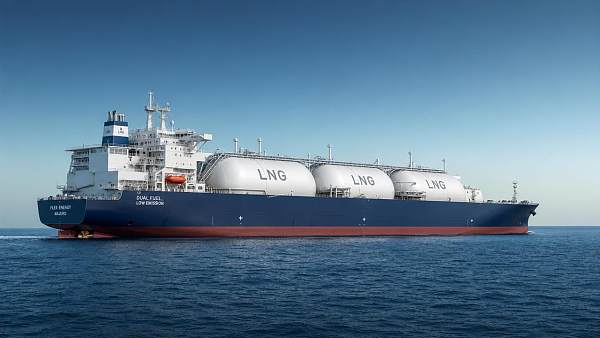
LNG carriers are an obvious example because fuel logic, cargo technology, and cryogenic expertise already intersect. That fits directly with GTOT’s focus on advanced ocean-going vessels and membrane containment stress analysis.
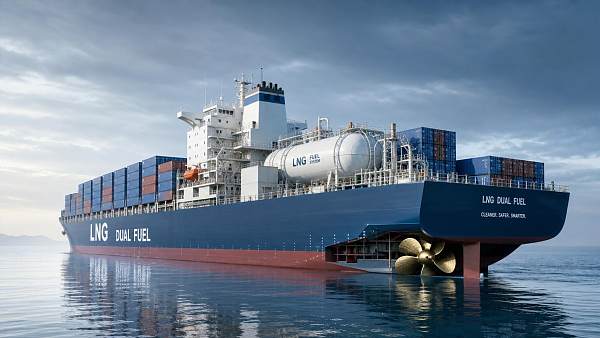
Smart container ships can also benefit, especially when AI route optimization and port coordination improve fuel-mode planning. In these cases, dual-fuel propulsion is not just an engine decision. It is part of a wider efficiency architecture.
By contrast, vessels with uncertain deployment, weak bunkering visibility, or limited technical support may struggle to capture the full value. Flexibility only pays if the surrounding operating model can use it well.
Practical signs the investment is well matched
- Choose dual-fuel propulsion when fleet deployment is stable enough to plan bunkering, maintenance, and crew competency over several years instead of treating each voyage as a standalone exception.
- Give more weight to projects tied to premium charters, regulated corridors, or high-visibility trade lanes. These settings usually reward emissions flexibility and operational resilience more clearly.
- Treat propulsion as one layer of a larger asset strategy. The best returns often appear when engine choice, route intelligence, safety systems, and digital reporting are planned together.
What often gets missed during final approval
Several late-stage gaps can weaken an otherwise sound case. One is overconfidence in fuel infrastructure timelines. Another is underestimating how training, controls, and maintenance discipline affect actual emissions and uptime.
A third is failing to compare dual-fuel propulsion against non-engine alternatives, such as operational optimization, hull improvements, or digital energy management. Sometimes the right decision is still dual-fuel. But it should win against realistic alternatives, not only against yesterday’s baseline.
This broader view matches GTOT’s intelligence model. Whether the subject is pantograph stability at 350 km/h or LNG vessel propulsion in global trade lanes, the durable answer usually comes from systems thinking, not isolated equipment selection.
A sensible next step
In 2026, dual-fuel propulsion is best treated as a strategic option with measurable upside and very specific conditions for success. It can improve fuel flexibility, strengthen emissions positioning, and protect route resilience. But it is not automatically the lowest-cost answer.
A disciplined next move is simple. Build a route-based comparison using total installed cost, real bunkering access, payload impact, operating profile emissions, and support capability. If dual-fuel propulsion still performs well after that, the investment case is probably grounded in reality rather than optimism.
For enterprises navigating both decarbonization pressure and global transport complexity, that kind of grounded evaluation is what turns propulsion technology into a reliable business decision.
Recommended News
 Aug 28, 2026How to select a marine propulsion system for tankers by operating profileMarine propulsion system for tankers: learn how to align propulsion, fuel strategy, propeller performance, redundancy, and lifecycle costs with real operating profiles.
 Jul 15, 2026Class Approved Dual-Fuel Marine Propulsion: Key Certification Points to CheckClass approved dual-fuel marine propulsion explained: learn the key certification points, hidden compliance gaps, and practical checks to improve safety, approval readiness, and supplier selection.
 Jul 10, 2026Dual Fuel Propulsion IMO Compliance: What to Check Before SpecificationDual fuel propulsion IMO compliance starts before spec freeze. Learn the key checks on emissions, IGF safety, class approval, and lifecycle risk to avoid costly redesigns.
 Jul 04, 2026LNG Vessel Retrofit: Key Risks Before Final Scope ApprovalLNG vessel retrofit risks often emerge before final scope approval. Learn how to assess interfaces, yard limits, compliance, and lifecycle value to avoid delays and costly rework.
 Jun 21, 2026How Dual-Fuel Propulsion Cuts LNG Carrier Fuel Risk and EmissionsLNG carriers dual-fuel propulsion cuts fuel risk and emissions by using boil-off gas and liquid fuels flexibly. Learn how it boosts efficiency, compliance, and voyage resilience.
 Jun 18, 2026Dual-Fuel Propulsion: What to Check Before Choosing a SystemDual-fuel propulsion buyers should check fuel strategy, emissions, control logic, safety, and lifecycle cost before choosing a system. Learn what drives real vessel performance.
 Jun 16, 2026Decarbonization Solutions for Maritime Logistics: Which Options Deliver Real ROI?Decarbonization solutions for maritime logistics: discover which upgrades, digital tools, and fuel strategies deliver real ROI, lower risk, and measurable savings for fleets.
 Jun 14, 2026Decarbonization Solutions for Maritime Logistics ComparedDecarbonization solutions for maritime logistics compared: explore LNG, retrofits, AI routing, and smart vessel strategies to cut emissions, control costs, and protect shipping reliability.
 Jun 12, 2026LNG Carriers Dual-Fuel Propulsion: Cost, Compliance, and PaybackLNG carriers dual-fuel propulsion explained: compare cost, compliance impact, and payback to see how fuel flexibility can protect vessel value and charter competitiveness.
![]() Jun 09, 2026Dual-Fuel Propulsion: Cost, Compliance, and Retrofit Trade-OffsDual-fuel propulsion explained: compare cost, compliance, and retrofit trade-offs for vessels, with practical insights on LNG flexibility, asset value, and smarter procurement decisions.
Jun 09, 2026Dual-Fuel Propulsion: Cost, Compliance, and Retrofit Trade-OffsDual-fuel propulsion explained: compare cost, compliance, and retrofit trade-offs for vessels, with practical insights on LNG flexibility, asset value, and smarter procurement decisions. Jun 08, 2026Dual-Fuel Propulsion: Cost, Range, and Emissions Trade-Offs in 2026Dual-fuel propulsion in 2026: compare cost, range, and emissions trade-offs for ships and transport assets. Learn where flexibility pays off and what to verify before investing.
 Jun 07, 2026Marine Propulsion Systems: Key Efficiency Trade-Offs for New Vessel ProjectsMarine propulsion systems for new vessel projects: compare fuel efficiency, emissions, lifecycle cost, and control trade-offs to choose a smarter, future-ready vessel solution.
 Jun 02, 20262026 LNG Carriers Technology Advancements Reshaping Fleet PlanningLNG carriers technology advancements are redefining 2026 fleet planning with smarter containment, dual-fuel propulsion, AI routing, and compliance-ready performance.
 Jun 01, 2026Marine Propulsion Systems: Cost Risks Before RetrofitMarine propulsion systems retrofits can hide fuel, downtime, compliance, and maintenance costs. Learn how to quantify risks before approval and protect fleet ROI.
 May 31, 2026International Shipbuilding Trends Shaping Dual-Fuel FleetsInternational shipbuilding is shifting toward dual-fuel fleets, reshaping fuel flexibility, asset value, compliance strategy, and maritime competitiveness.
 May 25, 2026LNG Carriers: Choosing Dual-Fuel Propulsion for Lower LossesLNG carriers for global energy transport benefit from dual-fuel propulsion with lower cargo losses, stronger compliance, and better fuel flexibility—see what buyers should evaluate now.
 May 24, 2026Marine Propulsion Technology: Dual-fuel Performance Trade-offsMarine propulsion technology explained: compare dual-fuel efficiency, emissions, methane slip, load profile, and lifecycle risk to choose smarter vessel propulsion strategies.
![]() May 23, 2026Marine Propulsion Systems: Cost vs Fuel EfficiencyMarine propulsion systems decisions should balance cost, fuel efficiency, and compliance. Compare scenario-based options for container ships, LNG carriers, and hybrid routes.
May 23, 2026Marine Propulsion Systems: Cost vs Fuel EfficiencyMarine propulsion systems decisions should balance cost, fuel efficiency, and compliance. Compare scenario-based options for container ships, LNG carriers, and hybrid routes. May 21, 2026LNG Carriers Dual-Fuel Propulsion: Fuel Savings vs Retrofit CostLNG carriers dual-fuel propulsion: compare fuel savings, retrofit cost, payback, and charter value to see when fleet upgrades deliver stronger ROI and lower compliance risk.
 May 18, 2026Marine Propulsion Technology: When Dual-Fuel Pays OffMarine propulsion technology explained: discover when dual-fuel systems deliver real ROI, lower compliance risk, and stronger vessel value across modern shipping routes.
 May 17, 2026Dual-fuel Marine Propulsion Systems: Cost vs EfficiencyMarine propulsion systems: discover whether dual-fuel upgrades truly balance higher capex with fuel savings, compliance gains, and stronger lifetime vessel returns.