



Search News
Industry Portal
Popular Tags
LNG Vessel Retrofit: Key Risks Before Final Scope Approval
Author
Time
Click Count
Why LNG Vessel Retrofit Decisions Change So Much Before Scope Freeze
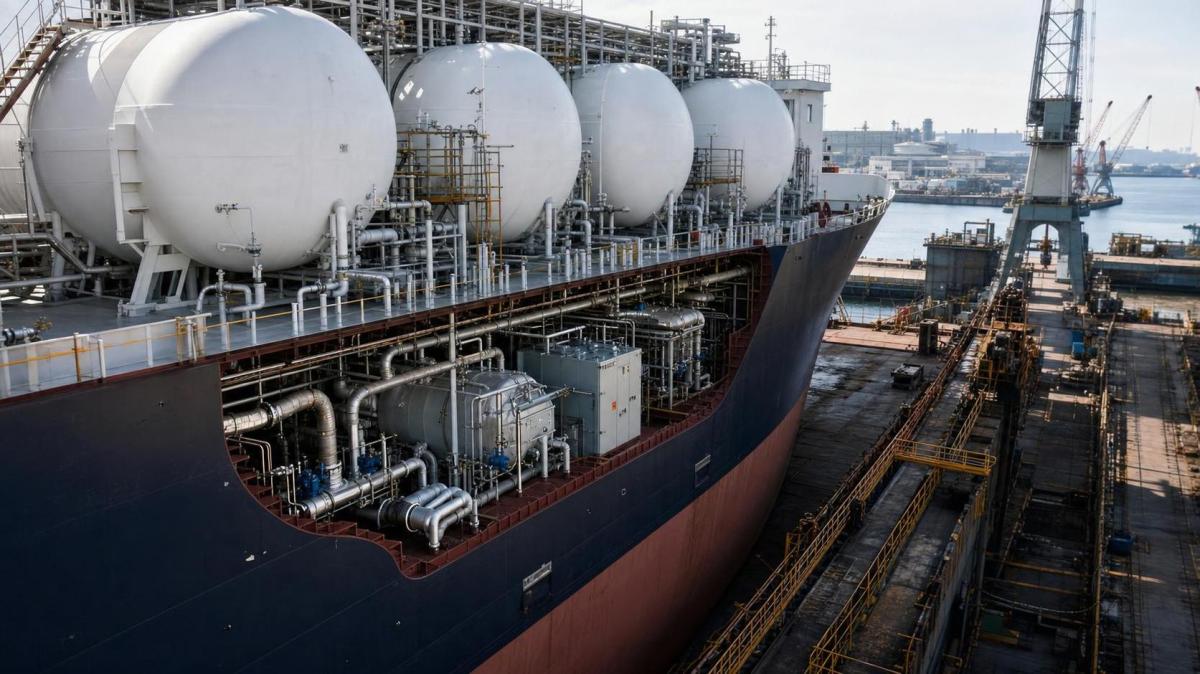
An LNG vessel retrofit rarely fails because the headline concept is wrong. It usually slips because early assumptions were too clean for the real ship, yard, and trading pattern.
That is why final scope approval matters. Once equipment lists, steel work, piping routes, and class submissions harden, every missed interface becomes schedule pressure or expensive rework.
In practice, LNG vessel retrofit planning sits at the intersection of cryogenic engineering, fuel transition, digital operations, and shipyard execution. The risk profile changes with each operating scenario.
GTOT follows these decisions from a broader transport systems perspective. The same discipline seen in railway control, braking, and power collection also applies here: interfaces decide reliability.
For LNG carriers and adjacent vessel classes, the main question is not whether retrofit is technically possible. The real question is whether the selected scope matches the vessel’s next commercial life.
Different Operating Contexts Create Different LNG Vessel Retrofit Priorities
A vessel trading on stable long-haul routes behaves differently from one exposed to mixed charter conditions. Fuel availability, port restrictions, maintenance windows, and emissions targets reshape the retrofit logic.
One common mistake is treating every LNG vessel retrofit as a fuel system project. Often the highest risk sits elsewhere, such as tank support loads, ventilation revisions, automation integration, or dock availability.
Another weak assumption appears when teams copy a sister-vessel solution. Similar hulls do not guarantee identical cable trays, machinery arrangements, control versions, or remaining asset life.
Before final approval, it helps to separate the retrofit into three layers: physical modification, regulatory acceptance, and operational adoption. Delays often come from the third layer, not the first.
When the vessel is mid-life and still commercially strong
In this scenario, LNG vessel retrofit usually aims to extend earnings without changing the trading identity of the ship. The best scope is often selective, not maximal.
Attention should go to boil-off gas handling, reliquefaction support systems, control upgrades, and insulation condition. These items affect daily performance more than a dramatic equipment refresh.
The judgment point is lifecycle balance. If drydock time expands beyond the vessel’s realistic payback window, a technically elegant LNG vessel retrofit can still destroy value.
When charter flexibility matters more than peak efficiency
Some vessels need broader compliance and operational flexibility rather than the highest efficiency in one trade lane. Here, retrofit scope must tolerate variable bunkering, port rules, and emissions reporting demands.
That usually pushes priority toward automation, gas detection, safety shutdown logic, and documentation quality. In these cases, the best LNG vessel retrofit lowers uncertainty more than fuel consumption.
Where Final Scope Approval Usually Breaks Down
The hardest part is not identifying major equipment. The hardest part is proving that each subsystem still works together after the vessel is opened, rerouted, and reclassified.
Several breakdown points appear repeatedly in LNG vessel retrofit programs:
- Basic design uses outdated as-built drawings.
- Class comments arrive after procurement commitments.
- Yard lifting, staging, or prefabrication assumptions prove unrealistic.
- New control packages do not integrate cleanly with legacy IAS or PMS architecture.
- Crew procedures are left until commissioning, when time is already gone.
These are not isolated engineering details. They shape whether the retrofit remains a contained modernization or turns into a cascading claim environment.
Fuel system integration is rarely a stand-alone issue
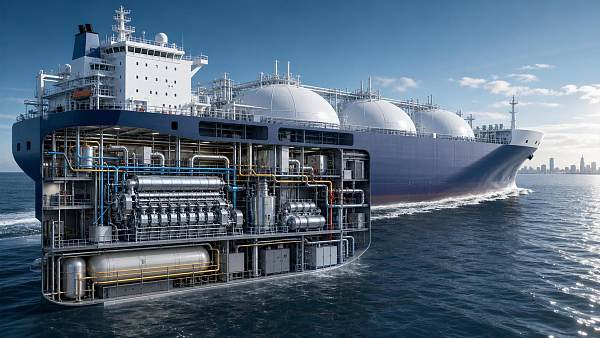
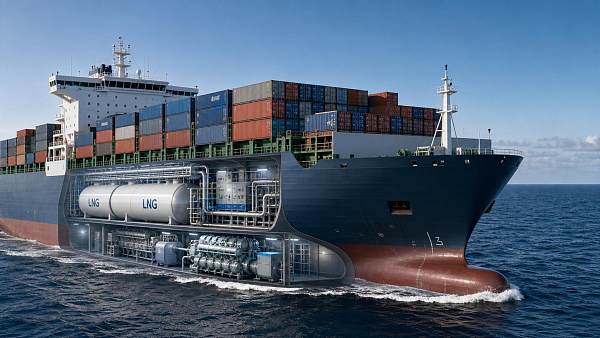
An LNG vessel retrofit involving fuel gas supply, dual-fuel engines, or auxiliary consumers changes more than the machinery room. It alters ventilation, hazardous zoning, alarms, electrical segregation, and maintenance access.
In actual projects, late conflict often appears in piping supports, valve accessibility, and shutdown sequence logic. These details can stall approval even after the main concept looks settled.
Yard constraints reshape the technical answer
A retrofit package that works on paper may not work in a congested yard slot. Crane reach, workshop capacity, prefabrication timing, and concurrent repair work all influence what should be approved.
The practical test is simple: can the chosen LNG vessel retrofit be installed, tested, and signed off within the real docking sequence, not the idealized schedule?
The Decision Criteria Are Not the Same in Every Retrofit Case
A side-by-side comparison usually reveals where judgment should shift. The table below reflects how LNG vessel retrofit priorities change with the vessel’s commercial and technical context.
This is where a transport intelligence lens becomes useful. GTOT often tracks how asset owners misread upgrade value by focusing on equipment headlines instead of control compatibility and operating envelope.
What Gets Missed When Teams Focus Only on Capex
The visible equipment package is only part of LNG vessel retrofit economics. Hidden cost usually sits in access work, commissioning extension, software tuning, class resubmission, and unplanned off-hire.
A low initial quote can become expensive if the retrofit introduces rare components, fragmented service support, or extra training burdens. That is especially true for mixed-fleet operators.
There is also a recurring technical misread: assuming compliance approval means operational readiness. A ship can pass formal checks and still suffer from slow fault tracing or awkward maintenance access.
For LNG vessel retrofit work involving cryogenic systems, maintainability deserves equal weight with efficiency. A difficult valve layout or inaccessible sensor cluster will surface later as reliability loss.
Common misjudgments before sign-off
- Using nameplate performance without verifying vessel-specific load profiles.
- Assuming existing foundations and supports can absorb revised dynamic loads.
- Treating control integration as a software task rather than a system architecture issue.
- Ignoring spare part logistics for remote trading areas.
- Freezing scope before confirming survey windows and commissioning sequence.
A More Reliable Way to Approve an LNG Vessel Retrofit Scope
A better approval path starts with decision filters, not with vendor lists. The first filter is commercial life. The second is technical interface density. The third is execution realism.
In practical terms, an LNG vessel retrofit scope should be challenged through a short but disciplined review set:
- Map every new system to existing controls, structures, electrical loads, and hazardous areas.
- Check whether the yard sequence supports prefabrication, testing, and close-out without parallel conflict.
- Confirm class and flag interpretations before long-lead procurement is locked.
- Test the maintenance concept against real onboard access and crew routines.
- Recalculate value using downtime, consumables, training, and support coverage, not only capex.
Where uncertainty remains high, scope can be phased. That may mean separating essential compliance work from optional performance upgrades, instead of approving one oversized package.
Before final scope approval, the most useful next step is to build a scenario-based review sheet. Compare route profile, class path, yard slot, integration complexity, and lifecycle economics side by side.
That approach keeps LNG vessel retrofit decisions grounded in actual operating conditions. It also reduces the chance that a well-intended modernization becomes a long chain of avoidable revisions.
Recommended News
 Aug 28, 2026How to select a marine propulsion system for tankers by operating profileMarine propulsion system for tankers: learn how to align propulsion, fuel strategy, propeller performance, redundancy, and lifecycle costs with real operating profiles.
 Jul 15, 2026Class Approved Dual-Fuel Marine Propulsion: Key Certification Points to CheckClass approved dual-fuel marine propulsion explained: learn the key certification points, hidden compliance gaps, and practical checks to improve safety, approval readiness, and supplier selection.
 Jul 10, 2026Dual Fuel Propulsion IMO Compliance: What to Check Before SpecificationDual fuel propulsion IMO compliance starts before spec freeze. Learn the key checks on emissions, IGF safety, class approval, and lifecycle risk to avoid costly redesigns.
 Jul 04, 2026LNG Vessel Retrofit: Key Risks Before Final Scope ApprovalLNG vessel retrofit risks often emerge before final scope approval. Learn how to assess interfaces, yard limits, compliance, and lifecycle value to avoid delays and costly rework.
 Jun 21, 2026How Dual-Fuel Propulsion Cuts LNG Carrier Fuel Risk and EmissionsLNG carriers dual-fuel propulsion cuts fuel risk and emissions by using boil-off gas and liquid fuels flexibly. Learn how it boosts efficiency, compliance, and voyage resilience.
 Jun 18, 2026Dual-Fuel Propulsion: What to Check Before Choosing a SystemDual-fuel propulsion buyers should check fuel strategy, emissions, control logic, safety, and lifecycle cost before choosing a system. Learn what drives real vessel performance.
 Jun 16, 2026Decarbonization Solutions for Maritime Logistics: Which Options Deliver Real ROI?Decarbonization solutions for maritime logistics: discover which upgrades, digital tools, and fuel strategies deliver real ROI, lower risk, and measurable savings for fleets.
 Jun 14, 2026Decarbonization Solutions for Maritime Logistics ComparedDecarbonization solutions for maritime logistics compared: explore LNG, retrofits, AI routing, and smart vessel strategies to cut emissions, control costs, and protect shipping reliability.
 Jun 12, 2026LNG Carriers Dual-Fuel Propulsion: Cost, Compliance, and PaybackLNG carriers dual-fuel propulsion explained: compare cost, compliance impact, and payback to see how fuel flexibility can protect vessel value and charter competitiveness.
![]() Jun 09, 2026Dual-Fuel Propulsion: Cost, Compliance, and Retrofit Trade-OffsDual-fuel propulsion explained: compare cost, compliance, and retrofit trade-offs for vessels, with practical insights on LNG flexibility, asset value, and smarter procurement decisions.
Jun 09, 2026Dual-Fuel Propulsion: Cost, Compliance, and Retrofit Trade-OffsDual-fuel propulsion explained: compare cost, compliance, and retrofit trade-offs for vessels, with practical insights on LNG flexibility, asset value, and smarter procurement decisions. Jun 08, 2026Dual-Fuel Propulsion: Cost, Range, and Emissions Trade-Offs in 2026Dual-fuel propulsion in 2026: compare cost, range, and emissions trade-offs for ships and transport assets. Learn where flexibility pays off and what to verify before investing.
 Jun 07, 2026Marine Propulsion Systems: Key Efficiency Trade-Offs for New Vessel ProjectsMarine propulsion systems for new vessel projects: compare fuel efficiency, emissions, lifecycle cost, and control trade-offs to choose a smarter, future-ready vessel solution.
 Jun 02, 20262026 LNG Carriers Technology Advancements Reshaping Fleet PlanningLNG carriers technology advancements are redefining 2026 fleet planning with smarter containment, dual-fuel propulsion, AI routing, and compliance-ready performance.
 Jun 01, 2026Marine Propulsion Systems: Cost Risks Before RetrofitMarine propulsion systems retrofits can hide fuel, downtime, compliance, and maintenance costs. Learn how to quantify risks before approval and protect fleet ROI.
 May 31, 2026International Shipbuilding Trends Shaping Dual-Fuel FleetsInternational shipbuilding is shifting toward dual-fuel fleets, reshaping fuel flexibility, asset value, compliance strategy, and maritime competitiveness.
 May 25, 2026LNG Carriers: Choosing Dual-Fuel Propulsion for Lower LossesLNG carriers for global energy transport benefit from dual-fuel propulsion with lower cargo losses, stronger compliance, and better fuel flexibility—see what buyers should evaluate now.
 May 24, 2026Marine Propulsion Technology: Dual-fuel Performance Trade-offsMarine propulsion technology explained: compare dual-fuel efficiency, emissions, methane slip, load profile, and lifecycle risk to choose smarter vessel propulsion strategies.
![]() May 23, 2026Marine Propulsion Systems: Cost vs Fuel EfficiencyMarine propulsion systems decisions should balance cost, fuel efficiency, and compliance. Compare scenario-based options for container ships, LNG carriers, and hybrid routes.
May 23, 2026Marine Propulsion Systems: Cost vs Fuel EfficiencyMarine propulsion systems decisions should balance cost, fuel efficiency, and compliance. Compare scenario-based options for container ships, LNG carriers, and hybrid routes. May 21, 2026LNG Carriers Dual-Fuel Propulsion: Fuel Savings vs Retrofit CostLNG carriers dual-fuel propulsion: compare fuel savings, retrofit cost, payback, and charter value to see when fleet upgrades deliver stronger ROI and lower compliance risk.
 May 18, 2026Marine Propulsion Technology: When Dual-Fuel Pays OffMarine propulsion technology explained: discover when dual-fuel systems deliver real ROI, lower compliance risk, and stronger vessel value across modern shipping routes.
 May 17, 2026Dual-fuel Marine Propulsion Systems: Cost vs EfficiencyMarine propulsion systems: discover whether dual-fuel upgrades truly balance higher capex with fuel savings, compliance gains, and stronger lifetime vessel returns.