



Search News
Industry Portal
Popular Tags
Electric traction systems for metros: key selection factors for reliable operation
Author
Time
Click Count
Electric traction systems for metros: what really matters in selection
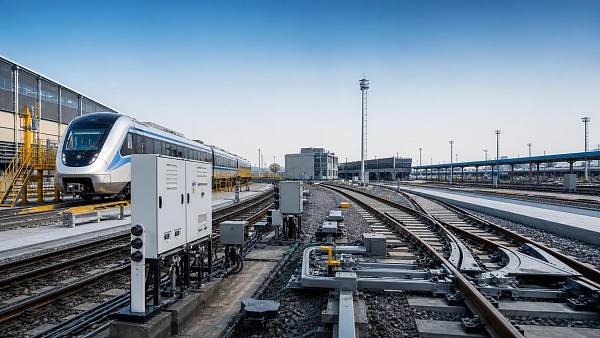
Electric traction systems for metros sit at the center of day-to-day rail performance. They determine how quickly a train accelerates, how smoothly it handles stop-start duty, how much energy the network consumes, and how often maintenance teams are pulled into corrective work. In dense urban service, that balance matters more than headline power numbers. A system that looks strong on paper can still become expensive if it is sensitive to voltage fluctuation, difficult to inspect, or poorly matched with the operator’s duty cycle.
For technical evaluation personnel, the real task is not to ask whether traction is “advanced” in a generic sense. It is to decide whether the architecture fits the line, the power supply, the control philosophy, and the maintenance model. That is where many projects slow down: teams compare motors, inverters, and converters separately, but the reliable operation of a metro fleet depends on how those parts behave as one system.
Start with the duty profile, not the brochure
A metro line is a harsh operating environment. Frequent acceleration and braking, short station spacing, crowding, tunnel heat, and mixed weekend or peak-hour patterns all push the traction package differently. A system optimized for one service pattern may underperform on another. That is why the first selection question should be simple: what does the line actually demand over a normal operating day?
For example, a corridor with tight headways and many intermediate stops usually rewards fast torque response and stable low-speed control. A longer suburban metro extension may care more about cruising efficiency and thermal margin. If the operator expects future timetable intensification, the selected traction system should also leave enough headroom for more frequent starts, not just today’s schedule.
This is also where the signal and traction relationship matters. GTOT often frames rail systems as interconnected layers rather than isolated components: signaling sets the service rhythm, pantographs affect power continuity, braking shapes recovery and wear, and traction decides how much of that operating logic can be executed safely and consistently. A good traction choice respects those dependencies instead of treating them as afterthoughts.
Voltage compatibility and grid behavior are not the same issue
Many evaluation teams begin with nominal voltage compatibility, which is necessary but not sufficient. A metro traction system must tolerate real network behavior: dips, transients, regeneration limits, and local power quality constraints. If the line uses multiple substations or has weak sections, the system needs to stay stable through those variations without nuisance trips or excessive derating.
Regenerative braking deserves special attention. In dense metro operation, energy recovery can be meaningful, but only if the network can accept it. If the traction package, onboard storage, or line-side infrastructure cannot absorb returned energy effectively, the operator may not get the savings they expected. In some cases, the system must be evaluated together with substations, wayside energy storage, or nearby train loading patterns. That is not a minor detail; it changes the economics of the whole line.
Technical teams should also confirm how the traction system behaves during voltage sag, restart after interruption, and transition between power conditions. A reliable system is usually not the one with the highest nominal rating, but the one that remains controllable when conditions move outside the ideal range.
Thermal stability often decides long-term reliability
Metro traction equipment spends much of its life in repeated heat cycles. Inverters, converters, motors, and auxiliary cooling all face rising ambient temperatures, tunnel heat, dust, and seasonal variation. If thermal design is marginal, performance degradation usually appears before outright failure: derating, unplanned stops, longer inspection intervals, and inconsistent fleet behavior.
This is why cooling architecture should be evaluated as seriously as power rating. Liquid cooling may offer advantages in compact or high-load designs, while air-cooled setups can be easier to maintain depending on the depot and service philosophy. The right answer depends on accessibility, climate, and maintenance capabilities. There is no universal winner.
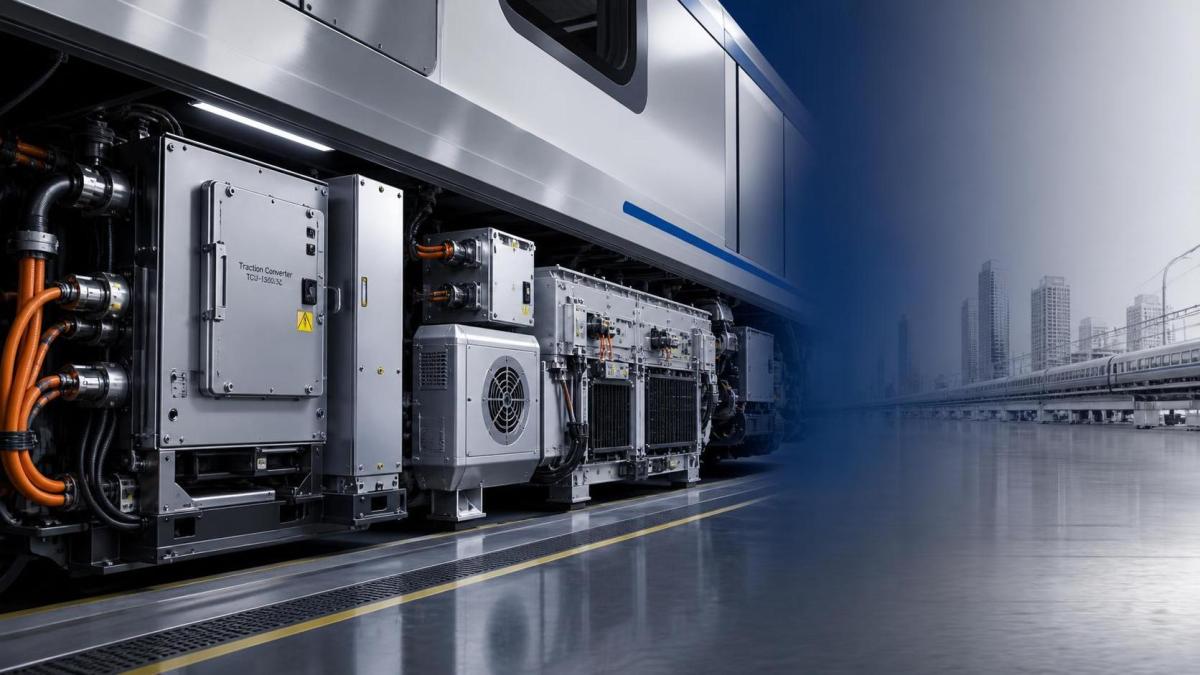
The same logic applies to insulation, component spacing, and thermal monitoring. A system with more conservative thermal margins may look less aggressive in specs, but it often behaves better under continuous service. For metro operators, that usually translates into fewer surprises during peak demand periods.
Redundancy and fault tolerance should match service criticality
In metro environments, a single traction fault can quickly become a network issue. The evaluation therefore has to look beyond normal-state performance and ask what happens when a subsystem fails. Can the train limp to the next station? Can it be isolated quickly? Does the architecture support degraded mode operation, or does one fault remove the vehicle from service?
This is where modularity matters. Swappable power modules, clear diagnostic logic, and well-defined isolation boundaries can reduce downtime and simplify spare-part planning. But redundancy should not be treated as a checkbox. Extra hardware adds weight, cost, and integration complexity, so the decision has to reflect route criticality, fleet size, depot resources, and passenger service expectations.
GTOT’s broader rail intelligence perspective is useful here: signaling, braking, and traction all influence availability differently. SIL4-level signaling may keep the network safe, but if traction recovery is slow or fault handling is opaque, service reliability still suffers. Technical evaluation should therefore look at system behavior, not just isolated compliance statements.
Maintenance access is part of the technical design
A traction system that is difficult to inspect will eventually cost more than one that is slightly less efficient on paper. This is a point experienced depot teams understand immediately. Cable routing, module replacement time, diagnostic access, and cleaning requirements all affect how fast faults can be identified and cleared.
For operators with limited workshop windows, condition monitoring can be more valuable than adding complexity for its own sake. The key question is whether onboard diagnostics provide actionable information, not just alarms. Good data shortens troubleshooting; noisy data only adds workload. In procurement discussions, this difference is easy to miss because both systems may claim “intelligent monitoring.” The details matter.
Spare-part strategy also belongs in the selection phase. If a system depends on a narrow supply chain, long lead items, or highly specialized tools, the operator should price that into lifecycle cost from the start. The cheapest initial package is not necessarily the lowest-risk one over a 15- or 20-year fleet life.
Interface quality is where projects succeed or stall
Metro traction systems do not operate alone. They must interface cleanly with pantographs, braking control, signaling logic, and sometimes energy storage or depot charging infrastructure. Poor interface design is one of the most common causes of commissioning friction. The hardware may be sound, but integration can expose timing mismatches, communication gaps, or protection settings that were not fully aligned during early design.
This is especially important in projects that mix equipment from different suppliers. Evaluation teams should check protocol compatibility, fault signaling philosophy, response timing, and testing responsibilities before contract award, not after installation begins. When those boundaries are vague, the system may still pass individual component tests but struggle at the line level.
For GTOT’s readership, which often looks across rail control, pantograph performance, braking behavior, and land-sea industrial intelligence, the lesson is consistent: interoperability is not a soft issue. It is one of the main determinants of whether sophisticated equipment becomes reliable infrastructure or a permanent commissioning problem.
How to compare options without getting lost in specifications
A practical comparison usually comes down to a small set of questions. Does the traction system match the route’s operating profile? Can it withstand the local power environment? Is thermal performance stable under real duty cycles? How does it fail, and how fast can it be restored? Can the maintenance team support it over the full lifecycle?
If a proposal answers these questions clearly, it is easier to trust. If it leans heavily on generic performance claims but is vague on recovery behavior, diagnostics, or integration boundaries, that should raise caution. In metro projects, vague answers usually become expensive later.
The strongest decision process is usually cross-functional. Rolling stock engineers, power supply specialists, signaling teams, depot maintainers, and procurement staff should review the same technical assumptions. That sounds obvious, but in practice the gaps between disciplines are where most selection errors begin.
A well-chosen traction system is not just efficient. It is predictable, maintainable, and compatible with the wider rail ecosystem. For metro operators planning new lines or fleet upgrades, that is the standard worth holding. Before finalizing any choice, it is worth confirming the actual duty cycle, voltage behavior, thermal limits, interface requirements, and maintenance model in the context of the specific project, not just the product data sheet.
Recommended News
 Sep 29, 2026What drives traction systems price differences between rail projects?Traction systems price differences explained: compare duty cycles, voltage compatibility, integration, localization, and lifecycle costs for smarter rail procurement.
 Sep 26, 2026What to assess before selecting an electric traction system manufacturerChoose an electric traction system manufacturer with confidence. Explore key criteria for performance, reliability, safety, integration, energy efficiency, and lifecycle support.
 Sep 25, 2026When do full digitalization systems justify the investment?Full digitalization systems: discover when rail and maritime operators can turn connected data into safer operations, higher availability, and measurable ROI.
 Sep 23, 2026What drives automatic train control systems cost on rail projects?Automatic train control systems cost depends on integration, migration, safety testing, communications, and lifecycle support. Explore the key budget drivers for rail projects.
 Sep 21, 2026How to assess an ocean going vessel builder’s delivery riskAssess an ocean going vessel builder’s delivery risk with proven checks for schedules, capacity, design maturity, critical equipment, quality, and project controls.
 Sep 20, 2026What drives rail safety technology costs over a project lifecycle?Rail safety technology cost goes beyond equipment—explore lifecycle drivers from integration and safety assurance to cybersecurity, commissioning, and obsolescence.
 Sep 16, 2026What to verify before choosing an advanced ocean-going vessels supplierAdvanced ocean-going vessels supplier checklist: verify design authority, build quality, digital systems, delivery reliability, and lifecycle support before you buy.
 Sep 15, 2026What rail safety technology best reduces level-crossing risks in Southeast Asia?Rail safety technology Southeast Asia: discover how fail-safe signalling, barriers, obstacle detection and remote monitoring reduce level-crossing risks.
 Sep 14, 2026How exporters can reduce customs delays in global trade logisticsGlobal trade logistics for exporters: reduce customs delays with accurate data, clearance-ready documents, early filing, and proactive exception management.
 Sep 13, 2026When do global transportation network systems reduce delivery delays?Global transportation network systems reduce delivery delays by improving rail-port-vessel coordination, real-time visibility, and proactive decisions across complex land-sea supply chains.
 Sep 09, 2026When should you choose a rail and maritime manufacturer with dual-sector capability?Rail and maritime manufacturer guide: learn when dual-sector capability reduces integration risk, improves lifecycle support, and strengthens rail-to-port operations.
 Sep 08, 2026What to verify before selecting a railway signalling equipment supplierRailway signalling equipment supplier checklist: verify safety evidence, integration, cybersecurity, delivery capability, and lifecycle support before award.
 Sep 07, 2026How to size a traction power transformer for railway load demandTraction power transformer sizing guide: model railway load demand, peak duty, voltage regulation, harmonics, and contingency capacity for reliable service.
 Sep 07, 2026How do customization options for industrial connectors affect lead times?Customization options for industrial connectors can impact lead times, cost, and compliance. Learn how to specify smarter for rail and marine projects.
 Sep 05, 2026What information should an industrial sourcing guide include?Industrial sourcing information procurement guide: evaluate suppliers, compliance, lifecycle costs, interfaces, and lead times for smarter rail and maritime purchasing decisions.
 Sep 01, 2026How to find reliable maritime tender information before biddingMaritime tender information: learn how to verify sources, define bid-ready scopes, check qualifications, and reduce risk before submitting competitive marine bids.
 Aug 30, 2026How to select railway automation equipment for depots with phased upgradesRailway automation equipment for depots: learn how to plan phased upgrades that improve safety, throughput, integration, and lifecycle control.
 Aug 27, 2026How industrial sourcing intelligence pricing data supports budget approvalIndustrial sourcing intelligence pricing data helps teams benchmark scope, assess supplier risk, and build defensible budget approvals for complex rail and maritime assets.
 Aug 26, 2026When does a marine fuel efficiency solution make financial sense in the Middle East?Marine fuel efficiency solution Middle East: learn when retrofit savings, compliance value, and vessel data align to deliver credible ROI and smarter shipping investment decisions.
 Aug 24, 2026When does maritime automation for tankers deliver a real payback?Maritime automation for tankers delivers real payback when it cuts fuel use, reduces cargo risk, and improves uptime. See how owners can time investment for stronger ROI.
 Aug 23, 2026When do maritime logistics systems in the Middle East justify the costMaritime logistics systems Middle East: discover when rising delays, manual coordination, and poor visibility make system investment the smarter move for regional operators.
 Aug 22, 2026What drives vessel navigation system price for commercial fleetsVessel navigation system price depends on integration, compliance, automation, and support—not just hardware. Learn what drives fleet costs and compare quotes with confidence.
 Aug 21, 2026How to assess shipbuilding maritime tenders before biddingShipbuilding maritime tenders require more than price checks. Learn how to assess technical scope, compliance, supply chain, and commercial risk before bidding with confidence.
 Aug 20, 2026When does working with an ocean-going vessels distributor reduce supply risk?Ocean-going vessels distributor: learn when this partner cuts supply risk through stronger compliance, faster response, and better sourcing resilience in complex maritime procurement.