Search News
Industry Portal
Popular Tags
When do remote maritime automation systems reduce bridge workload?
Author
Time
Click Count
When Do Remote Maritime Automation Systems Reduce Bridge Workload?
Introduction: Remote maritime automation systems reduce bridge workload when they turn disconnected operational data into timely, prioritized recommendations while retaining clear human command authority.
For fleet executives, the practical issue is not whether automation looks advanced during demonstrations. It is whether it improves safety, voyage economics, compliance, and crew performance.
The strongest results appear on vessels with repetitive workflows, reliable connectivity, mature onboard systems, and clearly defined escalation rules for unusual or safety-critical conditions.
Automation delivers less value when crews must reconcile conflicting screens, manually validate unreliable sensor feeds, or spend additional time documenting decisions made by separate systems.
Shipowners should therefore assess remote maritime automation systems as operational capability investments, not as isolated digital products purchased solely to reduce crew numbers.
The decision framework should begin with workload sources, then measure which tasks can be automated, supervised remotely, or converted into more useful bridge-team decisions.
What Bridge Workload Can Automation Actually Reduce?
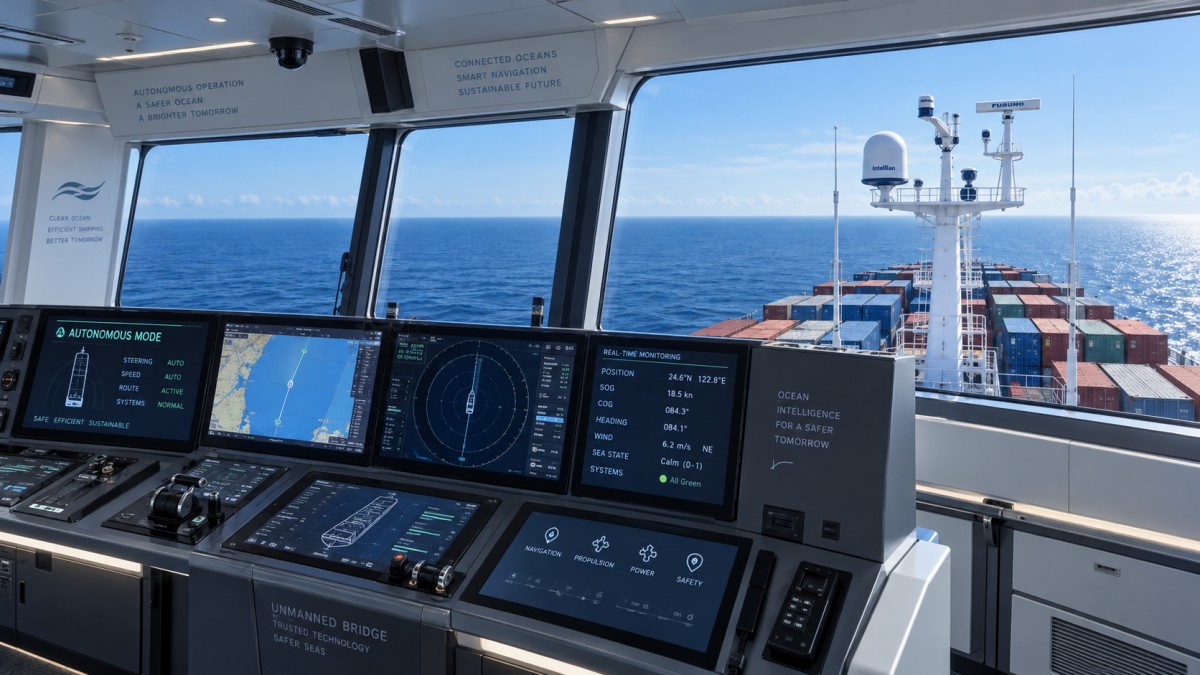
Bridge workload includes more than steering and collision avoidance. It also includes monitoring machinery status, route progress, weather updates, cargo constraints, alarms, communications, and reporting obligations.
During routine open-water navigation, officers often spend significant time collecting information rather than interpreting it. This is the first area where remote automation can create measurable value.
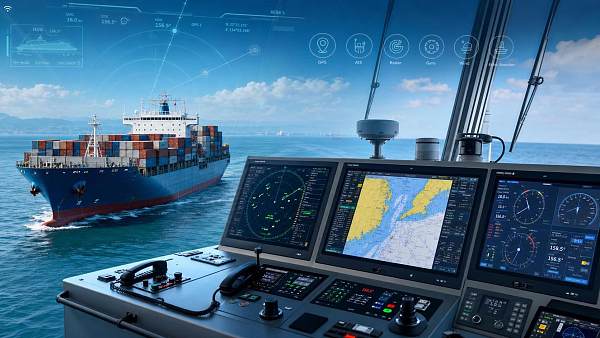
Integrated voyage systems can combine electronic chart information, AIS targets, radar tracking, weather forecasts, engine data, and fuel performance metrics into one operational picture.
When this information is filtered correctly, bridge teams receive exceptions and priorities instead of repeated raw alerts from multiple independent equipment interfaces.
For example, a system may identify that a planned speed adjustment avoids deteriorating weather, maintains arrival timing, and reduces fuel consumption without compromising safety margins.
That recommendation does not remove the master’s authority. It reduces the time required to compare operational variables and verify whether an adjustment is justified.
Remote maritime automation systems also reduce routine administrative workload when they automatically capture voyage events, equipment alarms, fuel data, and compliance-relevant operational records.
However, automation should not simply transfer onboard administrative work to shore staff. Its purpose is to eliminate duplicate handling and improve the quality of decisions.
Routine Navigation Is the Most Suitable Starting Point
The most suitable automation use cases are predictable, data-rich, and reversible. Open-sea route monitoring, performance optimization, machinery condition surveillance, and automated reporting fit this profile.
These tasks usually involve established operating limits, repeated calculations, and multiple data sources that crews already review during normal watchkeeping routines.
In such conditions, automation can continuously compare actual performance against voyage plans, safety thresholds, charter-party requirements, and equipment operating envelopes.
The bridge team remains responsible for approval, but receives concise prompts that identify material deviations before they become operational distractions or commercial losses.
Fuel optimization is a useful example. A remote system can recommend speed, trim, or engine-load changes after considering current, wind, wave height, draft, schedule, and bunker costs.
The commercial benefit comes from consistent execution across voyages. The bridge benefit comes from reducing manual comparison work, especially during long transits with stable traffic conditions.
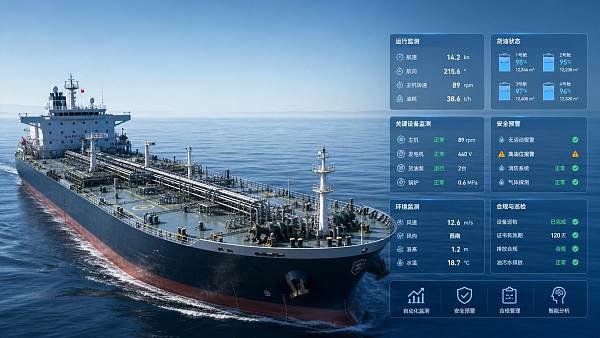
Remote condition monitoring can similarly reduce calls, checks, and interruptions by identifying machinery trends that require attention before they create alarms during critical navigation periods.
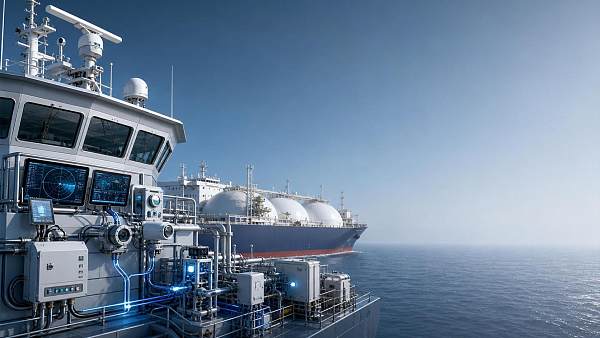
For LNG carriers and other complex vessels, this may include propulsion status, cargo containment signals, boil-off gas parameters, and dual-fuel system performance indicators.
Workload Falls Only When Alerts Are Prioritized
Alarm overload is one of the fastest ways to destroy the intended value of maritime automation. More data does not automatically mean better awareness.
A useful system distinguishes between information, advisory conditions, operational exceptions, and immediate safety risks. Each category should trigger a different response pathway.
Bridge teams should not receive repeated notifications for conditions already acknowledged, understood, and monitored through another approved system or operating procedure.
Instead, the platform should group related events, explain the operational consequence, and show the confidence level behind its recommendation or warning.
For instance, an automated weather-routing recommendation should show the expected fuel effect, schedule impact, exposure period, and any added constraints affecting cargo or passenger comfort.
That transparency allows officers and shore teams to challenge the recommendation quickly. It also creates an auditable record for post-voyage performance analysis.
Executives should ask vendors how their systems manage alert suppression, escalation, duplicate alarms, and changing risk conditions. These details matter more than dashboard appearance.
A system that creates ten new low-value notifications for every useful recommendation may increase cognitive workload, even if its analytical capability is technically sophisticated.
Human Oversight Determines Whether Automation Is Trusted
Remote maritime automation systems reduce workload only when crews understand who owns each decision, who can intervene, and how control transfers are managed.
Human oversight must be built into system design rather than added as a disclaimer. Officers need clear authority to accept, reject, modify, or suspend automated guidance.
Remote support centers can add value by monitoring fleet-wide conditions, analyzing exceptions, and providing specialist advice during situations that exceed normal onboard operating procedures.
They should not create ambiguity during urgent events. A vessel must retain defined command responsibility, especially when collision avoidance, emergency maneuvers, or local port constraints arise.
Effective operating models specify which decisions are automated, which require bridge confirmation, which require shore consultation, and which remain exclusively under the master’s authority.
These rules should be tested through simulations, drills, and post-voyage reviews. Written procedures alone rarely expose the communication delays that occur under real pressure.
Trust also depends on explainability. Officers are more likely to use recommendations consistently when the system shows why it reached a conclusion and what assumptions it used.
Black-box recommendations may still be useful for analytics, but they are less suitable for high-consequence navigation decisions where professional judgment and accountability remain essential.
Integration Quality Has a Direct Effect on Return on Investment
Remote automation cannot reliably reduce workload if it relies on incomplete, delayed, or inconsistent vessel data. Integration quality is therefore a financial and safety issue.
Before investing, operators should map data sources across navigation, propulsion, cargo, weather, maintenance, cybersecurity, and commercial planning systems.
The aim is to identify where crews re-enter information, reconcile different timestamps, or compensate manually for missing data fields and incompatible formats.
High-value systems use verified data interfaces and consistent vessel identifiers. They should also record data provenance so users can identify where a recommendation originated.
Legacy equipment does not automatically prevent implementation. Many fleets can begin with selected integrations, provided the limitations are visible and operational expectations remain realistic.
A phased approach is often preferable. Start with voyage monitoring or performance optimization, then expand after data quality, crew adoption, and savings assumptions have been validated.
Integration planning should include shipyard periods, class requirements, vendor responsibilities, satellite bandwidth, onboard computing capacity, and lifecycle support arrangements.
Without this preparation, projects may deliver attractive interfaces but leave officers switching between legacy displays, automation portals, and manual reporting tools.
Cybersecurity and Connectivity Set the Operating Boundaries
Remote capability introduces new dependencies on communications links, access control, software integrity, and incident response. These must be evaluated before operational authority is expanded.
Automation should degrade safely when connectivity is lost. The vessel must continue to navigate, monitor essential systems, and preserve critical records without shore intervention.
Operators should define which functions can continue autonomously, which become advisory-only, and which must be disabled during communication failures or cybersecurity incidents.
Role-based access controls are essential because shore staff, service providers, equipment manufacturers, and vessel personnel require different permissions and accountability levels.
Remote updates should follow controlled maintenance processes, with testing, rollback plans, approval records, and clear communication to affected crews before deployment.
Cybersecurity performance should be assessed through practical scenarios, including unauthorized access attempts, corrupted sensor data, communication loss, and conflicting command requests.
For decision makers, a useful question is whether the supplier can demonstrate resilient failure modes, not merely compliance with a cybersecurity checklist.
A system that fails predictably and visibly can be managed. A system that produces plausible but incorrect recommendations creates a much greater operational risk.
How Executives Should Measure Business Value
Bridge workload reduction should be measured through operational indicators rather than broad claims about digital transformation or autonomous shipping readiness.
Relevant indicators include alarm volumes, time spent preparing reports, route-deviation response times, fuel variance, machinery-related interruptions, and near-miss reporting quality.
Fleet managers should establish a baseline before deployment. Otherwise, seasonal conditions, charter changes, crew rotation, and vessel differences can distort reported performance improvements.
Financial evaluation should combine direct savings with avoided costs. Fuel reduction, fewer delays, lower maintenance disruption, and improved compliance all influence the investment case.
The labor case requires special caution. Automation may allow crews to focus on higher-value work, but it should not be justified by unrealistic assumptions about immediate manning reductions.
Training, integration, subscription fees, connectivity costs, cyber controls, and shore-center staffing should be included in the total cost of ownership.
Decision makers should request scenario-based business cases for specific vessel classes. A container ship, LNG carrier, bulk carrier, and offshore vessel face different constraints.
The best business case identifies a limited number of measurable use cases, assigns accountable owners, and states exactly how success will be verified after implementation.
Where Remote Automation Is Less Appropriate
Not every navigation environment is ready for the same degree of remote support. Congested waterways, pilotage areas, severe weather, and unfamiliar ports require heightened caution.
Local traffic behavior, rapidly changing visual conditions, language requirements, and port-specific procedures can exceed the reliability of generalized automated recommendations.
Automation can still assist in these environments by organizing information, checking procedures, and monitoring agreed limits, but direct human judgment should remain central.
Vessels with poor sensor reliability, outdated data networks, or unresolved maintenance issues should correct these foundations before pursuing more ambitious automation objectives.
Organizations should also avoid deploying systems solely because competitors are marketing autonomous capabilities. Operational readiness matters more than technology signaling.
A disciplined assessment asks whether the system reduces a known source of workload, whether crews will use it, and whether outcomes can be measured objectively.
A Practical Decision Framework for Fleet Leaders
First, identify the bridge tasks that consume time, create repeated interruptions, or require officers to reconcile data from several systems during routine operations.
Second, classify each task by consequence, predictability, data availability, and reversibility. Low-consequence repetitive tasks are the strongest candidates for initial automation.
Third, define the required human role for every automated function. Specify approval authority, escalation timing, remote support responsibilities, and manual fallback procedures.
Fourth, verify data quality and integration readiness before choosing interface features. Reliable information flow is more valuable than an extensive list of disconnected functions.
Fifth, conduct a limited pilot across comparable vessels and voyages. Measure workload, safety performance, fuel use, crew feedback, and system availability against a baseline.
Finally, scale only after the pilot proves value under normal operational variation. Include lessons from bad weather, connectivity loss, crew changes, and maintenance events.
Conclusion
Remote maritime automation systems reduce bridge workload when they remove repetitive information handling, prioritize meaningful exceptions, and support decisions without obscuring human accountability.
For enterprise leaders, the right question is not how autonomous a vessel can become. It is where automation produces safer, clearer, and more economically consistent operations.
The most credible investments begin with targeted workflows, dependable data, resilient controls, and measurable business outcomes. Technology should strengthen bridge teams, not merely add another screen.
Recommended News
 Nov 08, 2026How navigation decision logic handles obstacles at seaDiscover how navigation decision logic assesses maritime obstacles, applies COLREGs, and supports safer vessel manoeuvres in complex conditions.
 Oct 10, 2026When do remote maritime automation systems reduce bridge workload?Remote maritime automation systems reduce bridge workload through prioritized alerts, reliable data, and human oversight. Explore practical steps to improve safety, efficiency, and ROI.
 Jul 14, 2026Sensor Fusion Navigation Systems Trends Shaping Safer OperationsSensor fusion navigation systems are reshaping safer rail and maritime operations with real-time accuracy, stronger resilience, and smarter automation insights. Learn the key trends now.
 Jul 14, 2026How to Evaluate an AI Vessel Routing Provider for Fuel SavingsAI vessel routing provider selection starts with real fuel baselines, data quality, and live operational fit. Learn how to compare vendors, verify savings, and choose a partner that delivers measurable voyage results.
 Jul 13, 2026How Vessel Intelligence Analytics Improves Fleet ETA AccuracyVessel intelligence analytics improves fleet ETA accuracy by combining AIS, weather, congestion, and port signals—helping operators reduce delays, optimize arrivals, and strengthen end-to-end logistics decisions.
 Jul 12, 2026Marine Navigation for Commercial Vessels: Key Upgrade ChecksMarine navigation for commercial vessels: discover the key upgrade checks that improve safety, redundancy, cyber readiness, and bridge efficiency for smarter fleet decisions.
![]() Jul 07, 2026Navigation Decision Logic Explained: Limits, Risks, and Use CasesNavigation decision logic explained clearly: explore its limits, risks, and real-world use cases in rail and maritime systems to improve safety, resilience, and smarter operational decisions.
 Jul 05, 2026Maritime Automation for Tankers: Key Safety and Compliance Gaps to Check FirstMaritime automation for tankers starts with closing safety and compliance gaps. Learn the top risks in alarms, sensors, cyber controls, crew use, and records before problems escalate.
 Jul 04, 2026IMO-Compliant Smart Shipping Solutions: Certification Gaps to CheckSmart shipping solutions IMO compliant: discover the certification gaps that can delay audits, weaken safety assurance, and expose advanced vessels to operational risk.
 Jul 03, 2026Smart Shipping Solutions IMO Compliant: Features That Matter MostSmart shipping solutions IMO compliant deliver safer operations, emissions control, route efficiency, and audit-ready data. Discover the features that protect vessel value and improve fleet performance.
 Jun 22, 2026How Advanced Ocean-Going Vessels Cut Transit Risk in Long-Haul ShippingAdvanced ocean-going vessels cut transit risk through smarter routing, cargo monitoring, and port coordination. See how route-based vessel choices improve long-haul shipping reliability.
 Jun 21, 2026Smart Container Ships: What to Evaluate Before Investing in New SystemsSmart container ships demand more than new tech. Learn how to evaluate integration, lifecycle cost, cyber risk, and ROI before investing in new systems.
 Jun 14, 2026Smart Container Ships: Key Features Worth ComparingSmart container ships comparison guide: explore route intelligence, automation, connectivity, predictive maintenance, and cybersecurity to choose smarter vessels with better efficiency and reliability.
 Jun 13, 2026AI Route Optimization: When Fuel Savings Justify AdoptionAI route optimization explained: learn when fuel savings, ETA reliability, and lower emissions can justify adoption, with practical ROI factors and payback insights for transport operators.
 Jun 07, 2026AI Route Optimization in Shipping: Where It Cuts Delays—and Where It Doesn’tAI route optimization in shipping cuts delays when weather, vessel data, and port timing align—but it won’t fix congestion or canal queues. See where it truly delivers ROI.
![]() May 23, 2026Autonomous Navigation: How Safe Is It at Sea?Smart maritime technology is reshaping autonomous navigation at sea. Explore key safety risks, safeguards, and practical insights buyers need to evaluate trusted vessel autonomy.
 May 07, 2026AI Route Optimization for Fleet Expansion: What to Evaluate FirstAI route optimization is the first priority for fleet expansion. Learn what buyers should evaluate first to improve accuracy, integration, safety, and scalable transport performance.
 May 07, 2026AI Route Optimization vs Manual Planning: What Changes FirstAI route optimization vs manual planning: discover what changes first—faster decisions, better fuel efficiency, stronger schedule reliability, and smarter risk control.