



Search News
Industry Portal
Popular Tags
AI Route Optimization in Shipping: Where It Cuts Delays—and Where It Doesn’t
Author
Time
Click Count
For business evaluations in maritime logistics, AI route optimization sounds like an easy win. In practice, it is useful, but only when the operating context supports it.
The biggest gains usually appear when routing decisions, vessel performance data, weather feeds, and port updates work together. When those pieces are weak, delays often stay stubborn.
That matters across the broader transport chain as well. GTOT tracks how rail control systems, smart container ships, LNG carriers, and strategic intelligence all shape global schedule reliability.
So the real question is not whether AI route optimization works. It is where it cuts delay risk in measurable ways, and where physical constraints still overpower software.
Where AI Route Optimization Delivers Clear Value
The strongest use cases share one trait: route choices can still influence the final outcome. If a vessel can adjust speed, heading, or arrival timing, the model has room to create value.
That is why smart container ships benefit more often than highly constrained voyages. GTOT’s ocean intelligence focus makes this especially relevant for ship-to-shore coordination and schedule planning.
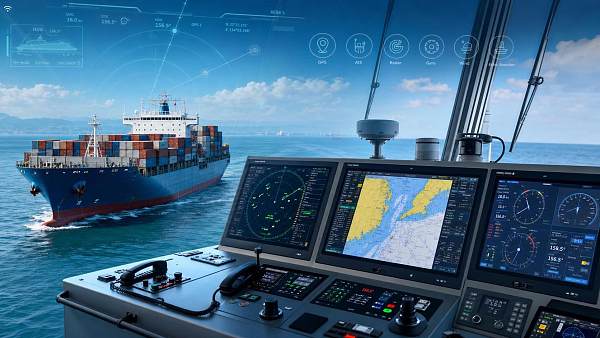
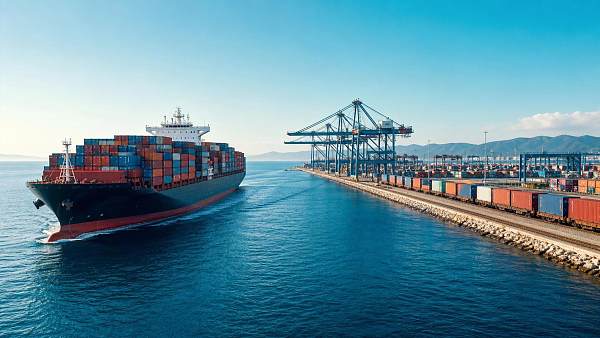
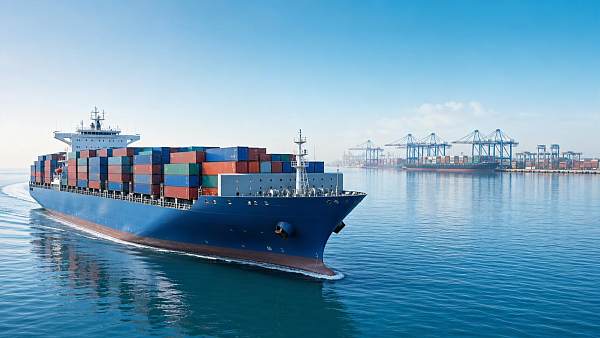
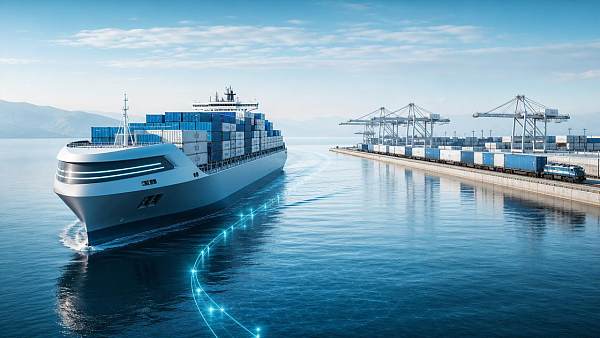
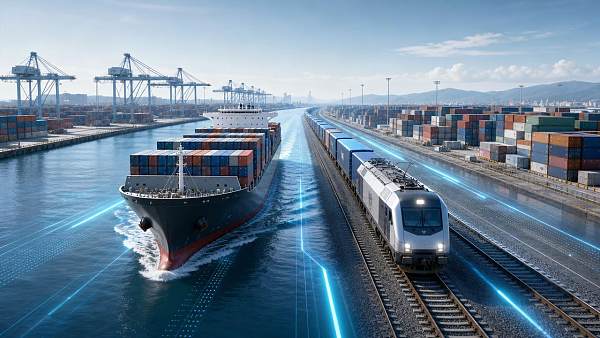
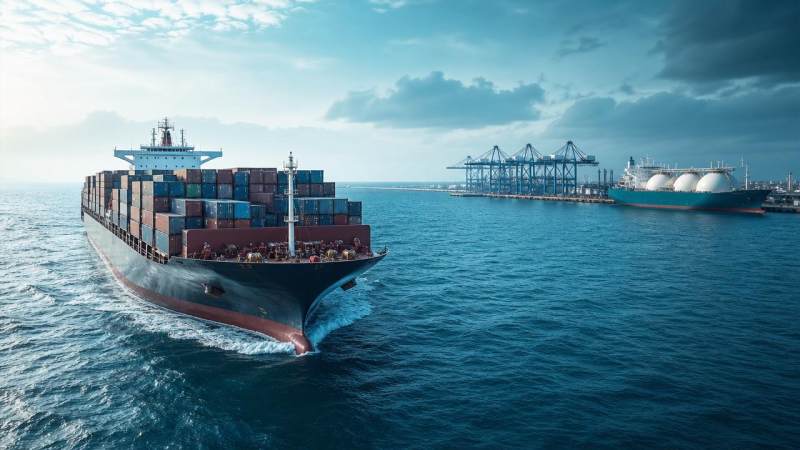
The image below highlights the main operating windows where AI route optimization tends to outperform manual planning.
[Image 01: AI route optimization decision points across weather, speed, fuel, and port timing]
- It works best on long-haul ocean routes where weather shifts mid-voyage. Better course and speed adjustments reduce exposure to storms, heavy seas, and inefficient fuel burn.
- It adds value when berth windows are flexible. A smarter arrival time can avoid offshore waiting, lower bunker use, and improve downstream cargo handling coordination.
- It performs well for fleets with reliable vessel-specific performance curves. Accurate hull, engine, and draft data make AI route optimization much more credible.
- It is especially useful when dispatch teams juggle multiple constraints at once. Weather, emissions targets, charter terms, and port timing become easier to balance.
- It supports smart container ships better than static planning methods. Continuous route updates help maintain service frequency under changing sea and terminal conditions.
- It becomes more convincing when linked to a wider intelligence center. GTOT-style cross-domain insight helps connect vessel routing with inland rail and terminal bottlenecks.
A practical container shipping scenario
A transpacific container service is a common example. The vessel still has enough sailing time to alter speed and path after new weather or berth data arrives.
In that case, AI route optimization can recommend slower steaming to hit a cleaner berth slot. That avoids arriving early only to anchor outside a congested terminal.
Why GTOT context matters here
Maritime delays rarely stay at sea. A late vessel disrupts terminal windows, rail departures, and cargo transfer plans. GTOT’s land-sea perspective is useful because route decisions affect the whole corridor.
That wider lens matters when evaluating digital tools. A routing engine that saves fuel but breaks inland timing may not create real commercial value.
Where AI Route Optimization Does Not Solve the Problem
Some delays have little to do with route choice. When the real bottleneck sits inside a port, terminal, canal queue, or regulatory inspection flow, software has limited leverage.
This is where evaluations often go wrong. Teams buy into the promise of AI route optimization without separating navigational delay from infrastructure delay.
- It cannot remove berth shortages at overloaded ports. If cranes, labor, yard space, or customs capacity are constrained, a better route alone will not cut delays.
- It does little when canal transit slots are fixed or disrupted. Queue dynamics at strategic chokepoints often overwhelm any gains from route recalculation.
- It has limited impact on highly specialized LNG carrier operations. Safety envelopes, cargo conditions, and terminal procedures narrow the room for routing flexibility.
- It struggles when input data is stale or fragmented. Bad AIS feeds, weak weather layers, or missing engine data quickly reduce recommendation quality.
- It cannot fix poor execution discipline on board or onshore. If crews and operators ignore timing recommendations, the algorithm becomes only a reporting tool.
- It should not be treated as a substitute for infrastructure intelligence. GTOT’s focus on equipment, safety systems, and corridor planning shows why the physical system still matters.
A practical LNG scenario
An LNG carrier crossing a weather-sensitive route may still benefit from better voyage planning. But the upside is narrower than on a liner container service.
Cargo integrity, boil-off management, terminal readiness, and safety margins can outweigh routing flexibility. In this case, AI route optimization helps, but it does not dominate the schedule outcome.
What to Check Before Approving an AI Route Optimization Project
A strong evaluation starts with operational reality, not vendor claims. The goal is to test whether route decisions truly drive delay performance on the target trade lane.
- Start by mapping the top three delay causes on each service lane. If route-related causes are minor, AI route optimization may not be the first investment priority.
- Ask for vessel-level proof, not fleet averages. Some ships respond well to speed and trim changes, while others show only marginal operational improvement.
- Check whether port ETA updates are dynamic and trusted. If the terminal side is blind or slow, the routing engine loses part of its timing advantage.
- Review how recommendations fit emissions strategy. The best route should balance delay reduction, bunker consumption, and carbon reporting obligations.
- Test integration with broader corridor intelligence. GTOT’s land-sea view is useful because marine arrival timing often affects rail dispatch and inland transfer capacity.
A common blind spot
One frequent mistake is measuring success only in nautical terms. Shorter routes or lower fuel burn do not always mean better network performance.
If the vessel reaches port at the wrong time, inland rail windows, yard flow, and customer delivery schedules can still deteriorate. GTOT’s integrated transport perspective helps catch that issue early.
How to Use AI Route Optimization Without Overpromising Results
The most effective approach is narrow and disciplined. Use AI route optimization where decisions remain adjustable, and pair it with honest limits on what it cannot control.
- Pilot on one corridor with recurring weather exposure and variable berth timing. That setup gives the clearest evidence of delay, fuel, and schedule improvements.
- Set success metrics beyond fuel savings alone. Include on-time arrival bands, anchorage hours, missed berth windows, and downstream handover performance.
- Keep human override visible and structured. Masters and operators should understand when to follow the model and when safety or commercial conditions require deviation.
- Review results by vessel type and trade lane, not just platform-wide. That is the fastest way to identify where scaling makes sense and where it does not.
- Link the project to strategic intelligence inputs. GTOT-style monitoring of shipbuilding cycles, port trends, and inland constraints makes routing decisions more commercially useful.
In short, AI route optimization is a practical tool, not a universal cure. It is strongest on flexible voyages, data-rich fleets, and corridors where arrival timing can still be shaped.
It is weaker where congestion, terminal limits, canal queues, or safety constraints dominate. That is especially important in complex networks involving smart vessels, LNG movements, and rail-connected cargo flows.
The next sensible step is simple: identify where delays truly originate, test AI route optimization on one route with measurable flexibility, and judge it against full corridor performance rather than software promises alone.
Recommended News
 Jul 14, 2026Sensor Fusion Navigation Systems Trends Shaping Safer OperationsSensor fusion navigation systems are reshaping safer rail and maritime operations with real-time accuracy, stronger resilience, and smarter automation insights. Learn the key trends now.
 Jul 14, 2026How to Evaluate an AI Vessel Routing Provider for Fuel SavingsAI vessel routing provider selection starts with real fuel baselines, data quality, and live operational fit. Learn how to compare vendors, verify savings, and choose a partner that delivers measurable voyage results.
 Jul 13, 2026How Vessel Intelligence Analytics Improves Fleet ETA AccuracyVessel intelligence analytics improves fleet ETA accuracy by combining AIS, weather, congestion, and port signals—helping operators reduce delays, optimize arrivals, and strengthen end-to-end logistics decisions.
 Jul 12, 2026Marine Navigation for Commercial Vessels: Key Upgrade ChecksMarine navigation for commercial vessels: discover the key upgrade checks that improve safety, redundancy, cyber readiness, and bridge efficiency for smarter fleet decisions.
![]() Jul 07, 2026Navigation Decision Logic Explained: Limits, Risks, and Use CasesNavigation decision logic explained clearly: explore its limits, risks, and real-world use cases in rail and maritime systems to improve safety, resilience, and smarter operational decisions.
Jul 07, 2026Navigation Decision Logic Explained: Limits, Risks, and Use CasesNavigation decision logic explained clearly: explore its limits, risks, and real-world use cases in rail and maritime systems to improve safety, resilience, and smarter operational decisions. Jul 05, 2026Maritime Automation for Tankers: Key Safety and Compliance Gaps to Check FirstMaritime automation for tankers starts with closing safety and compliance gaps. Learn the top risks in alarms, sensors, cyber controls, crew use, and records before problems escalate.
 Jul 04, 2026IMO-Compliant Smart Shipping Solutions: Certification Gaps to CheckSmart shipping solutions IMO compliant: discover the certification gaps that can delay audits, weaken safety assurance, and expose advanced vessels to operational risk.
 Jul 03, 2026Smart Shipping Solutions IMO Compliant: Features That Matter MostSmart shipping solutions IMO compliant deliver safer operations, emissions control, route efficiency, and audit-ready data. Discover the features that protect vessel value and improve fleet performance.
 Jun 22, 2026How Advanced Ocean-Going Vessels Cut Transit Risk in Long-Haul ShippingAdvanced ocean-going vessels cut transit risk through smarter routing, cargo monitoring, and port coordination. See how route-based vessel choices improve long-haul shipping reliability.
 Jun 21, 2026Smart Container Ships: What to Evaluate Before Investing in New SystemsSmart container ships demand more than new tech. Learn how to evaluate integration, lifecycle cost, cyber risk, and ROI before investing in new systems.
 Jun 14, 2026Smart Container Ships: Key Features Worth ComparingSmart container ships comparison guide: explore route intelligence, automation, connectivity, predictive maintenance, and cybersecurity to choose smarter vessels with better efficiency and reliability.
 Jun 13, 2026AI Route Optimization: When Fuel Savings Justify AdoptionAI route optimization explained: learn when fuel savings, ETA reliability, and lower emissions can justify adoption, with practical ROI factors and payback insights for transport operators.
 Jun 07, 2026AI Route Optimization in Shipping: Where It Cuts Delays—and Where It Doesn’tAI route optimization in shipping cuts delays when weather, vessel data, and port timing align—but it won’t fix congestion or canal queues. See where it truly delivers ROI.
![]() May 23, 2026Autonomous Navigation: How Safe Is It at Sea?Smart maritime technology is reshaping autonomous navigation at sea. Explore key safety risks, safeguards, and practical insights buyers need to evaluate trusted vessel autonomy.
May 23, 2026Autonomous Navigation: How Safe Is It at Sea?Smart maritime technology is reshaping autonomous navigation at sea. Explore key safety risks, safeguards, and practical insights buyers need to evaluate trusted vessel autonomy. May 07, 2026AI Route Optimization for Fleet Expansion: What to Evaluate FirstAI route optimization is the first priority for fleet expansion. Learn what buyers should evaluate first to improve accuracy, integration, safety, and scalable transport performance.
 May 07, 2026AI Route Optimization vs Manual Planning: What Changes FirstAI route optimization vs manual planning: discover what changes first—faster decisions, better fuel efficiency, stronger schedule reliability, and smarter risk control.