



Search News
Industry Portal
Popular Tags
Maritime Automation for Tankers: Key Safety and Compliance Gaps to Check First
Author
Time
Click Count
Maritime Automation for Tankers: Key Safety and Compliance Gaps to Check First
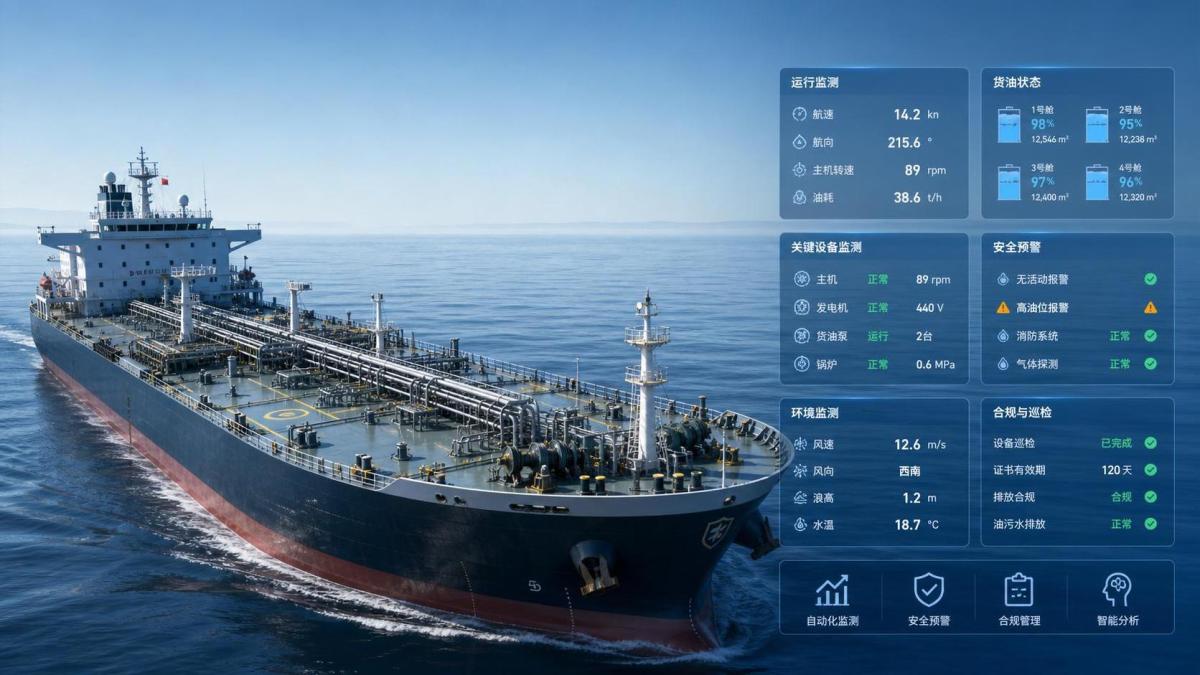
Maritime automation for tankers is moving from optional upgrade to operating baseline.
It improves route control, cargo monitoring, fuel use, and shore-side visibility.
Yet the first failures rarely start with headline technology.
They usually begin in alarm settings, sensor drift, weak access control, or missing records.
For tanker operators, that matters because automation errors can quickly become cargo, environmental, or class issues.
A smart audit starts by checking the gaps that create real exposure first.
This is where maritime automation for tankers should be reviewed with a safety and compliance lens, not only a performance lens.
Why early gap checking matters more than system expansion
Many fleets expand automation in layers.
Navigation support, tank gauging, valve control, engine analytics, and remote diagnostics may come from different suppliers.
That creates integration points where assumptions often go untested.
In practice, maritime automation for tankers fails less from one dramatic defect and more from several small mismatches.
A delayed high-level alarm, an unverified software patch, or an outdated bypass log can be enough.
More obvious pressure is also coming from inspections.
Port State Control, class surveys, SIRE expectations, and cyber guidance are becoming more specific.
That means the safest first step is not adding more automation.
It is proving the current automation works reliably, predictably, and with traceable compliance evidence.
1. Alarm logic gaps that hide real tanker risk
Alarm overload is one of the most common weaknesses in maritime automation for tankers.
When too many alerts have the same priority, operators stop distinguishing noise from danger.
That is especially risky during cargo transfer, inert gas management, and navigation in constrained waters.
Start by checking these points:
- High-high and shutdown thresholds match approved operating limits.
- Alarm priorities reflect consequence, not vendor default settings.
- Suppressed or shelved alarms are logged, justified, and time-limited.
- Bridge and cargo control room displays show consistent alarm states.
- Acknowledgement rules do not mask unresolved process conditions.
A useful check is to replay a recent abnormal event.
If the timeline cannot clearly show what alarm came first, the control logic needs attention.
This kind of review often reveals hidden weaknesses faster than a static checklist.
2. Sensor reliability issues that quietly distort automation decisions
Maritime automation for tankers depends on trusted inputs.
If pressure, temperature, level, gas, or position data drifts, the automation can stay active while being wrong.
That is a dangerous failure mode because the interface may still look normal.
Recent field reviews often find three patterns.
First, calibration intervals are based on habit, not performance history.
Second, redundancy exists on paper but not in voting logic.
Third, bad data flags do not trigger clear fallback actions.
Review sensor health using a simple decision table:
When sensor reliability is weak, maritime automation for tankers becomes a confidence problem before it becomes a hardware problem.
3. Cybersecurity weaknesses inside connected tanker automation
As vessels become more connected, maritime automation for tankers inherits more cyber exposure.
The issue is rarely dramatic hacking alone.
It is often poor account control, shared credentials, untracked laptops, or unsupported software.
A practical review should focus on operational technology, not only office IT policy.
- Map which automation systems can be accessed from shore or vendor channels.
- Confirm network separation between business systems and control systems.
- Check whether USB use, remote sessions, and software updates are logged.
- Verify user roles for crew, superintendent, vendor, and temporary technician access.
- Review patch approval records against vessel operating windows.
Cyber readiness also affects compliance evidence.
If a change was made remotely, there should be traceable approval, validation, and rollback planning.
Without that, even a successful update can become an audit finding.
4. Crew-system interaction problems that automation alone cannot solve
One persistent mistake is treating maritime automation for tankers as self-sufficient.
Even advanced systems depend on correct human interpretation, timing, and override judgment.
This becomes more visible during handover, pilotage, cargo startup, and emergency mode switching.
Look for signs that the interface is technically complete but operationally confusing.
Examples include similar screen colors for different states, unclear manual override pathways, or procedures that do not match display wording.
A strong review asks simple questions.
- Can operators explain the last three major alarms and required actions?
- Can watchkeepers shift from automatic to manual mode without hesitation?
- Do drills include realistic automation faults, not only generic emergencies?
- Are override permissions limited and reviewed after each use?
If those answers are weak, the automation design may be ahead of actual operational readiness.
5. Documentation and compliance gaps that trigger detentions and repeat findings
Documentation is where many maritime automation for tankers programs lose credibility.
The equipment may work well, yet the paper trail is incomplete.
That creates exposure during class review, flag inspections, terminal vetting, and internal audits.
Pay attention to these records:
- Cause and effect matrices for critical shutdown and interlock functions.
- Software version history and approved configuration baselines.
- Calibration, testing, and bypass logs for sensors and protections.
- Training evidence for new interfaces, updates, and revised procedures.
- Failure reports with closure evidence, not just temporary fixes.
A useful rule is simple.
If a safety function can change vessel behavior, the change should be documented well enough for an external reviewer to follow it.
That standard keeps compliance work practical and defensible.
A first-pass checklist for stronger maritime automation for tankers
When time is limited, use a focused review path.
It helps separate urgent gaps from longer improvement work.
- List all automation systems linked to navigation, cargo, propulsion, and safety functions.
- Identify which failures could lead to pollution, cargo loss, collision, or detention.
- Test alarm logic and manual fallback on those high-consequence functions first.
- Review sensor integrity and calibration evidence for every critical input.
- Check cyber access paths, patch control, and removable media rules.
- Compare onboard procedures with real operator behavior during drills or simulations.
- Close the loop with updated records, owner approval, and follow-up verification.
This process keeps maritime automation for tankers tied to measurable risk reduction.
It also supports the wider industry direction toward digitalization, decarbonization, and stronger operational transparency.
Conclusion: check the weak links before expanding automation
Maritime automation for tankers delivers real value when the basics are verified, not assumed.
The first review should concentrate on alarm logic, sensor trust, cyber control, crew interaction, and documentation quality.
Those five areas usually reveal the gaps most likely to produce incidents, findings, or disruption.
From there, improvement becomes more targeted and easier to justify.
In real operations, the best next move is a vessel-by-vessel gap check, backed by functional testing and clean compliance records.
Recommended News
 Jul 14, 2026Sensor Fusion Navigation Systems Trends Shaping Safer OperationsSensor fusion navigation systems are reshaping safer rail and maritime operations with real-time accuracy, stronger resilience, and smarter automation insights. Learn the key trends now.
 Jul 14, 2026How to Evaluate an AI Vessel Routing Provider for Fuel SavingsAI vessel routing provider selection starts with real fuel baselines, data quality, and live operational fit. Learn how to compare vendors, verify savings, and choose a partner that delivers measurable voyage results.
 Jul 13, 2026How Vessel Intelligence Analytics Improves Fleet ETA AccuracyVessel intelligence analytics improves fleet ETA accuracy by combining AIS, weather, congestion, and port signals—helping operators reduce delays, optimize arrivals, and strengthen end-to-end logistics decisions.
 Jul 12, 2026Marine Navigation for Commercial Vessels: Key Upgrade ChecksMarine navigation for commercial vessels: discover the key upgrade checks that improve safety, redundancy, cyber readiness, and bridge efficiency for smarter fleet decisions.
![]() Jul 07, 2026Navigation Decision Logic Explained: Limits, Risks, and Use CasesNavigation decision logic explained clearly: explore its limits, risks, and real-world use cases in rail and maritime systems to improve safety, resilience, and smarter operational decisions.
Jul 07, 2026Navigation Decision Logic Explained: Limits, Risks, and Use CasesNavigation decision logic explained clearly: explore its limits, risks, and real-world use cases in rail and maritime systems to improve safety, resilience, and smarter operational decisions. Jul 05, 2026Maritime Automation for Tankers: Key Safety and Compliance Gaps to Check FirstMaritime automation for tankers starts with closing safety and compliance gaps. Learn the top risks in alarms, sensors, cyber controls, crew use, and records before problems escalate.
 Jul 04, 2026IMO-Compliant Smart Shipping Solutions: Certification Gaps to CheckSmart shipping solutions IMO compliant: discover the certification gaps that can delay audits, weaken safety assurance, and expose advanced vessels to operational risk.
 Jul 03, 2026Smart Shipping Solutions IMO Compliant: Features That Matter MostSmart shipping solutions IMO compliant deliver safer operations, emissions control, route efficiency, and audit-ready data. Discover the features that protect vessel value and improve fleet performance.
 Jun 22, 2026How Advanced Ocean-Going Vessels Cut Transit Risk in Long-Haul ShippingAdvanced ocean-going vessels cut transit risk through smarter routing, cargo monitoring, and port coordination. See how route-based vessel choices improve long-haul shipping reliability.
 Jun 21, 2026Smart Container Ships: What to Evaluate Before Investing in New SystemsSmart container ships demand more than new tech. Learn how to evaluate integration, lifecycle cost, cyber risk, and ROI before investing in new systems.
 Jun 14, 2026Smart Container Ships: Key Features Worth ComparingSmart container ships comparison guide: explore route intelligence, automation, connectivity, predictive maintenance, and cybersecurity to choose smarter vessels with better efficiency and reliability.
 Jun 13, 2026AI Route Optimization: When Fuel Savings Justify AdoptionAI route optimization explained: learn when fuel savings, ETA reliability, and lower emissions can justify adoption, with practical ROI factors and payback insights for transport operators.
 Jun 07, 2026AI Route Optimization in Shipping: Where It Cuts Delays—and Where It Doesn’tAI route optimization in shipping cuts delays when weather, vessel data, and port timing align—but it won’t fix congestion or canal queues. See where it truly delivers ROI.
![]() May 23, 2026Autonomous Navigation: How Safe Is It at Sea?Smart maritime technology is reshaping autonomous navigation at sea. Explore key safety risks, safeguards, and practical insights buyers need to evaluate trusted vessel autonomy.
May 23, 2026Autonomous Navigation: How Safe Is It at Sea?Smart maritime technology is reshaping autonomous navigation at sea. Explore key safety risks, safeguards, and practical insights buyers need to evaluate trusted vessel autonomy. May 07, 2026AI Route Optimization for Fleet Expansion: What to Evaluate FirstAI route optimization is the first priority for fleet expansion. Learn what buyers should evaluate first to improve accuracy, integration, safety, and scalable transport performance.
 May 07, 2026AI Route Optimization vs Manual Planning: What Changes FirstAI route optimization vs manual planning: discover what changes first—faster decisions, better fuel efficiency, stronger schedule reliability, and smarter risk control.