Search News
Industry Portal
Popular Tags
How Advanced Ocean-Going Vessels Cut Transit Risk in Long-Haul Shipping
Author
Time
Click Count
Why transit risk changes from route to route
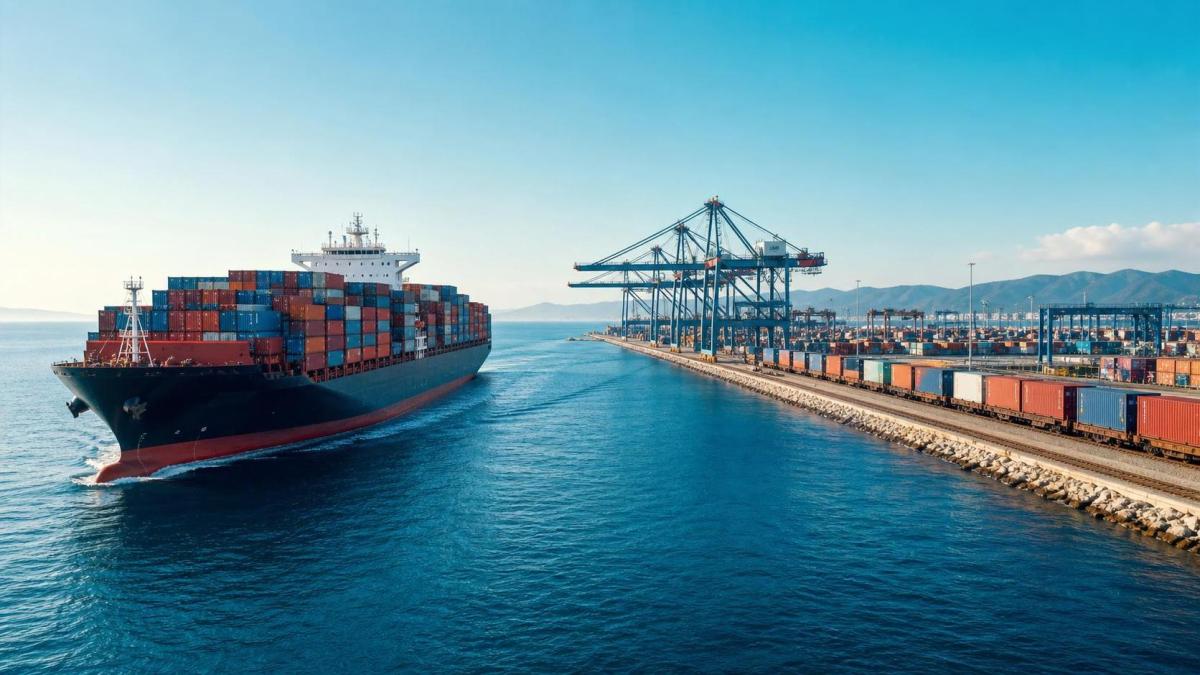
Long-haul shipping rarely fails for one reason alone.
Delay exposure builds through weather shifts, port congestion, fuel planning, cargo sensitivity, and handover gaps between sea and land networks.
That is why advanced ocean-going vessels matter beyond headline capacity or cruising speed.
They reduce uncertainty through better hull performance, smarter routing, stronger monitoring, and more stable equipment behavior over long distances.
In practice, the risk profile of a transpacific container service differs from an LNG voyage or a multi-stop intercontinental feeder chain.
The vessel may be advanced in all three cases, yet the judgment criteria are not identical.
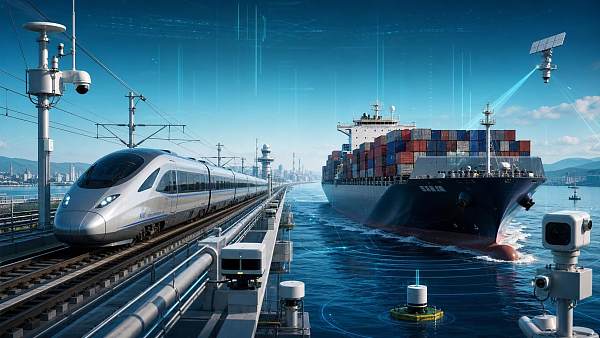
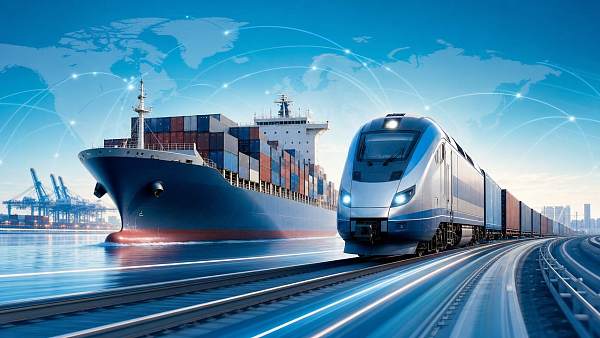
GTOT follows this wider transport logic closely.
Its intelligence work links maritime performance with the same discipline seen in railway signaling, traction stability, and braking precision.
That cross-network view is useful because supply chain resilience depends on synchronized movement, not isolated vessel efficiency.
On exposed ocean lanes, stability matters more than nominal speed
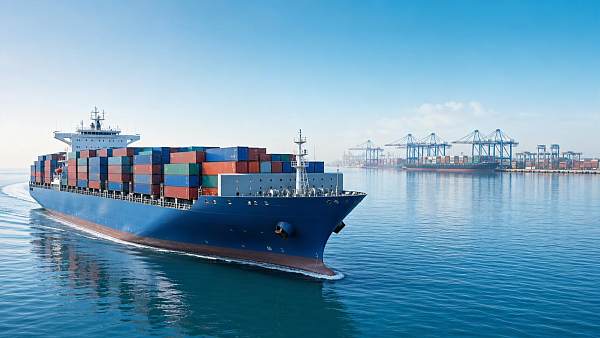
The first high-risk scenario is the long, exposed corridor.
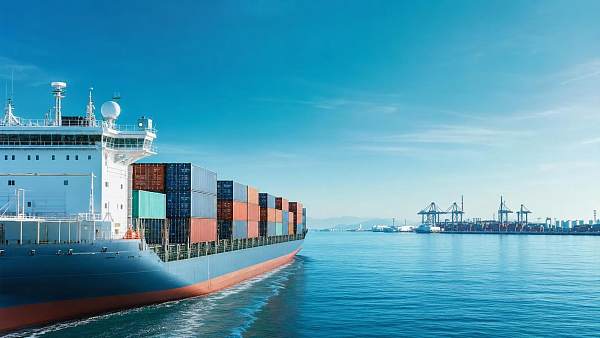
Routes crossing the North Pacific, South Atlantic, or winter North Sea face recurring wave loads, strong winds, and difficult schedule recovery windows.
Here, advanced ocean-going vessels cut transit risk when structural design supports operational consistency under stress.
A refined hull form, active trim optimization, and propulsion control can preserve fuel efficiency without sacrificing route stability.
More importantly, onboard analytics help crews avoid aggressive speed corrections that increase machinery strain and cargo motion.
A common mistake is treating higher installed power as the main protection against delay.
On rough lanes, poor weather response often causes more disruption than insufficient top-end performance.
A better way to judge advanced ocean-going vessels in this setting is to examine how they maintain schedule integrity during unstable sea states.
- Look at weather-routing accuracy versus actual arrival deviation.
- Check propulsion redundancy and condition-based maintenance alerts.
- Review cargo motion control for sensitive or high-value loads.
- Compare bunker use under heavy-weather adjustments, not calm-water benchmarks.
In this environment, transit risk falls when the vessel makes fewer unstable decisions over many days at sea.
Congested trade corridors demand digital coordination, not just bigger ships
Another common scenario is the corridor shaped by port congestion rather than open-water danger.
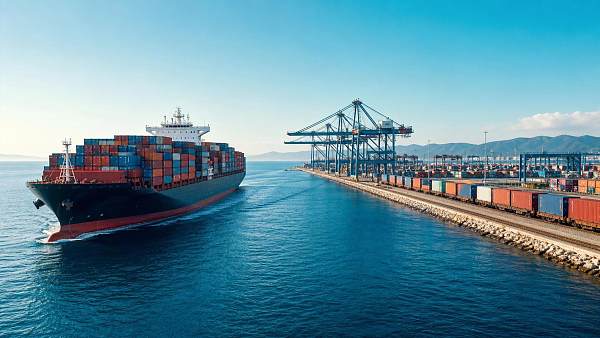
This often appears on Asia-Europe loops, Gulf transshipment networks, and major container gateways with uncertain berthing windows.
In these cases, advanced ocean-going vessels reduce transit risk through information quality.
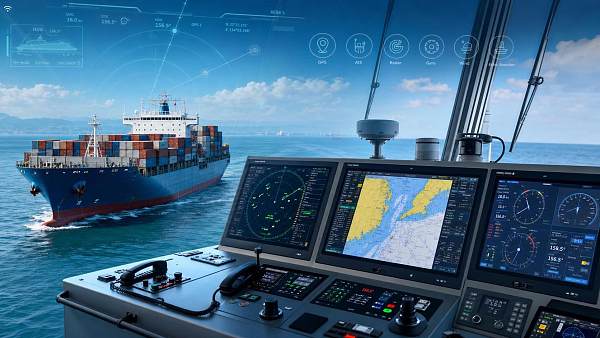
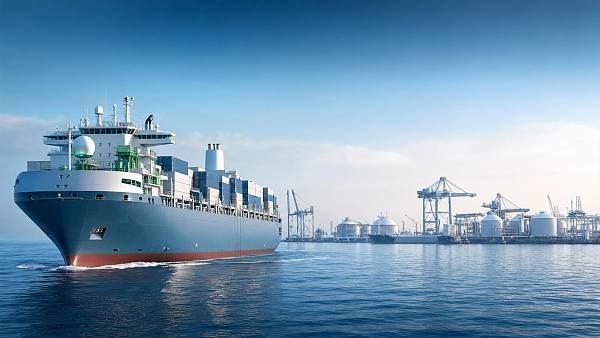
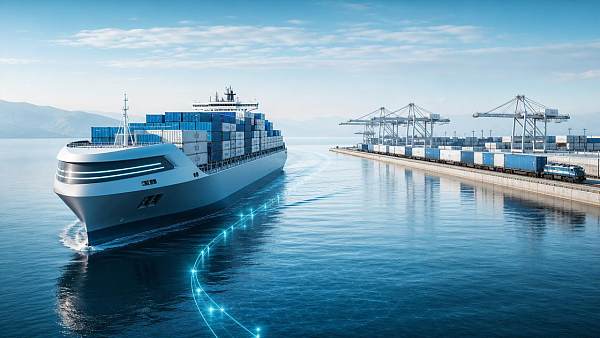
Smart container ships equipped with integrated voyage systems can recalculate arrival time, fuel burn, and berth readiness in near real time.
That capability supports slow steaming when it is useful and faster recovery when delay costs justify it.
The practical issue is not simply arriving early.
It is arriving in sync with cranes, yard flow, customs sequencing, and inland transfer capacity.
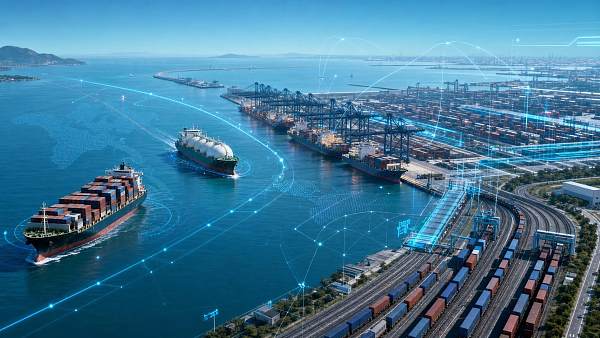
GTOT’s land-sea perspective is relevant here because maritime delay often becomes a rail or terminal bottleneck within hours.
A vessel with advanced navigation but weak data exchange still leaves risk sitting at the berth.
The key takeaway is simple.
In congested corridors, advanced ocean-going vessels create value when they align maritime movement with shore-side execution.
Cargo sensitivity changes what “low risk” really means
Not every voyage measures success by arrival time alone.
When cargo is temperature-sensitive, hazardous, oversized, or commercially critical, the definition of transit risk becomes narrower.
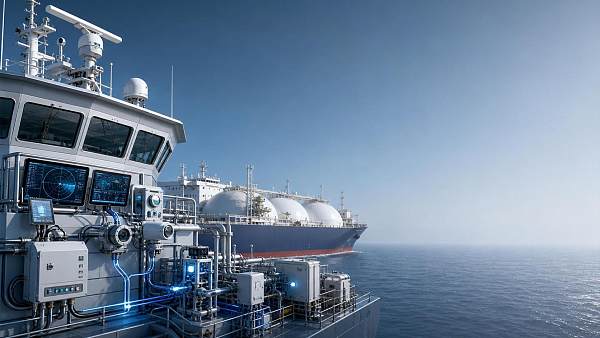
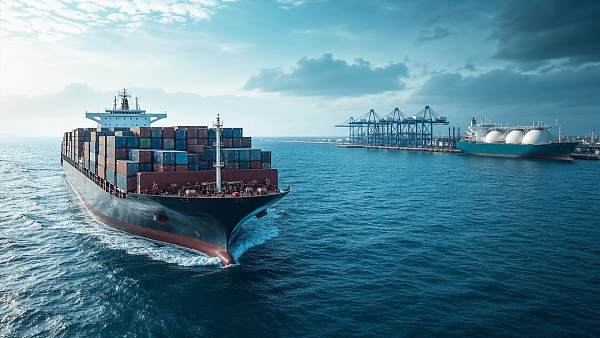
LNG carriers show this clearly.
For them, boil-off management, membrane stress behavior, insulation reliability, and dual-fuel propulsion discipline are central to voyage security.
A minor deviation in containment performance can become a major operational issue long before a visible incident occurs.
The same logic applies to pharmaceuticals, electronics, and project cargo on other advanced ocean-going vessels.
Shock loads, humidity, vibration, and access delays may outweigh pure transit time.
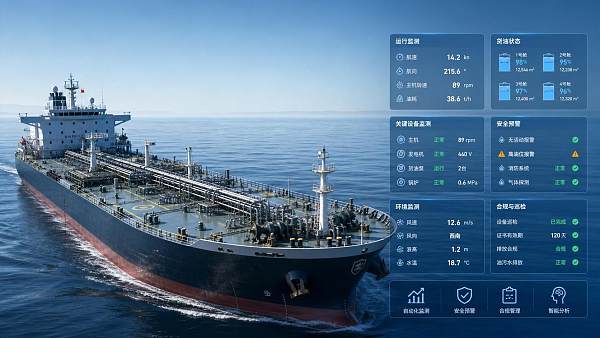
In actual deployment, the stronger vessels are those that combine navigation intelligence with deeper cargo-state visibility.
What deserves closer review on sensitive routes
- Sensor coverage for hold conditions, vibration, and containment status.
- Alarm escalation logic, especially during long unattended intervals.
- Compatibility between cargo requirements and port-side handling routines.
- Crew decision support during route changes or off-spec operating conditions.
A frequent misjudgment is assuming two high-value cargoes create the same operating demand.
They rarely do.
One may need thermal precision, while another needs motion restraint and fast customs release.
Different routes need different decision priorities
Choosing advanced ocean-going vessels without route-specific priorities often leads to hidden cost.
The vessel may look technically superior, yet still fit the network poorly.
A practical comparison helps clarify the difference.
This is also where GTOT’s broader transport focus adds context.
The same operational discipline behind SIL4 rail control or precision braking supports better judgment in marine schedule risk.
Reliable networks depend on controlled variability at every transfer point.
What often gets overlooked before deployment
Transit risk is often underestimated during planning, not at sea.
One overlooked issue is focusing on acquisition cost while ignoring lifecycle response capacity.
Advanced ocean-going vessels deliver their value through uptime, software integrity, crew support, and predictable maintenance intervals.
Another weak point is assuming that similar routes remain similar over time.
Port rules change, weather volatility increases, fuel strategy shifts, and geopolitical diversions can reshape voyage logic within one season.
There is also a tendency to judge vessel intelligence as a standalone feature.
If shore systems, terminals, and inland transport cannot use the data well, the risk reduction remains partial.
A more reliable adaptation checklist
- Map the real disruption pattern on each route, not the average annual profile.
- Define which losses matter most: delay, spoilage, damage, fuel variance, or berth penalties.
- Test whether onboard intelligence connects with port and inland scheduling systems.
- Review maintenance windows, spare strategy, and crew readiness for advanced functions.
- Reassess fit whenever trade lanes, cargo mix, or compliance demands change.
That approach usually reveals whether advanced ocean-going vessels are reducing actual exposure or only improving technical appearance.
The next step is to build a route-based fit standard
Long-haul shipping becomes more resilient when vessel choice follows route conditions, cargo behavior, and network timing together.
Advanced ocean-going vessels are most effective when their intelligence, structural design, and operating logic match the real source of transit risk.
For some lanes, that means weather endurance.
For others, it means berth coordination, cargo-state visibility, or stronger intermodal synchronization.
A useful next move is to sort voyages by disruption pattern, compare route-specific constraints, and define the parameters that truly protect delivery reliability.
From there, it becomes easier to judge implementation difficulty, maintenance demand, digital compatibility, and long-term risk-adjusted value.
That is the point where advanced ocean-going vessels shift from impressive assets to dependable strategic infrastructure.
Recommended News
 Jul 14, 2026Sensor Fusion Navigation Systems Trends Shaping Safer OperationsSensor fusion navigation systems are reshaping safer rail and maritime operations with real-time accuracy, stronger resilience, and smarter automation insights. Learn the key trends now.
 Jul 14, 2026How to Evaluate an AI Vessel Routing Provider for Fuel SavingsAI vessel routing provider selection starts with real fuel baselines, data quality, and live operational fit. Learn how to compare vendors, verify savings, and choose a partner that delivers measurable voyage results.
 Jul 13, 2026How Vessel Intelligence Analytics Improves Fleet ETA AccuracyVessel intelligence analytics improves fleet ETA accuracy by combining AIS, weather, congestion, and port signals—helping operators reduce delays, optimize arrivals, and strengthen end-to-end logistics decisions.
 Jul 12, 2026Marine Navigation for Commercial Vessels: Key Upgrade ChecksMarine navigation for commercial vessels: discover the key upgrade checks that improve safety, redundancy, cyber readiness, and bridge efficiency for smarter fleet decisions.
![]() Jul 07, 2026Navigation Decision Logic Explained: Limits, Risks, and Use CasesNavigation decision logic explained clearly: explore its limits, risks, and real-world use cases in rail and maritime systems to improve safety, resilience, and smarter operational decisions.
Jul 07, 2026Navigation Decision Logic Explained: Limits, Risks, and Use CasesNavigation decision logic explained clearly: explore its limits, risks, and real-world use cases in rail and maritime systems to improve safety, resilience, and smarter operational decisions. Jul 05, 2026Maritime Automation for Tankers: Key Safety and Compliance Gaps to Check FirstMaritime automation for tankers starts with closing safety and compliance gaps. Learn the top risks in alarms, sensors, cyber controls, crew use, and records before problems escalate.
 Jul 04, 2026IMO-Compliant Smart Shipping Solutions: Certification Gaps to CheckSmart shipping solutions IMO compliant: discover the certification gaps that can delay audits, weaken safety assurance, and expose advanced vessels to operational risk.
 Jul 03, 2026Smart Shipping Solutions IMO Compliant: Features That Matter MostSmart shipping solutions IMO compliant deliver safer operations, emissions control, route efficiency, and audit-ready data. Discover the features that protect vessel value and improve fleet performance.
 Jun 22, 2026How Advanced Ocean-Going Vessels Cut Transit Risk in Long-Haul ShippingAdvanced ocean-going vessels cut transit risk through smarter routing, cargo monitoring, and port coordination. See how route-based vessel choices improve long-haul shipping reliability.
 Jun 21, 2026Smart Container Ships: What to Evaluate Before Investing in New SystemsSmart container ships demand more than new tech. Learn how to evaluate integration, lifecycle cost, cyber risk, and ROI before investing in new systems.
 Jun 14, 2026Smart Container Ships: Key Features Worth ComparingSmart container ships comparison guide: explore route intelligence, automation, connectivity, predictive maintenance, and cybersecurity to choose smarter vessels with better efficiency and reliability.
 Jun 13, 2026AI Route Optimization: When Fuel Savings Justify AdoptionAI route optimization explained: learn when fuel savings, ETA reliability, and lower emissions can justify adoption, with practical ROI factors and payback insights for transport operators.
 Jun 07, 2026AI Route Optimization in Shipping: Where It Cuts Delays—and Where It Doesn’tAI route optimization in shipping cuts delays when weather, vessel data, and port timing align—but it won’t fix congestion or canal queues. See where it truly delivers ROI.
![]() May 23, 2026Autonomous Navigation: How Safe Is It at Sea?Smart maritime technology is reshaping autonomous navigation at sea. Explore key safety risks, safeguards, and practical insights buyers need to evaluate trusted vessel autonomy.
May 23, 2026Autonomous Navigation: How Safe Is It at Sea?Smart maritime technology is reshaping autonomous navigation at sea. Explore key safety risks, safeguards, and practical insights buyers need to evaluate trusted vessel autonomy. May 07, 2026AI Route Optimization for Fleet Expansion: What to Evaluate FirstAI route optimization is the first priority for fleet expansion. Learn what buyers should evaluate first to improve accuracy, integration, safety, and scalable transport performance.
 May 07, 2026AI Route Optimization vs Manual Planning: What Changes FirstAI route optimization vs manual planning: discover what changes first—faster decisions, better fuel efficiency, stronger schedule reliability, and smarter risk control.