



Search News
Industry Portal
Popular Tags
Autonomous Navigation: How Safe Is It at Sea?

Author
Time
Click Count
As autonomous navigation moves from pilot projects to real-world shipping lanes, one question dominates industry research: how safe is it at sea? From collision avoidance and sensor fusion to cyber resilience and crew-system coordination, smart maritime technology is redefining vessel operations while raising new safety benchmarks. This article explores the risks, safeguards, and practical realities shaping trust in next-generation autonomous shipping.
For information researchers, shipowners, EPC stakeholders, and marine equipment decision-makers, safety is no longer a narrow question about whether software can steer a ship. It now covers how autonomous systems perform across congested ports, open-ocean voyages, adverse weather windows, and mixed fleets where conventional and digitally enabled vessels must operate side by side.
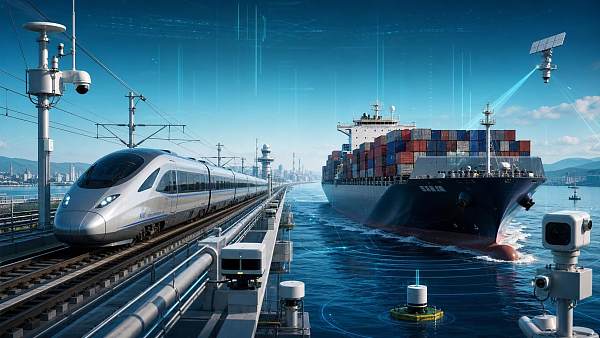
Within that context, smart maritime technology has become a strategic topic across the wider transport industry. Much like railway signalling depends on layered redundancy, marine autonomy depends on validated sensing, disciplined control logic, secure communications, and clearly defined human override procedures. The core issue is not whether autonomy exists, but under what conditions it can be trusted.
What Autonomous Navigation Really Means in Maritime Operations
Autonomous navigation at sea is not a single technology or a binary state. In practice, it spans at least 4 operational layers: decision support for crew, partial automation of route and speed control, remotely supervised functions, and high-autonomy vessel operation within tightly defined limits.
That distinction matters because safety performance varies by use case. A harbor tug operating within a 5- to 20-nautical-mile zone faces very different exposure compared with a container ship crossing 3,000 to 10,000 nautical miles through heavy traffic, changing weather, and international compliance regimes.
The Core Building Blocks
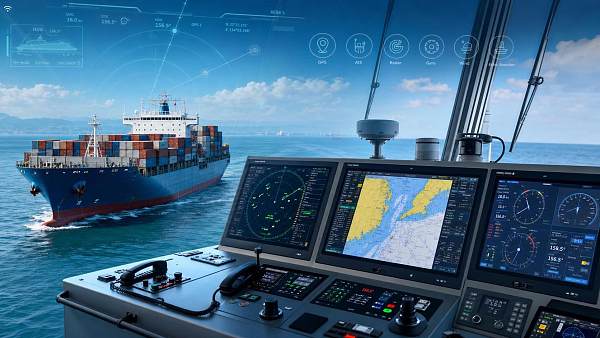
Most autonomous vessel concepts combine radar, cameras, GNSS, AIS, inertial sensors, engine monitoring, voyage planning software, and onboard decision engines. Higher-end architectures also integrate LIDAR in short-range environments, satellite links for remote supervision, and digital twins for route and machinery simulation.
- Perception: detecting targets, weather, obstacles, and navigational markers
- Decision logic: route planning, COLREGs interpretation, speed adjustment, and alert prioritization
- Actuation: helm, propulsion, thrusters, and braking or slowdown response
- Connectivity: ship-to-shore data exchange, remote diagnostics, and cybersecurity controls
Why Safety Is Harder at Sea Than It Looks
Unlike road autonomy, maritime autonomy operates in low-structure environments. Sea states change by the hour, visibility can fall below 0.5 nautical miles, and target behavior is often less predictable than mapped lane traffic. A vessel may also carry momentum that requires several ship lengths to achieve a meaningful course or speed correction.
On large ocean-going ships, response timing is not trivial. Even a modest delay of 10 to 30 seconds in object classification or command confirmation can significantly alter the closest point of approach in narrow channels. This is why safe autonomy is less about raw AI capability and more about system discipline, fallback logic, and operational boundaries.
A Useful Industry Framing
Researchers often assess autonomous safety through 3 linked questions: Can the vessel see correctly, decide correctly, and fail safely? If any one of those layers is weak, the full safety case becomes fragile, regardless of how advanced the interface appears.
The Main Safety Risks in Autonomous Shipping
The safety debate around smart maritime technology is best understood by breaking risk into operational categories. Most incidents or near misses are not caused by one dramatic failure. They emerge from a chain of smaller weaknesses across sensors, software, human supervision, and environmental uncertainty.
1. Sensor Blind Spots and Data Quality Gaps
Marine sensors rarely perform at peak level under all conditions. Radar clutter in rain, camera degradation in fog or glare, AIS data omission, and GNSS interference can create conflicting inputs. Sensor fusion can reduce those weaknesses, but it does not eliminate them. It depends on robust data weighting and confidence scoring.
In practical deployments, a safe system should continue operating within a degraded mode for 5 to 30 minutes, long enough for crew intervention or safe fallback action. Without that resilience, the vessel may switch too abruptly from automated confidence to operational ambiguity.
2. Collision Avoidance Logic in Mixed Traffic
Autonomous navigation must interpret COLREGs, but real traffic often includes ambiguous behavior. Fishing vessels, pilot boats, coastal craft, and manually operated merchant ships do not always behave in a machine-readable or uniform manner. In dense approach zones, several targets can alter speed or heading within 1 to 3 minutes.
That means safe collision avoidance is not simply a matter of detecting another ship. The system must classify intent, project trajectories, rank risk, and choose a maneuver that is compliant, visible to others, and still compatible with draft, channel limits, and propulsion conditions.
3. Cybersecurity and Remote Control Exposure
The more connected the vessel, the larger the attack surface. Smart maritime technology often relies on remote monitoring, cloud analytics, software updates, and shore control interfaces. Each link introduces risk related to spoofing, data tampering, unauthorized access, or denial of service.
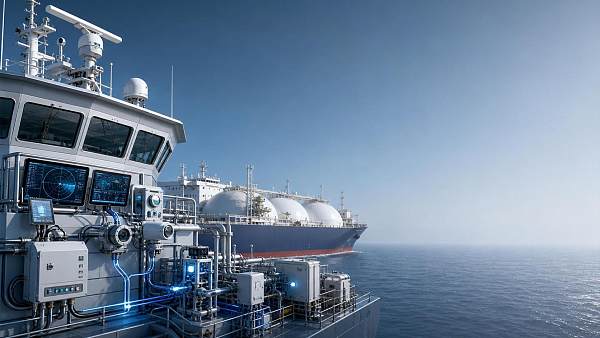
For high-value ships such as LNG carriers or smart container ships, cyber resilience is inseparable from navigation safety. A compromised route, false sensor feed, or delayed alert path can move a cyber issue into a direct operational hazard within minutes rather than days.
The table below shows how common risk categories translate into practical control requirements during autonomous or semi-autonomous vessel operation.
The key takeaway is that autonomous safety depends on overlap, not single-point excellence. Mature operators look for multiple defensive layers so that one weak data source or one software anomaly does not become a voyage-critical event.
How the Industry Makes Autonomous Navigation Safer
The strongest safety cases in smart maritime technology borrow from other high-consequence sectors, including rail signalling, aviation logic, and industrial control engineering. The goal is to build systems that are observable, testable, fail-aware, and recoverable under abnormal conditions.
Redundancy by Design
A vessel intended for partial or advanced autonomy should not rely on one sensor type, one communications link, or one navigation decision path. At minimum, many operators evaluate 2 to 3 independent perception channels, duplicated power and computing support, and local fallback capability if shore connectivity drops.
This design principle is especially relevant for long-haul smart container ships, where route continuity may depend on satellite coverage, weather variation over 7 to 20 days, and machinery health data that must remain actionable even during bandwidth reduction.
Operational Envelopes and Safe Fallback Modes
Safe autonomy works best when the vessel has a defined operating envelope. That envelope can include visibility thresholds, maximum traffic density, wind or wave limits, waterway type, and crew readiness status. If conditions move outside the approved envelope, the system should reduce autonomy and trigger a controlled handover.
- Normal autonomous support mode with live monitoring
- Degraded mode with reduced confidence and tighter alert intervals
- Human-supervised control with maneuver confirmation requirements
- Manual takeover or safe-state action such as speed reduction or holding pattern
Simulation, Verification, and Sea Trials
No credible autonomous safety claim should rely on software demonstration alone. Validation usually progresses through at least 3 stages: simulation, hardware-in-the-loop testing, and live sea trials. Some operators also require seasonal retesting because summer glare, winter precipitation, and traffic density shift system behavior.
A practical benchmark is not thousands of routine minutes in calm water, but performance across edge cases. That includes crossing traffic, buoy-rich channels, GNSS degradation, intermittent communications, and alert fatigue scenarios during extended bridge watch periods.
Human Factors Still Matter
Even advanced autonomy does not remove the human role. It changes it. Officers must supervise exceptions, validate system confidence, and intervene during uncertainty. If alert hierarchies are poorly designed, crews may either over-trust the machine or ignore escalating warnings after repeated low-value notifications.
What Buyers and Researchers Should Evaluate Before Trusting a System
For information researchers and procurement teams, the most useful question is not whether a vendor uses AI. It is whether the autonomy package can support a defendable safety case in the intended operating profile. That requires a structured review of function, failure handling, integration burden, and service readiness.
A 6-Point Evaluation Framework
- Perception coverage across day, night, rain, fog, and harbor clutter
- Decision transparency, including alert rationale and override traceability
- Fallback behavior during sensor loss, comms delay, or software fault
- Cyber controls for remote access, updates, and network segregation
- Integration fit with ECDIS, AIS, propulsion, alarm management, and shore systems
- Training and support model, including drills, updates, and incident response windows
The comparison table below helps separate early-stage autonomy concepts from systems that are more likely to perform in commercial marine environments.
For B2B buyers, these criteria also shape lifecycle cost. A system with weak fallback design may appear affordable upfront but create higher training demands, greater incident exposure, and more complicated compliance management over a 5- to 10-year operating period.
Questions to Ask a Supplier or Technical Partner
A credible supplier should be able to explain where autonomy is permitted, where it is restricted, and how the vessel behaves under data conflict. Researchers should ask for scenario logic, not just feature lists. The most important answers often involve what the system refuses to do.
Key Due-Diligence Questions
- What are the approved operating conditions in terms of weather, traffic, and geography?
- How long can the system sustain safe degraded operation after a sensor or link failure?
- What is the crew intervention process, and how many steps are required?
- How are software updates validated before live deployment?
- What event logs are available for post-voyage analysis and compliance review?
The Practical Outlook: Safe, But Only With Boundaries
So, how safe is autonomous navigation at sea? The realistic answer is that it can be very safe within defined boundaries, but it is not universally safe by default. Smart maritime technology performs best when autonomy is introduced as a controlled capability rather than a total replacement for seamanship, bridge discipline, and engineering oversight.
For coastal routes, repeatable short-sea services, and digitally mature fleets, the safety value can be substantial. Operators may gain earlier hazard detection, steadier route execution, reduced workload during routine phases, and better incident traceability. But those gains depend on robust architecture, disciplined testing, and realistic human-machine coordination.
Across the broader land-sea transport ecosystem, this mirrors the lesson long understood in advanced rail systems: automation improves safety when it is supported by redundancy, strict logic, and well-rehearsed intervention pathways. In shipping, the future will belong not to the boldest autonomy claims, but to the systems that prove reliability under pressure.
For researchers, distributors, and industrial decision-makers tracking next-generation vessels, the most valuable approach is evidence-based evaluation. Focus on control philosophy, verification depth, cyber resilience, and lifecycle support. If you want to assess autonomous shipping solutions, compare smart vessel architectures, or explore wider transport intelligence across rail and ocean equipment, contact GTOT to get tailored insights, technical guidance, and solution-focused research support.
Recommended News
 Jul 14, 2026Sensor Fusion Navigation Systems Trends Shaping Safer OperationsSensor fusion navigation systems are reshaping safer rail and maritime operations with real-time accuracy, stronger resilience, and smarter automation insights. Learn the key trends now.
 Jul 14, 2026How to Evaluate an AI Vessel Routing Provider for Fuel SavingsAI vessel routing provider selection starts with real fuel baselines, data quality, and live operational fit. Learn how to compare vendors, verify savings, and choose a partner that delivers measurable voyage results.
 Jul 13, 2026How Vessel Intelligence Analytics Improves Fleet ETA AccuracyVessel intelligence analytics improves fleet ETA accuracy by combining AIS, weather, congestion, and port signals—helping operators reduce delays, optimize arrivals, and strengthen end-to-end logistics decisions.
 Jul 12, 2026Marine Navigation for Commercial Vessels: Key Upgrade ChecksMarine navigation for commercial vessels: discover the key upgrade checks that improve safety, redundancy, cyber readiness, and bridge efficiency for smarter fleet decisions.
![]() Jul 07, 2026Navigation Decision Logic Explained: Limits, Risks, and Use CasesNavigation decision logic explained clearly: explore its limits, risks, and real-world use cases in rail and maritime systems to improve safety, resilience, and smarter operational decisions.
Jul 07, 2026Navigation Decision Logic Explained: Limits, Risks, and Use CasesNavigation decision logic explained clearly: explore its limits, risks, and real-world use cases in rail and maritime systems to improve safety, resilience, and smarter operational decisions. Jul 05, 2026Maritime Automation for Tankers: Key Safety and Compliance Gaps to Check FirstMaritime automation for tankers starts with closing safety and compliance gaps. Learn the top risks in alarms, sensors, cyber controls, crew use, and records before problems escalate.
 Jul 04, 2026IMO-Compliant Smart Shipping Solutions: Certification Gaps to CheckSmart shipping solutions IMO compliant: discover the certification gaps that can delay audits, weaken safety assurance, and expose advanced vessels to operational risk.
 Jul 03, 2026Smart Shipping Solutions IMO Compliant: Features That Matter MostSmart shipping solutions IMO compliant deliver safer operations, emissions control, route efficiency, and audit-ready data. Discover the features that protect vessel value and improve fleet performance.
 Jun 22, 2026How Advanced Ocean-Going Vessels Cut Transit Risk in Long-Haul ShippingAdvanced ocean-going vessels cut transit risk through smarter routing, cargo monitoring, and port coordination. See how route-based vessel choices improve long-haul shipping reliability.
 Jun 21, 2026Smart Container Ships: What to Evaluate Before Investing in New SystemsSmart container ships demand more than new tech. Learn how to evaluate integration, lifecycle cost, cyber risk, and ROI before investing in new systems.
 Jun 14, 2026Smart Container Ships: Key Features Worth ComparingSmart container ships comparison guide: explore route intelligence, automation, connectivity, predictive maintenance, and cybersecurity to choose smarter vessels with better efficiency and reliability.
 Jun 13, 2026AI Route Optimization: When Fuel Savings Justify AdoptionAI route optimization explained: learn when fuel savings, ETA reliability, and lower emissions can justify adoption, with practical ROI factors and payback insights for transport operators.
 Jun 07, 2026AI Route Optimization in Shipping: Where It Cuts Delays—and Where It Doesn’tAI route optimization in shipping cuts delays when weather, vessel data, and port timing align—but it won’t fix congestion or canal queues. See where it truly delivers ROI.
![]() May 23, 2026Autonomous Navigation: How Safe Is It at Sea?Smart maritime technology is reshaping autonomous navigation at sea. Explore key safety risks, safeguards, and practical insights buyers need to evaluate trusted vessel autonomy.
May 23, 2026Autonomous Navigation: How Safe Is It at Sea?Smart maritime technology is reshaping autonomous navigation at sea. Explore key safety risks, safeguards, and practical insights buyers need to evaluate trusted vessel autonomy. May 07, 2026AI Route Optimization for Fleet Expansion: What to Evaluate FirstAI route optimization is the first priority for fleet expansion. Learn what buyers should evaluate first to improve accuracy, integration, safety, and scalable transport performance.
 May 07, 2026AI Route Optimization vs Manual Planning: What Changes FirstAI route optimization vs manual planning: discover what changes first—faster decisions, better fuel efficiency, stronger schedule reliability, and smarter risk control.