



Search News
Industry Portal
Popular Tags
AI Route Optimization vs Manual Planning: What Changes First
Author
Time
Click Count
As logistics networks grow more complex, AI route optimization is no longer just a digital upgrade—it is often the first visible shift in how transport decisions are made. Compared with manual planning, it quickly changes response speed, fuel efficiency, schedule reliability, and risk control. For researchers tracking maritime and rail intelligence, this comparison reveals where operational transformation begins and what organizations notice first.
The short answer is this: the first thing that changes is not the route itself, but the decision cycle. Manual planning depends on human experience, fixed planning windows, and limited variables. AI changes how fast operators can evaluate options, react to disruptions, and update execution plans. That is why companies often feel the impact of AI route optimization in operational responsiveness before they fully measure long-term strategic gains.
For information researchers, this matters because route planning is one of the clearest entry points into transport intelligence. It sits at the intersection of vessel operations, rail scheduling, fuel use, congestion management, and supply chain resilience. In both smart shipping and rail-linked logistics, it is often the first area where digital capability turns into visible business performance.
What users searching this topic usually want to know first
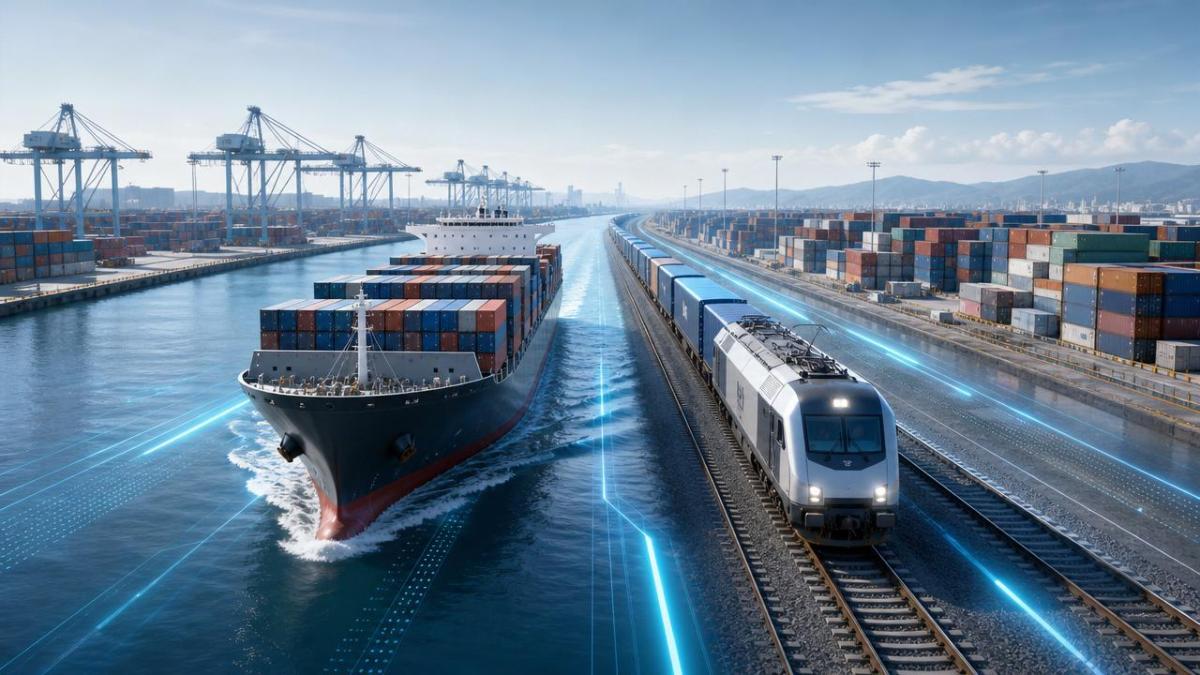
People searching for “AI Route Optimization vs Manual Planning: What Changes First” are usually not asking for a theoretical definition. They want to understand what actually shifts in real operations when AI enters planning workflows. They are comparing two decision models and looking for practical indicators of change.
For a research-oriented audience, the main concerns are predictable: Does AI route optimization improve planning quality immediately, or only after large data integration projects? Which operational metrics move first? Where does manual planning still remain useful? And how should decision-makers judge whether AI is creating real value or just adding software complexity?
These are valid questions because transport networks are not simple environments. Ocean shipping faces weather volatility, port congestion, fuel-price pressure, and emissions constraints. Rail-linked freight faces timetable density, signaling limitations, asset utilization targets, and unexpected disruptions. In both cases, route planning is constrained by safety, infrastructure, and commercial commitments. That is why the comparison between AI and manual planning must focus on operational reality rather than digital hype.
The first visible change: faster decisions under changing conditions
When organizations move from manual planning to AI-assisted planning, the first major change is usually speed of response. Manual planning can be highly capable when handled by experienced teams, but it is naturally limited by time, attention, and the number of variables that humans can process at once.
In manual workflows, planners often build routes using standard templates, historical patterns, spreadsheets, dispatch experience, and periodic updates from operations teams. This can work well in stable conditions. But when weather shifts, a port backlog grows, a rail corridor becomes constrained, or fuel costs move sharply, the human planning cycle slows down. Teams need to reassess information, compare alternatives, and reissue instructions.
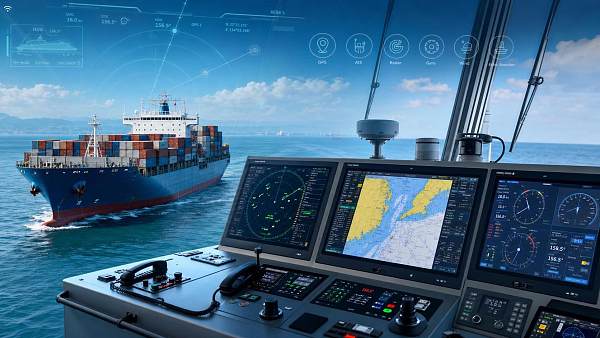
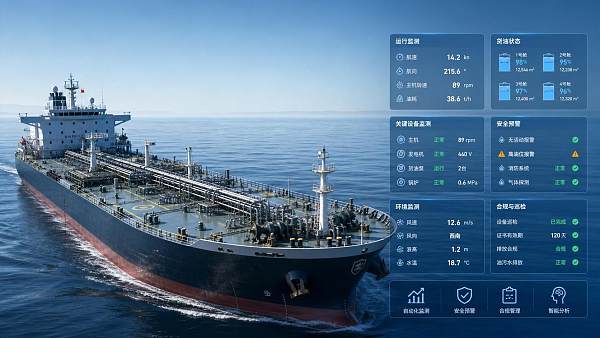
AI route optimization changes this first by continuously evaluating possible scenarios. Instead of reviewing a few route options, an AI engine can compare many combinations in near real time, balancing transit time, fuel consumption, network congestion, delivery windows, and risk exposure. This does not eliminate human oversight, but it reduces the time needed to move from problem detection to action.
That is why organizations often notice quicker replanning before they notice anything else. Faster decisions are the first operational signal that planning has changed. In practical terms, this means dispatch teams, fleet operators, and control centers can respond with more confidence when conditions no longer match the original plan.
The second change: better fuel and energy efficiency through constant recalculation
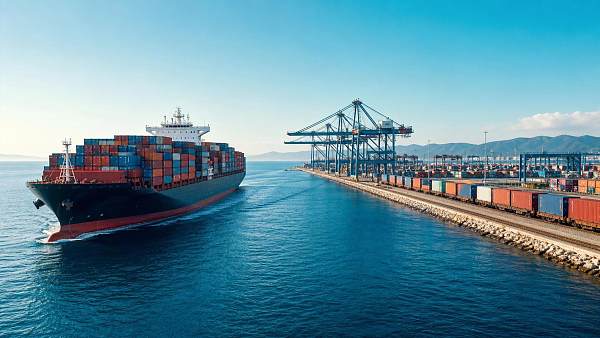
After decision speed, the next change organizations typically observe is improved efficiency. In shipping, this often shows up in fuel burn, speed adjustments, bunker strategy, and voyage timing. In rail-connected logistics, it may appear through smoother flow, reduced idle time, optimized power usage, and fewer avoidable delays.
Manual planning can target efficiency, but it usually relies on periodic planning rather than constant recalculation. A planner may build a route that looks efficient at departure, yet conditions can change rapidly. Wind, currents, berth availability, network conflicts, or downstream terminal conditions can make the original route less efficient as the journey progresses.
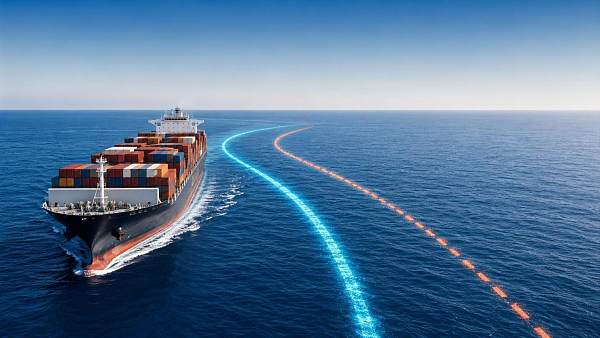
AI route optimization improves this by treating route efficiency as a dynamic problem instead of a fixed plan. It can continuously weigh trade-offs such as whether to maintain speed, slow steam, reroute, or adjust arrival timing to avoid congestion. This helps operators avoid the hidden waste that often comes from following a once-correct plan after the environment has changed.
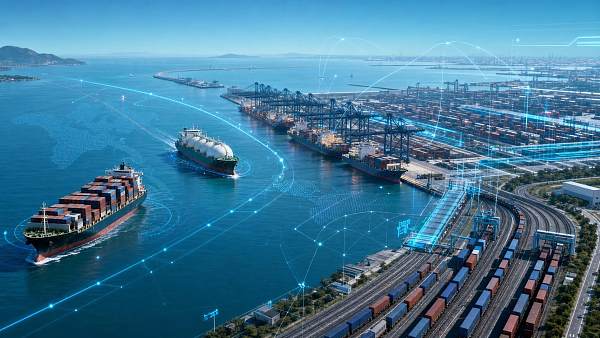
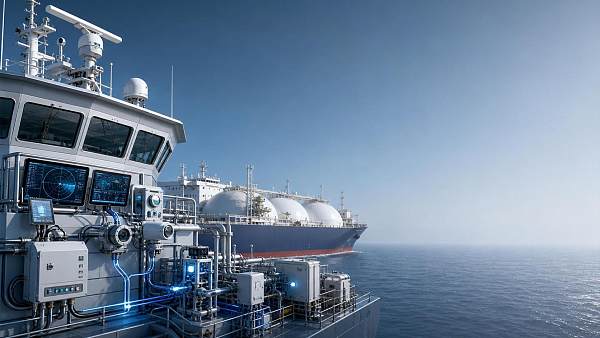
For readers in maritime intelligence, this is one of the clearest reasons AI route optimization matters. On large container ships and LNG carriers, even small improvements in routing logic can translate into major cost effects over time. The value is not only in shorter routes, but in smarter choices between speed, fuel, timing, emissions, and schedule commitments.
Schedule reliability often improves before total cost savings are fully proven
A common mistake in evaluating AI is expecting immediate proof of dramatic cost reduction. In reality, one of the earlier and more measurable advantages is often schedule reliability. AI-driven planning improves the ability to hit service windows because it better aligns route choices with current operating conditions.
Manual planning can produce reliable schedules when networks are predictable. But in high-variability systems, manual plans are more likely to be disrupted because they depend on limited update cycles and slower scenario testing. Once execution diverges from plan, downstream effects can spread quickly across ports, terminals, rail corridors, and customer delivery commitments.
AI route optimization helps reduce that gap between plan and execution. It can incorporate updated weather feeds, vessel performance data, traffic conditions, berth schedules, and infrastructure constraints, then revise route recommendations accordingly. This makes estimated arrival times more accurate and helps operators reduce cascading delays.
For researchers and industry observers, this is an important lens: in many deployments, reliability improves before organizations can isolate full ROI. That does not mean financial benefits are absent. It means the first operational wins are often seen in plan adherence, ETA confidence, and reduced disruption impact. Those are highly valuable in global supply chains where predictability is often worth as much as speed.
Risk control becomes more systematic, not just more automated
Another early change is in the way risk is handled. Manual planning often relies on the experience of senior planners who know seasonal patterns, dangerous bottlenecks, or likely points of delay. That knowledge is valuable, but it can be unevenly distributed across teams and difficult to scale.
AI route optimization changes risk control by making it more systematic. Instead of depending mainly on individual judgment, the system can integrate multiple risk factors into route recommendations. In ocean transport, these may include severe weather, piracy zones, port congestion, emissions restrictions, and draft limitations. In rail and inland intermodal systems, they may include corridor saturation, signaling windows, maintenance blocks, and handoff delays.
The key difference is that AI can evaluate these risks continuously and consistently. It does not get tired, overlook a variable, or delay review because of workload pressure. This does not make it infallible, but it does create a more structured decision framework. Human planners then shift from manually building every route to supervising exceptions, validating priorities, and handling ambiguous trade-offs.
This is especially relevant in sectors such as smart container shipping and high-density rail operations, where safety, compliance, and service continuity cannot be separated from route logic. The first visible benefit may not be “automation” in the abstract, but a more disciplined way to identify and respond to risk.
What does not change first: strategy, organization, and trust
While AI route optimization can quickly change operational decisions, some things usually change much more slowly. Strategy does not shift overnight. Organizational structure does not automatically improve because a new optimization tool is installed. And trust in the system has to be earned through repeated performance.
This is where many comparisons between AI and manual planning become misleading. AI may outperform manual methods in specific routing tasks early on, but broader transformation requires more than an algorithm. Teams need clean operational data, integration with control systems, feedback loops from execution results, and governance rules for when humans override automated recommendations.
In other words, the first changes are tactical and operational. The later changes are cultural and strategic. A company may start by using AI route optimization to improve voyage planning or corridor allocation, then gradually expand into broader decision intelligence such as fleet deployment, terminal coordination, predictive maintenance linkage, or commercial scheduling alignment.
For information researchers, this distinction is useful. It helps separate short-term operational impact from long-term digital maturity. The fact that route optimization changes first does not mean the entire organization becomes intelligent at once. It means this is where transformation becomes visible, measurable, and easier to test.
Where manual planning still holds value
It would be inaccurate to suggest that manual planning becomes obsolete as soon as AI tools are introduced. Manual planning still matters in several situations, especially where data quality is weak, routes are highly irregular, or operational judgment must weigh factors that are difficult to quantify.
Experienced planners often understand commercial sensitivities, political constraints, customer relationships, and local operating realities in ways that systems may not fully capture. In emerging markets, fragmented infrastructure environments, or exceptional conditions, human intervention remains essential.
The stronger model in most real-world environments is not AI versus humans, but AI plus humans. AI route optimization is best viewed as a decision amplifier. It handles scale, speed, and scenario comparison. Human teams provide strategic context, accountability, and final judgment where trade-offs are complex or data is incomplete.
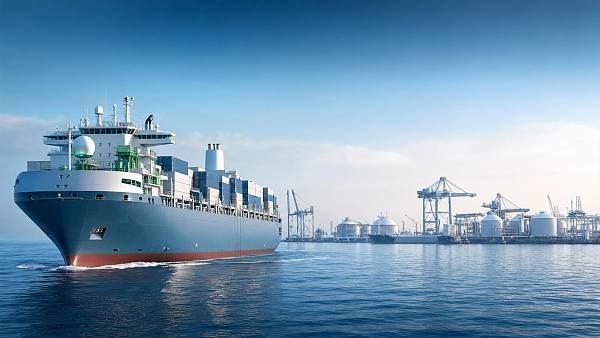
This hybrid model is especially important in high-value transport sectors. For example, a smart container ship may receive AI-generated voyage recommendations, but final routing still needs to reflect charter-party terms, berth coordination, engine considerations, weather routing standards, and company risk policy. Similarly, in rail-linked systems, dispatch optimization must still align with network rules, safety margins, and operational priorities set by control authorities.
How to evaluate whether AI route optimization is creating real value
For readers trying to judge practical value, the best approach is to track the earliest measurable effects rather than waiting for a perfect transformation story. The right question is not “Has AI changed everything?” but “Which operating indicators moved first, and are those changes sustainable?”
Useful indicators include replanning time, schedule adherence, ETA accuracy, fuel or energy efficiency, disruption recovery speed, congestion exposure, and planner workload distribution. If these improve in a consistent way, that is usually strong evidence that AI route optimization is contributing value even before full-system ROI is modeled.
It is also important to examine decision transparency. A good AI planning system should not only suggest a route, but help operators understand why that option was selected. If recommendations cannot be interpreted, trust adoption will slow and teams may revert to manual decisions under pressure.
For strategic observers, another useful marker is whether AI outputs influence adjacent functions. Once route optimization starts affecting bunker planning, terminal coordination, customer ETA communication, or intermodal handoffs, its value has moved beyond isolated software performance into broader operational intelligence.
Why this topic matters across maritime and rail intelligence
The significance of this comparison extends beyond one software category. AI route optimization is a practical window into how transport intelligence develops across complex infrastructure systems. It shows how digital tools begin to reshape execution before they fully reshape strategy.
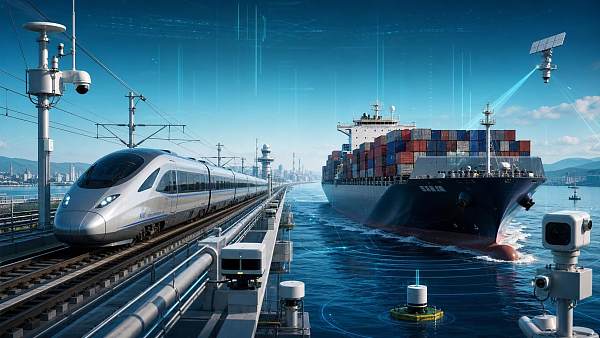
For a platform like GTOT, which tracks both advanced maritime systems and rail control ecosystems, this matters because route optimization sits close to the core of asset value. Smart container ships, LNG carriers, signaling-led rail corridors, and high-speed logistics networks all depend on making the right movement decisions under changing constraints.
That is why route planning becomes one of the earliest proving grounds for transport AI. It directly affects cost, reliability, emissions, throughput, and risk. It also creates observable evidence that researchers, investors, operators, and equipment stakeholders can track over time.
In that sense, the comparison between AI and manual planning is not just about software efficiency. It is about understanding where intelligence first becomes operationally visible in global transport systems that connect land and sea.
Conclusion: what changes first is the pace and quality of operational judgment
When comparing AI route optimization with manual planning, the first change is usually not a dramatic reinvention of the network. It is a faster, more adaptive, more systematic way of making routing decisions. From there, efficiency gains, schedule reliability, and stronger risk control begin to follow.
Manual planning still retains value, especially where experience and local judgment are critical. But as transport systems become more data-rich and disruption-prone, AI gains an advantage in speed, scale, and consistency. That is why it often becomes the first visible layer of operational intelligence in both shipping and rail-linked logistics.
For information researchers, the clearest takeaway is this: if you want to identify where digital transformation truly begins in transport operations, look first at route planning. It is where human expertise meets algorithmic decision power, and where the earliest measurable changes tend to appear.
Recommended News
 Jul 14, 2026Sensor Fusion Navigation Systems Trends Shaping Safer OperationsSensor fusion navigation systems are reshaping safer rail and maritime operations with real-time accuracy, stronger resilience, and smarter automation insights. Learn the key trends now.
 Jul 14, 2026How to Evaluate an AI Vessel Routing Provider for Fuel SavingsAI vessel routing provider selection starts with real fuel baselines, data quality, and live operational fit. Learn how to compare vendors, verify savings, and choose a partner that delivers measurable voyage results.
 Jul 13, 2026How Vessel Intelligence Analytics Improves Fleet ETA AccuracyVessel intelligence analytics improves fleet ETA accuracy by combining AIS, weather, congestion, and port signals—helping operators reduce delays, optimize arrivals, and strengthen end-to-end logistics decisions.
 Jul 12, 2026Marine Navigation for Commercial Vessels: Key Upgrade ChecksMarine navigation for commercial vessels: discover the key upgrade checks that improve safety, redundancy, cyber readiness, and bridge efficiency for smarter fleet decisions.
![]() Jul 07, 2026Navigation Decision Logic Explained: Limits, Risks, and Use CasesNavigation decision logic explained clearly: explore its limits, risks, and real-world use cases in rail and maritime systems to improve safety, resilience, and smarter operational decisions.
Jul 07, 2026Navigation Decision Logic Explained: Limits, Risks, and Use CasesNavigation decision logic explained clearly: explore its limits, risks, and real-world use cases in rail and maritime systems to improve safety, resilience, and smarter operational decisions. Jul 05, 2026Maritime Automation for Tankers: Key Safety and Compliance Gaps to Check FirstMaritime automation for tankers starts with closing safety and compliance gaps. Learn the top risks in alarms, sensors, cyber controls, crew use, and records before problems escalate.
 Jul 04, 2026IMO-Compliant Smart Shipping Solutions: Certification Gaps to CheckSmart shipping solutions IMO compliant: discover the certification gaps that can delay audits, weaken safety assurance, and expose advanced vessels to operational risk.
 Jul 03, 2026Smart Shipping Solutions IMO Compliant: Features That Matter MostSmart shipping solutions IMO compliant deliver safer operations, emissions control, route efficiency, and audit-ready data. Discover the features that protect vessel value and improve fleet performance.
 Jun 22, 2026How Advanced Ocean-Going Vessels Cut Transit Risk in Long-Haul ShippingAdvanced ocean-going vessels cut transit risk through smarter routing, cargo monitoring, and port coordination. See how route-based vessel choices improve long-haul shipping reliability.
 Jun 21, 2026Smart Container Ships: What to Evaluate Before Investing in New SystemsSmart container ships demand more than new tech. Learn how to evaluate integration, lifecycle cost, cyber risk, and ROI before investing in new systems.
 Jun 14, 2026Smart Container Ships: Key Features Worth ComparingSmart container ships comparison guide: explore route intelligence, automation, connectivity, predictive maintenance, and cybersecurity to choose smarter vessels with better efficiency and reliability.
 Jun 13, 2026AI Route Optimization: When Fuel Savings Justify AdoptionAI route optimization explained: learn when fuel savings, ETA reliability, and lower emissions can justify adoption, with practical ROI factors and payback insights for transport operators.
 Jun 07, 2026AI Route Optimization in Shipping: Where It Cuts Delays—and Where It Doesn’tAI route optimization in shipping cuts delays when weather, vessel data, and port timing align—but it won’t fix congestion or canal queues. See where it truly delivers ROI.
![]() May 23, 2026Autonomous Navigation: How Safe Is It at Sea?Smart maritime technology is reshaping autonomous navigation at sea. Explore key safety risks, safeguards, and practical insights buyers need to evaluate trusted vessel autonomy.
May 23, 2026Autonomous Navigation: How Safe Is It at Sea?Smart maritime technology is reshaping autonomous navigation at sea. Explore key safety risks, safeguards, and practical insights buyers need to evaluate trusted vessel autonomy. May 07, 2026AI Route Optimization for Fleet Expansion: What to Evaluate FirstAI route optimization is the first priority for fleet expansion. Learn what buyers should evaluate first to improve accuracy, integration, safety, and scalable transport performance.
 May 07, 2026AI Route Optimization vs Manual Planning: What Changes FirstAI route optimization vs manual planning: discover what changes first—faster decisions, better fuel efficiency, stronger schedule reliability, and smarter risk control.