



Search News
Industry Portal
Popular Tags
Smart Shipping Solutions IMO Compliant: Features That Matter Most
Author
Time
Click Count
Smart shipping solutions IMO compliant have moved from a technical preference to a commercial baseline. In ocean transport, compliance now sits alongside fuel performance, cargo reliability, and digital visibility as a core project requirement.
That shift matters across the wider transport economy. Ports, carriers, EPC teams, and cargo networks increasingly depend on vessels that can connect regulation, automation, and operating efficiency without creating new risks.
Within that context, smart shipping is not only about adding software to ships. It is about building a vessel ecosystem that can interpret rules, support crews, reduce emissions exposure, and protect long-term asset value.
Why IMO compliance now shapes technology choices
The International Maritime Organization influences how modern fleets are designed, monitored, and upgraded. Rules linked to safety, emissions, fuel efficiency, ballast water, and cybersecurity now affect vessel decisions much earlier in the project cycle.
For that reason, smart shipping solutions IMO compliant should be understood as integrated systems. They combine hardware, software, reporting logic, navigation intelligence, and operating procedures that help ships stay aligned with global requirements.
The issue is broader than avoiding penalties. Non-compliant vessels face slower charter acceptance, more difficult financing conversations, higher retrofit costs, and weaker performance in tenders that demand documented technical credibility.
This is where the GTOT perspective is useful. A platform that tracks both smart container ships and LNG carriers, while also observing rail control and heavy transport systems, highlights a common pattern: digital control only creates value when safety logic and operating data work together.
What makes a shipping solution genuinely smart
A vessel does not become smart simply because it has sensors or a dashboard. The stronger definition is operational intelligence that improves decisions in real time and leaves an auditable trail for compliance and performance review.
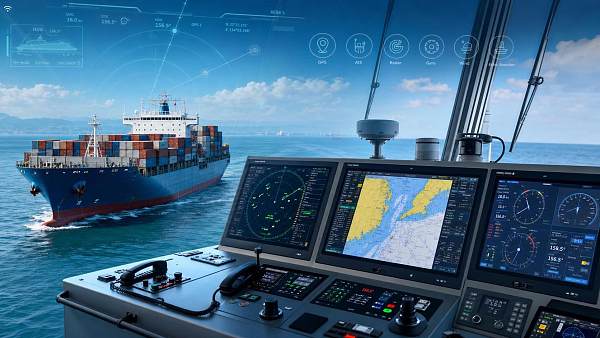
In practical terms, smart shipping solutions IMO compliant usually include connected bridge systems, voyage optimization tools, machinery health monitoring, emissions reporting, shore-side integration, and decision support for crews.
The most effective systems also reduce fragmentation. Navigation, propulsion, fuel management, and cargo condition data should not live in isolated silos when project success depends on coordinated action.
That principle mirrors other transport sectors. In railway signalling, isolated subsystems can undermine safe operations. Shipping faces a similar challenge when compliance data, route logic, and onboard engineering information are disconnected.
The difference between digital features and operational value
Many solutions look advanced during procurement reviews. Fewer perform well during rough weather, changing fuel economics, congested terminals, or inspection events.
A useful benchmark is whether the system helps answer three questions quickly: Is the ship compliant now, will it remain compliant on the next route, and can the evidence be verified without manual reconstruction?
Features that matter most in real projects
Feature lists often become too long. In business terms, the most important capabilities are the ones that lower technical uncertainty while supporting safer, cleaner, and more predictable operations.
1. Compliance-ready data architecture
Data collection should be structured from the start. Fuel use, engine status, emissions indicators, maintenance records, and voyage parameters need consistent timestamps, traceability, and reporting logic.
Without that foundation, smart shipping solutions IMO compliant become labor-intensive. Teams spend too much time cleaning data instead of managing operations.
2. Route optimization linked to fuel and weather
AI route optimization is valuable when it balances schedule reliability, sea state, bunker strategy, and emissions exposure. A system that only minimizes distance can create downstream problems for fuel cost and arrival windows.
For container ships, this affects network punctuality. For LNG carriers, route decisions can influence boil-off management, propulsion efficiency, and cargo integrity.
3. Machinery condition monitoring
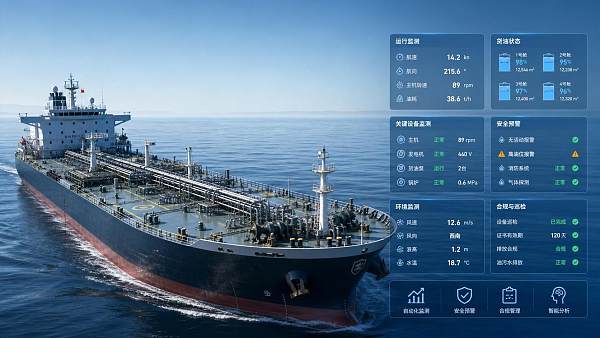
Predictive maintenance matters because unplanned failures are no longer just engineering issues. They can disrupt compliance records, delay port calls, and trigger costly off-hire events.
Condition-based monitoring should cover engines, propulsion lines, pumps, power systems, and critical auxiliaries. The useful metric is not the number of sensors, but the accuracy of actionable alerts.
4. Cybersecurity built into vessel operations
As ships exchange more operational data with shore systems, cyber resilience becomes part of compliance readiness. Navigation support, cargo systems, and remote diagnostics all increase the attack surface.
A credible solution includes access control, network segmentation, update governance, event logging, and response procedures that crews can actually follow during live operations.
5. Human-centered bridge and control interfaces
Advanced systems fail when crews cannot interpret them under pressure. Interface quality affects safety, decision speed, and the consistency of compliance actions.
Good smart shipping solutions IMO compliant present exceptions clearly, reduce duplicate entries, and support escalation paths instead of overwhelming operators with raw data.
Where these systems create the most value
The business case changes by vessel type, trade pattern, and cargo profile. Still, several use environments stand out because the operational stakes are higher and compliance complexity is more visible.
In each case, the strongest value comes from combining compliance with operational intelligence. A vessel that merely meets a rule today may still underperform if its data systems cannot support tomorrow’s decisions.
How to evaluate options without getting lost in specifications
Procurement and engineering reviews often focus too heavily on feature count. A better approach is to examine whether the solution supports the vessel’s real operating model and documentation burden.
Several questions are especially useful during evaluation:
- Can the platform generate verifiable compliance evidence with minimal manual handling?
- Does it integrate with existing navigation, machinery, and shore management systems?
- How well does it perform across different voyage profiles and fuel strategies?
- Are alerts prioritized in a way that supports action during operational stress?
- What retrofit effort, crew training, and cybersecurity maintenance will be required?
This is also where sector intelligence matters. GTOT’s land-sea perspective is relevant because heavy transport projects rarely fail from one missing feature. They fail when interfaces between systems, teams, and standards are underestimated.
Watch the lifecycle, not just the launch
A polished commissioning phase does not guarantee durable value. Smart shipping solutions IMO compliant should still be effective after software updates, regulation changes, crew turnover, and route diversification.
That means service support, interoperability, and data governance deserve as much scrutiny as onboard hardware.
A practical next step for stronger vessel decisions
The most useful next step is to map vessel objectives against compliance and operating realities. That map should include route profile, cargo sensitivity, fuel pathway, reporting demands, retrofit limits, and crew workflow.
From there, smart shipping solutions IMO compliant become easier to compare on substance. The right option is usually the one that aligns safety logic, emissions control, and commercial performance in one working system.
As shipping, rail, and global logistics become more tightly connected, decision quality will depend on how well technical intelligence is stitched across the full transport chain. That is the standard modern vessel projects increasingly need to meet.
Recommended News
 Jul 14, 2026Sensor Fusion Navigation Systems Trends Shaping Safer OperationsSensor fusion navigation systems are reshaping safer rail and maritime operations with real-time accuracy, stronger resilience, and smarter automation insights. Learn the key trends now.
 Jul 14, 2026How to Evaluate an AI Vessel Routing Provider for Fuel SavingsAI vessel routing provider selection starts with real fuel baselines, data quality, and live operational fit. Learn how to compare vendors, verify savings, and choose a partner that delivers measurable voyage results.
 Jul 13, 2026How Vessel Intelligence Analytics Improves Fleet ETA AccuracyVessel intelligence analytics improves fleet ETA accuracy by combining AIS, weather, congestion, and port signals—helping operators reduce delays, optimize arrivals, and strengthen end-to-end logistics decisions.
 Jul 12, 2026Marine Navigation for Commercial Vessels: Key Upgrade ChecksMarine navigation for commercial vessels: discover the key upgrade checks that improve safety, redundancy, cyber readiness, and bridge efficiency for smarter fleet decisions.
![]() Jul 07, 2026Navigation Decision Logic Explained: Limits, Risks, and Use CasesNavigation decision logic explained clearly: explore its limits, risks, and real-world use cases in rail and maritime systems to improve safety, resilience, and smarter operational decisions.
Jul 07, 2026Navigation Decision Logic Explained: Limits, Risks, and Use CasesNavigation decision logic explained clearly: explore its limits, risks, and real-world use cases in rail and maritime systems to improve safety, resilience, and smarter operational decisions. Jul 05, 2026Maritime Automation for Tankers: Key Safety and Compliance Gaps to Check FirstMaritime automation for tankers starts with closing safety and compliance gaps. Learn the top risks in alarms, sensors, cyber controls, crew use, and records before problems escalate.
 Jul 04, 2026IMO-Compliant Smart Shipping Solutions: Certification Gaps to CheckSmart shipping solutions IMO compliant: discover the certification gaps that can delay audits, weaken safety assurance, and expose advanced vessels to operational risk.
 Jul 03, 2026Smart Shipping Solutions IMO Compliant: Features That Matter MostSmart shipping solutions IMO compliant deliver safer operations, emissions control, route efficiency, and audit-ready data. Discover the features that protect vessel value and improve fleet performance.
 Jun 22, 2026How Advanced Ocean-Going Vessels Cut Transit Risk in Long-Haul ShippingAdvanced ocean-going vessels cut transit risk through smarter routing, cargo monitoring, and port coordination. See how route-based vessel choices improve long-haul shipping reliability.
 Jun 21, 2026Smart Container Ships: What to Evaluate Before Investing in New SystemsSmart container ships demand more than new tech. Learn how to evaluate integration, lifecycle cost, cyber risk, and ROI before investing in new systems.
 Jun 14, 2026Smart Container Ships: Key Features Worth ComparingSmart container ships comparison guide: explore route intelligence, automation, connectivity, predictive maintenance, and cybersecurity to choose smarter vessels with better efficiency and reliability.
 Jun 13, 2026AI Route Optimization: When Fuel Savings Justify AdoptionAI route optimization explained: learn when fuel savings, ETA reliability, and lower emissions can justify adoption, with practical ROI factors and payback insights for transport operators.
 Jun 07, 2026AI Route Optimization in Shipping: Where It Cuts Delays—and Where It Doesn’tAI route optimization in shipping cuts delays when weather, vessel data, and port timing align—but it won’t fix congestion or canal queues. See where it truly delivers ROI.
![]() May 23, 2026Autonomous Navigation: How Safe Is It at Sea?Smart maritime technology is reshaping autonomous navigation at sea. Explore key safety risks, safeguards, and practical insights buyers need to evaluate trusted vessel autonomy.
May 23, 2026Autonomous Navigation: How Safe Is It at Sea?Smart maritime technology is reshaping autonomous navigation at sea. Explore key safety risks, safeguards, and practical insights buyers need to evaluate trusted vessel autonomy. May 07, 2026AI Route Optimization for Fleet Expansion: What to Evaluate FirstAI route optimization is the first priority for fleet expansion. Learn what buyers should evaluate first to improve accuracy, integration, safety, and scalable transport performance.
 May 07, 2026AI Route Optimization vs Manual Planning: What Changes FirstAI route optimization vs manual planning: discover what changes first—faster decisions, better fuel efficiency, stronger schedule reliability, and smarter risk control.