



Search News
Industry Portal
Popular Tags
IMO-Compliant Smart Shipping Solutions: Certification Gaps to Check

Author
Time
Click Count
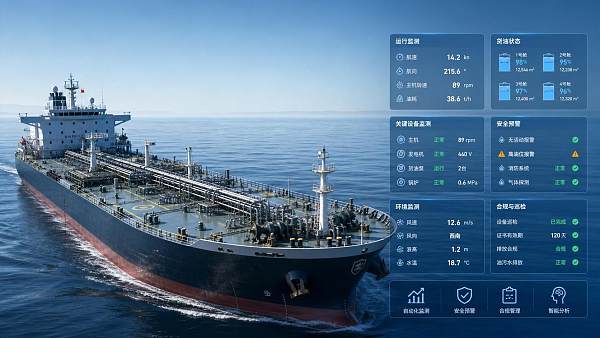
Smart shipping now sits at the intersection of compliance, automation, and supply chain resilience. In that context, choosing smart shipping solutions IMO compliant is less about adding digital features and more about confirming that every certified function still performs safely when systems connect, exchange data, and support operational decisions at sea.
That point matters across container vessels, LNG carriers, and other advanced fleets where navigation logic, onboard monitoring, remote diagnostics, and energy controls increasingly overlap. A small certification gap can delay inspections, weaken audit confidence, or create uncertainty during port state control, charter review, or incident investigation.
For a sector observed closely by GTOT, where intelligent rail systems and smart ocean-going vessels share the same demand for safety-critical reliability, compliance is no longer a paperwork exercise. It is an operational filter for deciding whether digital shipping technology is genuinely ready for service.
Why IMO compliance is a practical issue, not a formal label

The phrase smart shipping solutions IMO compliant often appears in sales material, technical brochures, and retrofit proposals. Yet the real question is narrower and more useful: compliant with which requirement, under what operating condition, and verified by which authority?
IMO compliance can involve several layers. Some relate to safety management. Others concern navigation equipment, cyber risk treatment, emissions performance, fuel handling, communications integrity, or recordkeeping. A vessel may satisfy one layer while remaining exposed in another.
This is why smart shipping solutions IMO compliant should be treated as a system-level claim. The claim only holds when hardware, software, interfaces, updates, and operating procedures align with class rules, flag expectations, and relevant IMO instruments.
In practice, compliance work begins before installation. It starts with understanding whether the solution affects a safety-critical function, modifies bridge workflows, changes alarm logic, influences propulsion efficiency, or introduces data pathways that were absent in the original certification basis.
Where certification gaps usually appear
Most problems do not come from obviously uncertified equipment. They appear in the spaces between approved components, updated software, and real onboard use. That is where hidden nonconformity tends to grow.
Interface changes after initial approval
A navigation unit may be approved on its own. Once linked to route optimization, cargo visibility, weather feeds, and shore analytics, its compliance context changes. Integration can alter alarm timing, operator interpretation, or fail-safe behavior.
Software version drift
Software patches are often installed to improve performance or close cyber vulnerabilities. However, undocumented version drift can separate the onboard configuration from the version reviewed by class, vendor, or internal compliance teams.
Data integrity assumptions
Smart functions depend on clean data. If sensor calibration, timestamp consistency, or communication redundancy are weak, a formally approved platform may still produce decisions that are hard to defend during audits or incident review.
Crew procedure mismatch
Even well-documented systems can fail compliance expectations when onboard procedures lag behind technology. If the safety management system does not reflect new workflows, approval on paper may not translate into compliant operation.
Critical checks before accepting a smart solution
A useful review should move past broad vendor claims and focus on evidence. The aim is to confirm whether the solution remains dependable under inspection, abnormal events, and everyday workload.
This type of review is especially relevant for smart shipping solutions IMO compliant that promise route optimization, predictive maintenance, energy efficiency, or remote support. The more functions a platform combines, the more carefully certification boundaries should be tested.
High-risk scenarios on advanced vessels
Not every vessel faces the same compliance pressure. Risk depends on cargo profile, automation depth, voyage pattern, and the number of connected systems involved in routine decision-making.
Smart container ships
These vessels depend heavily on ship-to-shore coordination, voyage planning tools, emissions reporting, and integrated cargo visibility. Certification gaps often emerge where commercial data systems begin to influence navigational or operational choices.
LNG carriers
For LNG shipping, digital controls connect with cargo containment monitoring, boil-off management, dual-fuel propulsion, and safety barriers. Here, a weakly governed software update can affect both efficiency and hazardous-area risk treatment.
Retrofit programs
Retrofits create a common blind spot. Legacy platforms may remain certified individually, while the new digital layer changes operator workload, maintenance intervals, and alarm priorities in ways that were never fully reassessed.
GTOT’s cross-sector perspective is useful here. In rail signalling, no one assumes that adding a digital interface is neutral to safety logic. The same discipline should apply to vessel intelligence stacks, especially when functions affect control confidence.
How to read vendor documentation with more precision
Documentation review should do more than confirm that certificates exist. It should reveal whether the proposed solution remains valid within the exact vessel architecture and operating profile.
- Check whether certification covers the delivered configuration, not just the product family.
- Match software and firmware versions against approval records and test reports.
- Review excluded conditions, interface limitations, and assumptions hidden in footnotes.
- Confirm who owns update validation after commissioning.
- Ask how evidence is retained for inspections, incident review, and charter compliance checks.
This is also where the phrase smart shipping solutions IMO compliant should be tested most carefully. A credible provider can explain the compliance path, reference class engagement, and show how operational changes are controlled over time.
Beyond certification: operational proof still matters
Certification is necessary, but it is not the final proof of readiness. What matters onboard is whether the approved solution remains understandable, traceable, and stable when weather, workload, and maintenance realities put pressure on the system.
That means reviewing alarm rationality, manual fallback options, training records, spare support, and cyber recovery plans. It also means checking whether data generated by the system can stand up during audits and casualty investigation.
In broader transport intelligence, this mirrors how critical railway equipment is judged. High-speed traction, braking, and signal control are not accepted because they are innovative. They are accepted because they remain predictable under verified constraints. Smart shipping should be assessed with the same rigor.
A workable next step for compliance review
A practical next move is to map each smart function against four questions: what regulation it touches, what certificate supports it, what interface could weaken it, and what onboard evidence proves it still works as intended.
That exercise quickly separates mature smart shipping solutions IMO compliant from systems that only appear compliant at brochure level. It also helps prioritize deeper review for retrofits, connected bridge tools, LNG-related controls, and platforms that depend on continuous data exchange.
For organizations tracking vessel technology through GTOT’s land-sea intelligence lens, the strongest position comes from combining certification review, change control discipline, and scenario-based validation. That approach creates a clearer basis for selection, audit preparation, and long-term fleet reliability.
Recommended News
 Jul 14, 2026Sensor Fusion Navigation Systems Trends Shaping Safer OperationsSensor fusion navigation systems are reshaping safer rail and maritime operations with real-time accuracy, stronger resilience, and smarter automation insights. Learn the key trends now.
 Jul 14, 2026How to Evaluate an AI Vessel Routing Provider for Fuel SavingsAI vessel routing provider selection starts with real fuel baselines, data quality, and live operational fit. Learn how to compare vendors, verify savings, and choose a partner that delivers measurable voyage results.
 Jul 13, 2026How Vessel Intelligence Analytics Improves Fleet ETA AccuracyVessel intelligence analytics improves fleet ETA accuracy by combining AIS, weather, congestion, and port signals—helping operators reduce delays, optimize arrivals, and strengthen end-to-end logistics decisions.
 Jul 12, 2026Marine Navigation for Commercial Vessels: Key Upgrade ChecksMarine navigation for commercial vessels: discover the key upgrade checks that improve safety, redundancy, cyber readiness, and bridge efficiency for smarter fleet decisions.
![]() Jul 07, 2026Navigation Decision Logic Explained: Limits, Risks, and Use CasesNavigation decision logic explained clearly: explore its limits, risks, and real-world use cases in rail and maritime systems to improve safety, resilience, and smarter operational decisions.
Jul 07, 2026Navigation Decision Logic Explained: Limits, Risks, and Use CasesNavigation decision logic explained clearly: explore its limits, risks, and real-world use cases in rail and maritime systems to improve safety, resilience, and smarter operational decisions. Jul 05, 2026Maritime Automation for Tankers: Key Safety and Compliance Gaps to Check FirstMaritime automation for tankers starts with closing safety and compliance gaps. Learn the top risks in alarms, sensors, cyber controls, crew use, and records before problems escalate.
 Jul 04, 2026IMO-Compliant Smart Shipping Solutions: Certification Gaps to CheckSmart shipping solutions IMO compliant: discover the certification gaps that can delay audits, weaken safety assurance, and expose advanced vessels to operational risk.
 Jul 03, 2026Smart Shipping Solutions IMO Compliant: Features That Matter MostSmart shipping solutions IMO compliant deliver safer operations, emissions control, route efficiency, and audit-ready data. Discover the features that protect vessel value and improve fleet performance.
 Jun 22, 2026How Advanced Ocean-Going Vessels Cut Transit Risk in Long-Haul ShippingAdvanced ocean-going vessels cut transit risk through smarter routing, cargo monitoring, and port coordination. See how route-based vessel choices improve long-haul shipping reliability.
 Jun 21, 2026Smart Container Ships: What to Evaluate Before Investing in New SystemsSmart container ships demand more than new tech. Learn how to evaluate integration, lifecycle cost, cyber risk, and ROI before investing in new systems.
 Jun 14, 2026Smart Container Ships: Key Features Worth ComparingSmart container ships comparison guide: explore route intelligence, automation, connectivity, predictive maintenance, and cybersecurity to choose smarter vessels with better efficiency and reliability.
 Jun 13, 2026AI Route Optimization: When Fuel Savings Justify AdoptionAI route optimization explained: learn when fuel savings, ETA reliability, and lower emissions can justify adoption, with practical ROI factors and payback insights for transport operators.
 Jun 07, 2026AI Route Optimization in Shipping: Where It Cuts Delays—and Where It Doesn’tAI route optimization in shipping cuts delays when weather, vessel data, and port timing align—but it won’t fix congestion or canal queues. See where it truly delivers ROI.
![]() May 23, 2026Autonomous Navigation: How Safe Is It at Sea?Smart maritime technology is reshaping autonomous navigation at sea. Explore key safety risks, safeguards, and practical insights buyers need to evaluate trusted vessel autonomy.
May 23, 2026Autonomous Navigation: How Safe Is It at Sea?Smart maritime technology is reshaping autonomous navigation at sea. Explore key safety risks, safeguards, and practical insights buyers need to evaluate trusted vessel autonomy. May 07, 2026AI Route Optimization for Fleet Expansion: What to Evaluate FirstAI route optimization is the first priority for fleet expansion. Learn what buyers should evaluate first to improve accuracy, integration, safety, and scalable transport performance.
 May 07, 2026AI Route Optimization vs Manual Planning: What Changes FirstAI route optimization vs manual planning: discover what changes first—faster decisions, better fuel efficiency, stronger schedule reliability, and smarter risk control.