



Search News
Industry Portal
Popular Tags
Navigation Decision Logic Explained: Limits, Risks, and Use Cases

Author
Time
Click Count
Navigation Decision Logic Explained: Limits, Risks, and Use Cases
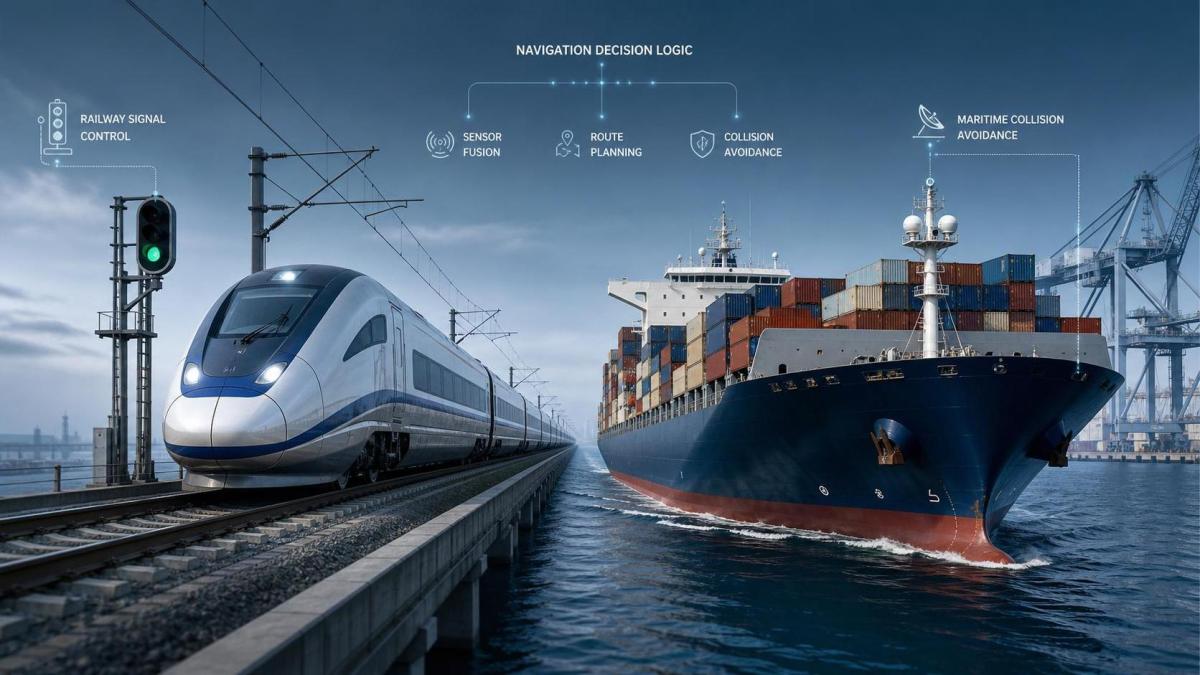
In complex transport and maritime environments, navigation decision logic decides how a system moves, slows, reroutes, or waits.
It is not only about route choice.
It is the rule set behind safe movement under uncertainty, pressure, and changing operating limits.
That matters in rail control, smart shipping, LNG operations, and any connected mobility platform handling mission-critical assets.
For GTOT, the topic sits at the center of land-sea interconnection.
A railway signal control system, a pantograph under high wind load, and a smart container ship crossing a busy corridor all rely on structured decisions.
The logic must convert sensor input, safety standards, operational goals, and environmental constraints into timely action.
This article explains what navigation decision logic is, where it breaks down, and how to evaluate its real use cases.
What Navigation Decision Logic Actually Means
At a practical level, navigation decision logic is the framework that turns data into movement decisions.
It combines perception, rules, thresholds, fallback states, and response priorities.
In rail, that may mean enforcing movement authority, braking curves, interlocking status, and track occupancy.
At sea, it may mean collision avoidance, route deviation, weather response, fuel tradeoff, and port approach sequencing.
The core idea is simple.
A system must decide what action is allowed, what action is preferred, and what action is forbidden.
Good navigation decision logic also ranks conflicting objectives.
Safety usually comes first, then stability, then schedule, then energy efficiency.
That ordering sounds obvious, yet many failures start when those priorities are poorly encoded.
The Basic Logic Stack
- Input layer: sensors, maps, schedules, signaling status, weather feeds, and vessel or train condition data.
- Interpretation layer: object detection, route state estimation, hazard classification, and confidence scoring.
- Decision layer: choose continue, slow, stop, reroute, isolate, or hand over to manual control.
- Execution layer: braking, steering, propulsion adjustment, switch command, or power regulation.
- Assurance layer: logging, verification, override limits, and fail-safe state management.
When reviewing any platform, this stack is a useful starting point.
If one layer is weak, the full navigation decision logic becomes brittle.
Why Limits Matter More Than Features
Many systems perform well in normal conditions.
The real question is how the navigation decision logic behaves near its operating limits.
That includes degraded sensors, delayed communications, conflicting commands, dense traffic, and unexpected physics.
In railway applications, SIL4 expectations force very strict treatment of uncertainty.
A doubtful input should never be treated like a valid one.
In ocean-going vessels, the issue is often more continuous.
A route may remain legal but become operationally poor as current, wave load, or fuel state changes.
This also means limits are not only physical.
They can be computational, regulatory, or organizational.
Common Limit Categories
- Sensor coverage limits: blind spots, fouling, interference, or vibration-induced distortion.
- Timing limits: late data, delayed control loops, and unstable network latency.
- Model limits: rare events outside the training or rule base.
- Environmental limits: fog, spray, electromagnetic noise, ice, heat, and crosswind.
- Human-machine limits: unclear override logic or poor alert prioritization.
- Compliance limits: standards mismatch across regions, ports, or rail operators.
A mature navigation decision logic design makes those limits visible, testable, and auditable.
Key Risks Inside Navigation Decision Logic
The biggest risks are rarely dramatic single-point failures.
More often, they come from subtle mismatches between assumptions and reality.
From recent system upgrades, a clearer signal is emerging.
Integrated platforms now depend on more external data and more automated handoffs.
That widens the risk surface of navigation decision logic.
Risk 1: False Confidence
A system may output a precise recommendation while confidence is actually weak.
That is dangerous in route optimization, collision avoidance, and predictive braking.
Risk 2: Rule Conflict
Different subsystems can pursue different goals at the same time.
An energy-saving mode may conflict with braking reserve or maneuver safety margin.
Risk 3: Poor Fallback Design
Fallback is where navigation decision logic proves its quality.
A system must degrade gracefully, not simply stop thinking.
In rail, that may mean moving to a restrictive mode.
At sea, it may mean reducing autonomy and tightening route envelopes.
Risk 4: Hidden Data Dependency
Some decisions look local but rely on remote data freshness.
When connectivity drops, the navigation decision logic may continue using stale assumptions.
Use Cases Across Rail and Maritime Systems
Use cases reveal whether a decision model is operationally credible.
They show how navigation decision logic handles tradeoffs in real settings.
Railway Signal Control Systems
Here, navigation decision logic manages authority, spacing, route locking, and safe recovery after disturbance.
The strongest systems make every restriction explainable.
That supports verification, certification, and operator trust.
High-Speed Traction and Braking
Decision logic also matters above the signaling layer.
Pantograph behavior, wheel-rail adhesion, and brake blending all affect movement decisions.
At very high speed, a small delay can distort stopping distance assumptions.
Smart Container Ships
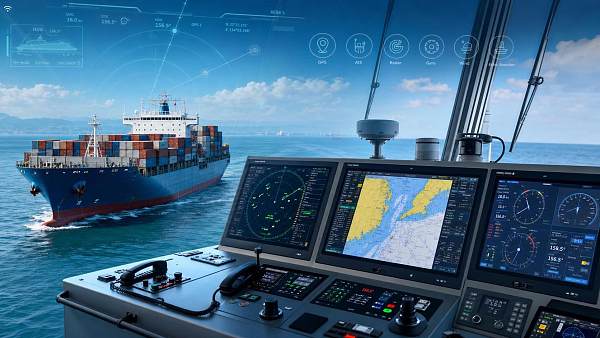
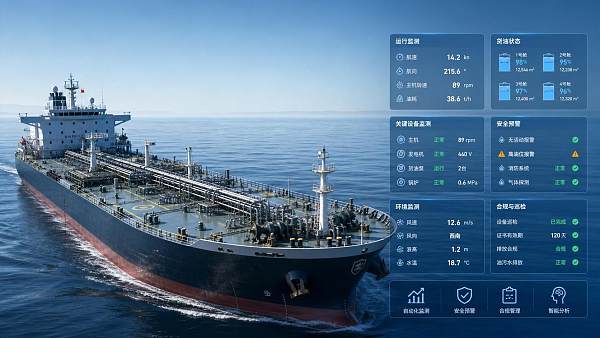
A smart vessel uses navigation decision logic for weather avoidance, route efficiency, arrival timing, and congested corridor behavior.
The challenge is balancing commercial efficiency with legal and safety obligations.
An efficient route is not always the best route.
LNG Carriers
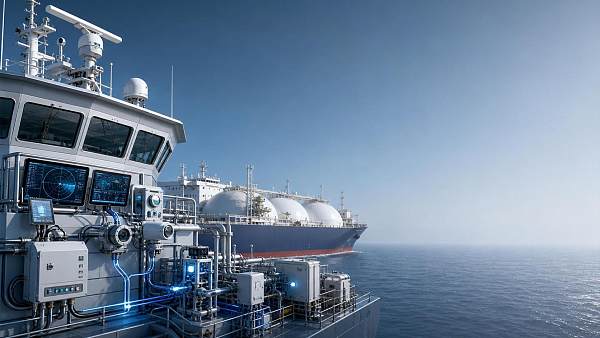
For LNG carriers, navigation decision logic must account for cargo sensitivity, boil-off management, weather routing, and terminal constraints.
This is where thermal, structural, and navigational decisions start to overlap.
How To Evaluate Navigation Decision Logic
A useful assessment goes beyond feature lists.
It tests how the navigation decision logic behaves under edge conditions, partial failures, and mixed priorities.
A Practical Review Checklist
- Map each decision input to its source, refresh cycle, confidence level, and failure mode.
- Check whether the system distinguishes unknown conditions from safe conditions.
- Review fallback states and the exact trigger for entering them.
- Verify rule priority when safety, punctuality, and efficiency conflict.
- Look for explainability in event logs, alarms, and post-incident replay.
- Confirm alignment with relevant standards, including signaling safety and marine navigation rules.
- Test operational drift across software updates, route changes, and new data integrations.
Questions That Expose Weak Design
- What happens when two trusted inputs disagree?
- How long can the system operate with stale external data?
- Which assumptions were validated only in simulation?
- Can operators understand why the navigation decision logic chose one action over another?
- Is the emergency mode operationally usable, or only technically present?
Standards, Governance, and Real-World Resilience
Standards do not replace engineering judgment, but they shape reliable navigation decision logic.
In rail, formal safety integrity expectations push stricter validation and traceability.
In maritime systems, compliance depends on rules, procedures, bridge practice, and increasingly connected onboard software.
What matters most is governance across the full lifecycle.
That includes change control, scenario testing, incident feedback, and retraining of human teams.
Without that discipline, navigation decision logic can slowly drift away from operating reality.
What Strong Decision Logic Looks Like in Practice
Strong navigation decision logic is conservative where failure is costly and adaptive where conditions evolve.
It does not hide uncertainty.
It surfaces uncertainty early, ranks response options clearly, and supports controlled intervention.
That is especially important for global rail components, smart vessels, and LNG fleets operating across varied regimes.
In actual projects, the best results usually come from disciplined data architecture, explicit safety hierarchy, and harsh scenario testing.
For GTOT-aligned sectors, this is more than a software topic.
It is a strategic capability shaping uptime, tender credibility, safety assurance, and long-term asset value.
When assessing any advanced mobility platform, start with the navigation decision logic, test its limits honestly, and judge it by how it behaves when conditions stop being ideal.
Recommended News
 Jul 14, 2026Sensor Fusion Navigation Systems Trends Shaping Safer OperationsSensor fusion navigation systems are reshaping safer rail and maritime operations with real-time accuracy, stronger resilience, and smarter automation insights. Learn the key trends now.
 Jul 14, 2026How to Evaluate an AI Vessel Routing Provider for Fuel SavingsAI vessel routing provider selection starts with real fuel baselines, data quality, and live operational fit. Learn how to compare vendors, verify savings, and choose a partner that delivers measurable voyage results.
 Jul 13, 2026How Vessel Intelligence Analytics Improves Fleet ETA AccuracyVessel intelligence analytics improves fleet ETA accuracy by combining AIS, weather, congestion, and port signals—helping operators reduce delays, optimize arrivals, and strengthen end-to-end logistics decisions.
 Jul 12, 2026Marine Navigation for Commercial Vessels: Key Upgrade ChecksMarine navigation for commercial vessels: discover the key upgrade checks that improve safety, redundancy, cyber readiness, and bridge efficiency for smarter fleet decisions.
![]() Jul 07, 2026Navigation Decision Logic Explained: Limits, Risks, and Use CasesNavigation decision logic explained clearly: explore its limits, risks, and real-world use cases in rail and maritime systems to improve safety, resilience, and smarter operational decisions.
Jul 07, 2026Navigation Decision Logic Explained: Limits, Risks, and Use CasesNavigation decision logic explained clearly: explore its limits, risks, and real-world use cases in rail and maritime systems to improve safety, resilience, and smarter operational decisions. Jul 05, 2026Maritime Automation for Tankers: Key Safety and Compliance Gaps to Check FirstMaritime automation for tankers starts with closing safety and compliance gaps. Learn the top risks in alarms, sensors, cyber controls, crew use, and records before problems escalate.
 Jul 04, 2026IMO-Compliant Smart Shipping Solutions: Certification Gaps to CheckSmart shipping solutions IMO compliant: discover the certification gaps that can delay audits, weaken safety assurance, and expose advanced vessels to operational risk.
 Jul 03, 2026Smart Shipping Solutions IMO Compliant: Features That Matter MostSmart shipping solutions IMO compliant deliver safer operations, emissions control, route efficiency, and audit-ready data. Discover the features that protect vessel value and improve fleet performance.
 Jun 22, 2026How Advanced Ocean-Going Vessels Cut Transit Risk in Long-Haul ShippingAdvanced ocean-going vessels cut transit risk through smarter routing, cargo monitoring, and port coordination. See how route-based vessel choices improve long-haul shipping reliability.
 Jun 21, 2026Smart Container Ships: What to Evaluate Before Investing in New SystemsSmart container ships demand more than new tech. Learn how to evaluate integration, lifecycle cost, cyber risk, and ROI before investing in new systems.
 Jun 14, 2026Smart Container Ships: Key Features Worth ComparingSmart container ships comparison guide: explore route intelligence, automation, connectivity, predictive maintenance, and cybersecurity to choose smarter vessels with better efficiency and reliability.
 Jun 13, 2026AI Route Optimization: When Fuel Savings Justify AdoptionAI route optimization explained: learn when fuel savings, ETA reliability, and lower emissions can justify adoption, with practical ROI factors and payback insights for transport operators.
 Jun 07, 2026AI Route Optimization in Shipping: Where It Cuts Delays—and Where It Doesn’tAI route optimization in shipping cuts delays when weather, vessel data, and port timing align—but it won’t fix congestion or canal queues. See where it truly delivers ROI.
![]() May 23, 2026Autonomous Navigation: How Safe Is It at Sea?Smart maritime technology is reshaping autonomous navigation at sea. Explore key safety risks, safeguards, and practical insights buyers need to evaluate trusted vessel autonomy.
May 23, 2026Autonomous Navigation: How Safe Is It at Sea?Smart maritime technology is reshaping autonomous navigation at sea. Explore key safety risks, safeguards, and practical insights buyers need to evaluate trusted vessel autonomy. May 07, 2026AI Route Optimization for Fleet Expansion: What to Evaluate FirstAI route optimization is the first priority for fleet expansion. Learn what buyers should evaluate first to improve accuracy, integration, safety, and scalable transport performance.
 May 07, 2026AI Route Optimization vs Manual Planning: What Changes FirstAI route optimization vs manual planning: discover what changes first—faster decisions, better fuel efficiency, stronger schedule reliability, and smarter risk control.