



Search News
Industry Portal
Popular Tags
Marine Navigation for Commercial Vessels: Key Upgrade Checks
Author
Time
Click Count
Marine navigation for commercial vessels now sits at the intersection of safety management, operational efficiency, and digital compliance. A bridge upgrade is no longer a matter of replacing a radar or adding a display. It is a system-level decision that affects route assurance, fuel use, crew workload, cargo protection, and audit readiness across global trade lanes.
That shift matters even more in a transport environment shaped by smart container ships, LNG carriers, tighter emissions targets, and denser port approaches. For organizations following GTOT’s land-sea intelligence view, navigation performance is part of a broader control architecture, much like signalling logic in rail or braking assurance in high-speed transit.
Why upgrade checks have become more demanding
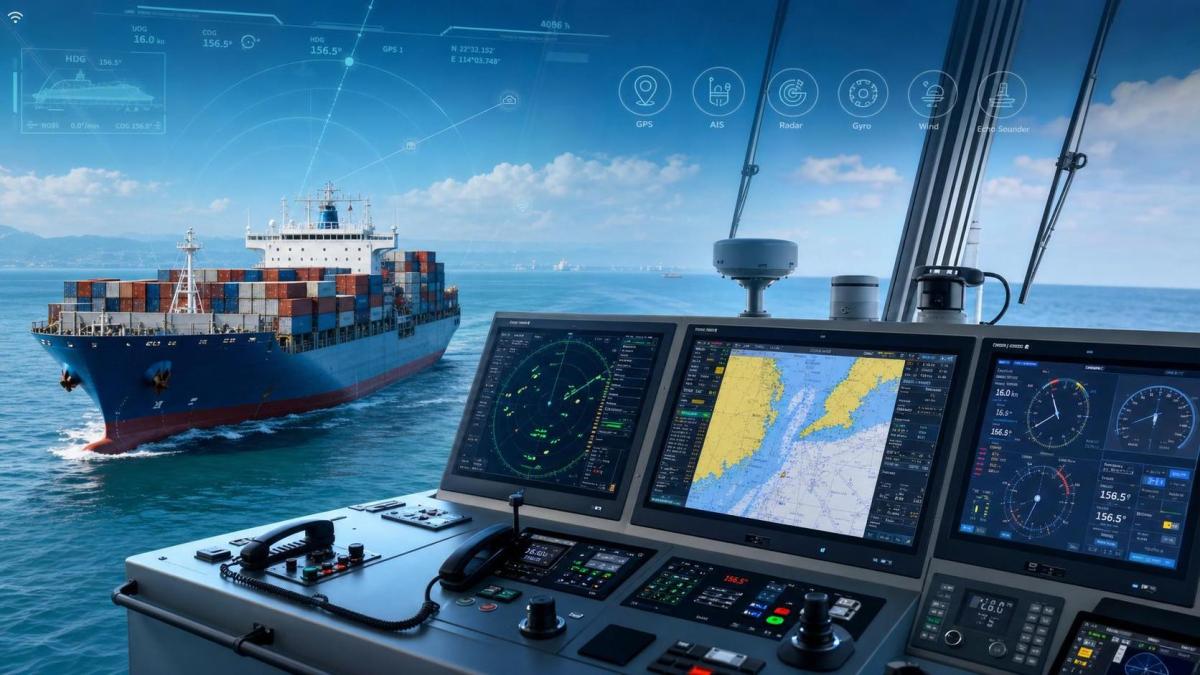
Marine navigation for commercial vessels used to be judged mainly by equipment presence and statutory compliance. That baseline still matters, but it is not enough for modern commercial operation.
Voyage planning now depends on continuous data exchange between navigation sensors, engine management, cargo priorities, weather feeds, electronic charts, and shore-side reporting systems.
A vessel may appear fully equipped on paper, yet still carry hidden weaknesses. Data delays, poor sensor alignment, fragmented interfaces, and weak redundancy can undermine performance long before a formal failure occurs.
In practical terms, upgrade checks are meant to answer a harder question: can the navigation stack support real operating pressure, not just normal transit in fair conditions?
What marine navigation for commercial vessels really includes
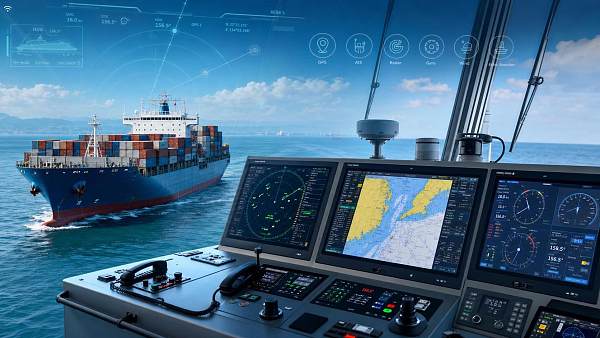
The term covers more than route plotting. It includes the sensing, processing, display, alerting, and decision layers that guide the vessel from berth departure to ocean passage and arrival.
Core elements usually include ECDIS, radar, GNSS, gyrocompass, speed log, AIS, echo sounder, autopilot, heading control, conning displays, and alarm management.
On advanced vessels, the picture expands further. Operators may rely on route optimization software, dynamic under-keel clearance tools, track control, cyber-secured remote diagnostics, and integrated bridge systems.
This is why marine navigation for commercial vessels should be evaluated as an operational ecosystem. Individual equipment quality matters, but integration quality often determines actual performance.
The checks that deserve the closest attention
The most useful upgrade review does not begin with brochures. It begins with failure points, route complexity, vessel type, and the business consequences of degraded navigation.
Sensor integrity and data consistency
Position, heading, speed, and depth inputs must agree within realistic operating tolerances. Drift between systems can produce misleading overlays, unstable autopilot behavior, and poor situational awareness.
Check how the system handles temporary GNSS degradation, gyro offsets, multipath effects, and sensor switchover. A resilient bridge does not wait for perfect conditions.
Redundancy that works in practice
True redundancy is not the same as duplicate hardware. Backup arrangements should remain usable under power interruptions, network faults, display failures, and maintenance isolation.
It is worth checking whether failover is automatic, how long recovery takes, and whether the crew can continue safe navigation without rebuilding the full route manually.
Human-machine interface quality
A technically rich system can still be operationally weak if menus are inconsistent, alarms are excessive, or critical information is buried under layers of screens.
Upgrade checks should review display logic, night mode readability, alarm prioritization, route editing steps, and workload during high-traffic approaches.
Cybersecurity and software lifecycle
Marine navigation for commercial vessels increasingly depends on software updates, networked interfaces, and remote support. That makes patch discipline and access control part of navigation assurance.
Questions should cover update validation, version compatibility, removable media controls, user permissions, and evidence trails for configuration changes.
Different vessel profiles, different navigation priorities
Not every vessel faces the same navigation burden. Upgrade checks should reflect route pattern, cargo sensitivity, port frequency, weather exposure, and automation level.
This variation is why generic upgrade language often misses the mark. Marine navigation for commercial vessels should be judged against the vessel’s actual operating envelope, not only its equipment list.
Where technical evaluation creates business value
A strong navigation upgrade reduces more than collision risk. It can improve route stability, lower avoidable fuel burn, shorten response time during weather changes, and reduce downtime caused by troubleshooting.
It also supports commercial credibility. Charterers, insurers, classification stakeholders, and project partners increasingly expect visible control over digital ship systems.
From GTOT’s broader transport perspective, this mirrors what high-integrity control means in rail. Safety is the starting point, but dependable system coordination is what protects asset value at scale.
That matters especially when fleets are balancing decarbonization targets with operational continuity. Better voyage execution depends on trustworthy navigation inputs.
A practical review framework before approving an upgrade
In real projects, useful assessment usually combines technical evidence, onboard workflow review, and scenario testing.
- Map every navigation input, output, and interface before comparing vendors.
- Review failure modes during coastal transit, congested approaches, and degraded satellite reception.
- Check whether alarms support action or simply add noise.
- Confirm chart handling, route transfer, and sensor calibration workflows.
- Ask for evidence of software support, spare strategy, and lifecycle compatibility.
- Test redundancy using realistic operating sequences, not showroom demonstrations.
It is also sensible to separate compliance acceptance from operational acceptance. A system may pass formal checks and still create avoidable friction on the bridge.
Signals worth tracking after installation
The best indicator of upgrade quality appears after the vessel returns to service. Marine navigation for commercial vessels should be monitored through operational evidence, not installation completion alone.
Useful signals include repeated alarm acknowledgements, unexplained route deviations, heading instability, crew workarounds, interface lag, and frequent support calls.
When those patterns are captured early, corrective action is far cheaper. When ignored, they tend to surface during the worst possible transit conditions.
The next step is straightforward: define the vessel scenario, list the critical navigation dependencies, and test upgrade options against real operating risk. That approach turns marine navigation for commercial vessels from a procurement line item into a measurable control decision.
Recommended News
 Jul 14, 2026Sensor Fusion Navigation Systems Trends Shaping Safer OperationsSensor fusion navigation systems are reshaping safer rail and maritime operations with real-time accuracy, stronger resilience, and smarter automation insights. Learn the key trends now.
 Jul 14, 2026How to Evaluate an AI Vessel Routing Provider for Fuel SavingsAI vessel routing provider selection starts with real fuel baselines, data quality, and live operational fit. Learn how to compare vendors, verify savings, and choose a partner that delivers measurable voyage results.
 Jul 13, 2026How Vessel Intelligence Analytics Improves Fleet ETA AccuracyVessel intelligence analytics improves fleet ETA accuracy by combining AIS, weather, congestion, and port signals—helping operators reduce delays, optimize arrivals, and strengthen end-to-end logistics decisions.
 Jul 12, 2026Marine Navigation for Commercial Vessels: Key Upgrade ChecksMarine navigation for commercial vessels: discover the key upgrade checks that improve safety, redundancy, cyber readiness, and bridge efficiency for smarter fleet decisions.
![]() Jul 07, 2026Navigation Decision Logic Explained: Limits, Risks, and Use CasesNavigation decision logic explained clearly: explore its limits, risks, and real-world use cases in rail and maritime systems to improve safety, resilience, and smarter operational decisions.
Jul 07, 2026Navigation Decision Logic Explained: Limits, Risks, and Use CasesNavigation decision logic explained clearly: explore its limits, risks, and real-world use cases in rail and maritime systems to improve safety, resilience, and smarter operational decisions. Jul 05, 2026Maritime Automation for Tankers: Key Safety and Compliance Gaps to Check FirstMaritime automation for tankers starts with closing safety and compliance gaps. Learn the top risks in alarms, sensors, cyber controls, crew use, and records before problems escalate.
 Jul 04, 2026IMO-Compliant Smart Shipping Solutions: Certification Gaps to CheckSmart shipping solutions IMO compliant: discover the certification gaps that can delay audits, weaken safety assurance, and expose advanced vessels to operational risk.
 Jul 03, 2026Smart Shipping Solutions IMO Compliant: Features That Matter MostSmart shipping solutions IMO compliant deliver safer operations, emissions control, route efficiency, and audit-ready data. Discover the features that protect vessel value and improve fleet performance.
 Jun 22, 2026How Advanced Ocean-Going Vessels Cut Transit Risk in Long-Haul ShippingAdvanced ocean-going vessels cut transit risk through smarter routing, cargo monitoring, and port coordination. See how route-based vessel choices improve long-haul shipping reliability.
 Jun 21, 2026Smart Container Ships: What to Evaluate Before Investing in New SystemsSmart container ships demand more than new tech. Learn how to evaluate integration, lifecycle cost, cyber risk, and ROI before investing in new systems.
 Jun 14, 2026Smart Container Ships: Key Features Worth ComparingSmart container ships comparison guide: explore route intelligence, automation, connectivity, predictive maintenance, and cybersecurity to choose smarter vessels with better efficiency and reliability.
 Jun 13, 2026AI Route Optimization: When Fuel Savings Justify AdoptionAI route optimization explained: learn when fuel savings, ETA reliability, and lower emissions can justify adoption, with practical ROI factors and payback insights for transport operators.
 Jun 07, 2026AI Route Optimization in Shipping: Where It Cuts Delays—and Where It Doesn’tAI route optimization in shipping cuts delays when weather, vessel data, and port timing align—but it won’t fix congestion or canal queues. See where it truly delivers ROI.
![]() May 23, 2026Autonomous Navigation: How Safe Is It at Sea?Smart maritime technology is reshaping autonomous navigation at sea. Explore key safety risks, safeguards, and practical insights buyers need to evaluate trusted vessel autonomy.
May 23, 2026Autonomous Navigation: How Safe Is It at Sea?Smart maritime technology is reshaping autonomous navigation at sea. Explore key safety risks, safeguards, and practical insights buyers need to evaluate trusted vessel autonomy. May 07, 2026AI Route Optimization for Fleet Expansion: What to Evaluate FirstAI route optimization is the first priority for fleet expansion. Learn what buyers should evaluate first to improve accuracy, integration, safety, and scalable transport performance.
 May 07, 2026AI Route Optimization vs Manual Planning: What Changes FirstAI route optimization vs manual planning: discover what changes first—faster decisions, better fuel efficiency, stronger schedule reliability, and smarter risk control.