Search News
Industry Portal
Popular Tags
How Can You Prevent Pantograph Damage in Severe Wind Conditions?
Author
Time
Click Count
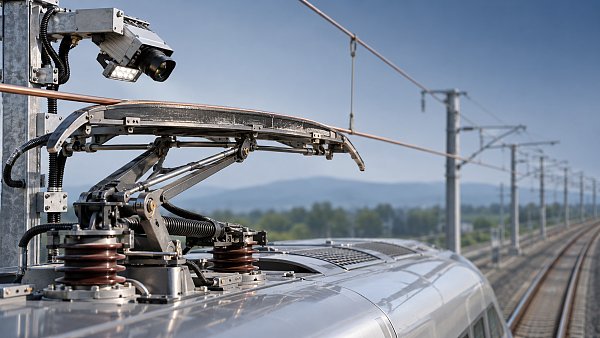
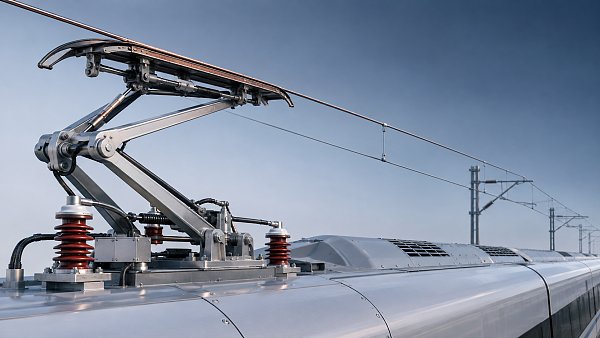
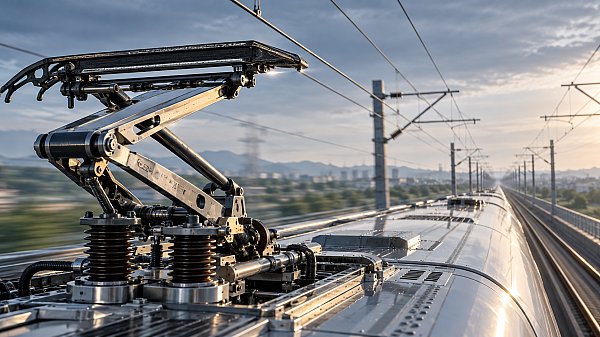
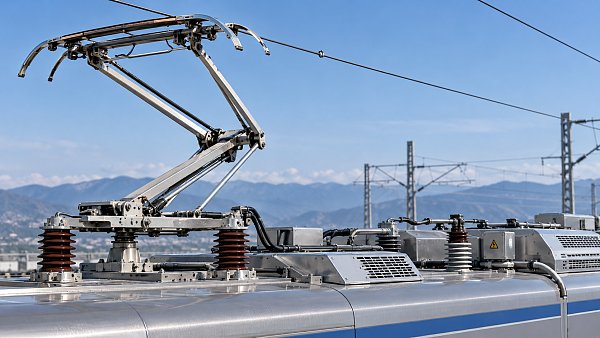
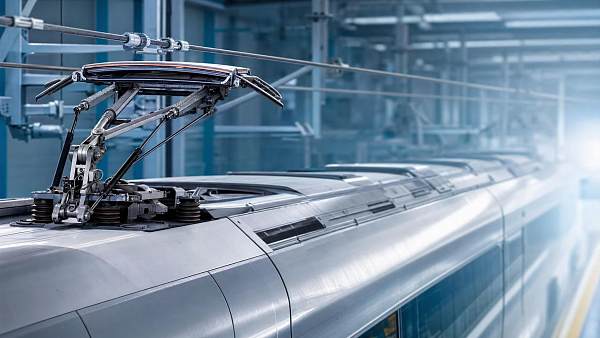
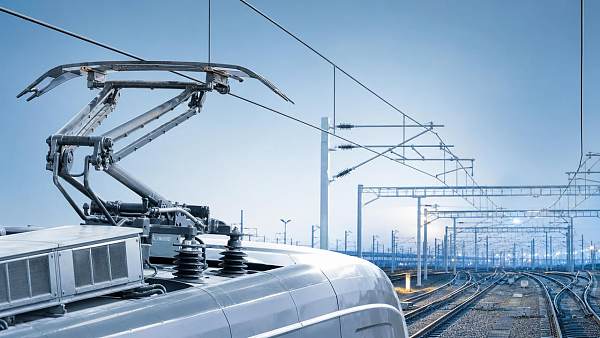
Preventing pantograph damage in severe wind conditions is less about fitting a single “wind-resistant” part and more about keeping the pantograph, overhead contact line, train speed, and operating rules working as one system. High winds can push the vehicle laterally, disturb the contact wire, and make the contact strip lose or strike the wire. Once contact force becomes unstable, arcing, carbon-strip breakage, entanglement, and overhead line damage can follow quickly.
If you are asking, “How can I avoid pantograph damage in severe wind conditions?”, the practical answer is to combine route-specific wind assessment, reliable weather detection, appropriate speed restrictions, correctly maintained pantograph mechanics, and condition monitoring. Treating wind as only a driver-handling issue leaves too much risk unmanaged.
Why wind damages pantographs
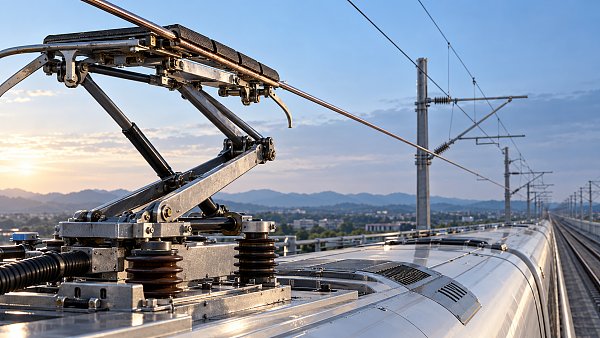
A pantograph is designed to maintain controlled, continuous contact with an overhead contact wire while the train moves. In calm conditions, its uplift mechanism and suspension characteristics help keep the carbon contact strip pressed against the wire within a planned force range. Strong crosswinds complicate that balance.
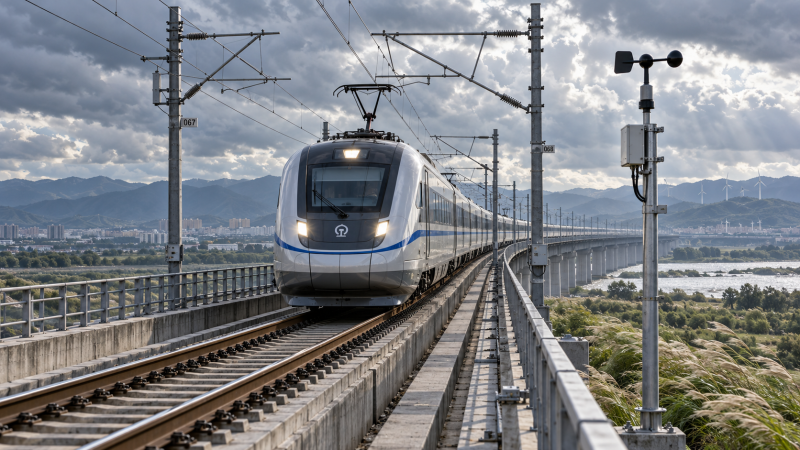
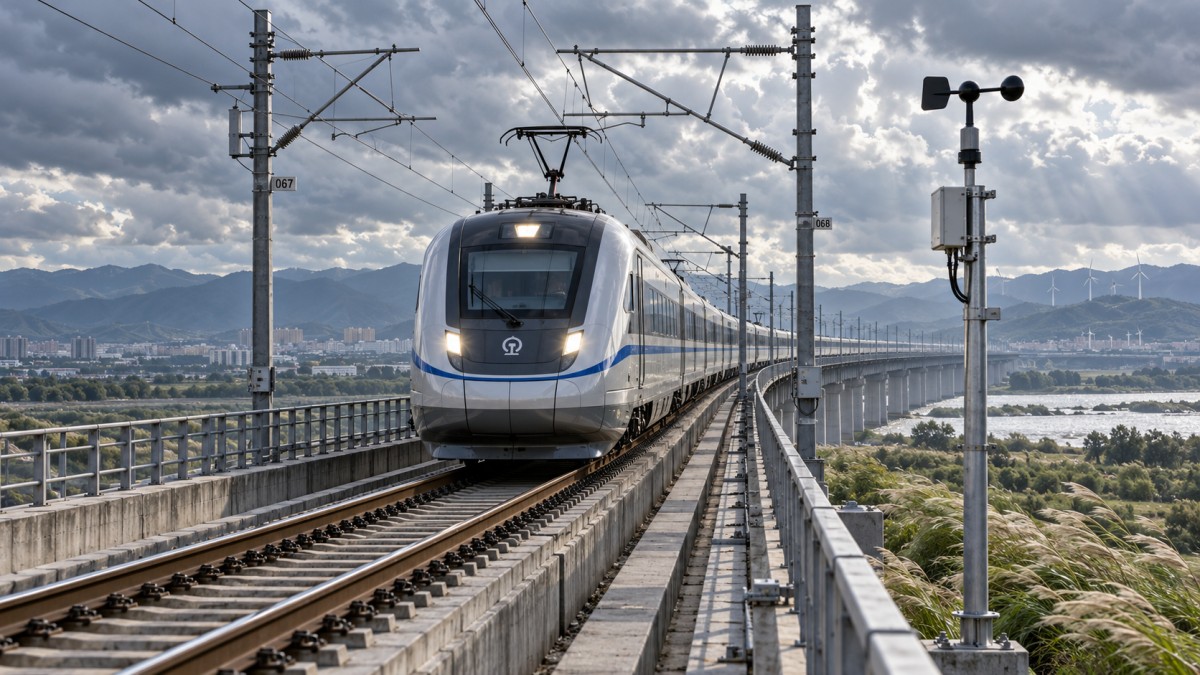
Wind does not act on the pantograph alone. It can move the train body, excite the overhead line, alter the pantograph head’s effective angle, and amplify vibration at exposed locations. Bridges, embankments, cuttings, tunnel portals, coastal sections, and open plains can all create localized wind behavior that differs from a general weather forecast.
The damaging event is often not steady wind pressure. It is the sudden gust, rapid direction change, or turbulent airflow that causes a brief loss of contact followed by a hard re-contact. That impact can chip or fracture a carbon strip, damage the collector head, bend linkages, or pull the contact wire out of its intended running position. In a severe case, the pantograph can snag the overhead line and escalate a component failure into a wider service disruption.
Set operating limits by location, not by a single wind number
A network-wide wind threshold is useful for communication, but it is rarely sufficient for equipment protection. The same nominal wind speed can produce very different pantograph behavior depending on vehicle type, train speed, wind direction, track geometry, overhead line design, and terrain exposure.
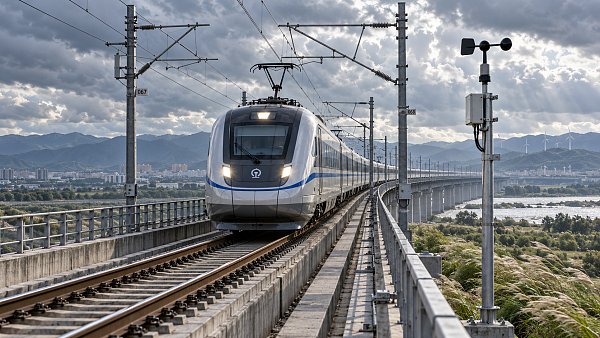
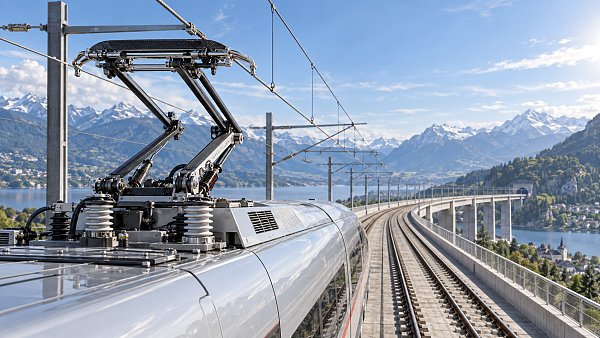
For example, a crosswind on an open viaduct affects vehicle sway and pantograph alignment differently from wind entering a tunnel portal. A gust near a large structure can produce turbulence that is more disruptive than steady wind on an open section. Curved track adds another variable because the contact wire and pantograph do not have the same lateral relationship as they do on a straight alignment.
Operating rules should therefore identify high-risk sections and define graduated actions. The response might range from increased observation, to reduced speed, to restricted use of a particular pantograph, to temporary suspension of traffic where safe current collection cannot be maintained. The action must reflect both vehicle stability and overhead current-collection risk; focusing on derailment risk alone is incomplete.
Use weather data that supports a real operating decision
Weather information becomes useful only when it can be tied to a route section and an action. Regional forecasts help plan staffing and service adjustments, but they cannot reliably describe the gusts acting on a specific bridge, cutting, or coastal approach.
Fixed wind sensors at known exposure points give dispatchers and control rooms a more relevant signal. Their value increases when the system distinguishes sustained wind from gusts, captures direction, and presents data in a form that aligns with route rules. A reading without an agreed operational response can create uncertainty at exactly the moment when crews need clear instruction.
For high-risk operations, connect wind warnings to the wider operating picture: train position, permitted speed, local route restrictions, overhead line status, and maintenance alerts. This does not mean every wind event should automatically stop traffic. It means the response should be predictable, traceable, and proportionate to the route’s known behavior.
Keep contact force stable rather than simply increasing it
A common but unsafe assumption is that higher pantograph force will solve wind-related contact loss. Extra upward force may reduce separation in one situation, but it can also increase mechanical wear, raise the force applied to the overhead line, and make impacts during gust-driven re-contact more severe. It may shift the problem rather than solve it.
The objective is stable contact force across the expected operating range. That requires the pantograph’s uplift system, damping, head suspension, collector strip, and control settings to match the vehicle and overhead line system. On trains with active or semi-active contact-force control, the control logic should be assessed for disturbed airflow and the actual dynamics of the route. A setting that performs well during routine high-speed running may behave differently in turbulent crosswinds.
Maintenance teams should pay particular attention to components that introduce slack, asymmetry, or delayed response. Worn joints, tired springs, degraded dampers, damaged flexible connections, and unequal collector-strip wear can all reduce the pantograph’s ability to follow the wire smoothly. These faults may remain manageable in normal weather but become critical when wind loads rise.
Inspect the pantograph and overhead line as a pair
After a severe wind event, inspecting only the train-side equipment can miss the cause of the failure. A pantograph can be damaged because of contact-wire displacement, poor tensioning, a local geometry defect, damaged droppers, loose fittings, or debris introduced by the weather. Conversely, an apparently minor crack in a carbon strip can develop into overhead line damage if the train returns to service unchanged.
A practical post-event inspection should consider the following:
- Condition of carbon contact strips, including chips, cracks, uneven wear, and missing material.
- Collector-head alignment, horn condition, articulation, and freedom of movement.
- Visible distortion, looseness, or damage in the pantograph frame, linkages, insulators, and pneumatic or electrical connections.
- Evidence of flashover, excessive arcing, or contact-wire strike marks.
- Overhead contact wire position, tension behavior, support fittings, and localized damage in exposed sections.
- Records of onboard alarms, abnormal current collection, driver reports, and wind readings at the time of the event.
These checks should not be treated as separate maintenance routines. The most useful investigation links a specific train movement, wind condition, pantograph condition, and route location. That makes it possible to distinguish a one-off extreme event from a recurring weakness in equipment setup or infrastructure geometry.
Match the pantograph design to the route’s wind and speed profile
Equipment selection matters most when it is based on the operating environment rather than headline capability. A pantograph intended for high-speed service must handle aerodynamic loads, vibration, and contact-wire interaction at speed. An urban rail application may operate at lower speeds yet face frequent transitions, closely spaced structures, exposed elevated sections, or repeated stop-start cycles that place different demands on the assembly.
When evaluating a pantograph or collector-head configuration for wind-exposed service, focus on the whole contact system:
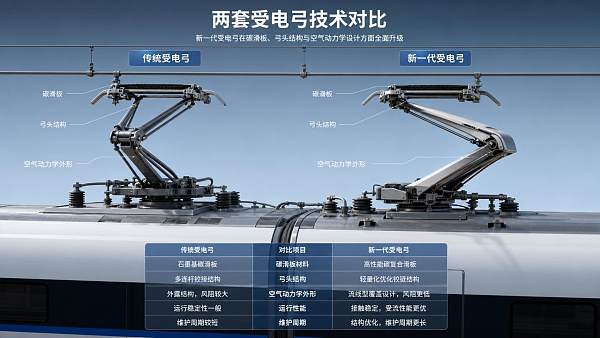
- Aerodynamic behavior: The head and frame should limit unstable lift or lateral disturbance under the train’s expected airflow conditions.
- Dynamic response: The mechanism must react quickly enough to follow the wire without becoming overly sensitive to vibration.
- Compatibility: Contact-strip material, head width, uplift characteristics, and control settings must suit the overhead line and electrical system.
- Maintainability: Wear points and inspection items should be accessible enough for frequent checks where severe-weather exposure is routine.
- Monitoring capability: Sensors and diagnostic interfaces are especially valuable when a route has recurring wind-related events.
There is no universal “best” wind-resistant pantograph. A design choice is sound only when it has been evaluated against the line’s catenary arrangement, train formation, operating speed, local turbulence, and maintenance capacity.
Make onboard monitoring actionable
Modern current-collection monitoring can detect conditions associated with damage before a visible failure occurs. Depending on the system, useful signals may include contact-force instability, excessive arcing, loss-of-contact events, collector-head movement, unusual uplift behavior, or abnormalities in the pantograph’s pneumatic and electrical systems.
The benefit comes from deciding what happens after an alert. A repeated indication in the same route segment may call for overhead line inspection. An alarm limited to one train may point to a pantograph defect. A sudden increase in alarms across several trains during high winds suggests that the operating restriction or weather threshold may need review.
Diagnostic information should also help maintenance prioritize work. Replacing a contact strip after visible damage is necessary, but preventing the next incident requires finding whether the initiating factor was wind exposure, incorrect setup, a deteriorating damper, a local wire defect, or an inappropriate operating response.
Do not rely on drivers to compensate for a system problem
Drivers play an essential role in reporting unusual noise, arcing, vibration, and changes in train behavior. Yet they cannot see contact-force fluctuations or reliably judge gust intensity at the pantograph. Instructions should be simple: recognize the warning condition, apply the prescribed speed or traction response, report the location and symptoms, and follow procedures for suspected pantograph or overhead line damage.
Ambiguous instructions create risk. “Proceed carefully” does not tell a driver when to reduce speed, isolate traction, lower a pantograph where permitted, or stop for inspection. Weather-response procedures should be practiced alongside fault-response procedures so that severe wind is handled as an operational condition with defined equipment consequences.
Common mistakes that increase damage risk
The first mistake is treating wind speed as the only variable. Gust direction, local terrain, vehicle speed, and overhead line condition often determine whether current collection remains stable.
The second is using a speed restriction as the only safeguard. Lower speed can reduce aerodynamic loading, but it cannot correct a cracked contact strip, displaced wire, loose pantograph linkage, or debris on the line.
The third is increasing uplift force without examining the complete contact system. That approach can create higher impact loads and accelerated wear. It should be an engineered adjustment, not a field workaround.
The fourth is returning equipment to service after a visual check alone. Some faults are intermittent or only appear under motion. Event data, repeat alarms, and known exposure locations should inform the release decision.
FAQ
Should a pantograph be lowered in high winds?
Only when the railway’s operating rules and train configuration permit it. Lowering a pantograph can protect damaged equipment or remove a suspected fault from service, but it may also remove traction power. The decision depends on the available pantographs, electrical supply arrangement, route conditions, and the nature of the alarm.
Can a damaged carbon strip cause overhead line damage?
Yes. A cracked, chipped, or severely worn strip can create poor contact, arcing, and sharp edges that damage the contact wire. A suspected strip defect should be treated as an overhead line protection issue, not merely a consumable-part replacement.
Are crosswinds more dangerous than headwinds for pantographs?
Crosswinds are often more difficult because they can move the vehicle laterally and disturb alignment between the collector head and contact wire. Headwinds can also affect aerodynamic loading, particularly at high speed, so the relevant risk depends on the train and route design.
What should be reviewed after repeated wind-related pantograph incidents?
Review the incident locations, wind direction and gust pattern, train speed, pantograph condition, onboard event data, and overhead line geometry together. Repeated incidents at one location usually justify a route-specific investigation rather than repeated replacement of damaged components.
For operators assessing high-speed traction and current-collection risks, GTOT’s coverage of pantograph dynamics, rail control systems, and severe operating conditions can support a more connected view of equipment selection, maintenance evidence, and route-level resilience. The practical priority remains clear: protect the contact interface before a gust-driven instability becomes a pantograph and overhead line failure.
Recommended News
 Nov 15, 2026Can high-speed rail pantograph monitoring detect carbon strip wear?Can high-speed rail pantograph monitoring detect carbon strip wear? Explore inspection methods, measurement limits and smarter maintenance decisions.
 Nov 11, 2026How high-speed rail pantograph aerodynamics affect contact forceDiscover how high-speed rail pantograph aerodynamics affect contact force, and explore testing methods that help engineers improve current collection.
 Oct 30, 2026How high-speed rail pantograph design affects contact forceDiscover how high-speed rail pantograph design affects contact force, wear and current collection—and what to check when comparing designs.
 Oct 18, 2026How to assess fatigue life in forged high-speed pantograph armsEvaluating railway pantograph components forged arm suppliers? Learn how load spectra, material data and component testing help verify fatigue life and reduce sourcing risks.
 Oct 17, 2026What causes railway pantographs to lose contact at high speeds?Why do railway pantographs lose contact at high speeds? Explore aerodynamic forces, wire dynamics, and wear—and discover how to diagnose root causes and improve current collection.
 Oct 16, 2026How 25 kV traction power affects pantograph insulation clearancesExplore how traction power 25kV affects pantograph insulation clearances. Discover key voltage, movement, and environmental factors to support safer railway roof designs.
 Oct 17, 2026How Can You Prevent Pantograph Damage in Severe Wind Conditions?How can I avoid pantograph damage in severe wind conditions? Explore practical strategies for wind monitoring, speed control, stable contact force, and safer rail operations.
 Sep 27, 2026How to assess a high speed pantograph supplier in EuropeHigh speed pantograph supplier Europe: learn how to assess technical fit, validation, compliance, and lifecycle support for reliable rail operations.
 Aug 08, 2026How to Evaluate Rail Pantograph Systems for Speed, Contact Stability, and Maintenance LifeRail pantograph systems evaluation made practical: learn how to assess speed performance, contact stability, and maintenance life for safer selection, lower wear, and more reliable rail operations.
 Jul 11, 2026Pantographs for High-Speed Rail: How to Reduce Lifecycle Maintenance CostsPantographs for high-speed rail: learn how smarter design, stable current collection, and serviceable components can cut lifecycle maintenance costs and reduce downtime.
 Jun 30, 2026How to Evaluate High-Speed Rail Pantograph Head Wear and Contact StabilityHigh-speed rail pantograph head evaluation starts with wear patterns, contact stability, and route fit. Learn how to reduce arc risk, prevent failures, and improve replacement decisions.
 Jun 27, 2026How Pantograph Components Affect Current Collection and WearPantograph components directly influence current collection, contact stability, and wear. Learn how strip material, force control, damping, and frame design improve rail reliability and cut maintenance costs.
 Jun 23, 2026How Pantographs for High-Speed Rail Affect Uptime and Maintenance CostsPantographs for high-speed rail directly impact fleet uptime and maintenance costs. Learn how stable contact, smarter inspections, and better design reduce failures and downtime.
 Jun 22, 2026High-Speed Rail Technology: Key Performance Factors Before System SelectionHigh-speed rail technology selection starts with safety, traction, braking, interoperability, and lifecycle value. Discover the key factors that help buyers choose reliable, future-ready systems.
 Jun 13, 2026Pantographs Supplier for Railway Networks: 7 Factors to ComparePantographs supplier for railway networks: compare 7 critical factors including performance, wear life, certification, delivery, service, and total cost to choose a reliable partner.
 Jun 13, 2026How Pantographs for High-Speed Rail Affect Uptime and WearPantographs for high-speed rail directly shape uptime, wear, and lifecycle cost. Learn how contact stability, materials, and aerodynamics impact reliability and maintenance.
 Jun 11, 2026High-Speed Traction Systems: Performance Factors That Affect Rail EfficiencyHigh-speed traction systems drive rail efficiency through better power conversion, thermal control, precision software, and reliability. Learn which upgrades deliver measurable results.
![]() Jun 04, 2026Pantographs for High-Speed Rail: Key Wear Signs to TrackPantographs for high-speed rail: learn the key wear signs to track, from uneven strip wear to arc marks and vibration, to improve safety, uptime, and maintenance decisions.
 May 25, 2026Pantographs for High-Speed Rail: Key Performance ChecksPantographs for high-speed rail: discover the key performance checks technical evaluators should review, from contact force and aerodynamics to wear, vibration, and life-cycle reliability.
 May 21, 2026Pantographs for Electric Locomotives: What Affects Contact StabilityPantographs for electric locomotives: discover what affects contact stability, from airflow and catenary dynamics to strip wear and suspension tuning for safer, more reliable rail performance.
 May 20, 2026Pantographs Supplier for Railway Networks: Key Checks Before ShortlistingPantographs supplier for railway networks: learn the key checks for technical fit, compliance, lifecycle support, and reliability before shortlisting the right partner.
 May 07, 2026How to Compare Pantographs for High-Speed Rail UpgradesPantographs comparison for high-speed rail upgrades: learn how to evaluate contact stability, aerodynamics, wear, and lifecycle cost to choose safer, smarter systems.