



Search News
Industry Portal
Popular Tags
How to Evaluate High-Speed Rail Pantograph Head Wear and Contact Stability
Author
Time
Click Count
How to Evaluate High-Speed Rail Pantograph Head Wear and Contact Stability
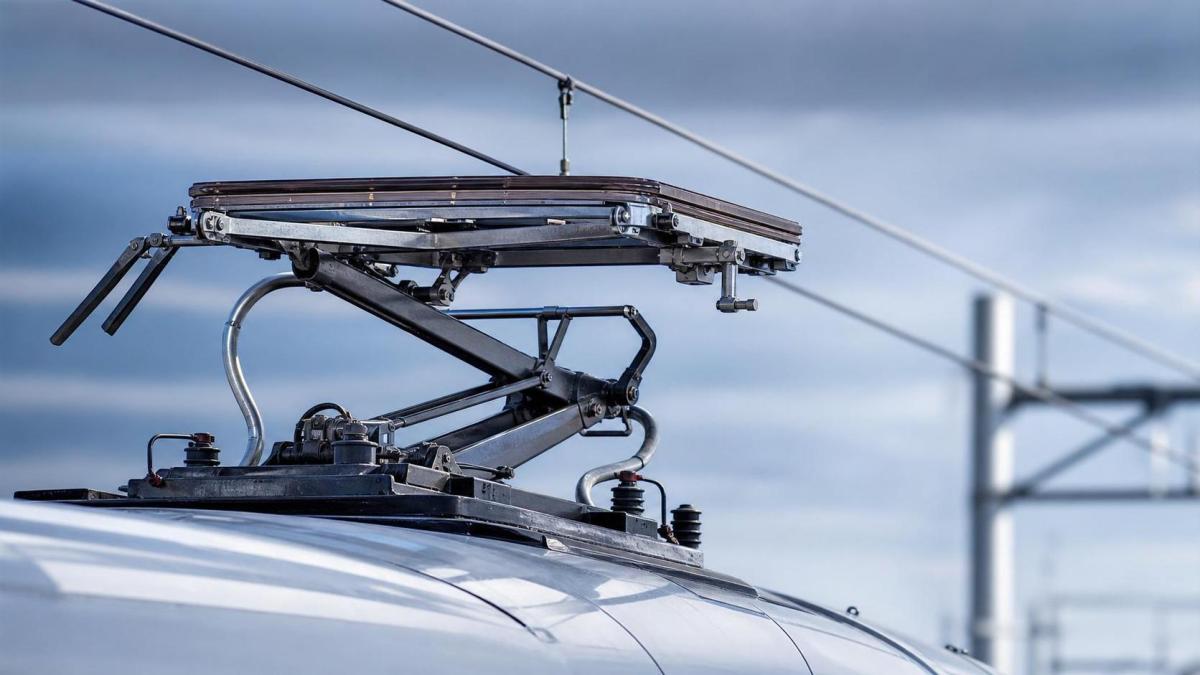
Evaluating a high-speed rail pantograph head is not just a visual task. A clean-looking strip can still produce unstable contact at operating speed.
The real job is to connect wear condition, contact force behavior, current quality, and service environment into one decision.
That matters more on trains running above 250 km/h, where small contact defects can quickly become power loss, overheating, or catenary damage.
In practice, a sound assessment of a high-speed rail pantograph head should answer three questions.
- How fast is the contact surface wearing, and is that wear predictable?
- Can the head maintain stable contact under real aerodynamic and vibration loads?
- Does the design still fit the target route, climate, speed band, and maintenance interval?
Once those answers are clear, selection and replacement decisions become much more reliable.
Start with the wear mechanism, not the wear mark
Many evaluations begin with thickness checks. That is necessary, but it is rarely enough for a high-speed rail pantograph head.
A better approach starts with the wear mechanism behind the surface change. Different mechanisms suggest very different risks.
Common wear patterns to classify
- Uniform abrasion: usually acceptable if the rate remains inside the maintenance model.
- Localized grooving: often linked to contact force imbalance or wire alignment issues.
- Edge chipping: a warning sign for impact, uplift variation, or installation error.
- Burn marks and arc pits: often indicate contact loss, current concentration, or contamination.
- Layer peeling or cracking: usually points to material fatigue or poor bonding quality.
More importantly, do not read the carbon strip alone. The high-speed rail pantograph head is a system component.
The strip, carrier, suspension, horn geometry, damping, and head frame all influence the final wear pattern.
If the strip looks abnormal, the root cause may sit upstream in the head dynamics.
Measure wear with data that supports replacement decisions
A usable evaluation needs measurable thresholds. Otherwise, teams end up replacing parts too early or too late.
Core inspection data to collect
- Remaining strip thickness at multiple points across the head width.
- Longitudinal and transverse wear profile, including asymmetry.
- Arc damage count, depth, and clustering trend.
- Surface roughness changes after service intervals.
- Mileage-based wear rate under known route and speed conditions.
This is where trend analysis becomes more useful than single inspection snapshots.
For example, two high-speed rail pantograph head units may show the same remaining thickness today, yet one may be wearing twice as fast.
That difference changes the replacement window, fleet risk, and spare planning.
A practical decision table
Check contact stability under operating conditions
Wear tells you what has happened. Contact stability tells you what is likely to happen next.
For a high-speed rail pantograph head, stable current collection depends on controlled force, limited separation, and predictable vibration response.
At higher speed, aerodynamic uplift and head oscillation can change contact quality even when static inspection looks fine.
The most useful stability indicators
- Mean contact force and force standard deviation
- Contact loss rate over defined speed ranges
- Arc duration and arc repetition under load
- Vertical acceleration at the head assembly
- Current collection quality in tunnels, crosswinds, and transition zones
These indicators should be reviewed together. Looking at only one can hide a developing problem.
For instance, average force may stay within target while force fluctuation rises sharply. That usually means contact instability is approaching.
In actual projects, this is often the earlier warning signal than visible strip damage.
Link the head design to route conditions
A high-speed rail pantograph head that performs well on one corridor may underperform on another.
That is why route context should sit inside the evaluation, not outside it.
Route variables that change the result
- Maximum operating speed and time spent near top speed
- Tunnel ratio and pressure wave effects
- Crosswind exposure on bridges and open sections
- Current demand from traction and onboard loads
- Temperature range, humidity, sand, ice, and pollution level
- Catenary stiffness, stagger, uplift behavior, and maintenance quality
This also affects material choice. Carbon composition that resists wear in dry conditions may respond differently in humid or icy environments.
Likewise, head geometry optimized for one catenary system may increase localized stress on another.
Selection quality improves when route data is treated as a primary input, not a later adjustment.
Look for early failure signals before hard limits are reached
Hard limits are necessary for safety, but they are not enough for good asset decisions.
A high-speed rail pantograph head usually gives earlier signals before it reaches rejection thickness or visible fracture.
Signals worth acting on early
- A growing gap between left and right side wear rates.
- Rising arc counts during similar operating cycles.
- More frequent contact alarms at specific speed bands.
- Repeated polishing bands that indicate unstable force concentration.
- Shorter maintenance intervals without a clear route change.
These signs are especially useful when comparing candidate suppliers or upgraded strip grades.
A supplier may meet minimum wear limits yet still show worse stability trends over time.
That distinction matters when the purchasing decision is tied to lifecycle cost rather than unit price alone.
Build a practical evaluation workflow
A strong workflow keeps wear review, dynamic testing, and replacement judgment connected.
That is usually the difference between routine inspection and real selection insight.
Recommended evaluation sequence
- Define route, speed, current, and maintenance boundary conditions.
- Collect dimensional wear data from multiple service intervals.
- Review contact force, contact loss, and arc behavior under operation.
- Check head structure, damping parts, and mounting integrity.
- Compare results against baseline fleet data and candidate alternatives.
- Estimate lifecycle cost, failure risk, and replacement timing.
This workflow makes the high-speed rail pantograph head evaluation more defensible during procurement and fleet review.
It also helps separate true component weakness from catenary or operating-condition effects.
Final selection judgment
The best high-speed rail pantograph head is not simply the one with the slowest visible wear.
The better choice is the one that keeps stable contact, controls arc risk, fits the route environment, and delivers predictable maintenance intervals.
When evaluating options, give more weight to trend consistency than isolated inspection results.
Give more weight to system behavior than strip appearance alone.
And always test whether the high-speed rail pantograph head can hold contact stability where the route is most demanding, not where conditions are easiest.
That approach leads to better replacement timing, lower network risk, and more confident equipment decisions.
Recommended News
 Sep 27, 2026How to assess a high speed pantograph supplier in EuropeHigh speed pantograph supplier Europe: learn how to assess technical fit, validation, compliance, and lifecycle support for reliable rail operations.
 Aug 08, 2026How to Evaluate Rail Pantograph Systems for Speed, Contact Stability, and Maintenance LifeRail pantograph systems evaluation made practical: learn how to assess speed performance, contact stability, and maintenance life for safer selection, lower wear, and more reliable rail operations.
 Jul 11, 2026Pantographs for High-Speed Rail: How to Reduce Lifecycle Maintenance CostsPantographs for high-speed rail: learn how smarter design, stable current collection, and serviceable components can cut lifecycle maintenance costs and reduce downtime.
 Jun 30, 2026How to Evaluate High-Speed Rail Pantograph Head Wear and Contact StabilityHigh-speed rail pantograph head evaluation starts with wear patterns, contact stability, and route fit. Learn how to reduce arc risk, prevent failures, and improve replacement decisions.
 Jun 27, 2026How Pantograph Components Affect Current Collection and WearPantograph components directly influence current collection, contact stability, and wear. Learn how strip material, force control, damping, and frame design improve rail reliability and cut maintenance costs.
 Jun 23, 2026How Pantographs for High-Speed Rail Affect Uptime and Maintenance CostsPantographs for high-speed rail directly impact fleet uptime and maintenance costs. Learn how stable contact, smarter inspections, and better design reduce failures and downtime.
 Jun 22, 2026High-Speed Rail Technology: Key Performance Factors Before System SelectionHigh-speed rail technology selection starts with safety, traction, braking, interoperability, and lifecycle value. Discover the key factors that help buyers choose reliable, future-ready systems.
 Jun 13, 2026Pantographs Supplier for Railway Networks: 7 Factors to ComparePantographs supplier for railway networks: compare 7 critical factors including performance, wear life, certification, delivery, service, and total cost to choose a reliable partner.
 Jun 13, 2026How Pantographs for High-Speed Rail Affect Uptime and WearPantographs for high-speed rail directly shape uptime, wear, and lifecycle cost. Learn how contact stability, materials, and aerodynamics impact reliability and maintenance.
 Jun 11, 2026High-Speed Traction Systems: Performance Factors That Affect Rail EfficiencyHigh-speed traction systems drive rail efficiency through better power conversion, thermal control, precision software, and reliability. Learn which upgrades deliver measurable results.
![]() Jun 04, 2026Pantographs for High-Speed Rail: Key Wear Signs to TrackPantographs for high-speed rail: learn the key wear signs to track, from uneven strip wear to arc marks and vibration, to improve safety, uptime, and maintenance decisions.
Jun 04, 2026Pantographs for High-Speed Rail: Key Wear Signs to TrackPantographs for high-speed rail: learn the key wear signs to track, from uneven strip wear to arc marks and vibration, to improve safety, uptime, and maintenance decisions. May 25, 2026Pantographs for High-Speed Rail: Key Performance ChecksPantographs for high-speed rail: discover the key performance checks technical evaluators should review, from contact force and aerodynamics to wear, vibration, and life-cycle reliability.
 May 21, 2026Pantographs for Electric Locomotives: What Affects Contact StabilityPantographs for electric locomotives: discover what affects contact stability, from airflow and catenary dynamics to strip wear and suspension tuning for safer, more reliable rail performance.
 May 20, 2026Pantographs Supplier for Railway Networks: Key Checks Before ShortlistingPantographs supplier for railway networks: learn the key checks for technical fit, compliance, lifecycle support, and reliability before shortlisting the right partner.
 May 07, 2026How to Compare Pantographs for High-Speed Rail UpgradesPantographs comparison for high-speed rail upgrades: learn how to evaluate contact stability, aerodynamics, wear, and lifecycle cost to choose safer, smarter systems.