



Search News
Industry Portal
Popular Tags
Pantographs for High-Speed Rail: Key Wear Signs to Track

Author
Time
Click Count
For after-sales maintenance teams, monitoring pantographs for high-speed rail is no longer a routine checklist item. It is a frontline reliability task tied to safety, energy continuity, and fleet availability.
As train speeds rise, wear patterns become faster, more complex, and less forgiving. Small defects in contact strips, frame geometry, or damping behavior can escalate into arcing, wire damage, or service disruption.
This makes condition tracking essential across the wider transport equipment landscape. For intelligence platforms like GTOT, pantographs for high-speed rail represent a critical interface between traction power, digital maintenance, and asset value.
Why wear monitoring on pantographs for high-speed rail is becoming more demanding
The operating environment for pantographs for high-speed rail has changed significantly. Higher line speeds, denser service schedules, and stricter punctuality targets leave less room for gradual degradation.
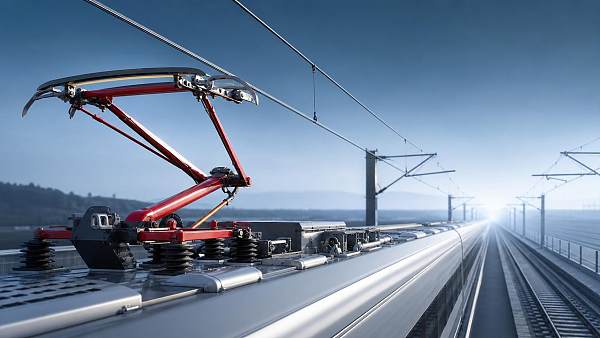
At 300 km/h and above, contact force must stay stable under crosswind, vibration, and dynamic uplift. Even minor wear can disturb the pantograph-catenary interface and amplify downstream faults.
Another shift comes from maintenance digitalization. Fleets increasingly combine manual inspection with onboard sensing, image recognition, and data-led thresholds. Wear is now judged by trend quality, not only by end-limit dimensions.
In this context, tracking pantographs for high-speed rail means looking beyond visible damage. Teams must identify subtle changes early, before they affect overhead line health or train power stability.
The clearest trend signals are appearing in a few repeatable wear indicators
The most useful warning signs are not random. They usually emerge in repeatable patterns linked to contact quality, structure fatigue, and environmental stress.
1. Uneven carbon strip wear is the first red flag
Uneven strip wear often signals poor contact distribution. One side may thin faster, or the center may hollow out earlier than expected.
This can indicate misalignment, irregular contact force, catenary geometry issues, or frame distortion. On pantographs for high-speed rail, uneven wear reduces stable current collection and increases arcing risk.
2. Surface burns and arc marks usually point to unstable contact
Localized blackening, pitting, or thermal damage on the strip surface should never be treated as cosmetic. These marks often reveal repeated contact loss and electrical discharge.
When arc marks cluster in the same area, teams should check uplift behavior, spring performance, and overhead wire condition together.
3. Abnormal vibration is becoming a stronger predictor of future failure
Visible oscillation, noise changes, or unstable head motion during operation often appear before severe mechanical wear. Damper degradation, loosened joints, or hidden fatigue may be involved.
For pantographs for high-speed rail, vibration matters because repeated instability accelerates strip consumption and can transmit harmful loads into the catenary.
4. Cracks, looseness, and joint play show structural aging
Wear is not limited to contact strips. Hinges, linkages, fasteners, and frame members can develop play or microcracks under long-term dynamic loading.
These defects may look small at depot level, yet under high-speed operation they can alter contact geometry quickly.
5. Loss of contact force consistency is often the hidden root cause
A pantograph may pass a visual inspection while still performing poorly. Drift in static or dynamic contact force can sit behind many recurring wear symptoms.
This is why pantographs for high-speed rail need both dimensional checks and force-related diagnostics.
Several forces are driving these wear patterns across modern rail operations
The rise in wear sensitivity is shaped by both technical and operational pressures. The table below summarizes the main drivers and their maintenance implications.
The effects extend beyond one component and touch multiple business links
Wear on pantographs for high-speed rail influences more than replacement cost. It affects rolling stock reliability, overhead line integrity, energy quality, and maintenance planning efficiency.
If uneven wear goes undetected, the result may be faster strip consumption, more emergency interventions, and avoidable catenary damage. That raises both direct labor cost and indirect service risk.
- Operations face higher risks of unexpected power collection instability.
- Maintenance teams lose planning accuracy when wear trends are poorly classified.
- Infrastructure owners may absorb extra overhead wire stress and repair burden.
- Asset managers see shorter component life and weaker life-cycle cost control.
For a broader intelligence ecosystem such as GTOT, this connects with a larger pattern. High-performance transport assets now require cross-domain thinking, where diagnostics, materials, control logic, and service reliability are evaluated together.
What deserves the closest attention in daily tracking and inspection routines
To improve decision quality, inspection routines should focus on a compact set of high-value indicators rather than treating all observations equally.
- Measure strip thickness by zone, not only by total remaining depth.
- Compare left-right wear balance on every pantograph head.
- Document arc marks by location, density, and recurrence frequency.
- Track noise and vibration change against route and speed conditions.
- Check fasteners, linkages, and joints for play under realistic load positions.
- Validate static and dynamic contact force trends after major maintenance events.
- Link defects to catenary zones, weather exposure, and trainset assignment history.
This approach helps pantographs for high-speed rail move from calendar-based replacement logic toward evidence-based intervention.
A practical judgment framework can improve response speed and maintenance accuracy
Not every defect needs the same response. A simple triage model helps teams react faster and allocate workshop time more effectively.
For pantographs for high-speed rail, the best results usually come from combining visual evidence, measurement data, and route context into one maintenance judgment.
The next step is building a trend-based maintenance loop, not just fixing visible defects
A stronger strategy starts with standardizing inspection language. Teams should define wear categories clearly, including thresholds for uneven loss, burn intensity, vibration severity, and structural looseness.
Next, connect workshop records with route, season, speed band, and component batch history. This often reveals why some pantographs for high-speed rail deteriorate faster under seemingly similar duty cycles.
Finally, review intervention timing. If defects are repeatedly found too late, the issue may be inspection interval design rather than technician effort.
For organizations following GTOT’s land-and-sea intelligence logic, the lesson is clear. High-value equipment performs best when maintenance decisions are informed by patterns, not isolated symptoms.
Start by auditing the last six months of wear records for pantographs for high-speed rail. Reclassify repeat faults, identify the earliest missed signals, and adjust inspection triggers before the next heavy operating cycle.
Recommended News
 Sep 27, 2026How to assess a high speed pantograph supplier in EuropeHigh speed pantograph supplier Europe: learn how to assess technical fit, validation, compliance, and lifecycle support for reliable rail operations.
 Aug 08, 2026How to Evaluate Rail Pantograph Systems for Speed, Contact Stability, and Maintenance LifeRail pantograph systems evaluation made practical: learn how to assess speed performance, contact stability, and maintenance life for safer selection, lower wear, and more reliable rail operations.
 Jul 11, 2026Pantographs for High-Speed Rail: How to Reduce Lifecycle Maintenance CostsPantographs for high-speed rail: learn how smarter design, stable current collection, and serviceable components can cut lifecycle maintenance costs and reduce downtime.
 Jun 30, 2026How to Evaluate High-Speed Rail Pantograph Head Wear and Contact StabilityHigh-speed rail pantograph head evaluation starts with wear patterns, contact stability, and route fit. Learn how to reduce arc risk, prevent failures, and improve replacement decisions.
 Jun 27, 2026How Pantograph Components Affect Current Collection and WearPantograph components directly influence current collection, contact stability, and wear. Learn how strip material, force control, damping, and frame design improve rail reliability and cut maintenance costs.
 Jun 23, 2026How Pantographs for High-Speed Rail Affect Uptime and Maintenance CostsPantographs for high-speed rail directly impact fleet uptime and maintenance costs. Learn how stable contact, smarter inspections, and better design reduce failures and downtime.
 Jun 22, 2026High-Speed Rail Technology: Key Performance Factors Before System SelectionHigh-speed rail technology selection starts with safety, traction, braking, interoperability, and lifecycle value. Discover the key factors that help buyers choose reliable, future-ready systems.
 Jun 13, 2026Pantographs Supplier for Railway Networks: 7 Factors to ComparePantographs supplier for railway networks: compare 7 critical factors including performance, wear life, certification, delivery, service, and total cost to choose a reliable partner.
 Jun 13, 2026How Pantographs for High-Speed Rail Affect Uptime and WearPantographs for high-speed rail directly shape uptime, wear, and lifecycle cost. Learn how contact stability, materials, and aerodynamics impact reliability and maintenance.
 Jun 11, 2026High-Speed Traction Systems: Performance Factors That Affect Rail EfficiencyHigh-speed traction systems drive rail efficiency through better power conversion, thermal control, precision software, and reliability. Learn which upgrades deliver measurable results.
![]() Jun 04, 2026Pantographs for High-Speed Rail: Key Wear Signs to TrackPantographs for high-speed rail: learn the key wear signs to track, from uneven strip wear to arc marks and vibration, to improve safety, uptime, and maintenance decisions.
Jun 04, 2026Pantographs for High-Speed Rail: Key Wear Signs to TrackPantographs for high-speed rail: learn the key wear signs to track, from uneven strip wear to arc marks and vibration, to improve safety, uptime, and maintenance decisions. May 25, 2026Pantographs for High-Speed Rail: Key Performance ChecksPantographs for high-speed rail: discover the key performance checks technical evaluators should review, from contact force and aerodynamics to wear, vibration, and life-cycle reliability.
 May 21, 2026Pantographs for Electric Locomotives: What Affects Contact StabilityPantographs for electric locomotives: discover what affects contact stability, from airflow and catenary dynamics to strip wear and suspension tuning for safer, more reliable rail performance.
 May 20, 2026Pantographs Supplier for Railway Networks: Key Checks Before ShortlistingPantographs supplier for railway networks: learn the key checks for technical fit, compliance, lifecycle support, and reliability before shortlisting the right partner.
 May 07, 2026How to Compare Pantographs for High-Speed Rail UpgradesPantographs comparison for high-speed rail upgrades: learn how to evaluate contact stability, aerodynamics, wear, and lifecycle cost to choose safer, smarter systems.