



Search News
Industry Portal
Popular Tags
Pantographs for Electric Locomotives: What Affects Contact Stability
Author
Time
Click Count
For technical evaluators assessing pantographs for electric locomotives, contact stability is a decisive factor behind power quality, wear control, and high-speed reliability. This article explains how airflow, catenary behavior, strip condition, suspension tuning, and environmental stress combine to shape current collection quality and lifecycle risk.
Across rail modernization programs, expectations for pantographs for electric locomotives are changing. Networks now demand higher speed tolerance, lower maintenance windows, better interoperability, and stronger energy efficiency. As a result, contact stability is no longer judged only by uplift force. It is evaluated as a system-level performance outcome.
Why contact stability has become the key performance signal
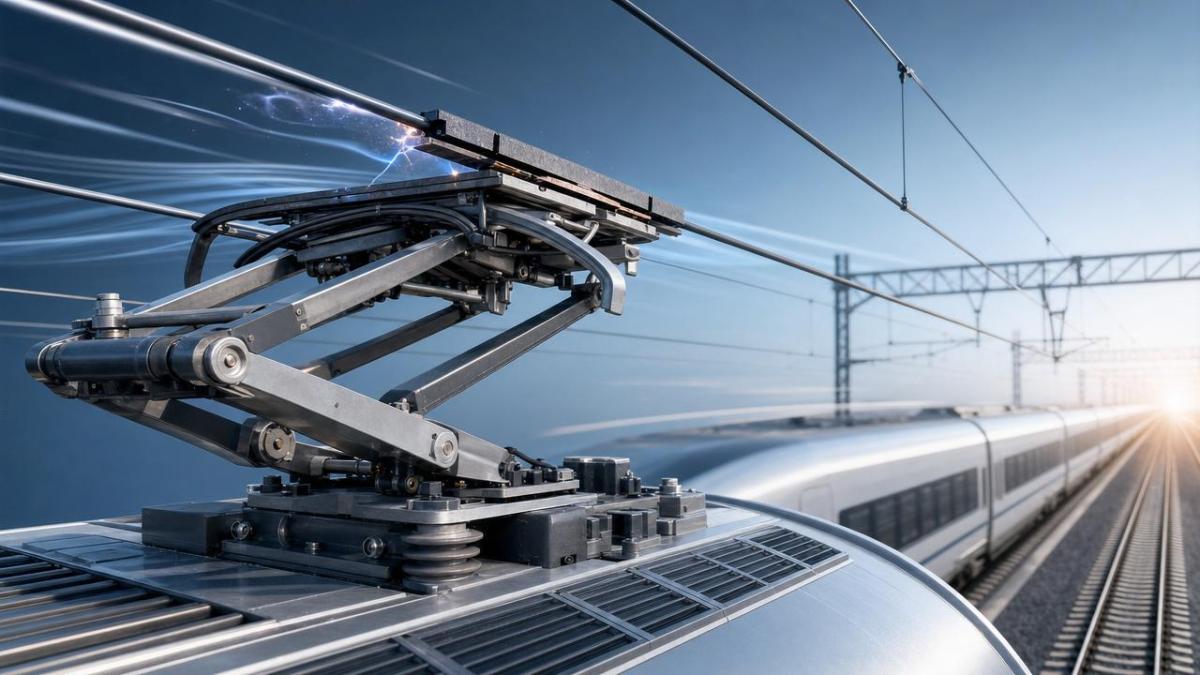
In modern traction systems, unstable contact creates more than visible arcing. It also increases harmonic disturbance, carbon strip loss, overhead line wear, and unplanned service interruptions. For that reason, pantographs for electric locomotives are increasingly assessed through dynamic contact behavior rather than static geometry alone.
This shift is especially visible on mixed-traffic corridors. Freight locomotives, regional services, and high-speed trains often share infrastructure with different loading patterns. The same pantograph head must remain compliant under varying wire heights, crosswind levels, and maintenance conditions.
Another signal is the wider use of predictive maintenance. Operators now compare contact force trends, strip wear rates, and arc events over time. That makes contact stability a measurable strategic indicator, not just a workshop observation.
The strongest trend signals shaping pantographs for electric locomotives
Several industry shifts are redefining what stable current collection means in practice. These shifts affect design targets, test methods, and acceptance criteria.
These signals show why pantographs for electric locomotives must now be judged as part of a complete energy transfer chain. Mechanical tuning, wire quality, and environmental exposure all matter together.
Five interacting factors now determine contact stability
Stable current collection depends on the interaction of several variables. Looking at only one variable often leads to weak conclusions.
1. Aerodynamic loads are no longer a secondary issue
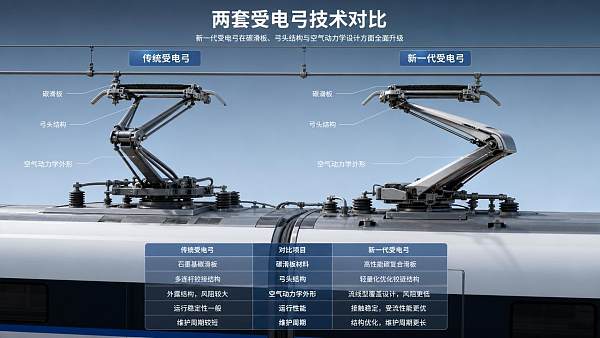
At higher speeds, airflow changes the effective uplift force on the pantograph head. Turbulence near the roof, tunnels, and passing trains can cause rapid contact force variation.
For pantographs for electric locomotives, poor aerodynamic shaping often appears as intermittent dewire tendencies, arc marks, and uneven strip wear. These symptoms become stronger under crosswind and winter service conditions.
2. Catenary dynamics can override nominal pantograph quality
A well-designed pantograph still performs poorly on irregular overhead lines. Stagger variation, dropper condition, wire tension, and support spacing all influence wave propagation and local contact loss.
This is why evaluations of pantographs for electric locomotives should always include compatibility with actual infrastructure classes, not only laboratory benchmarks.
3. Carbon strip condition directly affects electrical and mechanical stability
Carbon strips are often treated as consumables, yet their condition strongly influences contact quality. Uneven wear, contamination, edge damage, or poor material matching can raise local resistance and worsen arcing.
When pantographs for electric locomotives operate under polluted or coastal conditions, strip inspection frequency becomes more important. Salt, dust, and moisture accelerate surface instability.
4. Suspension tuning defines how the head follows wire movement
The suspension system must balance responsiveness and damping. If it is too stiff, the head cannot track vertical wire motion smoothly. If it is too soft, oscillation increases after disturbances.
This tradeoff explains why pantographs for electric locomotives need application-specific tuning. Urban acceleration patterns, freight vibration, and high-speed cruising create different dynamic demands.
5. Operating environment increasingly shapes real-world outcomes
Temperature swings, icing, airborne particles, humidity, and tunnel pressure pulses all affect stability. Environmental effects are often underestimated during selection, then discovered after service entry.
For globally deployed pantographs for electric locomotives, environmental adaptability has become a core evaluation dimension rather than a minor specification note.
Why these changes matter across the rail value chain
The consequences of contact instability extend beyond the pantograph assembly. They affect traction efficiency, timetable resilience, infrastructure wear, and long-term cost visibility.
- Vehicle performance suffers when arcing introduces voltage fluctuation and heat stress.
- Overhead line assets degrade faster under repeated contact loss and impact loading.
- Maintenance planning becomes less accurate when wear patterns are irregular.
- Energy efficiency targets become harder to achieve under unstable current collection.
This broader impact explains the growing attention around monitoring and simulation. In advanced rail programs, pantographs for electric locomotives are reviewed together with line condition data, route profile, and operating regime.
The same system-level thinking fits GTOT’s wider land-sea intelligence view. High-reliability transport depends on stable interfaces under dynamic loads, whether the interface is a pantograph head, a braking surface, or a ship control subsystem.
What deserves closer attention during technical evaluation
When reviewing pantographs for electric locomotives, several checkpoints deserve priority because they reveal practical stability risk better than headline ratings.
- Dynamic contact force range: look beyond average values and examine fluctuation amplitude.
- Aerodynamic behavior: verify stability under crosswind, tunnel entry, and train passing scenarios.
- Strip wear pattern: assess edge wear, thermal marks, and compatibility with line materials.
- Suspension response: review damping and recovery after transient disturbances.
- Infrastructure fit: match the design with actual catenary tolerances and route conditions.
- Monitoring readiness: prefer designs that support data-based maintenance and failure diagnosis.
These points help separate nominally compliant equipment from truly resilient pantographs for electric locomotives suited for demanding service environments.
A practical way to judge future suitability
Because rail systems are evolving quickly, technical decisions should test future suitability, not only present compliance. A practical framework can support more reliable judgments.
Using this approach, pantographs for electric locomotives can be evaluated against realistic service futures, including rising speed expectations and more diverse infrastructure conditions.
The next action is to evaluate contact stability as a connected system
The main industry direction is clear. Contact stability is becoming a strategic measure of traction reliability, maintenance efficiency, and infrastructure protection. The best decisions come from comparing pantograph behavior with route dynamics, strip condition, and environmental exposure together.
For organizations tracking railway electrification and high-performance transport systems, pantographs for electric locomotives should be reviewed with the same rigor used for signaling, braking, and other mission-critical interfaces. A connected evaluation model produces better reliability forecasts and stronger technical confidence.
If a program is entering upgrade planning, testing, or fleet benchmarking, the most practical next step is to build a contact stability checklist based on speed profile, catenary condition, climate exposure, and maintenance data readiness. That framework turns a component review into a long-term performance decision.
Recommended News
 Sep 27, 2026How to assess a high speed pantograph supplier in EuropeHigh speed pantograph supplier Europe: learn how to assess technical fit, validation, compliance, and lifecycle support for reliable rail operations.
 Aug 08, 2026How to Evaluate Rail Pantograph Systems for Speed, Contact Stability, and Maintenance LifeRail pantograph systems evaluation made practical: learn how to assess speed performance, contact stability, and maintenance life for safer selection, lower wear, and more reliable rail operations.
 Jul 11, 2026Pantographs for High-Speed Rail: How to Reduce Lifecycle Maintenance CostsPantographs for high-speed rail: learn how smarter design, stable current collection, and serviceable components can cut lifecycle maintenance costs and reduce downtime.
 Jun 30, 2026How to Evaluate High-Speed Rail Pantograph Head Wear and Contact StabilityHigh-speed rail pantograph head evaluation starts with wear patterns, contact stability, and route fit. Learn how to reduce arc risk, prevent failures, and improve replacement decisions.
 Jun 27, 2026How Pantograph Components Affect Current Collection and WearPantograph components directly influence current collection, contact stability, and wear. Learn how strip material, force control, damping, and frame design improve rail reliability and cut maintenance costs.
 Jun 23, 2026How Pantographs for High-Speed Rail Affect Uptime and Maintenance CostsPantographs for high-speed rail directly impact fleet uptime and maintenance costs. Learn how stable contact, smarter inspections, and better design reduce failures and downtime.
 Jun 22, 2026High-Speed Rail Technology: Key Performance Factors Before System SelectionHigh-speed rail technology selection starts with safety, traction, braking, interoperability, and lifecycle value. Discover the key factors that help buyers choose reliable, future-ready systems.
 Jun 13, 2026Pantographs Supplier for Railway Networks: 7 Factors to ComparePantographs supplier for railway networks: compare 7 critical factors including performance, wear life, certification, delivery, service, and total cost to choose a reliable partner.
 Jun 13, 2026How Pantographs for High-Speed Rail Affect Uptime and WearPantographs for high-speed rail directly shape uptime, wear, and lifecycle cost. Learn how contact stability, materials, and aerodynamics impact reliability and maintenance.
 Jun 11, 2026High-Speed Traction Systems: Performance Factors That Affect Rail EfficiencyHigh-speed traction systems drive rail efficiency through better power conversion, thermal control, precision software, and reliability. Learn which upgrades deliver measurable results.
![]() Jun 04, 2026Pantographs for High-Speed Rail: Key Wear Signs to TrackPantographs for high-speed rail: learn the key wear signs to track, from uneven strip wear to arc marks and vibration, to improve safety, uptime, and maintenance decisions.
Jun 04, 2026Pantographs for High-Speed Rail: Key Wear Signs to TrackPantographs for high-speed rail: learn the key wear signs to track, from uneven strip wear to arc marks and vibration, to improve safety, uptime, and maintenance decisions. May 25, 2026Pantographs for High-Speed Rail: Key Performance ChecksPantographs for high-speed rail: discover the key performance checks technical evaluators should review, from contact force and aerodynamics to wear, vibration, and life-cycle reliability.
 May 21, 2026Pantographs for Electric Locomotives: What Affects Contact StabilityPantographs for electric locomotives: discover what affects contact stability, from airflow and catenary dynamics to strip wear and suspension tuning for safer, more reliable rail performance.
 May 20, 2026Pantographs Supplier for Railway Networks: Key Checks Before ShortlistingPantographs supplier for railway networks: learn the key checks for technical fit, compliance, lifecycle support, and reliability before shortlisting the right partner.
 May 07, 2026How to Compare Pantographs for High-Speed Rail UpgradesPantographs comparison for high-speed rail upgrades: learn how to evaluate contact stability, aerodynamics, wear, and lifecycle cost to choose safer, smarter systems.