



Search News
Industry Portal
Popular Tags
How Pantograph Components Affect Current Collection and Wear
Author
Time
Click Count
Current collection looks simple from the outside: a pantograph reaches the overhead line and draws power. In practice, the result depends on how well pantograph components work together under speed, vibration, temperature change, and uneven wire conditions.
That is why current collection and wear remain a priority in rail investment, fleet modernization, and maintenance planning. Small differences in strip material, uplift force, damping, and frame stability can change contact quality, energy efficiency, and service intervals.
Within GTOT’s broader view of land-sea transport systems, pantographs sit in the same strategic category as signalling and braking: they are not peripheral hardware, but operating-critical interfaces that shape reliability, safety, and asset value.
Why the component level matters
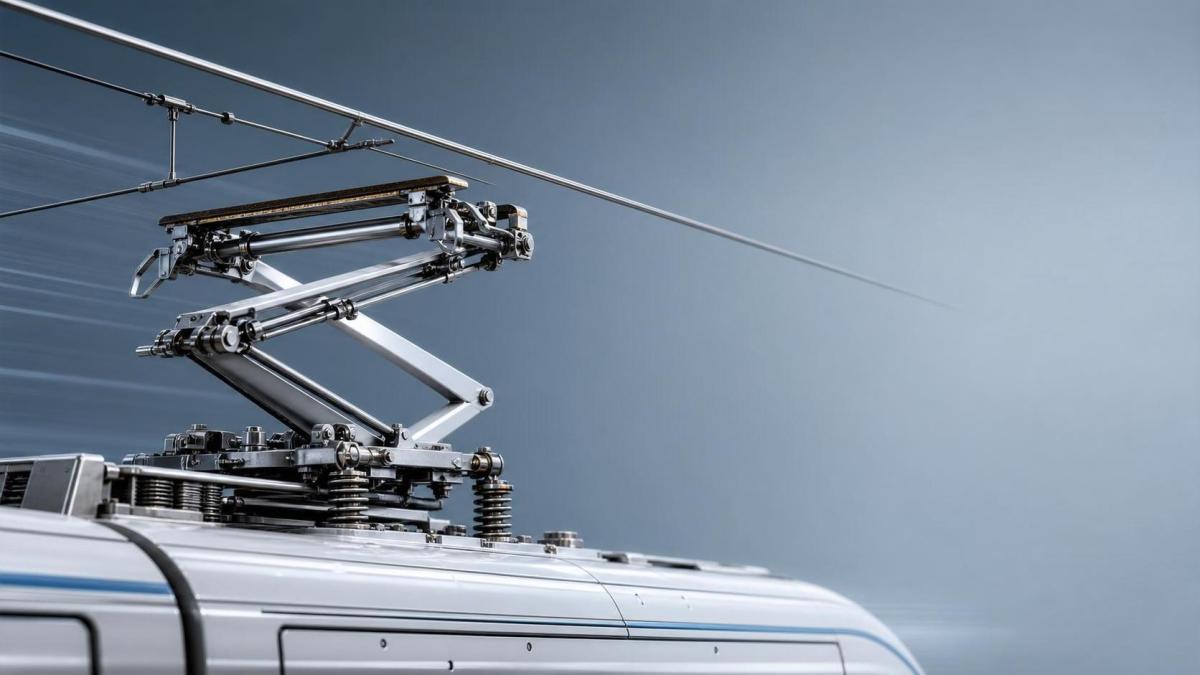
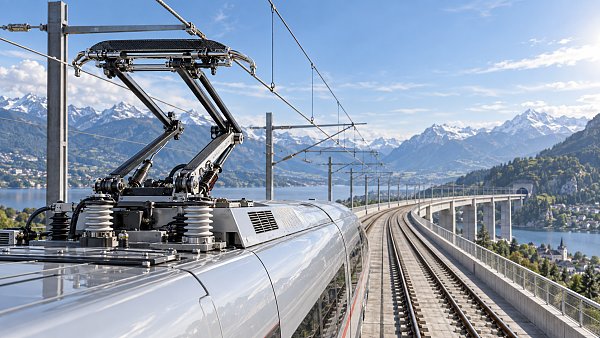
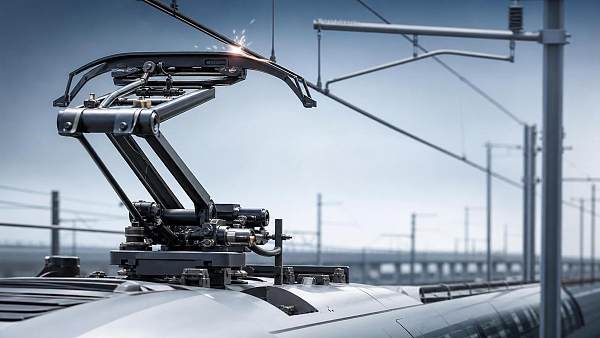
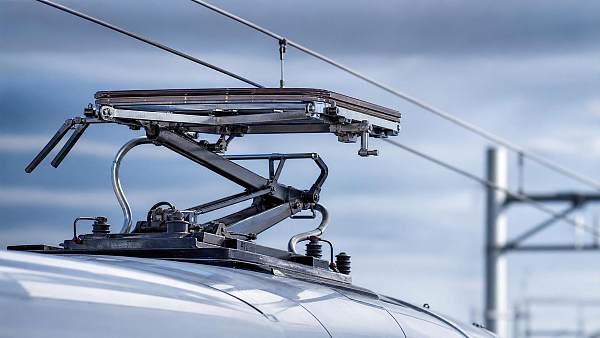
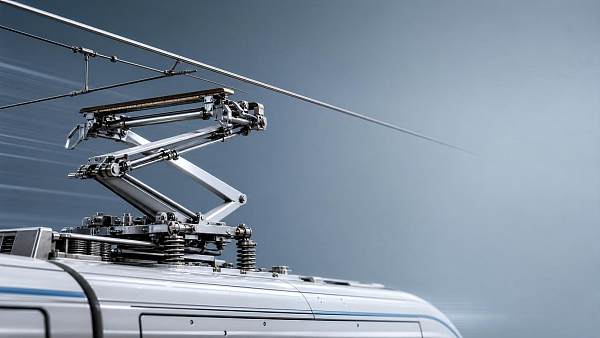
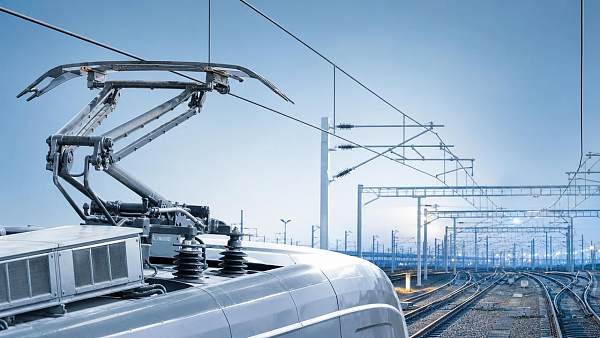
A pantograph is a mechanical and electrical system, not a single part. Current collection depends on stable contact between the contact strip and the catenary, while wear depends on how forces, motion, heat, and arcing are distributed over time.
If one element performs poorly, the rest of the assembly usually cannot compensate for long. A well-designed head with weak damping can lose contact at speed. A strong frame with the wrong strip material can accelerate wire wear.
For that reason, assessing pantograph components one by one is useful, but assessing their interaction is more valuable. The practical question is not whether a component is advanced in isolation. It is whether the full system stays stable in real service.
The contact strip sets the first boundary
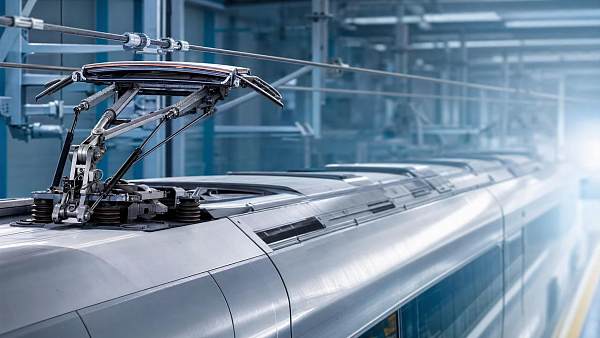
Among all pantograph components, the contact strip usually gets the most attention first, and for good reason. It is the direct sliding interface with the overhead contact wire, so it affects conductivity, friction, arc behavior, and wear on both sides.
Carbon-based strips are common because they balance conductivity with controlled wear and help protect the wire. Metallic content may improve electrical performance, but material selection always involves a tradeoff between strip life, wire preservation, and operating conditions.
Surface condition matters almost as much as material choice. Uneven wear, contamination, microcracks, or poor mounting can create local pressure peaks. Those peaks increase temperature, arc risk, and material transfer, which then accelerates deterioration across the system.
In technical evaluation, strip performance should be judged with service context in mind: line speed, current demand, climate, tunnel pressure waves, and catenary quality all influence the right material decision.
Force control is where wear often begins
Current collection is highly sensitive to contact force. Too little uplift force causes contact loss, arcing, and unstable current transfer. Too much force increases mechanical wear on strips and wire, especially at high speed or on less uniform overhead lines.
Springs, pneumatic devices, and force control mechanisms therefore deserve close scrutiny. Their role is not only to push upward, but to maintain a narrow and stable force band as train speed, head movement, and aerodynamic load change.
Aging in these pantograph components is easy to underestimate. Spring fatigue, seal drift, and response delay can gradually shift force behavior without obvious visual damage. The result may appear first as abnormal strip wear, not as a visible actuator failure.
This is one reason lifecycle review matters more than catalog values. A nominal force setting measured in static conditions says little about dynamic performance after long service exposure.
What stable force really means
Stable force is not simply a target number. It means the pantograph can absorb disturbances while keeping contact pressure within an acceptable range across overlaps, stagger, crosswinds, and vertical wire irregularities.
When evaluators review pantograph components, dynamic force variation is often more informative than nominal uplift alone.
Frame geometry and head design shape dynamic behavior
The pantograph frame carries more than structure. Its geometry influences mass distribution, stiffness, aerodynamic drag, and the way oscillations travel from the base to the head.
At higher speeds, poor geometry can amplify bouncing, hunting, or asymmetric motion. Even when contact force is correctly set, unstable kinematics may reduce effective current collection and create irregular wear marks on both strip and wire.
Head design matters as well. The head must follow wire movement smoothly while distributing force evenly across the contact strip. Excessive mass at the head usually harms responsiveness. Insufficient stiffness can cause local misalignment under load.
For networks above 250 km/h, these details become commercially important. Wear is no longer only a maintenance issue. It becomes a timetable risk, a reliability risk, and a cost driver for both rolling stock and infrastructure owners.
Damping determines whether disturbances stay small
Many current collection problems are not caused by one large failure. They result from repeated small disturbances that are not absorbed effectively. This is where damping elements and suspension behavior become central.
Well-tuned damping reduces vibration energy before it turns into contact loss. It helps the pantograph recover quickly after support transitions, local wire defects, or aerodynamic shocks. Weak damping allows oscillations to persist and interact with line frequency effects.
In practice, damping is one of the pantograph components most closely tied to route-specific performance. A unit that behaves acceptably on urban commuter lines may show very different wear characteristics on long high-speed corridors with stronger wind exposure.
This is why GTOT’s intelligence approach is relevant here. Comparing component data without operating context rarely gives a complete picture. Cross-reading speed class, wire system design, maintenance history, and environmental exposure produces a better evaluation baseline.
Electrical continuity and mechanical wear are linked
It is useful to separate electrical and mechanical analysis, but field performance does not respect that boundary. Poor electrical continuity creates arcs and thermal hotspots. Those effects damage strip surfaces, alter friction, and increase mechanical wear.
The opposite is also true. Mechanical instability produces momentary separation, and separation degrades current transfer. Once arcing begins repeatedly, wear no longer follows a simple linear pattern. Damage can accelerate quickly.
This interaction explains why pantograph components should not be judged only by replacement cost. A lower-cost strip or damper can trigger higher network costs through wire grinding, unplanned maintenance windows, or reduced fleet availability.
Typical evaluation links
What deserves attention in different operating scenarios
Not every network stresses pantograph components in the same way. The evaluation criteria should shift with the route profile and operating mission.
- High-speed rail places more weight on aerodynamic stability, low head mass, and damping precision.
- Urban rail often emphasizes frequent acceleration cycles, compact maintenance windows, and contamination resistance.
- Mixed-traffic corridors require tolerance for variable wire quality and changing current demand.
- Cross-border or export programs need close alignment with local standards, climate loads, and infrastructure condition.
For broader transport portfolios, this matters beyond rail alone. The same asset logic seen in marine propulsion or cryogenic containment also applies here: component behavior under real operating stress defines long-term value more accurately than nominal specification.
A practical way to assess pantograph components
A useful review starts with the contact interface, then moves outward through force control, structural behavior, and maintenance evidence. That sequence usually reveals whether wear is driven by material choice, dynamic mismatch, or degraded adjustment.
Several checkpoints tend to be more revealing than brochure claims.
- Compare dynamic contact force data, not only static settings.
- Review strip wear patterns across mileage, not single inspection snapshots.
- Check how the pantograph responds to crosswind, overlap zones, and stagger variation.
- Look for correlations between arcing records and mechanical condition.
- Assess whether maintenance intervals reflect actual condition or fixed routine only.
Where data is available, pairing onboard monitoring with workshop findings is especially effective. It helps distinguish normal consumable wear from wear caused by force drift, vibration growth, or catenary interaction problems.
Where to focus next
Understanding how pantograph components affect current collection and wear leads to a more disciplined evaluation process. The goal is not simply choosing durable parts. It is building a stable interface between rolling stock and infrastructure under real operating stress.
The next useful step is to map component behavior against route speed, wire condition, maintenance records, and energy demand. That makes it easier to identify which pantograph components deserve closer testing, redesign review, or supplier comparison.
For organizations following GTOT’s intelligence model, the strongest decisions usually come from connecting component detail with system-level risk. In pantographs, that connection is where reliability, wear control, and long-term asset performance become measurable.
Recommended News
 Sep 27, 2026How to assess a high speed pantograph supplier in EuropeHigh speed pantograph supplier Europe: learn how to assess technical fit, validation, compliance, and lifecycle support for reliable rail operations.
 Aug 08, 2026How to Evaluate Rail Pantograph Systems for Speed, Contact Stability, and Maintenance LifeRail pantograph systems evaluation made practical: learn how to assess speed performance, contact stability, and maintenance life for safer selection, lower wear, and more reliable rail operations.
 Jul 11, 2026Pantographs for High-Speed Rail: How to Reduce Lifecycle Maintenance CostsPantographs for high-speed rail: learn how smarter design, stable current collection, and serviceable components can cut lifecycle maintenance costs and reduce downtime.
 Jun 30, 2026How to Evaluate High-Speed Rail Pantograph Head Wear and Contact StabilityHigh-speed rail pantograph head evaluation starts with wear patterns, contact stability, and route fit. Learn how to reduce arc risk, prevent failures, and improve replacement decisions.
 Jun 27, 2026How Pantograph Components Affect Current Collection and WearPantograph components directly influence current collection, contact stability, and wear. Learn how strip material, force control, damping, and frame design improve rail reliability and cut maintenance costs.
 Jun 23, 2026How Pantographs for High-Speed Rail Affect Uptime and Maintenance CostsPantographs for high-speed rail directly impact fleet uptime and maintenance costs. Learn how stable contact, smarter inspections, and better design reduce failures and downtime.
 Jun 22, 2026High-Speed Rail Technology: Key Performance Factors Before System SelectionHigh-speed rail technology selection starts with safety, traction, braking, interoperability, and lifecycle value. Discover the key factors that help buyers choose reliable, future-ready systems.
 Jun 13, 2026Pantographs Supplier for Railway Networks: 7 Factors to ComparePantographs supplier for railway networks: compare 7 critical factors including performance, wear life, certification, delivery, service, and total cost to choose a reliable partner.
 Jun 13, 2026How Pantographs for High-Speed Rail Affect Uptime and WearPantographs for high-speed rail directly shape uptime, wear, and lifecycle cost. Learn how contact stability, materials, and aerodynamics impact reliability and maintenance.
 Jun 11, 2026High-Speed Traction Systems: Performance Factors That Affect Rail EfficiencyHigh-speed traction systems drive rail efficiency through better power conversion, thermal control, precision software, and reliability. Learn which upgrades deliver measurable results.
![]() Jun 04, 2026Pantographs for High-Speed Rail: Key Wear Signs to TrackPantographs for high-speed rail: learn the key wear signs to track, from uneven strip wear to arc marks and vibration, to improve safety, uptime, and maintenance decisions.
Jun 04, 2026Pantographs for High-Speed Rail: Key Wear Signs to TrackPantographs for high-speed rail: learn the key wear signs to track, from uneven strip wear to arc marks and vibration, to improve safety, uptime, and maintenance decisions. May 25, 2026Pantographs for High-Speed Rail: Key Performance ChecksPantographs for high-speed rail: discover the key performance checks technical evaluators should review, from contact force and aerodynamics to wear, vibration, and life-cycle reliability.
 May 21, 2026Pantographs for Electric Locomotives: What Affects Contact StabilityPantographs for electric locomotives: discover what affects contact stability, from airflow and catenary dynamics to strip wear and suspension tuning for safer, more reliable rail performance.
 May 20, 2026Pantographs Supplier for Railway Networks: Key Checks Before ShortlistingPantographs supplier for railway networks: learn the key checks for technical fit, compliance, lifecycle support, and reliability before shortlisting the right partner.
 May 07, 2026How to Compare Pantographs for High-Speed Rail UpgradesPantographs comparison for high-speed rail upgrades: learn how to evaluate contact stability, aerodynamics, wear, and lifecycle cost to choose safer, smarter systems.