



Search News
Industry Portal
Popular Tags
How to Specify Traction Power Equipment Switchgear for Urban Rail Projects
Author
Time
Click Count
Why switchgear specification goes wrong in urban rail
The most common mistake in specifying traction power equipment switchgear is treating it like a generic medium-voltage procurement package. In urban rail, that shortcut usually fails. The switchgear does not sit in an isolated industrial plant with stable loading and occasional operations; it sits inside a traction power system exposed to repetitive duty, fault stress, regeneration effects, tight civil interfaces, and a maintenance regime that has to coexist with passenger service windows. That changes the specification logic.
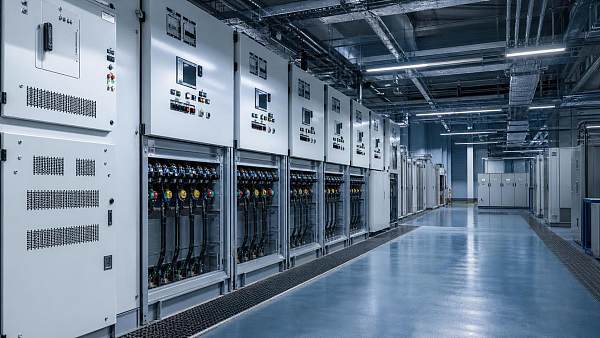
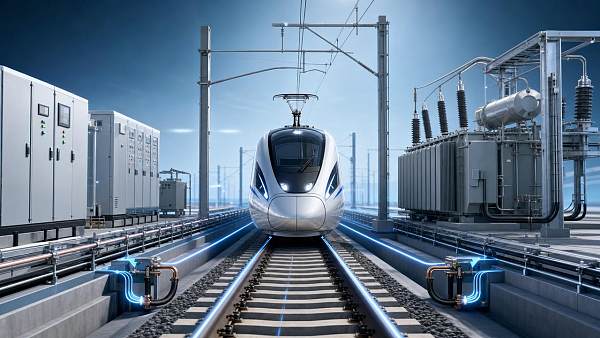
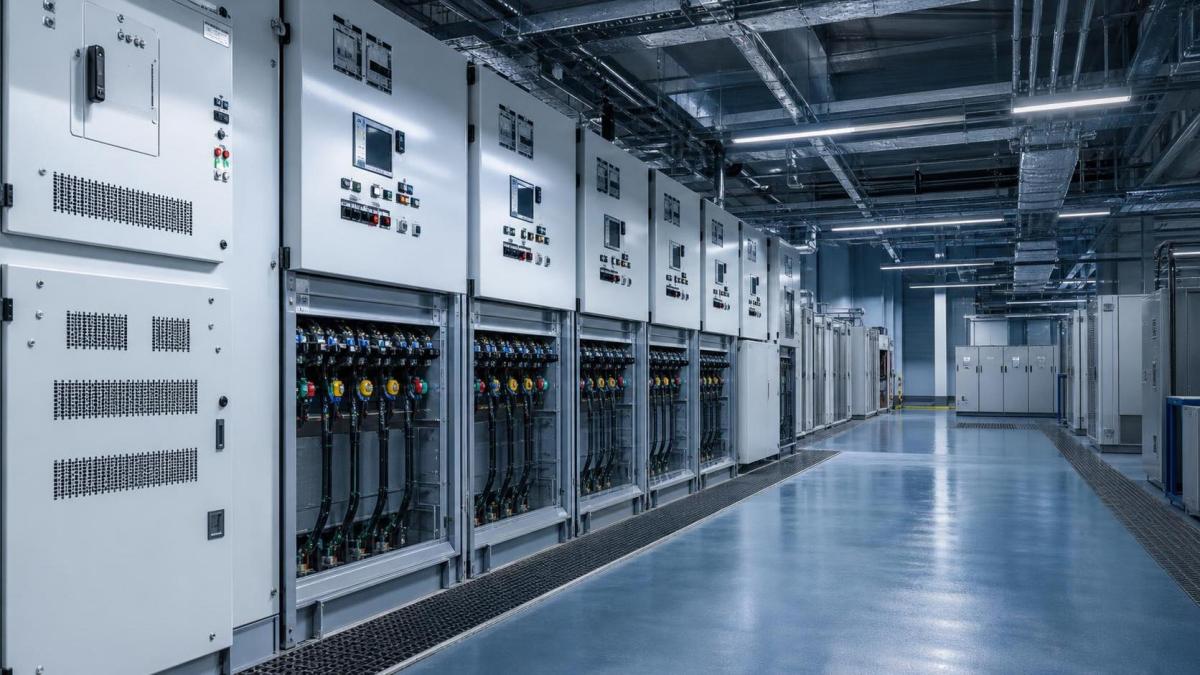
For project teams, the phrase traction power equipment switchgear generally refers to the switching and protection assemblies used in substations and traction power distribution points that feed rail vehicles through the traction network. Depending on the system architecture, this may include incoming switchgear on the utility side, medium-voltage distribution boards, rectifier feeder interfaces, DC switchgear, and feeder panels tied to the third rail or overhead contact system. The selection problem is not only electrical rating. It is about how the gear behaves under railway operating conditions, how easily it can be isolated and restored, and how much project risk it introduces over a thirty-year asset life.
That is why experienced teams start from service conditions and operational philosophy, not from a catalog table.
Start with the traction system, not the switchgear brochure
Urban rail traction power schemes vary more than procurement documents sometimes admit. A metro line with dense headways, frequent acceleration and regenerative braking behaves differently from a light rail corridor with longer station spacing. A 750 V DC third-rail network raises different interface questions than a 1,500 V DC overhead line. Some projects prioritize compact indoor substations because station footprints are constrained; others can accept larger equipment rooms if maintenance access improves. Each of those choices pushes the switchgear specification in a different direction.
Before naming a preferred switchgear type, project managers should force agreement on a few upstream points: utility supply arrangement, transformer and rectifier topology, fault level at each node, expected load profile, regeneration handling philosophy, SCADA integration, and the operator’s maintenance capability. If those items remain vague, the switchgear schedule will look precise while the actual equipment remains poorly matched to the line.
A useful internal test is simple: can the power team explain what happens after a feeder fault during peak service, and how quickly the system is expected to sectionalize, isolate, and restore supply? If not, the switchgear has not really been specified yet.
The ratings that matter, and the ones that are often misunderstood
Voltage and current ratings are the visible part of the decision, but they are rarely the difficult part. Most suppliers can meet nominal system voltage. The harder questions sit behind the headline numbers.
Short-circuit withstand capability is one of them. In rail projects, prospective fault current can be shaped by utility contribution, transformer impedance, rectifier behavior, cable length, and network configuration. A panel that looks adequate at nominal load can still be a weak choice if its short-time withstand or peak withstand margins are too tight for future network reinforcement. Expansion matters here. Many lines are commissioned with one operating pattern and later pushed to shorter headways, added rolling stock, or extra branch connections. If the switchgear is selected only for opening-day conditions, the project may buy an avoidable retrofit a few years later.
Another point often missed is duty cycle. Transit substations may see frequent switching operations associated with maintenance isolation, feeder transfer, recovery from incidents, and service optimization. Mechanical endurance and electrical endurance should not be treated as minor datasheet footnotes. They affect outage planning and spare strategy directly.
Internal arc classification also deserves serious attention, especially where substations are compact and personnel access routes are limited. In an urban rail environment, equipment is often installed in constrained rooms inside stations, tunnels, or roadside enclosures where pressure relief, operator position, and cable compartment behavior are not abstract safety topics. They are civil and operational issues.
Standards are a floor, not a specification strategy
Transit owners usually require compliance with IEC or equivalent national standards for switchgear and controlgear, plus project-specific railway requirements. That compliance is necessary, but it does not settle selection. A compliant product can still be wrong for the duty, wrong for the maintenance model, or difficult to integrate into the protection philosophy.
In practice, teams should read standards in two layers. The first layer is formal conformity: insulation level, temperature rise, short-circuit performance, internal arc behavior where applicable, and routine/type test evidence. The second layer is whether the tested configuration meaningfully matches the offered one. This is where many tenders become loose. Accessories, relay schemes, busbar arrangements, cable terminations, and enclosure modifications can materially change performance or maintainability. A test certificate alone does not guarantee that the assembled project configuration behaves the same way.
For project managers, this becomes a contract issue. The technical specification should be explicit about which assemblies require demonstrated type-tested lineage, which deviations need engineering review, and which interfaces are the switchgear supplier’s responsibility rather than the integrator’s problem later.
What actually drives the choice between acceptable and robust
When engineers debate air-insulated versus gas-insulated arrangements, fixed versus withdrawable designs, or compactness versus access, the conversation can become ideological. It should stay practical. The right answer depends on what the railway is optimizing for.
If the civil footprint is extremely constrained, a more compact arrangement may be justified, but the team should then examine maintainability with unusual discipline: front and rear access, cable working space, replacement procedures, interlock visibility, and the time required to return a bay to service after a component fault. In other words, space savings are not free. They are paid for somewhere, often in maintenance complexity.
Protection and control integration is another divider between average and well-considered specifications. Urban rail operators increasingly expect detailed event records, remote status visibility, disturbance capture, and clean SCADA mapping. That means relay architecture, communication protocol support, cyber hygiene, time synchronization, and panel marshalling design should be treated as core switchgear requirements, not late-stage automation extras.
Then there is environmental suitability. Indoor station substations, trackside shelters, tunnels, coastal depots, and hot, humid climates impose different requirements on enclosure protection, corrosion resistance, ventilation strategy, condensation control, and heat dissipation. This is especially important in mixed infrastructure portfolios where the same procurement template gets reused across very different sites.
Questions that expose weak specifications early
Lifecycle cost is where procurement discipline usually shows
Urban rail projects often say they are evaluating total cost of ownership, but many still compare bids mainly on purchase price and broad compliance statements. For switchgear, that approach is thin. The more meaningful cost picture includes inspection intervals, expected component life, spare part commonality, relay support horizon, ease of obtaining replacement breakers or contact assemblies, training burden for maintainers, and outage cost when a bay is unavailable.
This is where project managers need to challenge both suppliers and internal stakeholders. A lower-priced package may depend on proprietary elements with long lead times. A technically strong package may still create a support problem if the local service network is weak or if the operator has no experience with the protection platform. Conversely, a slightly higher initial price can be justified when it reduces maintenance possession time, simplifies fault diagnosis, or aligns with fleetwide spare philosophy.
The decision is rarely about buying the most advanced gear. It is about buying the most defensible one for the railway’s operating model.
Common misunderstandings in tender-stage evaluation
One misunderstanding is that higher rating always means lower risk. Overspecification can create unnecessary cost, larger footprints, more difficult cable routing, or poorer procurement competitiveness without improving the service outcome. The issue is not maximum rating in isolation; it is adequacy with credible margin.
Another is assuming that all railway projects need the same switchgear philosophy because the traction voltage looks similar. Two networks with the same nominal voltage may differ sharply in service pattern, depot arrangement, utility interface, and emergency operating rules. Specification by imitation is common, especially where consultants recycle legacy clauses. It saves drafting time, but it can conceal mismatches for years.
A third weak assumption is that maintainability can be recovered later through procedures. Usually it cannot. If access is poor, interlocking logic is awkward, or diagnostics are limited, operations teams will absorb that penalty for the whole asset life.
A better way to frame the selection decision
A strong specification for traction power equipment switchgear in urban rail does three things at once. It defines the electrical duty with enough rigor that bid compliance is meaningful. It captures the railway’s operating and maintenance reality, including restoration strategy and access constraints. And it leaves room for future network development without paying blindly for capability that will never be used.
For project leaders, that means the best review meetings are rarely the ones dominated by component brand comparisons. The useful meetings are the ones where protection engineers, operations staff, maintainers, civil designers, and procurement managers can all answer the same question: if this substation is in service for decades, under fault conditions, timetable pressure, and eventual expansion, is this switchgear package still the one we would choose?
If the answer is clear only on price, the specification is not finished. If the answer is clear on system behavior, maintainability, test pedigree, and future fit, the project is close to a sound decision.
Recommended News
 Jul 30, 2026How to Specify Traction Power Equipment Switchgear for Urban Rail ProjectsTraction power equipment switchgear selection for urban rail starts with system duty, fault levels, maintainability, and lifecycle cost. Learn how to specify the right solution with confidence.
 Jul 15, 2026How to Evaluate an Urban Rail Pantograph Manufacturer for Long-Term ReliabilityUrban rail pantograph manufacturer selection affects safety, uptime, and lifecycle cost. Learn how to assess engineering, testing, production control, and support for long-term reliability.
 Jul 09, 2026Urban Rail Pantograph Price: What Drives Lifecycle CostUrban rail pantograph price is only the starting point. Discover what really drives lifecycle cost, from wear and downtime to reliability, maintenance, and supplier support.
 Jul 04, 2026How to Evaluate Railway Pantograph Components for EMU ReliabilityRailway pantograph components for EMU reliability: learn how to assess contact stability, wear, dynamics, and lifecycle risk to improve fleet performance and reduce maintenance costs.
 Jul 01, 2026How to Evaluate Pantographs for Tram Systems by Wear, Noise, and UptimePantographs for tram systems: learn how to evaluate wear, noise, and uptime with practical metrics that reduce risk, improve reliability, and support smarter fleet decisions.
 Jun 27, 2026Pantograph Components Checklist for Retrofit and ReplacementPantograph components checklist for retrofit and replacement: learn how to assess compatibility, wear, climate, and lifecycle cost to improve rail reliability and reduce downtime.
 Jun 26, 2026Urban Rail Pantographs: Selection Factors for Stable Current CollectionUrban rail pantographs are key to stable current collection. Learn the selection factors that improve reliability, reduce wear, and support efficient metro and light rail operations.
 Jun 26, 2026Urban Rail Pantographs: Common Wear Problems and FixesUrban rail pantographs face wear from arcing, contamination, and mechanical looseness. Learn the common problems, practical fixes, and maintenance tips to boost reliability and cut downtime.
 Jun 17, 2026How to Compare Pantographs Manufacturers for Urban Rail ProjectsPantographs manufacturers for urban rail: learn how to compare technical performance, lifecycle cost, certifications, and service support to choose lower-risk suppliers for transit projects.
 Jun 11, 2026How to Compare Pantographs Manufacturers for Urban Rail ProjectsPantographs manufacturers for urban rail should be compared on technical fit, lifecycle cost, quality control, and support. Learn how to choose a reliable supplier with confidence.
 Jun 06, 2026Pantographs Manufacturers for Urban Rail: Key Checks Before ShortlistingPantographs manufacturers for urban rail: discover the key checks for technical fit, compliance, reliability, and after-sales support before shortlisting suppliers.
 May 27, 2026How to Compare Urban Rail Pantographs Manufacturers in 2026Pantographs manufacturers for urban rail: learn how to compare suppliers in 2026 by performance, compliance, lifecycle cost, and support to reduce risk and choose with confidence.
 May 19, 2026Pantographs Manufacturers for Urban Rail: What Impacts Lifecycle Value?Pantographs manufacturers for urban rail: discover what drives lifecycle value beyond price, from contact stability and maintenance to compatibility, testing, and long-term fleet reliability.
 May 07, 2026Traction Power Issues Behind Repeated Rail System DowntimeTraction power issues often hide behind repeated rail downtime. Learn the key fault triggers, fast-check methods, and maintenance insights to restore reliability and cut recurring failures.