



Search News
Industry Portal
Popular Tags
How to Compare Pantographs Manufacturers for Urban Rail Projects

Author
Time
Click Count
How to Compare Pantographs Manufacturers for Urban Rail Projects

Choosing the right pantographs manufacturers for urban rail can directly affect system reliability, lifecycle cost, and tender success.
That is why supplier comparison should go far beyond unit price.
In urban rail, pantographs work under frequent acceleration, tight headway, vibration, and changing weather.
A weak choice can trigger power instability, maintenance pressure, and avoidable downtime.
A strong choice supports energy collection, fleet availability, and long-term contract confidence.
For that reason, comparing pantographs manufacturers for urban rail should be a structured evaluation process.
This guide breaks down the criteria that matter most in real procurement decisions.
Start with application fit, not brochure claims
The first filter is operational fit.
Not all pantographs manufacturers for urban rail are equally strong in metro, light rail, and suburban transit projects.
Some suppliers are optimized for high-speed applications but less prepared for stop-start city duty cycles.
Others are better at compact roof integration, lower noise, and frequent contact strip replacement.
So begin with project basics before sending any RFQ.
- Operating speed range and acceleration profile
- Overhead catenary type and voltage system
- Carbody envelope and roof space limits
- Environmental exposure, including dust, salt, and humidity
- Maintenance window and depot capability
This step sounds basic, but it prevents many costly mismatches later.
In practice, the best pantographs manufacturers for urban rail usually ask detailed operating questions early.
That is often a good signal.
Check technical compliance in depth
Technical compliance should be treated as a layered review, not a box-ticking exercise.
Many procurement teams compare drawings and datasheets, then stop too early.
A better approach is to test how well each supplier proves performance under urban operating conditions.
Focus on standards, but also on evidence quality.
Key technical points to compare
- Static and dynamic contact force stability
- Aerodynamic behavior at line operating speed
- Uplift range and compatibility with catenary geometry
- Carbon strip wear rate and replacement cycle
- Insulation performance and fault tolerance
- Emergency lowering and fail-safe features
Ask for test reports, validation history, and project references with similar line conditions.
This is where stronger pantographs manufacturers for urban rail separate themselves from traders and assemblers.
If a supplier cannot explain failure modes clearly, risk is usually hiding somewhere.
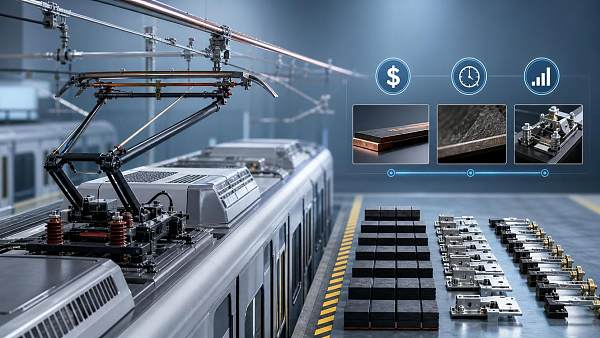
Compare lifecycle cost, not just purchase price
Low headline pricing can be attractive during tendering.
Still, urban rail projects usually feel the real cost during operation.
This is why lifecycle cost should sit near the center of supplier evaluation.
When comparing pantographs manufacturers for urban rail, build a five-to-fifteen-year cost view.
That view should include both direct and hidden costs.
- Initial equipment and spare parts package
- Contact strip consumption over expected mileage
- Inspection labor and maintenance downtime
- Failure-related service interruption risk
- Retrofit cost if interface problems appear later
A supplier with better wear life and faster maintenance access may deliver better value, even with a higher purchase price.
In recent projects, that difference has become more visible as operators push for higher fleet availability.
Review manufacturing capability and quality control
A polished presentation is not enough.
Buyers should understand how pantographs manufacturers for urban rail actually build, inspect, and trace their products.
Manufacturing discipline matters because pantographs operate in a tight performance envelope.
Small quality deviations can create repeated operational noise.
Questions worth asking during evaluation
- Are key components produced in-house or outsourced?
- What incoming inspection process covers springs, actuators, and composite materials?
- How are fatigue, vibration, and corrosion risks validated?
- Can the supplier provide serial traceability and batch records?
- How are nonconformities handled and closed?
A site audit, even a focused one, often reveals more than a thick proposal file.
It also helps confirm whether the supplier can scale without sacrificing consistency.
Measure service support and spare parts assurance
After-sales support is often underestimated during early comparison.
Yet in urban rail, response speed can matter almost as much as equipment design.
The best pantographs manufacturers for urban rail usually combine product supply with field support, training, and spare parts planning.
This reduces operating surprises after commissioning.
This also means checking whether the supplier can support multi-year fleet expansion.
A good product without dependable support can still become a weak procurement result.
Look at delivery risk and supply chain resilience
From recent market changes, delivery reliability has become a bigger decision factor.
Urban rail schedules are sensitive to late components, especially during fleet rollout.
So when comparing pantographs manufacturers for urban rail, review supply chain resilience carefully.
Ask where critical materials and subassemblies come from.
Then ask what happens if one source fails.
- Dual sourcing for critical components
- Buffer stock for long-lead items
- Export compliance and customs readiness
- Capacity planning for phased deliveries
- Business continuity plans for disruption events
This is especially relevant for cross-border tenders and localization requirements.
Reliable supply is now part of technical competitiveness, not just logistics.
Use a weighted scorecard for final comparison
Once supplier data is collected, avoid making the final choice through scattered opinions.
A weighted scorecard keeps the process transparent and easier to defend internally.
It also helps separate critical risks from negotiable differences.
Suggested scoring structure
- Technical compliance and validation evidence
- Lifecycle cost and maintenance impact
- Manufacturing quality and traceability
- Service support and spare parts readiness
- Delivery risk and supply continuity
- Commercial terms and contract flexibility
Assign weights based on project priorities, not habit.
For example, a new automated metro line may weight reliability and support more heavily than headline price.
This creates a more disciplined way to compare pantographs manufacturers for urban rail.
Final decision: choose the supplier that lowers operational uncertainty
At the final stage, the strongest option is rarely the cheapest on paper.
The better choice is the supplier that reduces uncertainty across operation, maintenance, and future expansion.
That is the real test when reviewing pantographs manufacturers for urban rail.
Look for proven fit, solid evidence, responsive support, and dependable delivery.
If two suppliers look similar, the one with clearer data and better field execution usually wins over time.
In practical terms, that means building a comparison process that is technical, commercial, and risk-aware from the beginning.
When that process is done well, selecting pantographs manufacturers for urban rail becomes less about guesswork and more about durable project value.
Recommended News
 Jul 30, 2026How to Specify Traction Power Equipment Switchgear for Urban Rail ProjectsTraction power equipment switchgear selection for urban rail starts with system duty, fault levels, maintainability, and lifecycle cost. Learn how to specify the right solution with confidence.
 Jul 15, 2026How to Evaluate an Urban Rail Pantograph Manufacturer for Long-Term ReliabilityUrban rail pantograph manufacturer selection affects safety, uptime, and lifecycle cost. Learn how to assess engineering, testing, production control, and support for long-term reliability.
 Jul 09, 2026Urban Rail Pantograph Price: What Drives Lifecycle CostUrban rail pantograph price is only the starting point. Discover what really drives lifecycle cost, from wear and downtime to reliability, maintenance, and supplier support.
 Jul 04, 2026How to Evaluate Railway Pantograph Components for EMU ReliabilityRailway pantograph components for EMU reliability: learn how to assess contact stability, wear, dynamics, and lifecycle risk to improve fleet performance and reduce maintenance costs.
 Jul 01, 2026How to Evaluate Pantographs for Tram Systems by Wear, Noise, and UptimePantographs for tram systems: learn how to evaluate wear, noise, and uptime with practical metrics that reduce risk, improve reliability, and support smarter fleet decisions.
 Jun 27, 2026Pantograph Components Checklist for Retrofit and ReplacementPantograph components checklist for retrofit and replacement: learn how to assess compatibility, wear, climate, and lifecycle cost to improve rail reliability and reduce downtime.
 Jun 26, 2026Urban Rail Pantographs: Selection Factors for Stable Current CollectionUrban rail pantographs are key to stable current collection. Learn the selection factors that improve reliability, reduce wear, and support efficient metro and light rail operations.
 Jun 26, 2026Urban Rail Pantographs: Common Wear Problems and FixesUrban rail pantographs face wear from arcing, contamination, and mechanical looseness. Learn the common problems, practical fixes, and maintenance tips to boost reliability and cut downtime.
 Jun 17, 2026How to Compare Pantographs Manufacturers for Urban Rail ProjectsPantographs manufacturers for urban rail: learn how to compare technical performance, lifecycle cost, certifications, and service support to choose lower-risk suppliers for transit projects.
 Jun 11, 2026How to Compare Pantographs Manufacturers for Urban Rail ProjectsPantographs manufacturers for urban rail should be compared on technical fit, lifecycle cost, quality control, and support. Learn how to choose a reliable supplier with confidence.
 Jun 06, 2026Pantographs Manufacturers for Urban Rail: Key Checks Before ShortlistingPantographs manufacturers for urban rail: discover the key checks for technical fit, compliance, reliability, and after-sales support before shortlisting suppliers.
 May 27, 2026How to Compare Urban Rail Pantographs Manufacturers in 2026Pantographs manufacturers for urban rail: learn how to compare suppliers in 2026 by performance, compliance, lifecycle cost, and support to reduce risk and choose with confidence.
 May 19, 2026Pantographs Manufacturers for Urban Rail: What Impacts Lifecycle Value?Pantographs manufacturers for urban rail: discover what drives lifecycle value beyond price, from contact stability and maintenance to compatibility, testing, and long-term fleet reliability.
 May 07, 2026Traction Power Issues Behind Repeated Rail System DowntimeTraction power issues often hide behind repeated rail downtime. Learn the key fault triggers, fast-check methods, and maintenance insights to restore reliability and cut recurring failures.