



Search News
Industry Portal
Popular Tags
Pantograph Components Checklist for Retrofit and Replacement
Author
Time
Click Count
Why pantograph components need a scenario-based checklist
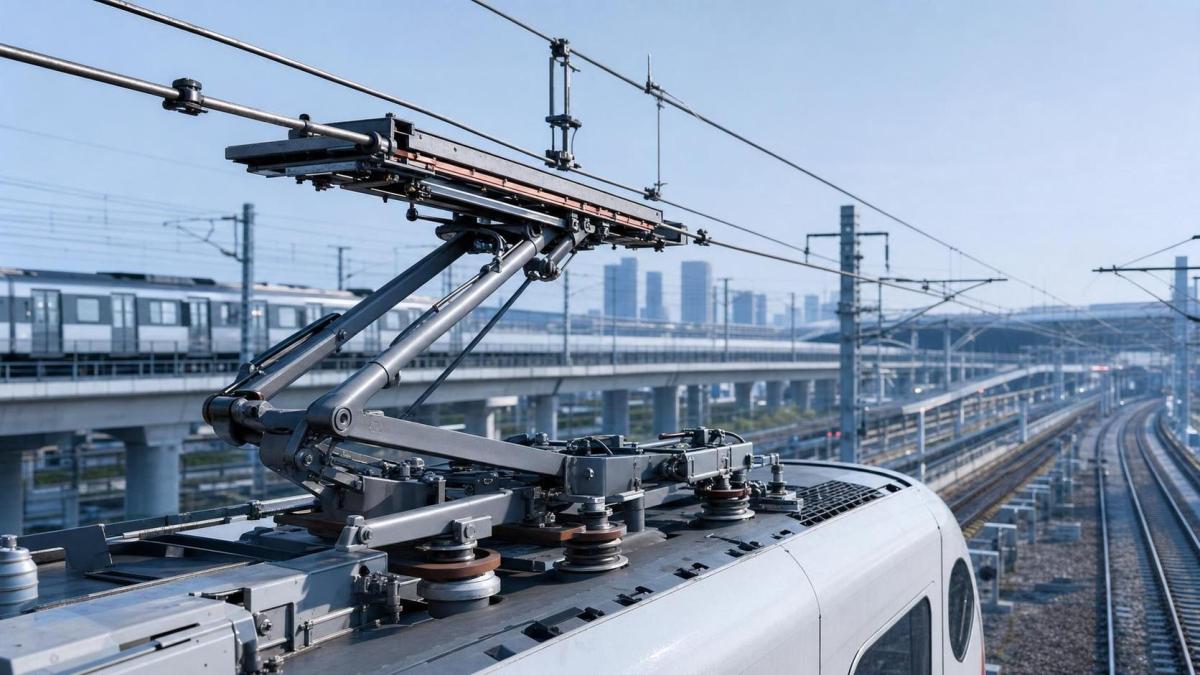
Pantograph components rarely fail for a single reason. Retrofit and replacement decisions usually sit between wear history, route conditions, and electrical performance targets.
That is why a generic spare list often creates hidden risk. A part that works on one fleet may shorten service intervals on another.
In practice, the best checklist starts with current collection stability. After that, mechanical fit, compliance, maintenance access, and lifecycle timing become the deciding filters.
GTOT tracks this issue within a wider transport picture. Across high-speed rail, signaling, braking, and maritime assets, the same rule applies: component intelligence matters most where uptime and safety margins are tight.
For pantograph components, that means looking beyond the headline specification. Contact quality, vibration response, and replacement compatibility usually determine whether the project actually delivers value.
The same train network can create very different replacement needs
Not every retrofit project begins with obvious failure. Some start with rising carbon strip wear. Others begin with arcing events, aerodynamic instability, or new operating speed requirements.
A metro line with frequent acceleration cycles stresses pantograph components differently from an intercity corridor running long, steady, high-speed sections.
Border-crossing routes add another layer. Different overhead line standards, climate exposure, and maintenance windows can turn a simple replacement into a compatibility problem.
More operators are also extending fleet life rather than replacing rolling stock early. In that setting, pantograph components must match both legacy interfaces and newer performance expectations.
The more demanding the corridor, the less useful it is to judge by procurement price alone. Downtime, inspection frequency, and contact wire impact can outweigh the initial part cost.
Typical triggers behind retrofit or replacement
- Repeated loss of contact under crosswind or vibration.
- Higher wear rates after timetable or speed upgrades.
- Obsolete assemblies with limited spare availability.
- Changes in carbon strip material policy or standards.
- Unexpected maintenance burden from mixed fleet configurations.
What usually matters on high-speed corridors
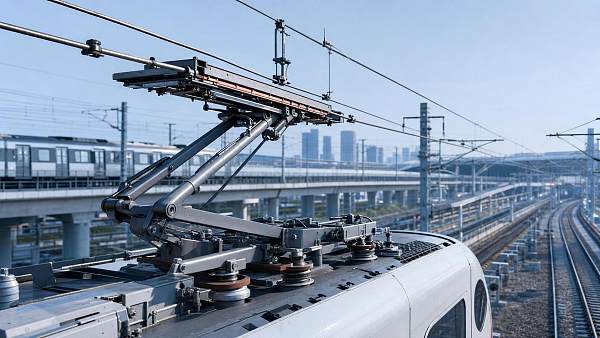
High-speed service puts the most pressure on pantograph components. At elevated speed, small weaknesses in head geometry or damping behavior become system-level issues.
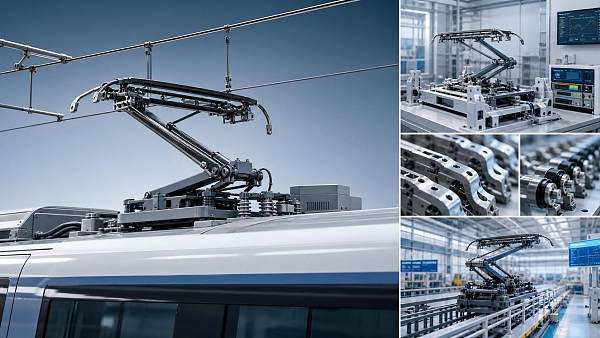
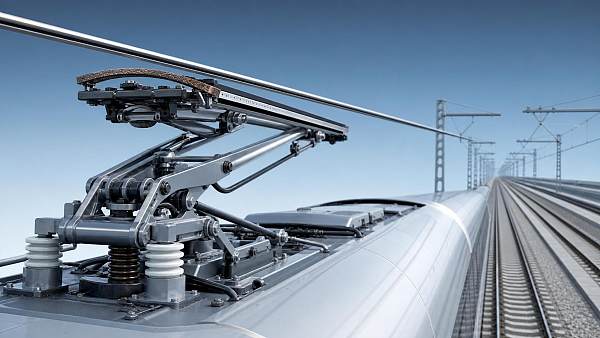
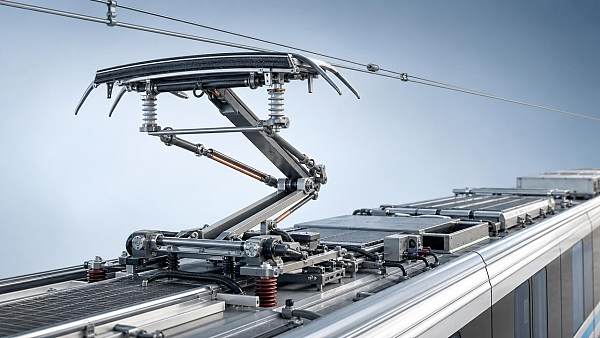
The first items to review are the panhead, carbon strip, horn, frame, and suspension linkage. Together, they control contact stability at speed.
If the route includes tunnels, crosswind zones, or seasonal icing, aerodynamic behavior matters as much as electrical conductivity. Stable uplift is only part of the picture.
A common mistake is replacing only worn contact strips while leaving fatigued dampers or misaligned head assemblies in service. That can preserve the root cause.
For these routes, pantograph components should be checked against speed envelope, contact force range, wave propagation behavior, and accepted overhead line interaction limits.
Key components for this scenario
- Carbon strips with proven wear and arc resistance.
- Panhead profiles matched to catenary geometry.
- Shock absorbers and springs with stable force response.
- Insulators rated for contamination and vibration exposure.
- Articulation joints and bearings with low play tolerance.
Urban and regional fleets usually judge differently
Metro and regional applications often focus less on extreme speed and more on repetitive duty cycles, depot turnaround, and service continuity.
Here, pantograph components are exposed to frequent raising and lowering, dense stop-start operation, and more maintenance interventions over short periods.
That changes the checklist. Pneumatic actuators, lowering devices, bearings, and locking mechanisms deserve closer attention than many buyers expect.
Another practical point is depot workflow. If replacement requires special tools or long roof access time, the true cost of the part rises quickly.
This is also where modular pantograph components can help. Faster exchange and clearer inspection routines often matter more than pushing to the highest technical ceiling.
Retrofit projects on aging fleets need stricter compatibility checks
Older rolling stock creates a different challenge. The question is not only which pantograph components perform better, but which ones fit without creating new approval work.
Mounting dimensions, roof load distribution, insulation clearance, and control interface details should be verified early. Small mismatches can delay the full project window.
In these cases, component standardization across the fleet can bring more value than peak specification. Fewer part variants reduce storage complexity and maintenance errors.
This approach mirrors wider transport asset management. GTOT often highlights how system reliability improves when component decisions support the whole operating chain, not one isolated subsystem.
For aging fleets, the checklist should include drawing review, retrofit kit completeness, spare continuity, and evidence from similar fleet conversions.
Questions worth asking before approval
- Does the new assembly change roof dynamics or clearance?
- Are the pantograph components supported for the intended overhaul cycle?
- Will maintenance documents and training need revision?
- Can the fleet absorb mixed configurations during transition?
Harsh environments expose weak assumptions quickly
Routes near coasts, industrial zones, deserts, or snow belts can change the replacement logic again. The environment starts driving failure patterns.
Salt, dust, moisture, and temperature swings affect pantograph components in different ways. Corrosion protection and sealing become more than secondary features.
This matters in a broader global logistics context. Land-sea interconnection often pushes rail assets closer to ports and freight gateways, where environmental stress can rise.
The usual oversight is assuming that a proven component on inland routes will behave the same near marine exposure. It often will not.
When conditions are harsh, material finish, insulator contamination resistance, strip wear pattern, and drainage design deserve explicit review in the checklist.
Common misjudgments when selecting pantograph components
One frequent error is reading datasheets without mapping the actual route profile. Laboratory values help, but they do not replace service condition matching.
Another is separating the pantograph from the overhead line system. Good pantograph components still need a compatible catenary, contact wire condition, and inspection discipline.
It is also common to focus on individual parts and ignore assembly interaction. A superior strip cannot compensate for frame looseness or unstable uplift control.
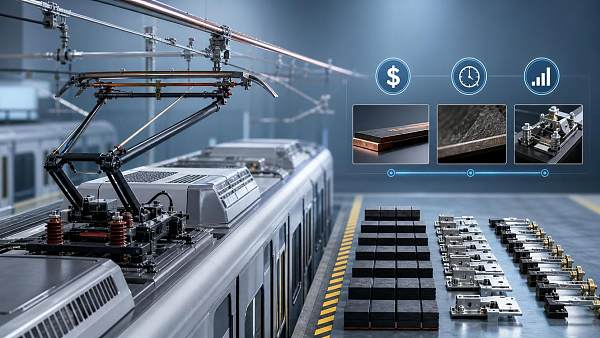
Cost comparisons often miss service labor, possession windows, and wire wear. Those factors can change the economic ranking of replacement options.
The stronger approach is to compare pantograph components by total operating effect, not by catalog value alone.
A practical checklist before moving forward
Before locking the specification, build the review around the route and fleet reality. That keeps the checklist usable during procurement, installation, and later maintenance.
- Confirm operating speed, current demand, and overhead line standard.
- Identify which pantograph components are wear-driven and which are design-limiting.
- Check mounting compatibility, roof clearance, and control interface details.
- Review climate exposure, contamination level, and maintenance access.
- Estimate lifecycle cost using labor, downtime, and wire impact.
- Validate evidence from similar routes or fleet retrofits.
A useful next step is to sort the fleet into operating groups first, then compare pantograph components against each group’s actual duty pattern.
That usually reveals where one standard solution works, where a route-specific option is justified, and where replacement should wait for a broader overhaul window.
When the checklist is built this way, retrofit and replacement decisions become more stable, easier to defend, and better aligned with long-term asset value.
Recommended News
 Jul 30, 2026How to Specify Traction Power Equipment Switchgear for Urban Rail ProjectsTraction power equipment switchgear selection for urban rail starts with system duty, fault levels, maintainability, and lifecycle cost. Learn how to specify the right solution with confidence.
 Jul 15, 2026How to Evaluate an Urban Rail Pantograph Manufacturer for Long-Term ReliabilityUrban rail pantograph manufacturer selection affects safety, uptime, and lifecycle cost. Learn how to assess engineering, testing, production control, and support for long-term reliability.
 Jul 09, 2026Urban Rail Pantograph Price: What Drives Lifecycle CostUrban rail pantograph price is only the starting point. Discover what really drives lifecycle cost, from wear and downtime to reliability, maintenance, and supplier support.
 Jul 04, 2026How to Evaluate Railway Pantograph Components for EMU ReliabilityRailway pantograph components for EMU reliability: learn how to assess contact stability, wear, dynamics, and lifecycle risk to improve fleet performance and reduce maintenance costs.
 Jul 01, 2026How to Evaluate Pantographs for Tram Systems by Wear, Noise, and UptimePantographs for tram systems: learn how to evaluate wear, noise, and uptime with practical metrics that reduce risk, improve reliability, and support smarter fleet decisions.
 Jun 27, 2026Pantograph Components Checklist for Retrofit and ReplacementPantograph components checklist for retrofit and replacement: learn how to assess compatibility, wear, climate, and lifecycle cost to improve rail reliability and reduce downtime.
 Jun 26, 2026Urban Rail Pantographs: Selection Factors for Stable Current CollectionUrban rail pantographs are key to stable current collection. Learn the selection factors that improve reliability, reduce wear, and support efficient metro and light rail operations.
 Jun 26, 2026Urban Rail Pantographs: Common Wear Problems and FixesUrban rail pantographs face wear from arcing, contamination, and mechanical looseness. Learn the common problems, practical fixes, and maintenance tips to boost reliability and cut downtime.
 Jun 17, 2026How to Compare Pantographs Manufacturers for Urban Rail ProjectsPantographs manufacturers for urban rail: learn how to compare technical performance, lifecycle cost, certifications, and service support to choose lower-risk suppliers for transit projects.
 Jun 11, 2026How to Compare Pantographs Manufacturers for Urban Rail ProjectsPantographs manufacturers for urban rail should be compared on technical fit, lifecycle cost, quality control, and support. Learn how to choose a reliable supplier with confidence.
 Jun 06, 2026Pantographs Manufacturers for Urban Rail: Key Checks Before ShortlistingPantographs manufacturers for urban rail: discover the key checks for technical fit, compliance, reliability, and after-sales support before shortlisting suppliers.
 May 27, 2026How to Compare Urban Rail Pantographs Manufacturers in 2026Pantographs manufacturers for urban rail: learn how to compare suppliers in 2026 by performance, compliance, lifecycle cost, and support to reduce risk and choose with confidence.
 May 19, 2026Pantographs Manufacturers for Urban Rail: What Impacts Lifecycle Value?Pantographs manufacturers for urban rail: discover what drives lifecycle value beyond price, from contact stability and maintenance to compatibility, testing, and long-term fleet reliability.
 May 07, 2026Traction Power Issues Behind Repeated Rail System DowntimeTraction power issues often hide behind repeated rail downtime. Learn the key fault triggers, fast-check methods, and maintenance insights to restore reliability and cut recurring failures.